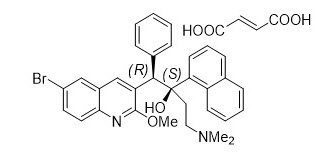
Other
Increased Mortality
- An increased risk of death was seen in the SIRTURO treatment group (9/79, 11.4%) compared to the placebo treatment group (2/81, 2.5%) in one placebo-controlled trial in adults. Only use SIRTURO in patients 5 years of age and older when an effective treatment regimen cannot otherwise be provided [see Indications and Usage (1), Warnings and Precautions (5.1) and Use in Specific Populations (8.4)].
- QT prolongation can occur with SIRTURO. Use with drugs that prolong the QT interval may cause additive QT prolongation. Monitor ECGs. Discontinue SIRTURO if significant ventricular arrhythmia or if QTcF interval prolongation of greater than 500 ms develops [see Warnings and Precautions (5.2)].
- Do not use SIRTURO for the treatment of:
- Latent infection due to Mycobacterium tuberculosis
- Drug-sensitive tuberculosis
- Extra-pulmonary tuberculosis
- Infections caused by non-tuberculous mycobacteria
- The safety and efficacy of SIRTURO in the treatment of HIV infected patients with MDR-TB have not been established as clinical data are limited [see Clinical Studies (14)].
- Disperse tablets in water (maximum of 5 tablets in 5 mL of water) in a drinking cup.
- Mix the contents of the cup well until the tablets are completely dispersed and then orally administer the contents of the cup immediately with food. To aid with administration, the dispersed mixture in water can be further mixed with at least 5 mL of beverage or 1 teaspoonful of soft food and then orally administer the contents of the cup immediately.
- If the total dose requires more than 5 tablets, repeat the above preparation steps with the appropriate number of additional tablets until the desired dose is reached.
- Ensure no tablet residue is left in the cup, rinse with beverage or add more soft food and orally administer the contents of the cup immediately.
- Disperse 5 tablets or less in 50 mL of non-carbonated water and mix well. Mixture should be white to almost white with visible particles expected.
- Administer through the nasogastric tube immediately.
- Repeat with additional tablets until desired dose is reached.
- Rinse and flush with 25 mL of additional water to ensure no tablet residue is left in materials used for preparation or the nasogastric tube.
- Dispersed in water and the mixture administered immediately. To aid with administration, the dispersed mixture in water can be further mixed with a beverage (e.g., water, milk products, apple juice, orange juice, cranberry juice or carbonated beverage) or soft food (e.g., yogurt, apple sauce, mashed banana or porridge) and then administered immediately,
- Crushed and mixed with soft food and the mixture administered immediately,
- Administered through a nasogastric tube [see Dosage and Administration (2.6)].
QT Prolongation
Limitations of Use:
Methods of Administration of SIRTURO 20 mg Tablet
Administration of 20 mg Tablets to Patients who Can Swallow Intact Tablets:
Administer SIRTURO 20 mg tablet whole or divided in half along the functional score line into two equal halves of 10 mg each. Administer SIRTURO 20 mg tablet with water. Take with food.
Administration of 20 mg Tablets to Patients who Cannot Swallow Intact Tablets:
Dispersed in Water and Administered with Beverage or Soft Food
For patients who have difficulty swallowing intact tablets, SIRTURO 20 mg tablet can be dispersed in water and administered. To aid with administration, the dispersed mixture in water can be further mixed with a beverage (e.g., water, milk products, apple juice, orange juice, cranberry juice or carbonated beverage) or soft food (e.g., yogurt, apple sauce, mashed banana or porridge) as follows:
Crushed and Mixed with Soft Food
SIRTURO 20 mg tablet can be crushed and mixed with soft food (e.g., yogurt, apple sauce, mashed banana or porridge) immediately prior to use and administered orally. Ensure no tablet residue is left in container, add more soft food and administer the contents immediately.
Administration Through a Nasogastric Tube
SIRTURO 20 mg tablet can be administered through a nasogastric tube (8 French or greater) as follows:
CYP3A4 inducers/inhibitors
Bedaquiline is metabolized by CYP3A4 and its systemic exposure and therapeutic effect may therefore be reduced during co-administration with inducers of CYP3A4. Avoid co-administration of strong CYP3A4 inducers, such as rifamycins (i.e., rifampin, rifapentine and rifabutin), or moderate CYP3A4 inducers, such as efavirenz, during treatment with SIRTURO [see Drug Interactions (7.1)].
Co-administration of SIRTURO with strong CYP3A4 inhibitors may increase the systemic exposure to bedaquiline, which could potentially increase the risk of adverse reactions. Therefore, avoid the use of strong CYP3A4 inhibitors for more than 14 consecutive days while on SIRTURO, unless the benefit of treatment with the drug combination outweighs the risk [see Drug Interactions (7.1)]. Appropriate clinical monitoring for SIRTURO-related adverse reactions is recommended.
Clinical Studies Experience in Adults
Adverse reactions for SIRTURO were identified from the pooled safety data from 335 SIRTURO-exposed patients who received 8 weeks (Study 2) and 24 weeks (Studies 1 and 3) at the proposed dose. Studies 1 and 2 were randomized, double-blind, placebo-controlled trials in newly diagnosed patients with pulmonary MDR-TB. In both treatment arms, patients received SIRTURO or placebo in combination with other drugs used to treat MDR-TB. Study 3 was an open-label, noncomparative study with SIRTURO administered as part of an individualized pulmonary MDR-TB treatment regimen in previously treated patients.
In Study 1, 35% were Black, 17.5% were Hispanic, 12.5% were White, 9.4% were Asian, and 25.6% were of another race. Eight of 79 (10.1%) patients in the SIRTURO group and 16 of 81 (19.8%) patients in the placebo treatment group were HIV-infected. Seven (8.9%) SIRTURO-treated patients and six (7.4%) placebo-treated patients discontinued Study 1 because of an adverse reaction.
| Adverse Reactions | SIRTURO Treatment Group N=79 n (%) | Placebo Treatment Group N=81 n (%) |
|---|---|---|
| Nausea | 30 (38) | 26 (32) |
| Arthralgia | 26 (33) | 18 (22) |
| Headache | 22 (28) | 10 (12) |
| Hemoptysis | 14 (18) | 9 (11) |
| Chest Pain | 9 (11) | 6 (7) |
| Anorexia | 7 (9) | 3 (4) |
| Transaminases Increased Terms represented by 'transaminases increased' included transaminases increased, AST increased, ALT increased, hepatic enzyme increased, and hepatic function abnormal. | 7 (9) | 1 (1) |
| Rash | 6 (8) | 3 (4) |
| Blood Amylase Increased | 2 (3) | 1 (1) |
No additional unique adverse reactions were identified from the uncontrolled Study 3.
In both Studies 1 and 2, aminotransferase elevations of at least 3 times the upper limit of normal developed more frequently in the SIRTURO treatment group (11/102 [10.8%] vs 6/105 [5.7%]) than in the placebo treatment group. In Study 3, 22/230 (9.6%) patients had alanine aminotransferase (ALT) or aspartate aminotransferase (AST) greater than or equal to 3 times the upper limit of normal during the overall treatment period.
Increased Mortality
In Study 1, there was a statistically significant increased mortality risk by Week 120 in the SIRTURO treatment group compared to the placebo treatment group (9/79 (11.4%) versus 2/81 (2.5%), p-value=0.03, an exact 95% confidence interval of the difference [1.1%, 18.2%]). Five of the 9 SIRTURO deaths and the 2 placebo deaths were tuberculosis-related. One death occurred during the 24-week SIRTURO treatment period. The median time to death for the remaining eight patients in the SIRTURO treatment group was 329 days after last intake of SIRTURO. The imbalance in deaths is unexplained; no discernible pattern between death and sputum conversion, relapse, sensitivity to other drugs used to treat tuberculosis, HIV status, and severity of disease was observed.
In the open-label Study 3, 6.9% (16/233) of patients died. The most common cause of death as reported by the investigator was TB (9 patients). All but one patient who died of TB had not converted or had relapsed. The causes of death in the remaining patients varied.
Clinical Studies Experience in Pediatric Patients
The safety assessment of bedaquiline is based on the Week 24 analysis from 30 pediatric patients in an ongoing, single-arm, open-label, multi-cohort trial, (Study 4).
Pediatric Patients (12 years to less than 18 years of age)
The first cohort was designed to enroll patients 12 years to less than 18 years of age (fifteen patients 14 years to less than 18 years of age were enrolled) with confirmed or probable pulmonary MDR-TB infection who received SIRTURO (400 mg once daily for the first 2 weeks and 200 mg 3 times/week for the following 22 weeks) in combination with a background regimen [see Clinical Studies (14.2)].
The most common adverse reactions were arthralgia in 6/15 (40%) patients, nausea in 2/15 (13%) patients, and abdominal pain in 2/15 (13%) patients. Among the 15 patients, no deaths occurred during treatment with SIRTURO. Observed laboratory abnormalities were comparable to those in adults.
Pediatric Patients (5 years to less than 12 years of age)
The second cohort was designed to enroll patients 5 years to less than 12 years of age (fifteen patients aged 5 years to less than 11 years of age were enrolled) with confirmed or probable pulmonary MDR-TB infection who received SIRTURO (200 mg once daily for the first 2 weeks and 100 mg 3 times/week for the following 22 weeks) in combination with a background regimen [see Clinical Studies (14.2)].
The most common adverse reactions were related to elevations in liver enzymes (5/15, 33%), and led to discontinuation of SIRTURO in three patients. Elevations in liver enzymes were reversible upon discontinuation of SIRTURO and some of the background regimen drugs. Among these 15 pediatric patients, no deaths occurred during treatment with SIRTURO.
CYP3A4 Inducers
Due to the possibility of a reduction of the therapeutic effect of bedaquiline because of the decrease in systemic exposure, co-administration of strong CYP3A4 inducers, such as rifamycins (i.e., rifampin, rifapentine and rifabutin), or moderate CYP3A4 inducers should be avoided during treatment with SIRTURO [see Clinical Pharmacology (12.3)].
CYP3A4 inhibitors
Due to the potential risk of adverse reactions to bedaquiline because of the increase in systemic exposure, prolonged co-administration of bedaquiline and strong CYP3A4 inhibitors, such as ketoconazole or itraconazole, for more than 14 consecutive days should be avoided unless the benefit outweighs the risk [see Clinical Pharmacology (12.3)]. Appropriate clinical monitoring for SIRTURO-related adverse reactions is recommended.
Lopinavir/ritonavir
Although clinical data in HIV/MDR-TB co-infected patients on the combined use of lopinavir (400 mg)/ritonavir (100 mg) with SIRTURO are not available, use SIRTURO with caution when co-administered with lopinavir/ritonavir and only if the benefit outweighs the risk [see Clinical Pharmacology (12.3)].
Nevirapine
No dosage adjustment of bedaquiline is required when co-administered with nevirapine [see Clinical Pharmacology (12.3)].
Efavirenz
Concomitant administration of bedaquiline and efavirenz, or other moderate CYP3A inducers, should be avoided [see Warnings and Precautions (5.5)].
Risk Summary
Available data from published literature of SIRTURO use in pregnant women are insufficient to evaluate a drug-associated risk of major birth defects, miscarriage, or adverse maternal or fetal outcomes. There are risks associated with active tuberculosis during pregnancy (see Clinical Considerations).
Reproduction studies performed in rats and rabbits have revealed no evidence of harm to the fetus due to oral administration of bedaquiline to pregnant rats and rabbits during organogenesis at exposures up to 6 times the clinical dose based on AUC comparisons (see Data).
The estimated background risk of major birth defects and miscarriage for the indicated populations is unknown. All pregnancies have a background risk of birth defect, loss, or other adverse outcomes. In the U.S. general population, the estimated background risk of major birth defects and miscarriage in clinically recognized pregnancies is 2 to 4% and 15 to 20%, respectively.
Clinical Considerations
Disease-Associated Maternal and/or Embryo/Fetal Risk
Active tuberculosis in pregnancy is associated with adverse maternal and neonatal outcomes including maternal anemia, caesarean delivery, preterm birth, low birth weight, birth asphyxia, and perinatal infant death.
Data
Animal Data
Pregnant rats were treated with bedaquiline at 5, 15 and 45 mg/kg (approximately 0.7, 2 and 6 times the clinical dose based on AUC comparisons) during the period of organogenesis (gestational Days 6–17, inclusive). Pregnant rabbits were treated with bedaquiline at 10, 30 and 100 mg/kg (approximately 0.05, 0.2 and 1.5 times the clinical dose based on AUC comparisons) during the period of organogenesis (gestational Days 6–19, inclusive). No embryotoxic effects were found in rats or rabbits at dose exposures up to 6 times the clinical dose exposures based on AUC comparisons.
Risk Summary
There is no information regarding the presence of bedaquiline in human milk. Minimal data are available on the effects of the drug on breastfed infants. No data are available on the effects of the drug on milk production. Bedaquiline is concentrated in the milk of rats (see Data). When a drug is present in animal milk, it is likely that the drug will be present in human milk. The developmental and health benefits of breastfeeding should be considered along with the mother's clinical need for SIRTURO and any potential adverse effects on the breastfed infant from SIRTURO or from the underlying maternal condition.
Clinical Considerations
Monitor infants exposed to bedaquiline through breast milk for signs of bedaquiline-related adverse reactions, such as hepatotoxicity [see Adverse Reactions (6)].
Data
Bedaquiline concentrations in rat milk were 6-fold to 12-fold higher than the maximum concentration observed in maternal plasma at exposures 1 time to 2 times the clinical exposure (based on AUC comparisons). Pups from these dams were exposed to bedaquiline via milk during the lactation period and showed reduced body weights compared to control animals.
Cardiac Electrophysiology
In Study 1, in adults, the mean increases in QTcF, corrected using the Fridericia method, were greater in the SIRTURO treatment group compared to the placebo treatment group from the first week of treatment (9.9 ms at Week 1 for SIRTURO and 3.5 ms for placebo). The largest mean increase in QTcF during the 24 weeks of SIRTURO treatment was 15.7 ms compared to 6.2 ms with placebo treatment (at Week 18). After bedaquiline treatment ended, the QTcF gradually decreased, and the mean value was similar to that in the placebo group by study week 60.
In Study 3, where adult patients with no treatment options received other QT-prolonging drugs used to treat tuberculosis, including clofazimine, concurrent use with SIRTURO resulted in additive QTcF prolongation, proportional to the number of QT prolonging drugs in the treatment regimen. Patients taking SIRTURO alone with no other QT prolonging drug developed a mean QTcF increase over baseline of 23.7 ms with no QTcF segment duration in excess of 480 ms, whereas patients taking at least 2 other QT prolonging drugs developed a mean QTcF prolongation of 30.7 ms over baseline, and resulted in QTcF segment duration in excess of 500 ms in one patient [see Warnings and Precautions (5.2)].
Absorption
After single oral dose administration of SIRTURO, maximum plasma concentrations (Cmax) are typically achieved at approximately 5 hours post-dose. Cmax and the area under the plasma concentration-time curve (AUC) increased proportionally up 700 mg (1.75 times the 400 mg loading dose).
Administration of SIRTURO with a standard meal containing approximately 22 grams of fat (558 total Kcal) increased the relative bioavailability by approximately 2-fold compared to administration under fasted conditions. SIRTURO should be taken with food to enhance its oral bioavailability.
Distribution
The plasma protein binding of bedaquiline is greater than 99.9%. The volume of distribution in the central compartment is estimated to be approximately 164 Liters.
Elimination
After reaching Cmax, bedaquiline concentrations decline tri-exponentially. The mean terminal elimination half-life of bedaquiline and the N-monodesmethyl metabolite (M2) is approximately 5.5 months. This long terminal elimination phase likely reflects slow release of bedaquiline and M2 from peripheral tissues.
Metabolism
CYP3A4 was the major CYP isoenzyme involved in the in vitro metabolism of bedaquiline and the formation of the N-monodesmethyl metabolite (M2).
Excretion
Based on preclinical studies, bedaquiline is mainly excreted in feces. The urinary excretion of unchanged bedaquiline was less than or equal to 0.001% of the dose in clinical studies, indicating that renal clearance of unchanged drug is insignificant.
Specific Populations
Hepatic Impairment: After single-dose administration of 400 mg SIRTURO to 8 adult patients with moderate hepatic impairment (Child-Pugh B), mean exposure to bedaquiline and M2 (AUC672h) was approximately 20% lower compared to healthy subjects. SIRTURO has not been studied in patients with severe hepatic impairment. [See Warnings and Precautions (5.4) and Use in Specific Populations (8.6)].
Renal Impairment: SIRTURO has mainly been studied in adult patients with normal renal function. Renal excretion of unchanged bedaquiline is not substantial (less than or equal to 0.001%).
In a population pharmacokinetic analysis of MDR-TB adult patients treated with SIRTURO 200 mg three times per week, creatinine clearance was not found to influence the pharmacokinetic parameters of bedaquiline. It is therefore not expected that mild or moderate renal impairment will have a clinically relevant effect on the exposure to bedaquiline. However, in patients with severe renal impairment or end-stage renal disease requiring hemodialysis or peritoneal dialysis bedaquiline concentrations may be increased due to alteration of drug absorption, distribution, and metabolism secondary to renal dysfunction. As bedaquiline is highly bound to plasma proteins, it is unlikely that it will be significantly removed from plasma by hemodialysis or peritoneal dialysis [see Use in Specific Populations (8.7)].
Sex: In a population pharmacokinetic analysis of MDR-TB adult patients treated with SIRTURO no clinically relevant difference in exposure between men and women were observed.
Race/Ethnicity: In a population pharmacokinetic analysis of MDR-TB adult patients treated with SIRTURO, systemic exposure (AUC) to bedaquiline was found to be 34% lower in Black patients than in patients from other race categories. This lower exposure was not considered to be clinically relevant as no clear relationship between exposure to bedaquiline and response has been observed in clinical trials of MDR-TB. Furthermore, response rates were comparable in patients of different race categories that completed 24 weeks of bedaquiline treatment.
HIV Co-infection: There are limited data on the use of SIRTURO in HIV co-infected patients [see Drug Interactions (7)].
Geriatric Population: There are limited data on the use of SIRTURO in tuberculosis patients 65 years of age and older.
In a population pharmacokinetic analysis of MDR-TB adult patients treated with SIRTURO, age was not found to influence the pharmacokinetics of bedaquiline.
Pediatric Population:
Pediatric patients 12 years to less than 18 years of age with MDR-TB
The pharmacokinetic parameters of bedaquiline in 15 pediatric patients (body weight at baseline: 38 to 75 kg) who received the same adult dosage regimen of SIRTURO (400 mg once daily for the first 2 weeks and 200 mg 3 times/week for the following 22 weeks) in combination with a background regimen were comparable to those in adults. There was no impact of body weight on bedaquiline pharmacokinetics in this cohort.
Pediatric patients 5 years to less than 12 years of age with MDR-TB
Fifteen MDR-TB pediatric patients (body weight at baseline: 14 to 36 kg) received SIRTURO (200 mg once daily for the first 2 weeks and 100 mg 3 times/week for the following 22 weeks) in combination with a background regimen. Of these 15 pediatric patients, complete pharmacokinetic data were obtained for 10 patients at the aforementioned dosage regimen of SIRTURO. In 9 of these 10 pediatric patients who weighed at least 15 kg at baseline, the mean bedaquiline Cmax and AUC24h were similar to that of adult MDR-TB patients receiving the recommended adult dosage regimen. In 1 of these 10 pediatric patients who weighed 14 kg at baseline, the bedaquiline mean Cmax and AUC24h were 3.8-fold and 2.6-fold, respectively, higher than the mean Cmax and AUC24h in adult MDR-TB patients administered the recommended adult dosage regimen. The clinical significance of this higher pharmacokinetic plasma exposure in this one pediatric patient is not known [see Use in Specific Populations (8.4)].
See Table 5 for a summary of the pharmacokinetic parameters in pediatric patients 5 years to less than 18 years of age.
| Pharmacokinetic Parameter | Bedaquiline Mean (SD) | |
|---|---|---|
| 14 years to less than 18 years (N=15) | 5 years to less than 12 years (N=10) | |
| SD=Standard Deviation | ||
| AUC24h (ng∙h/mL) | 26,300 (10,300) | 32,200 (16,300) |
| Cmax (ng/mL) | 1,800 (736) | 2,430 (1,670) |
| Tmax (h) Median (range) | 4 (2–8) | 4 (2–8) |
| Cmin (ng/mL) | 544 (263) | 461 (173) |
Drug-Drug Interactions
In vitro, bedaquiline does not significantly inhibit the activity of the following CYP450 enzymes that were tested: CYP1A2, CYP2A6, CYP2C8/9/10, CYP2C19, CYP2D6, CYP2E1, CYP3A4, CYP3A4/5 and CYP4A, and it does not induce CYP1A2, CYP2C9, CYP2C19, or CYP3A4 activities.
Bedaquiline is an in vitro substrate of CYP3A4, and because of this, the following clinical drug interaction studies were performed.
Ketoconazole: Co-administration of multiple-dose bedaquiline (400 mg once daily for 14 days) and multiple-dose ketoconazole (once daily 400 mg for 4 days) in healthy adult subjects increased the AUC24h, Cmax and Cmin of bedaquiline by 22% [90% CI (12; 32)], 9% [90% CI (-2, 21)] and 33% [90% CI (24, 43)] respectively [see Drug Interactions (7.1) and (7.4)].
Rifampin: In a drug interaction study of single-dose 300 mg bedaquiline and multiple-dose rifampin (once daily 600 mg for 21 days) in healthy adult subjects, the exposure (AUC) to bedaquiline was reduced by 52% [90% CI (-57; -46)] [see Drug Interactions (7.1)].
Antimicrobial agents: The combination of multiple-dose bedaquiline 400 mg once daily with multiple-dose isoniazid/pyrazinamide (300 mg/2000 mg once daily) in healthy adult subjects did not result in clinically relevant changes in the exposure (AUC) to bedaquiline, isoniazid or pyrazinamide [see Drug Interactions (7.2)].
In a placebo-controlled study in adult patients with MDR-TB, no major impact of co-administration of bedaquiline on the pharmacokinetics of ethambutol, kanamycin, pyrazinamide, ofloxacin or cycloserine was observed.
Lopinavir/ritonavir: In a drug interaction study in healthy adult volunteers of single-dose bedaquiline (400 mg) and multiple-dose lopinavir (400 mg)/ritonavir (100 mg) given twice daily for 24 days, the mean AUC of bedaquiline was increased by 22% [90% CI (11; 34)] while the mean Cmax was not substantially affected [see Drug Interactions (7.3)].
Nevirapine: Co-administration of multiple-dose nevirapine 200 mg twice daily for 4 weeks in HIV-infected adult patients with a single 400 mg dose of bedaquiline did not result in clinically relevant changes in the exposure to bedaquiline [see Drug Interactions (7.3)].
Efavirenz: Co-administration of a single dose of bedaquiline 400 mg and efavirenz 600 mg daily for 27 days to healthy adult volunteers resulted in approximately a 20% decrease in the AUCinf of bedaquiline; the Cmax of bedaquiline was not altered. The AUC and Cmax of the primary metabolite of bedaquiline (M2) were increased by 70% and 80%, respectively. The effect of efavirenz on the pharmacokinetics of bedaquiline and M2 following steady-state administration of bedaquiline has not been evaluated [see Drug Interactions (7.3)].
Mechanism of Action
SIRTURO is a diarylquinoline antimycobacterial drug that inhibits mycobacterial ATP (adenosine 5'-triphosphate) synthase, by binding to subunit c of the enzyme that is essential for the generation of energy in M. tuberculosis.
Resistance
A potential for development of resistance to bedaquiline in M. tuberculosis exists. Modification of the atpE target gene, and/or upregulation of the MmpS5-MmpL5 efflux pump (Rv0678 mutations) have been associated with increased bedaquiline MIC values in isolates of M. tuberculosis. Target-based mutations generated in preclinical studies lead to 8- to 133-fold increases in bedaquiline MIC, resulting in MICs ranging from 0.25 to 4 micrograms per mL. Efflux-based mutations have been seen in preclinical and clinical isolates. These lead to 2- to 8-fold increases in bedaquiline MICs, resulting in bedaquiline MICs ranging from 0.25 to 0.5 micrograms per mL.
M. tuberculosis isolates from a clinical study in adult patients with MDR-TB that developed at least 4-fold increase in bedaquiline MIC were associated with mutations in Rv0678 gene that lead to upregulation of the MmpS5-MmpL5 efflux pump. Isolates with these efflux-based mutations are less susceptible to clofazimine. Isolates that are phenotypically resistant to bedaquiline should be tested for cross-resistance to clofazimine, if clofazimine is being considered as part of the treatment regimen. In Study 2 and 3 there was no clear relationship between the presence of Rv0678 mutations at baseline and treatment outcome.
Activity In Vitro and in Clinical Infections
SIRTURO has been shown to be active in vitro and in clinical infections against most isolates of M. tuberculosis [see Indications and Usage (1) and Clinical Studies (14)].
Susceptibility Testing
The bedaquiline agar (left) and resazurin microtiter assay1 (REMA; a 7H9 broth microdilution to which resazurin, a bacterial growth indicator, was added) (right) MIC distributions against clinical isolates resistant to isoniazid and rifampin from Studies 1, 2, and 3 are provided below.
 Figure 1 (Sirturo 02) |
| Figure 1: Bedaquiline MIC Distribution against Baseline MDRH&R-TB Isolates from Studies 1, 2, and 3 mITT Adult Patients: Agar Method (left) and Broth (REMA) Method (right) |
MICs for baseline M. tuberculosis isolates from patients in Studies 1 and 3 and their sputum culture conversion rates at Week 24 are shown in Table 6 below. Based on the available data, there was no trend for poor microbiologic outcomes related to baseline bedaquiline MIC.
| Baseline Bedaquiline MIC (micrograms/mL) | SIRTURO (Bedaquiline) Treatment Group 24-Week Culture Conversion Rate n/N (%) | |
|---|---|---|
| 7H11 Agar | 7H9 Broth (REMA) | |
| N=number of patients with data; n=number of patients with that result; MIC=minimum inhibitory concentration; BR=background regimen | ||
| ≤ 0.008 | 2/2 (100) | 21/25 (84.0) |
| 0.015 | 13/15 (86.7) | 33/39 (84.6) |
| 0.03 | 36/46 (78.3) | 70/92 (76.1) |
| 0.06 | 82/107 (76.6) | 45/56 (80.4) |
| 0.12 | 36/42 (85.7) | 6/7 (85.7) |
| 0.25 | 3/4 (75.0) | 3/4 (75.0) |
| 0.5 | 5/6 (83.3) | 0/1 (0) |
| ≥ 1 | 0/1 (0) | |
Nineteen patients in the efficacy population of study 3 had bedaquiline susceptibility testing results of paired (baseline and post-baseline, all of which were at Week 24 or later) genotypically identical isolates. Twelve of the 19 had a post-baseline ≥4-fold increase in bedaquiline MIC. Whole genome sequencing of 9 of these 12 post-baseline isolates was done and no mutations were found in the ATP synthase operon. All 9 were found to have a mutation in Rv0678. Eleven of the twelve (11/12) increases in bedaquiline MIC were seen in patients with pre-XDR-TB or with XDR-TB. Pre-XDR-TB is defined as MDR-TB isolates resistant to either a fluoroquinolone or a second line injectable drug, and XDR-TB as MDR-TB isolates resistant to both a fluoroquinolone and a second line injectable drug. Based on available data, response rate (culture conversion at week 120 endpoint) was similar in patients with ≥4-fold increases in bedaquiline MIC (5/12) and patients with < 4-fold increases (3/7).
For specific information regarding susceptibility test criteria and associated test methods and quality control standards recognized by FDA for this drug, please see: www.fda.gov/STIC.
Pediatric Patients (12 years to less than 18 years of age)
Fifteen patients ages 14 years to less than 18 years of age were enrolled in the first cohort. The median age was 16 years, 80% were female, 53% were Black, 33% were White and 13% were Asian. No patient 12 years to less than 14 years of age was enrolled in this cohort. SIRTURO was administered as 400 mg once daily for the first 2 weeks and 200 mg 3 times/week for the following 22 weeks using the 100 mg tablet.
In the subset of patients with culture positive pulmonary MDR-TB at baseline, treatment with bedaquiline resulted in conversion to a negative culture in 75.0% (6/8 patients) at Week 24.
Pediatric Patients (5 years to less than 12 years of age)
Fifteen patients ages 5 years to 10 years of age were enrolled in the second cohort. The median age was 7 years, 60% were female, 60% were Black, 33% were White and 7% were Asian. No patient older than 10 years to less than 12 years of age was enrolled in this cohort. The body weight range was 14 kg to 36 kg; only 1 patient weighing 14 kg was enrolled. SIRTURO was administered as 200 mg once daily for the first 2 weeks and 100 mg 3 times/week for the following 22 weeks using the 20 mg tablet.
In the subset of patients with culture positive pulmonary MDR-TB at baseline, treatment with bedaquiline resulted in conversion to a negative culture in 100% (3/3 patients) at Week 24.
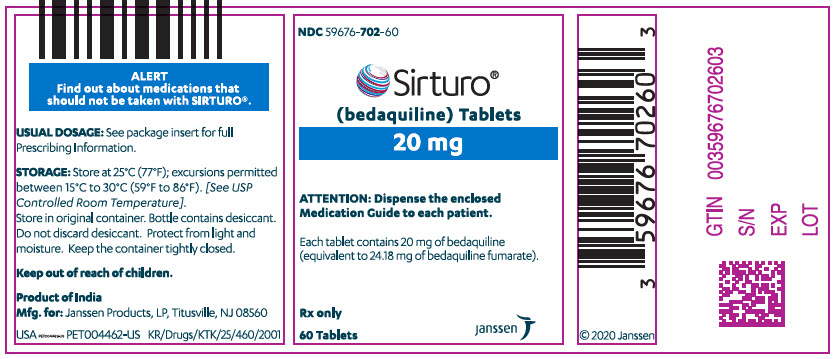
SIRTURO 20 mg Tablet
Store in original container. Bottle contains desiccant. Do not discard desiccant. Protect from light and moisture. Keep the container tightly closed.
Store at 25°C (77°F); excursions permitted between 15°C to 30°C (59°F to 86°F). [See USP Controlled Room Temperature]
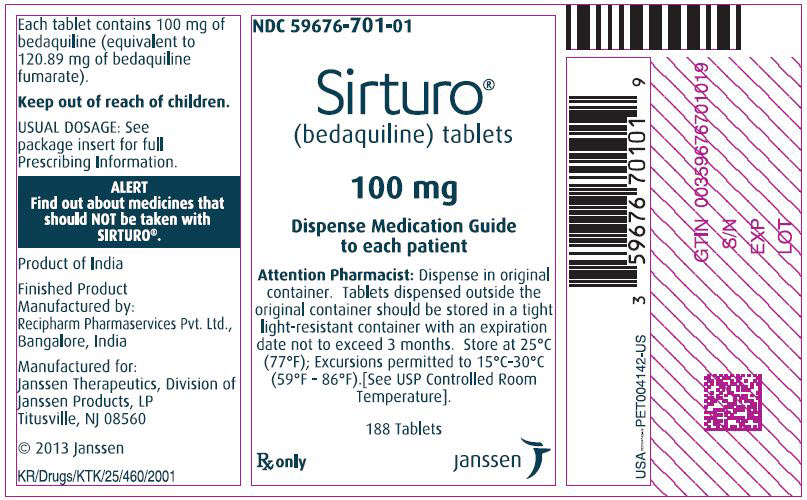
SIRTURO 100 mg Tablet
Dispense in original container. Store tablets dispensed outside the original container in a tight light-resistant container with an expiration date not to exceed 3 months. Protect from light. Keep the container tightly closed.
Store at 25°C (77°F); excursions permitted from 15°C to 30°C (59°F to 86°F) [see USP Controlled Room Temperature].
Serious Adverse Reactions
Advise patients that the following serious side effects can occur with SIRTURO: death, heart rhythm abnormalities, and/or hepatitis. In addition, advise patients about other potential side effects: nausea, joint pain, headache, increased blood amylase, hemoptysis, chest pain, anorexia, rash, and/or abdominal pain. Additional testing may be needed to monitor or reduce the likelihood of adverse effects.
Compliance with Treatment
Advise patients to take SIRTURO in combination with other antimycobacterial drugs as prescribed. Emphasize compliance with the full course of therapy. Advise patients that skipping doses or not completing the full course of therapy may (1) decrease the effectiveness of the treatment and (2) increase the likelihood that their mycobacterium may develop resistance and the disease will not be treatable by SIRTURO or other antibacterial drugs in the future.
If a dose is missed during the first 2 weeks of treatment, advise patients not to make up the missed dose but to continue the usual dosing schedule. From Week 3 onwards, if a dose is missed, advise patients to take the missed dose as soon as possible, and then resume the 3 times a week regimen. Ensure that the total dose of SIRTURO during a 7-day period does not exceed the recommended weekly dose (with at least 24 hours between each intake).
Administration Instructions
Advise patients to take SIRTURO with food.
Advise patients who have difficulty swallowing tablets that SIRTURO 20 mg tablet can be administered by the following methods:
Use with Alcohol and other Medications
Instruct patients to abstain from alcohol, hepatotoxic medications or herbal products.
Advise patients to discuss with their physician the other medications they are taking and other medical conditions before starting treatment with SIRTURO.
Lactation
Advise patients or caregivers to monitor infants exposed to bedaquiline through breast milk for signs of bedaquiline-related adverse reactions, such as hepatotoxicity (yellowing of the eyes and changes in the color of the urine or stool) [see Adverse Reactions (6) and Use in Specific Populations (8.2)].
Product of India
Finished Product Manufactured by: Recipharm Pharmaservices Pvt. Ltd., Bangalore, India
Manufactured for:
Janssen Therapeutics, Division of Janssen Products, LP
Titusville, NJ 08560
© 2012 Janssen Products, LP