Cyanide poisoning may result from inhalation, ingestion, or dermal exposure to various cyanide-containing compounds, including smoke from closed-space fires. Sources of cyanide poisoning include hydrogen cyanide and its salts, cyanogenic plants, aliphatic nitriles, and prolonged exposure to sodium nitroprusside.
The presence and extent of cyanide poisoning are often initially unknown. There is no widely available, rapid, confirmatory cyanide blood test. Treatment decisions must be made on the basis of clinical history and signs and symptoms of cyanide intoxication.
In some settings, panic symptoms including tachypnea and vomiting may mimic early cyanide poisoning signs. The presence of altered mental status (e.g., confusion and disorientation) and/or mydriasis is suggestive of true cyanide poisoning although these signs can occur with other toxic exposures as well.
Not all smoke inhalation victims will have cyanide poisoning and may present with burns, trauma, and exposure to other toxic substances making a diagnosis of cyanide poisoning particularly difficult. Prior to administration of Sodium Thiosulfate Injection, smoke-inhalation victims should be assessed for the following:
- Exposure to fire or smoke in an enclosed area
- Presence of soot around the mouth, nose, or oropharynx
- Altered mental status
Although hypotension is highly suggestive of cyanide poisoning, it is only present in a small percentage of cyanide-poisoned smoke inhalation victims. Also indicative of cyanide poisoning is a plasma lactate concentration greater than or equal to 10 mmol/L (a value higher than that typically listed in the table of signs and symptoms of isolated cyanide poisoning because carbon monoxide associated with smoke inhalation also contributes to lactic acidemia). If cyanide poisoning is suspected, treatment should not be delayed in order to obtain a plasma lactate concentration.
Use with Other Cyanide Antidotes
The safety of administering other cyanide antidotes simultaneously with Sodium Thiosulfate Injection has not been established. If a decision is made to administer another cyanide antidote with Sodium Thiosulfate Injection, these drugs should not be administered concurrently in the same intravenous (IV) line. [see Dosage and Administration (2.2)]
Risk Summary
There are no available data on Sodium Thiosulfate Injection use in pregnant women to establish a drug-associated risk for major birth defects, miscarriage, or adverse maternal or fetal outcomes. There are risks to the pregnant woman and fetus associated with untreated cyanide poisoning (see Clinical Considerations). Therefore, if a pregnant woman has known or suspected cyanide poisoning, Sodium Thiosulfate Injection for sequential use with sodium nitrite is recommended [see Indications and Usage (1)]. In published animal studies, no evidence of embryotoxicity or malformations was reported when sodium thiosulfate was administered during organogenesis to pregnant mice, rats, hamsters, or rats at 0.2 to 0.9 times the human daily dose of 12.5 g for cyanide poisoning. The studies did not test doses that were comparable to the human dose for cyanide poisoning (see Data).
The estimated background risk of major birth defects and miscarriage for the indicated population is unknown. All pregnancies have a background risk of birth defect, loss, or other adverse outcomes. In the US general population, the estimated background risk of major birth defects and miscarriage in clinically recognized pregnancies is 2 to 4% and 15 to 20%, respectively.
Clinical Considerations
Disease-associated maternal and/or embryo/fetal risk
Cyanide readily crosses the placenta. Cyanide poisoning is a medical emergency in pregnancy, which can be fatal for the pregnant woman and fetus if left untreated. Life-sustaining therapy should not be withheld due to pregnancy.
Data
Animal Data:
No malformations or evidence of embryo-fetal toxicity were noted when pregnant mice, rats, hamsters, or rabbits were administered oral doses of sodium thiosulfate of up to 550, 400, 400, or 580 mg/kg, respectively during organogenesis (0.2, 0.3, 0.26, and 0.9 times the human dose of 12.5 g/60 kg person for cyanide poisoning based on body surface area).
Published studies suggest that treatment with sodium thiosulfate ameliorates the teratogenic effects of maternal cyanide poisoning in hamsters.
Risk Summary
There are no data on the presence of sodium thiosulfate in human or animal milk, the effects on the breastfed infant, or the effects on milk production. Cyanide and thiocyanate (which is formed when sodium thiosulfate combines with cyanide) are present in human milk. Because of the potential for serious adverse reactions in the breastfed infant, breastfeeding is not recommended during treatment with Sodium Thiosulfate Injection. There are no data to determine when breastfeeding may be safely restarted following the administration of Sodium Thiosulfate Injection.
Sodium Nitrite
Sodium nitrite is thought to exert its therapeutic effect by reacting with hemoglobin to form methemoglobin, an oxidized form of hemoglobin incapable of oxygen transport but with high affinity for cyanide. Cyanide preferentially binds to methemoglobin over cytochrome a3, forming the nontoxic cyanomethemoglobin. Methemoglobin displaces cyanide from cytochrome oxidase, allowing resumption of aerobic metabolism. The chemical reaction is as follows:
NaNO2 + Hemoglobin → Methemoglobin
HCN + Methemoglobin → Cyanomethemoglobin
Vasodilation has also been cited to account for at least part of the therapeutic effect of sodium nitrite. It has been suggested that sodium nitrite-induced methemoglobinemia may be more efficacious against cyanide poisoning than comparable levels of methemoglobinemia induced by other oxidants. Also, sodium nitrite appears to retain some efficacy even when the formation of methemoglobin is inhibited by methylene blue.
Sodium Thiosulfate
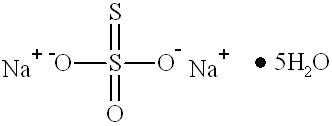
The primary route of endogenous cyanide detoxification is by enzymatic transulfuration to thiocyanate (SCN-), which is relatively nontoxic and readily excreted in the urine. Sodium thiosulfate is thought to serve as a sulfur donor in the reaction catalyzed by the enzyme rhodanese, thus enhancing the endogenous detoxification of cyanide in the following chemical reaction:
| Rhodanese |
| Na2S2O3 + CN- → SCN- + Na2SO3. |
Sodium Thiosulfate
Thiosulfate taken orally is not systemically absorbed. Most of the thiosulfate is oxidized to sulfate or is incorporated into endogenous sulphur compounds; a small proportion is excreted through the kidneys. Approximately 20-50% of exogenously administered thiosulfate is eliminated unchanged via the kidneys. After an intravenous injection of 1 g sodium thiosulfate in patients, the reported serum thiosulfate half-life was approximately 20 minutes. However, after an intravenous injection of a substantially higher dose of sodium thiosulfate (150 mg/kg, that is, 9 g for 60 kg body weight) in normal healthy men, the reported elimination half-life was 182 minutes.
Cyanide
The apparent terminal elimination half life and volume of distribution of cyanide, in a patient treated for an acute cyanide poisoning with sodium nitrite and sodium thiosulfate administration, have been reported to be 19 hours and 0.41 L/kg, respectively. Additionally, an initial elimination half life of cyanide has been reported to be approximately 1-3 hours.
Thiocyanate
After detoxification, in healthy subjects, thiocyanate is excreted mainly in the urine at a rate inversely proportional to creatinine clearance. In healthy subjects, the elimination half-life and volume of distribution of thiocyanate have been reported to be 2.7 days and 0.25 L/kg, respectively. However, in subjects with renal insufficiency the reported elimination half life is approximately 9 days.
Carcinogenesis
Long-term studies in animals have not been performed to evaluate the potential carcinogenicity of sodium thiosulfate.
Mutagenesis:
The mutagenic potential of sodium thiosulfate has been examined in the in vitro Bacterial Reverse Mutation Assay (Ames Assay). Sodium thiosulfate was not mutagenic in the absence of metabolic activation in S. typhimurium strains TA98, TA100, TA1535, TA537, or TA1538. Sodium thiosulfate was not mutagenic in the presence of metabolic activation in strains TA 98, TA1535, TA1537, TA1538 or E. coli strain WP2.
Sodium thiosulfate was negative for clastogenic potential in the in vivo mammalian erythrocyte micronucleus assay in rats.
Impairment of Fertility:
Animal studies to examine the effects of sodium thiosulfate on fertility have not been conducted.
Human Data
The human data supporting the use of sodium thiosulfate for cyanide poisoning consists primarily of published case reports. There are no randomized controlled clinical trials. Nearly all the human data describing the use of sodium thiosulfate report its use in conjunction with sodium nitrite. Dosing recommendations for humans have been based on theoretical calculations of antidote detoxifying potential, extrapolation from animal experiments, and a small number of human case reports.
There have been no human studies to prospectively and systematically evaluate the safety of sodium thiosulfate or sodium nitrite in humans. Available human safety information is based largely on anecdotal case reports and case series of limited scope.
Animal Data (Cyanide Poisoning)
THE EFFECTIVENESS OF SODIUM THIOSULFATE AND SODIUM NITRITE FOR THE TREATMENT OF ACUTE CYANIDE POISONING HAS NOT BEEN STUDIED IN HUMANS IN ADEQUATE AND WELL-CONTROLLED CLINICAL TRIALS BECAUSE INDUCING THE CONDITION IN HUMANS TO STUDY THE DRUG'S EFFICACY IS NOT ETHICAL.
Due to the extreme toxicity of cyanide, experimental evaluation of treatment efficacy has predominantly been completed in animal models. The efficacy of sodium thiosulfate treatment alone to counteract the toxicity of cyanide was initially reported in 1895 by Lang. The efficacy of amyl nitrite treatment in cyanide poisoning of the dog model was first reported in 1888 by Pedigo. Further studies in the dog model, which demonstrated the utility of sodium nitrite as a therapeutic intervention, were reported in 1929 by Mladoveanu and Gheorghiu. However, Hugs and Chen et al. independently reported upon the superior efficacy of the combination of sodium nitrite and sodium thiosulfate in 1932-1933. Treatment consisted of intravenously administered 22.5 mg/kg (half the lethal dose) sodium nitrite or 1 g/kg sodium thiosulfate alone or in sequence immediately after subcutaneous injection of sodium cyanide into dogs over a range of doses. Subsequent doses of 10 mg/kg sodium nitrite and/or 0.5 g/kg sodium thiosulfate were administered when clinical signs or symptoms of poisoning persisted or reappeared. Either therapy administered alone increased the dose of sodium cyanide required to cause death, and when administered together, sodium nitrite and sodium thiosulfate resulted in a synergistic effect in raising the lethal dose of sodium cyanide. The combined therapy appeared to have reduced efficacy when therapy was delayed until signs of poisoning (e.g. convulsions) appeared; however, other investigators have reported survival in dogs that were administered antidotal treatment after respiratory arrest had occurred.
Animal studies conducted in other species (e.g., rat, guinea pig, sheep, pigeon and cat) have also supported a synergistic effect of intravenous sodium nitrite and sodium thiosulfate in the treatment of cyanide poisoning.
While intravenous injection of sodium nitrite and sodium thiosulfate was effective in reversing the effects of lethal doses of cyanide in dogs, intramuscular injection of sodium nitrite, with or without sodium thiosulfate, was found not to be effective in the same setting.
Hypotension
When feasible, patients should be informed of the possibility of hypotension.
Monitoring
Where feasible, patients should be informed of the need for close monitoring of blood pressure and oxygenation.
Lactation
Advise women that breastfeeding is not recommended during treatment with Sodium Thiosulfate Injection [see Use in Specific Populations (8.2)].
Manufactured by Cangene BioPharma, Inc., Baltimore, Maryland 21230 for
Hope Pharmaceuticals, Scottsdale, Arizona 85260
US PATENTS 8496973, 9345724, and 9585912