Because clinical trials are conducted under widely varying conditions, adverse reaction rates observed in the clinical trials of a drug cannot be directly compared to rates in the clinical trials of another drug and may not reflect the rates observed in practice.
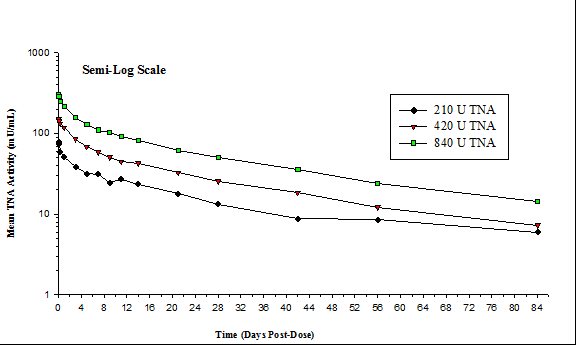
In a double blind, randomized, placebo-controlled study designed to assess the safety and pharmacokinetics of three doses of ANTHRASIL after a single intravenous infusion in healthy volunteers, 72 healthy adult subjects were randomized to receive a dose of 210, 420 or 840 units of ANTHRASIL by Toxin Neutralization Assay (TNA) (N=18/dosing group) or an equal volume of saline placebo (N=6/dosing group). A total of 54 healthy volunteers received one of the three ANTHRASIL doses while 18 healthy volunteers received a saline placebo.
A second stage of the study, designed only for additional safety assessment, was a randomized, open-label study in 20 healthy adult volunteers. Subjects were randomized to receive a dose of 840 units by TNA from one of two additional product lots (10 subjects per lot). There was no placebo group.
Table 1 Adverse Reactions Observed in >5% of Subjects Administered ANTHRASIL or Placebo in a Healthy Volunteer Clinical TrialSystem Organ Class | Preferred Term | AIGIV Blinded Randomized Group (N=54) | Placebo
(N=18) |
No. of
Events | No. of
Subjects | % of
Subjects | No. of
Events | No. of
Subjects | % of
Subjects |
Gastrointestinal disorders | Nausea | 5 | 5 | 9.3 | 2 | 1 | 5.6 |
General disorders and administration site conditions | Infusion site pain | 7 | 5 | 9.3 | 0 | 0 | 0.0 |
Infusion site swelling | 5 | 4 | 7.4 | 0 | 0 | 0.0 |
Musculoskeletal and connective tissue disorders | Back pain | 2 | 2 | 3.7 | 1 | 1 | 5.6 |
Nervous system disorders | Headache | 15 | 11 | 20.4 | 3 | 1 | 5.6 |
There were no serious adverse reactions reported in any of the AIGIV or saline placebo control groups in these studies. Non-serious adverse events and adverse reactions were more frequent in the active AIGIV dosage groups that in the subjects administered placebo.
Headache and back pain rates occurred in a dose-dependent fashion. Back pain was observed with 840 unit doses in five out of 74 subjects (6.8%).
Dose-related elevations in urine glucose were also noted transiently following infusion [See 5.9 Interference with Laboratory Testing].
Infusion of ANTHRASIL was stopped for four subjects due to adverse reactions. One subject was withdrawn due to chest discomfort, flushing, tachycardia and throat tightness.
Patient Experience
Nineteen adult patients with severe systemic anthrax have been dosed with single 420 unit doses of ANTHRASIL and antimicrobial therapy through expanded access use with the Centers for Disease Control and Prevention (CDC): three patients with inhalational anthrax, 15 patients with anthrax due to injection of anthrax-contaminated heroin and one patient with gastrointestinal anthrax.
A total of 16 serious adverse reactions that began within 72 hours of infusion were reported for eight out of 19 patients (42%) as follows: acute respiratory distress syndrome (n=2), pulmonary edema, pleural effusion, acute renal insufficiency/failure (n=4), coagulopathy, cardiac arrest/death (not otherwise specified, n=2), hypotension, ascites, metabolic acidosis, hyperkalemia, and edema/perhipheral edema.
Six deaths were reported including one patient with inhalational anthrax. The cause of death in three of these six expired patients, including the patient who expired with inhalational anthrax, was consistent with progression of anthrax disease or co-morbidities and the cause of death in the remaining three patients was not determined or available.