Brimonidine Tartrate/timolol Maleate Ophthalmic Solution
Product Images NDC 60505-0589

View Photos of Packaging, Regulatory Labels, and Product Appearance

Product Visual Gallery

This gallery contains 4 technical images submitted to the FDA as part of the official labeling for Brimonidine Tartrate/timolol Maleate Ophthalmic Solution (NDC 60505-0589). Unlike standard consumer photos, these assets often include clinical data figures, molecular chemical structures, and official manufacturer packaging layouts.

As provided by Apotex Corp., these visuals offer a comprehensive scientific overview of the product's physical and chemical identity, aiding pharmacists and researchers in product verification and study.

FDA Label Image

Brimonidine (Brimtim 01)

FDA Label Image

Timolol (Brimtim 02)

FDA Label Image

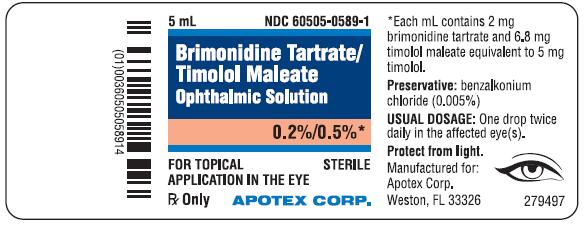
Bottle (Brimtim Bottle)

Bottle (Brimtim Bottle)
This is a description of an ophthalmic solution manufactured by Apotex Corp. The product, labeled with NDC 60505-0589-1, contains 2 mo of brimonidine tartrate and 6.8 mg of timolol maleate equivalent to 5 mg. The solution also contains preservative benzalkonium chloride (0.005%). The recommended application of the ophthalmic solution is in the eye.*
FDA Label Image

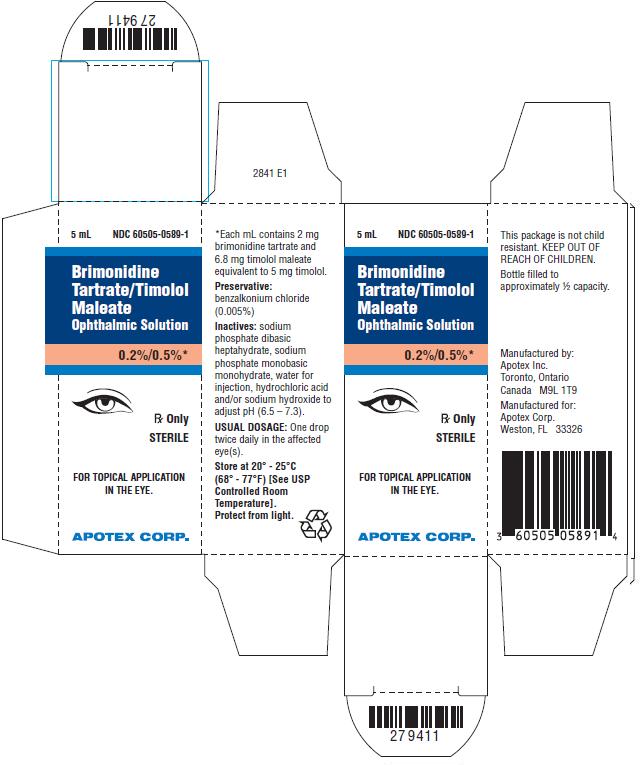
Carton (Brimtim Carton)

Carton (Brimtim Carton)
This is a description for Brimonidine Tartrate/Timolol Maleate Ophthalmic Solution. The solution is for topical application in the eye and it is sterile. Each bottle contains approximately 4 capacity and contains 2mg brimonidine tartrate and 68 mg timolol maleate equivalent o 5 mg timolol. The preservative used is benzalkonium chloride at 0.005% and its inactive ingredients include sodium phosphate dibasic heptahydrate, sodium phosphate monobasic monohydrate, water for infection, hydrochloric acid, and sodium hydroxide to adjust its pH (6.5 -7.3). Its recommended use is one drop in the affected eye. The solution should be protected from light and stored at 20° - 25°C (68°-77°F). The manufacturer is Apotex Corp located in Toronto, Ontario, Canada.*

* These product label images have been analyzed using experimental machine learning. Please verify findings with the primary label text.