During concomitant use of a strong CYP3A4 inhibitor (e.g., itraconazole, clarithromycin, voriconazole), the vilazodone hydrochloride dose should not exceed 20 mg once daily. The original vilazodone hydrochloride dose level, can be resumed when the CYP3A4 inhibitor is discontinued [see Drug Interactions (7)].
Based on clinical response, consider increasing the dosage of vilazodone hydrochloride by 2-fold, up to a maximum 80 mg once daily, over 1 to 2 weeks in patients taking strong CYP3A4 inducers (e.g., carbamazepine, phenytoin, rifampin) for greater than 14 days. If CYP3A4 inducers are discontinued, gradually reduce the vilazodone hydrochloride dosage to its original level over 1 to 2 weeks [see Drug Interactions (7)].
The safety of vilazodone hydrochloride was evaluated in 3,007 patients (18 to 70 years of age) diagnosed with MDD who participated in clinical studies, representing 676 patient-years of exposure. In an open-label 52 week study at 40 mg daily, 599 patients were exposed to vilazodone hydrochloride for a total of 348 patient-years.
The adverse reaction information presented below was derived from studies of vilazodone hydrochloride 20 mg and 40 mg daily in patients with MDD including:
- Four placebo-controlled 8 to 10-week studies in 2,233 patients, including 1,266 vilazodone hydrochloride-treated patients; and
- An open-label 52-week study of 599 vilazodone hydrochloride-treated patients.
These studies included a titration period of 10 mg daily for 7 days, followed by 20 mg daily for 7 days or to 40 mg daily over 2 weeks. In these clinical trials, vilazodone hydrochloride was administered with food.
Adverse reactions reported as reasons for discontinuation of treatment
In these studies, 7.3% of the vilazodone hydrochloride-treated patients discontinued treatment due to an adverse reaction, compared with 3.5% of placebo-treated patients. The most common adverse reaction leading to discontinuation in at least 1% of the vilazodone hydrochloride-treated patients in the placebo-controlled studies was nausea (1.4%).
Common adverse reactions in placebo-controlled MDD studies
Table 2 shows the incidence of common adverse reactions occurring in ≥ 2% of vilazodone hydrochloride-treated patients and greater than the rate of placebo-treated patients in MDD Studies. There were no dose-related adverse reactions between 20 mg and 40 mg reported.
Table 2: Common Adverse Reactions Occurring in ≥ 2% of Vilazodone Hydrochloride-treated Patients and Greater than the Rate of Placebo-Treated Patients System Organ Class
Preferred Term |
Placebo
N=967 | Vilazodone Hydrochloride
20 mg/day
N=288 | Vilazodone Hydrochloride
40 mg/day
N=978 |
|---|
|
|
|
|
| Gastrointestinal disorders | | | |
| Diarrhea | 10% | 26% | 29% |
| Nausea | 7% | 22% | 24% |
| Dry mouth | 5% | 8% | 7% |
| Vomiting | 2% | 4% | 5% |
| Abdominal pain1 | 3% | 7% | 4% |
| Dyspepsia | 2% | 2% | 3% |
| Flatulence | 1% | 3% | 3% |
| Gastroenteritis | 1% | 1% | 2% |
| Abdominal distension | 1% | 2% | 1% |
| Nervous system disorders | | | |
| Headache2 | 14% | 15% | 14% |
| Dizziness | 5% | 6% | 8% |
| Somnolence | 2% | 4% | 5% |
| Paresthesia | 1% | 1% | 2% |
| Psychiatric disorders | | | |
| Insomnia | 2% | 7% | 6% |
| Abnormal dreams | 2% | 2% | 3% |
| Restlessness3 | 1% | 2% | 3% |
| General disorders | | | |
| Fatigue | 3% | 4% | 3% |
| Cardiac disorders | | | |
| Palpitations | <1% | 1% | 2% |
| Metabolism and nutrition disorders | | | |
| Increased appetite | 1% | 1% | 3% |
| Musculoskeletal and connective tissue disorders | | | |
| Arthralgia | 1% | 2% | 1% |
| Investigations | | | |
| Increased weight | 1% | 1% | 2% |
Sexual adverse reactions
Table 3 displays the most common sexual adverse reactions in the placebo-controlled MDD studies.
Table 3: Common Sexual Adverse Reactions Occurring in ≥ 2% of Vilazodone Hydrochloride-treated Patients and Greater than the Rate of Placebo-Treated Patients |
Preferred Term
| Males | Females |
Placebo
N=416 | Vilazodone Hydrochloride 20 mg/day
N=122 | Vilazodone Hydrochloride
40 mg/day
N=417 |
Placebo
N=551 | Vilazodone Hydrochloride 20 mg/day
N=166 | Vilazodone Hydrochloride
40 mg/day
N=561 |
| Abnormal Orgasm* | <1% | 2% | 2% | 0% | 1% | 1% |
| Erectile dysfunction | 1% | 0% | 3% | - | - | - |
| Libido decreased | <1% | 3% | 4% | <1% | 2% | 2% |
| Ejaculation disorder | 0% | 1% | 2% | - | - | - |
Other adverse reactions observed in clinical studies
The following list does not include reactions: 1) already listed in previous tables or elsewhere in labeling, 2) for which a drug cause was remote, 3) which were so general as to be uninformative, 4) which were not considered to have significant clinical implications, or 5) which occurred at a rate equal to or less than placebo.
Reactions are categorized by body system according to the following definitions: frequent adverse reactions are those occurring in at least 1/100 patients; infrequent adverse reactions are those occurring in 1/100 to 1/1000 patients; rare reactions are those occurring in fewer than 1/1000 patients:
Cardiac disorders: infrequent: ventricular extrasystoles
Eye disorders: infrequent: dry eye, vision blurred, rare: cataracts
Nervous System: frequent: sedation, tremor; infrequent: migraine
Psychiatric disorders: infrequent: panic attack
Skin and subcutaneous tissue disorders: infrequent: hyperhidrosis, night sweats
Risk Summary
Based on data from published observational studies, exposure to SSRIs, particularly in the month before delivery, has been associated with a less than 2-fold increase in the risk of postpartum hemorrhage [see Warnings and Precautions (5.3) and Clinical Considerations].
There are no adequate and well-controlled studies of vilazodone hydrochloride in pregnant women. The background risk of major birth defects and miscarriage for the indicated population is unknown. However, the background risk in the U.S. general population of major birth defects is 2 to 4% and of miscarriage is 15 to 20% of clinically recognized pregnancies. In animal reproduction studies, oral administration of vilazodone during the period of organogenesis at doses up to 48 and 17 times the maximum recommended human dose (MRHD) in rats and rabbits, respectively, resulted in decreased fetal body weight gain and delayed skeletal ossification but no teratogenic effects were observed. Decreased fetal body weight and delayed skeletal ossification were not observed at doses up to 10 and 4 times the MRHD in rats and rabbits, respectively [see Data].
Clinical Considerations
Disease-associated maternal and/or embryo/fetal risk
A prospective, longitudinal study followed 201 pregnant women with a history of major depressive disorder who were euthymic and taking antidepressants at the beginning of pregnancy. The women who discontinued antidepressants during pregnancy were more likely to experience a relapse of major depression than women who continued antidepressants. Consider the risks of untreated depression when discontinuing or changing treatment with antidepressant medication during pregnancy and postpartum.
Maternal Adverse Reactions
Use of vilazodone hydrochloride in the month before delivery may be associated with an increased risk of postpartum hemorrhage [see Warnings and Precautions (5.3)].
Fetal/Neonatal adverse reactions
Exposure to SSRIs and SNRIs, including vilazodone hydrochloride, in late pregnancy may lead to an increased risk for neonatal complications requiring prolonged hospitalization, respiratory support, and tube feeding, and/or persistent pulmonary hypertension of the newborn (PPHN). Monitor neonates who were exposed to vilazodone hydrochloride in the third trimester of pregnancy for PPHN and drug discontinuation syndrome [see Data)].
Data
Human Data
Third Trimester Exposure
Neonates exposed to SSRIs or SNRIs late in the third trimester, have developed complications requiring prolonged hospitalization, respiratory support, and tube feeding. These findings are based on post-marketing reports. Such complications can arise immediately upon delivery. Reported clinical findings have included respiratory distress, cyanosis, apnea, seizures, temperature instability, feeding difficulty, vomiting, hypoglycemia, hypotonia, hypertonia, hyperreflexia, tremor, jitteriness, irritability, and constant crying. These features are consistent with either a direct toxic effect of SSRIs and SNRIs or, possibly, a drug discontinuation syndrome. In some cases, the clinical picture was consistent with serotonin syndrome [see Warnings and Precautions (5.2)].
Exposure during late pregnancy to SSRIs may have an increased risk for persistent pulmonary hypertension of the newborn (PPHN). PPHN occurs in 1 to 2 per 1,000 live births in the general population and is associated with substantial neonatal morbidity and mortality. In a retrospective case-control study of 377 women whose infants were born with PPHN and 836 women whose infants were born healthy, the risk for developing PPHN was approximately six-fold higher for infants exposed to SSRIs after the 20th week of gestation compared to infants who had not been exposed to antidepressants during pregnancy. A study of 831,324 infants born in Sweden in 1997-2005 found a PPHN risk ratio of 2.4 (95% CI 1.2 to 4.3) associated with patient-reported maternal use of SSRIs "in early pregnancy" and a PPHN risk ratio of 3.6 (95% CI 1.2 to 8.3) associated with a combination of patient-reported maternal use of SSRIs "in early pregnancy" and an antenatal SSRI prescription "in later pregnancy."
Animal Data
No teratogenic effects were observed when vilazodone was given to pregnant rats or rabbits during the period of organogenesis at oral doses up to 200 and 36 mg/kg/day, respectively. These doses are 48 and 17 times, in rats and rabbits, respectively, the maximum recommended human dose (MRHD) of 40 mg on a mg/m2 basis. Fetal body weight gain was reduced, and skeletal ossification was delayed in both rats and rabbits at these doses; these effects were not observed at doses up to 10 times the MRHD in rats or 4 times the MRHD in rabbits.
When vilazodone was administered to pregnant rats at an oral dose of 30 times the MRHD during the period of organogenesis and throughout pregnancy and lactation, the number of live born pups was decreased. There was an increase in early postnatal pup mortality, and among surviving pups there was decreased body weight, delayed maturation, and decreased fertility in adulthood. There was some maternal toxicity at this dose. These effects were not seen at 6 times the MRHD.
Risk Summary
There are no data on the presence of vilazodone in human milk, the effects of vilazodone on the breastfed infant, or the effects of the drug on milk production. However, vilazodone is excreted in rat milk [see Data]. The developmental and health benefits of breastfeeding should be considered along with the mother's clinical need for vilazodone hydrochloride and any potential adverse effects on the breastfed child from vilazodone hydrochloride or from the underlying maternal condition.
Data
Animal Data
Administration of vilazodone to lactating rats at an oral dose of 30 times the maximum recommended human dose (MRHD), resulted in early postnatal pup mortality, and among surviving pups there was decreased body weight and delayed maturation.
Cardiac Electrophysiology
Treatment with vilazodone hydrochloride did not prolong the QTc interval. The effect of vilazodone hydrochloride [20, 40, 60, and 80 mg (2 times the recommended dosage)] on the QTc interval was evaluated in a randomized, placebo-, and active-controlled (moxifloxacin 400 mg), parallel-group, thorough QTc study in 157 healthy subjects. The study demonstrated an ability to detect small effects. The upper bound of the 90% confidence interval for the largest placebo-adjusted, baseline-corrected QTc interval was below 10 msec, based on the individual correction method (QTcI). Thus, at doses of 2 times the recommended dosage, vilazodone hydrochloride did not prolong the QTc interval to a clinically relevant extent.
Absorption
Vilazodone concentrations peaked at a median of 4 to 5 hours (Tmax) after vilazodone hydrochloride administration and declined with a terminal half-life of approximately 25 hours. The absolute bioavailability of vilazodone was 72% with food. Vilazodone AUC and Cmax in the fasted state can be decreased by approximately 50% and 60%, respectively, compared to the fed state. Administration without food can result in inadequate drug concentrations and may reduce effectiveness.
Co-administration of vilazodone hydrochloride with ethanol or with a proton pump inhibitor (pantoprazole) did not affect the rate or extent of vilazodone absorption. In addition, neither the Tmax nor terminal elimination rate of vilazodone was altered by co-administration with either pantoprazole or ethanol.
Absorption is decreased by approximately 25% if vomiting occurs within 7 hours of ingestion; no replacement dose is needed.
Distribution
Vilazodone is widely distributed and approximately 96 to 99% protein-bound. Administration of vilazodone hydrochloride to a patient taking another drug that is highly protein bound may cause increased free concentrations of the other drug, because vilazodone is highly bound to plasma protein. The interaction between vilazodone and other highly protein-bound drugs has not been evaluated.
Metabolism and Elimination
Vilazodone hydrochloride is extensively metabolized through CYP and non-CYP pathways (possibly by carboxylesterase), with only 1% of the dose recovered in the urine and 2% of the dose recovered in the feces as unchanged vilazodone. CYP3A4 is primarily responsible for its metabolism among CYP pathways, with minor contributions from CYP2C19 and CYP2D6.
Drug Interaction Studies
Figure 1 below includes the impact of other drugs on the pharmacokinetics of vilazodone [see Drug Interactions (7)].
Figure 1. Effect of Other Drugs on Vilazodone Pharmacokinetics
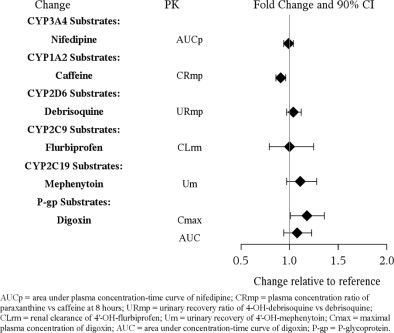
In vitro studies indicate that vilazodone is unlikely to inhibit or induce the metabolism of substrates for CYP1A1, 1A2, 2A6, 2B6, 2C9, 2C19, 2D6, 2E1, 3A4 or 3A5, except for CYP2C8. The effect of vilazodone on CYP2C8 activity has not been tested in vivo. Figure 2 below includes the impact of vilazodone on the pharmacokinetics of other drugs in vivo.
Figure 2. Impact of Vilazodone on Other Drug Pharmacokinetics
Studies in Specific Populations:
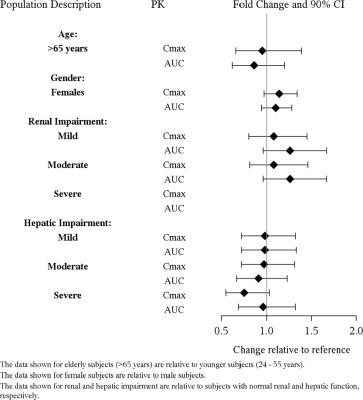
The presence of mild to severe renal impairment or mild to severe hepatic impairment did not affect the apparent clearance of vilazodone (see Figure 3). There were no pharmacokinetic differences of vilazodone in geriatric patients compared to younger patients, or between males and females (see Figure 3).
Figure 3: Impact of Intrinsic Factors on Vilazodone Pharmacokinetics
Carcinogenesis
Carcinogenicity studies were conducted in which B6C3F1 mice and Wistar rats were given oral doses of vilazodone up to 135 and 150 mg/kg/day, respectively, for 2 years. These doses are approximately 16.5 and 36 times the maximum recommended human dose (MRHD) of 40 mg, respectively, on a mg/m2 basis.
In mice, the incidence of hepatocellular carcinomas was increased in males at 16.5 times the MRHD; this finding was not observed at 5.5 times the MRHD. The incidence of malignant mammary gland tumors was numerically increased in females at 5.5 and 16.5 times the MRHD, with statistical significance at 16.5 the MRHD; this finding was not observed at 1.8 times the MRHD. Elevated prolactin levels were observed in a 2-week study of vilazodone administered at 5.5 and 33 times the MRHD. Increases in prolactin levels are known to cause mammary tumors in rodents.
In the rat study, vilazodone was not carcinogenic in either sex at doses up to 36 times the MRHD.
Mutagenesis
Vilazodone was not mutagenic in the in vitro bacterial reverse mutation assay (Ames test). Vilazodone was negative in the in vitro V79/HGRPT mammalian cell forward mutation assay. Vilazodone was clastogenic in two in vitro mammalian cell chromosome aberration assays. However, vilazodone was negative for clastogenic activity in both an in vivo rat bone marrow chromosome aberration assay and a micronucleus test. Vilazodone was also negative in an in vivo/in vitro unscheduled DNA synthesis assay in rats.
Impairment of Fertility
Treatment of rats with vilazodone at a dose of 125 mg/kg, which is 30 times the MRHD of 40 mg on a mg/m2 basis, caused impairment of male fertility with no effect on female fertility. Impaired male fertility was not observed at 6 times the MRHD.