Ambrisentan Tablet, Film Coated
Product Images NDC 60505-4553
View Photos of Packaging, Regulatory Labels, and Product Appearance
Product Visual Gallery
This gallery contains 10 technical images submitted to the FDA as part of the official labeling for Ambrisentan (NDC 60505-4553). Unlike standard consumer photos, these assets often include clinical data figures, molecular chemical structures, and official manufacturer packaging layouts.
As provided by Apotex Corp., these visuals offer a comprehensive scientific overview of the product's physical and chemical identity, aiding pharmacists and researchers in product verification and study.
Product Images & Figures Index
Ctn-lbl-5mg10s.jpg (Ctn Lbl 5mg10s)
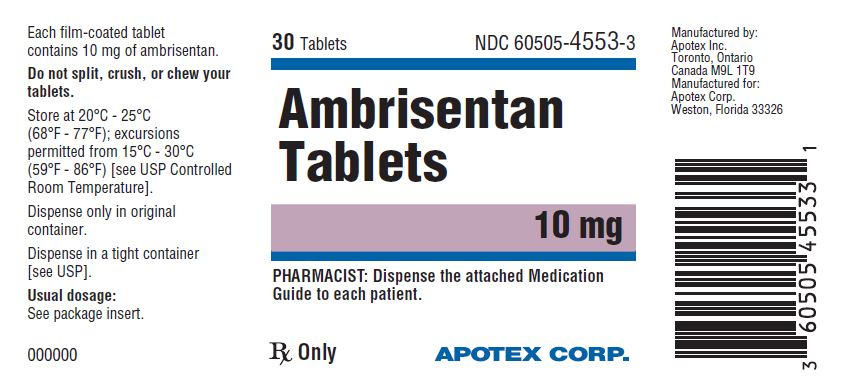
Lbl-10mg30s.jpg (Lbl 10mg30s)
This is a medication description for Ambrisentan Tablets containing 10 mg. The tablets should not be split, crushed or chewed and should be stored at 20°C - 25°C. It comes in a tight container and should be dispensed only in the original container. The usual dosage is mentioned in the package insert. The item is a pack of 30 tablets with NDC number 60505-4553-3. The manufacturer of the medication is Apotex Ing in Toronto, Canada and it is manufactured for Apotex Corp in Weston, Florida. Pharmacists should dispense the attached Medication Guide along with the medication to each patient.*
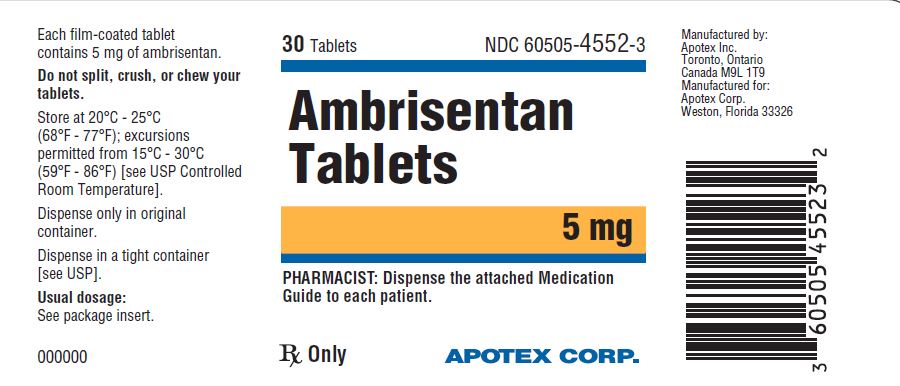
Lbl-5mg30s.jpg (Lbl 5mg30s)
Each film-coated tablet contains 5 mg of ambrisentan. It is recommended not to split, crush, or chew the tablets. The medicine should be stored in a tight container in a cool and dry place. The usual dosage may be found in the package insert. The medication guide should be given to each patient. This medicine is dispensed in the original container only. The manufacturer of Ambrisentan Tablets is Apotex Ing located in Toronto, Canada and manufactured for Apotex Carp in Weston, Florida.*
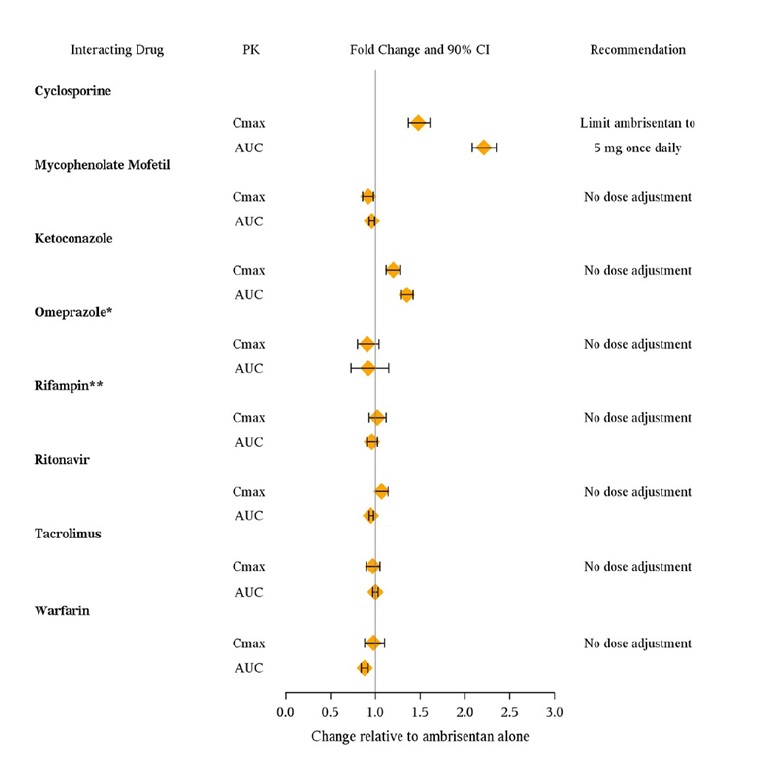
Figure-2 (Figure 2)
This appears to be a table showing the interaction between different drugs and their recommended PK (pharmacokinetics) dosages. The table lists various drugs and their effects on Cmax and AUC (maximum and area under the curve) when taken with ambrisentan. Not all drugs require a dose adjustment when taken with ambrisentan. The table also shows the recommended changes in dosage relative to ambrisentan alone.*
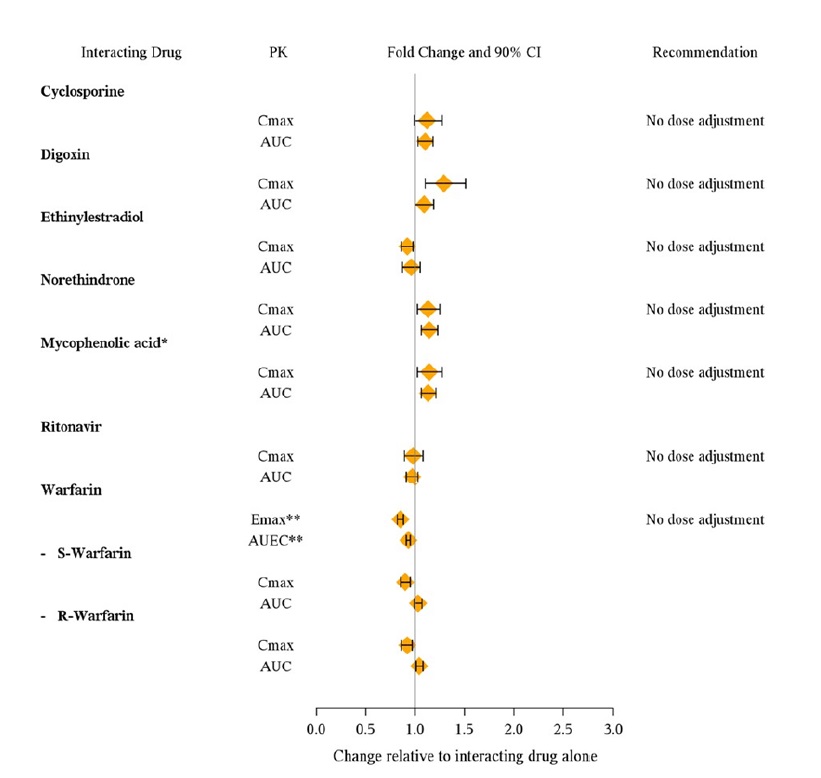
Figure-3 (Figure 3)
This is a list of drugs and their interacting effects with a specific set of medications. The mentioned drugs are Cyclosporine, Digoxin, Ethinylestradiol, Norethindrone, Mycophenolic acid, Ritonavir, Warfarin (S-Warfarin and R-Warfarin). The data in the list includes the PK of the drugs, the Fold Change and 90% C1, and the Change relative to the interacting drug alone. The recommendation for all the drugs is that there is no need for dose adjustment.*
Figure-4 (Figure 4)
The text appears to be a table showing different dosages of a medication called ARIESA, with measurements taken at baseline, week 4, week 8, and week 12. There is also a comparison to a placebo group in a study called ARIES-2. However, without more context or information, it is difficult to provide a more detailed description of the text.*
Figure-5 (Figure 5)
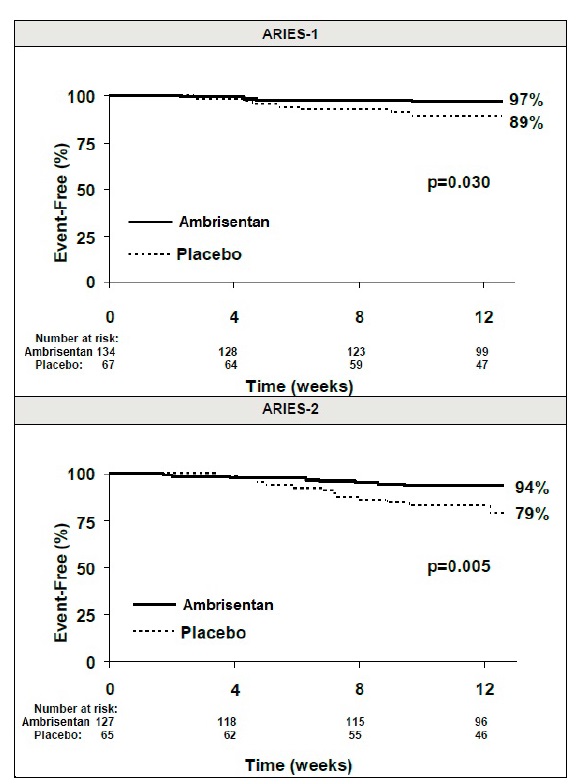
This appears to be a table showing the results of two clinical trials (ARIES-1 and ARIES-2) testing a drug called Ambrisentan versus a placebo for treating some condition. The trials lasted for 12 weeks, and the table shows the number of participants at risk at different time points as well as the percentage of participants who experienced some outcome measured by the "p" value. Not enough context is given to determine the specific condition being treated or the outcome measured, but Ambrisentan appears to have performed better than the placebo in both trials.*
Chart (Letairis 10)
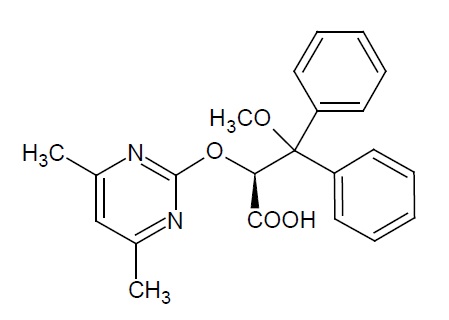
Structure (Structure)
* These product label images have been analyzed using experimental machine learning. Please verify findings with the primary label text.