Nintedanib Capsule
Product Images NDC 60505-4818

View Photos of Packaging, Regulatory Labels, and Product Appearance

Product Visual Gallery

This gallery contains 9 technical images submitted to the FDA as part of the official labeling for Nintedanib (NDC 60505-4818). Unlike standard consumer photos, these assets often include clinical data figures, molecular chemical structures, and official manufacturer packaging layouts.

As provided by Apotex Corp., these visuals offer a comprehensive scientific overview of the product's physical and chemical identity, aiding pharmacists and researchers in product verification and study.

FDA Label Image

Btl-lbl-100mg.jpg (Btl Lbl 100mg)
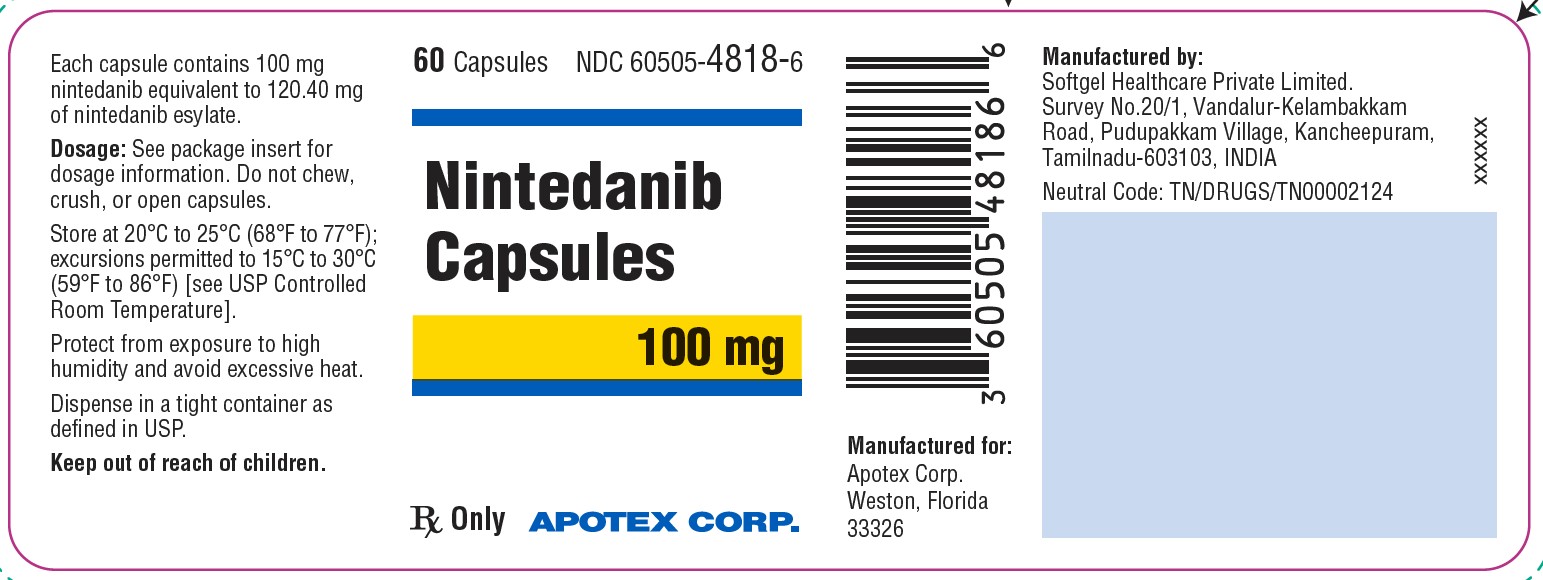
Btl-lbl-100mg.jpg (Btl Lbl 100mg)
This text provides detailed information about a medication called Nintedanib in capsule form. Each capsule contains 100 mg of nintedanib equivalent to 120.40 mg of nintedanib esylate. The dosage instructions are mentioned, and it is advised not to chew, crush, or open the capsules. Storage conditions require keeping the medication at temperatures between 20°C to 25°C (68°F to 77°F), with permissible excursions between 15°C to 30°C (59°F to 86°F). It is important to protect the capsules from high humidity and excessive heat, store them in a tight container, and keep them out of reach of children. The manufacturing details of the capsules are provided for Apotex Corp. and Softgel Healthcare Private Limited in India.*
FDA Label Image

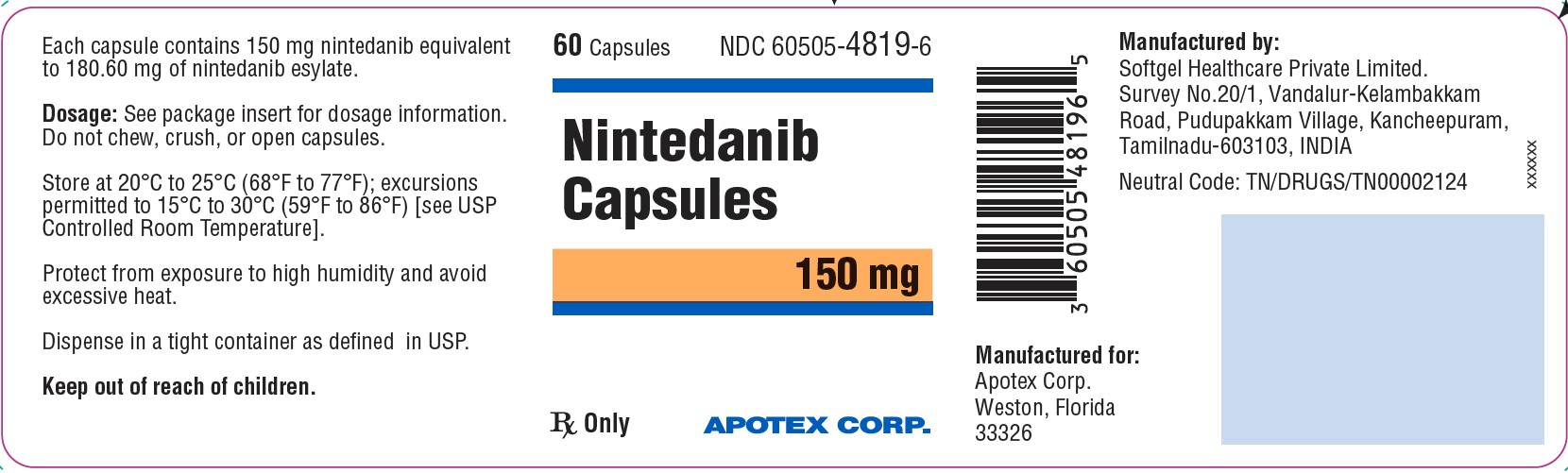
Btl-lbl-150mg.jpg (Btl Lbl 150mg)

Btl-lbl-150mg.jpg (Btl Lbl 150mg)
The text provides information about nintedanib capsules, each containing 150 mg of the active ingredient equivalent to 180.60 mg of nintedanib esylate. It includes dosage instructions, storage conditions (20°C to 25°C), precautions against high humidity and excessive heat, and the importance of keeping it out of reach of children. The capsules are to be dispensed in a tight container and must not be chewed, crushed, or opened. The text also lists the manufacturer details including Softgel Healthcare Private Limited in Tamilnadu, India, and Apotex Corp. in Weston, Florida. The product is packaged in containers of 60 capsules with a specific NDC code.*
FDA Label Image

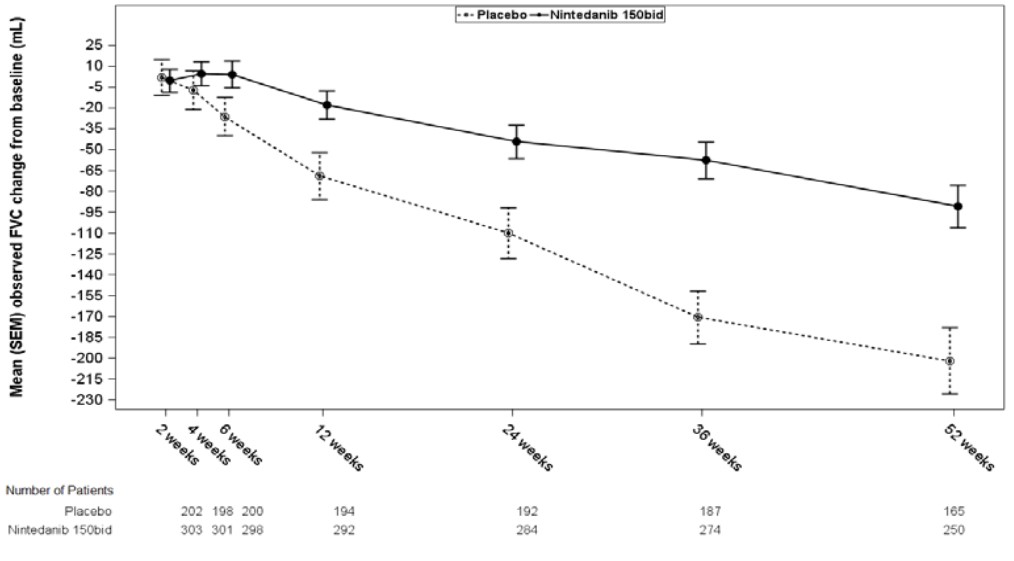
Figure1.jpg (Figure1)

Figure1.jpg (Figure1)
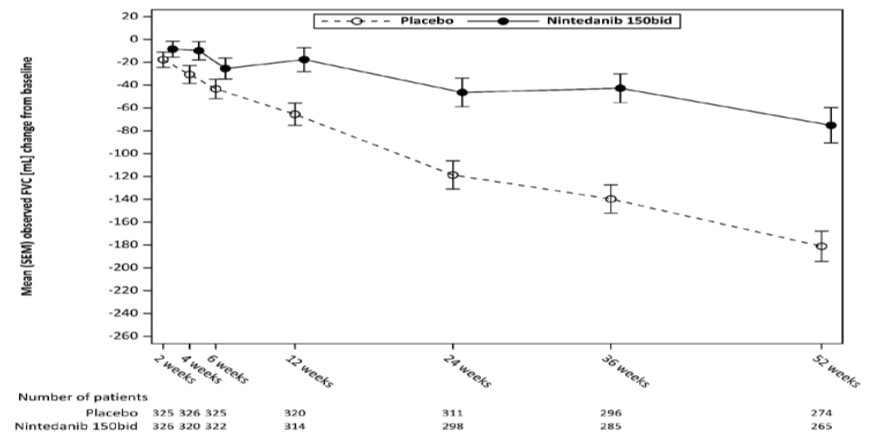
This information shows the mean Forced Vital Capacity (FVC) change from baseline in milliliters for patients taking a Placebo compared to Nintedanib 150mg twice daily. The data indicates that the Nintedanib group had a higher average increase in FVC compared to the Placebo group over the specified time period.*
FDA Label Image

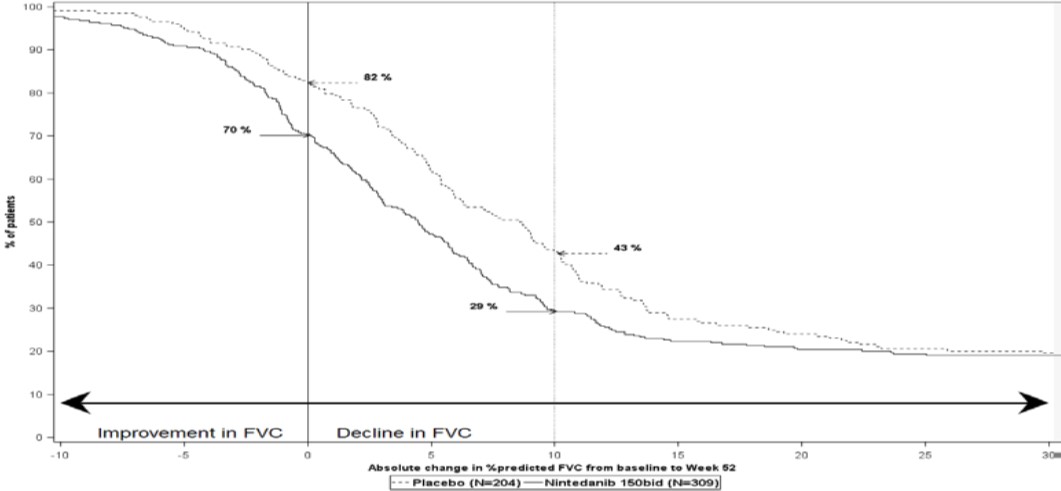
Figure2.jpg (Figure2)

Figure2.jpg (Figure2)
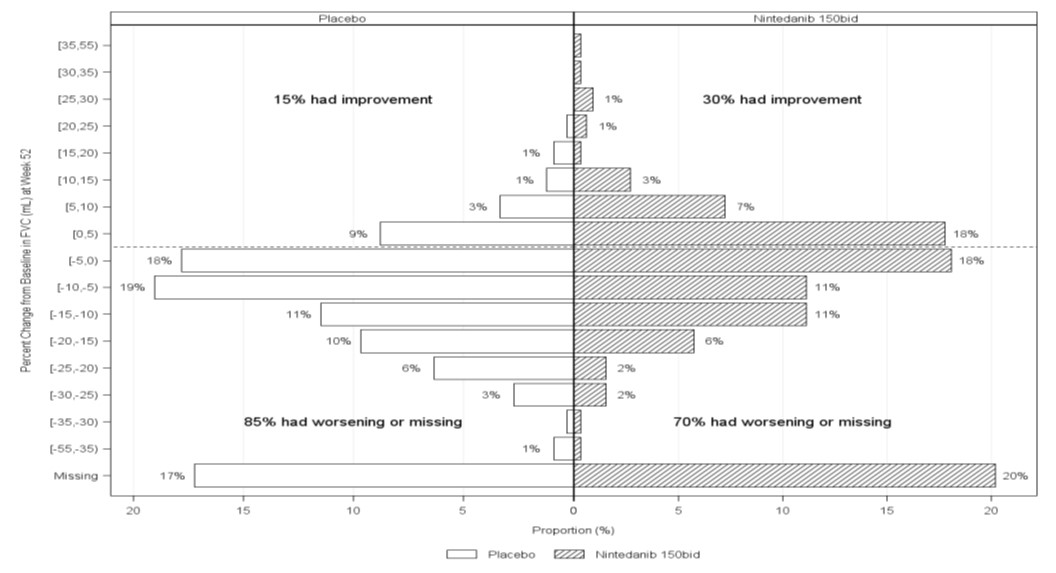
This text contains data related to the percentage of patients and their improvement in Forced Vital Capacity (FVC). The values provided are 0%, 30%, 20%, 10%, and some numerical values indicating improvement in FVC.*
FDA Label Image

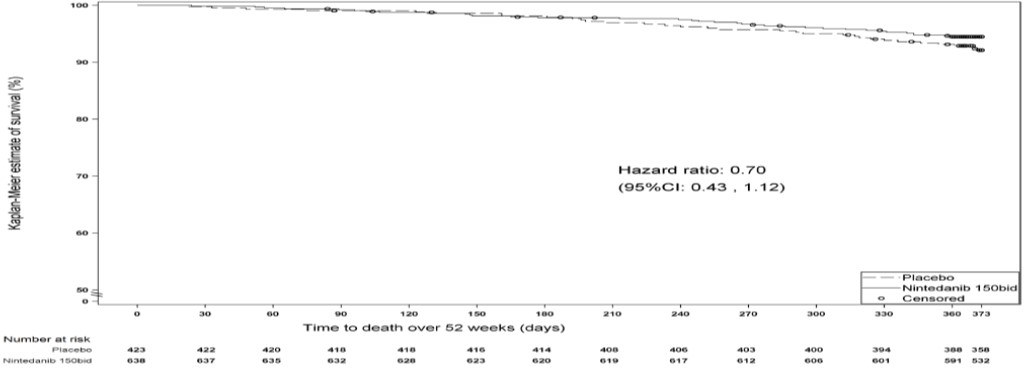
Figure3.jpg (Figure3)

FDA Label Image

Figure4.jpg (Figure4)

Figure4.jpg (Figure4)
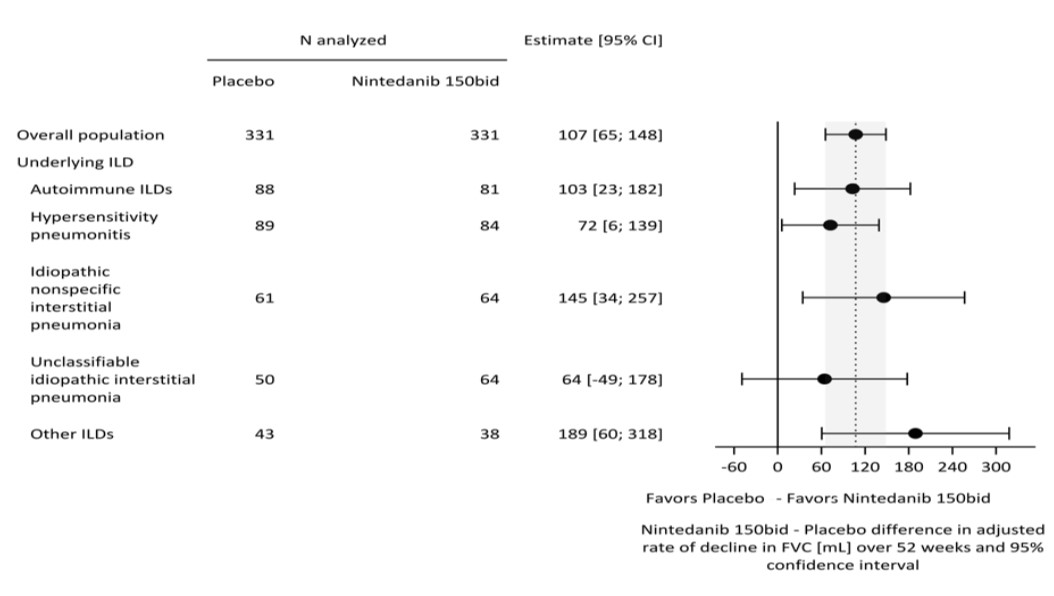
This text provides information on a study evaluating the impact of Nintedanib 150bid compared to a placebo in patients with various types of interstitial lung diseases (ILDs). It includes data on different subtypes of ILDs analyzed, with corresponding sample sizes, estimates, and confidence intervals for the adjusted rate of decline in forced vital capacity (FVC) over 52 weeks. The analysis indicates the potential benefit of Nintedanib treatment in certain ILDs compared to a placebo, suggesting a potential positive effect on lung function decline.*
FDA Label Image

Figure5.jpg (Figure5)

Figure5.jpg (Figure5)
This text provides data on the effect of Nintedanib 150mg twice daily compared to a placebo on observed vital capacity (VC) change from baseline. The mean and standard error of the mean (SEM) for each group is included. The results show that Nintedanib had a slight improvement in VC compared to the placebo.*
FDA Label Image

Figure6.jpg (Figure6)

FDA Label Image

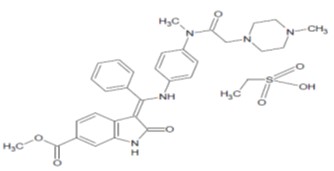
Structure.jpg (Structure)

* These product label images have been analyzed using experimental machine learning. Please verify findings with the primary label text.