Duloxetine Capsule, Delayed Release
Product Images NDC 60760-461

8 FDA label images from St. Mary's Medical Park Pharmacy · Packaging, Regulatory Labels, and Product Appearance

Product Visual Gallery

This gallery contains 8 technical images submitted to the FDA as part of the official labeling for Duloxetine (NDC 60760-461). Unlike standard consumer photos, these assets often include clinical data figures, molecular chemical structures, and official manufacturer packaging layouts.

As provided by St. Mary's Medical Park Pharmacy, these visuals offer a comprehensive scientific overview of the product's physical and chemical identity, aiding pharmacists and researchers in product verification and study.

FDA Label Image

Dulox (Duloxetine 60760 461 30)

Dulox (Duloxetine 60760 461 30)
Label for Duloxetine Delayed-Release Capsules 30 mg, quantity 30. The label includes NDC 60760-461-30, manufactured by Ajanta Pharma Limited in India, and packaged by St. Mary's Medical Park Pharmacy, Oro Valley, AZ. The label states 'USE AS DIRECTED' and storage instructions for controlled room temperature (15°-30°C). Several fields such as lot, expiration date, and prescription number show placeholder or unreadable data.*
FDA Label Image

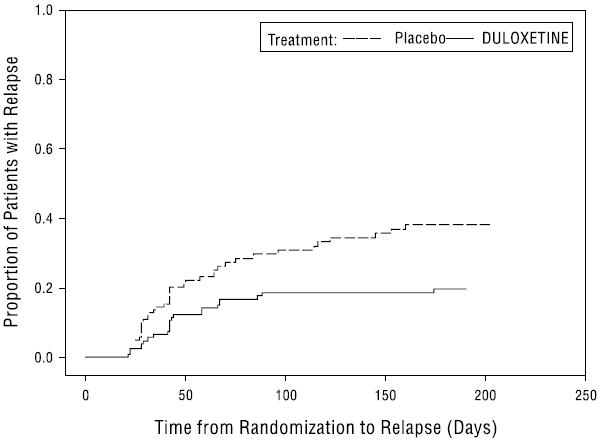
Figure01 (Duloxetine Fig01)

Figure01 (Duloxetine Fig01)
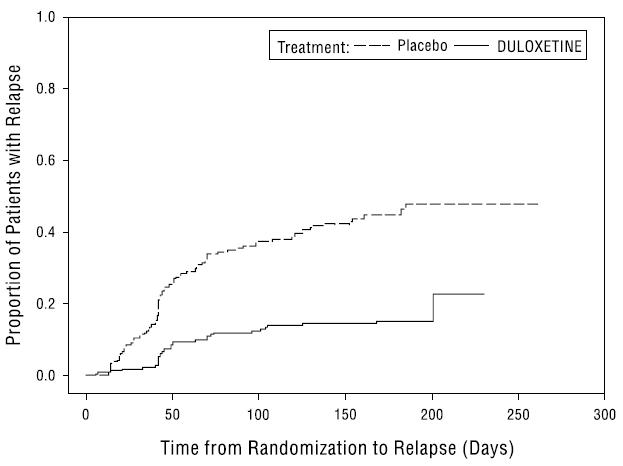
A Kaplan-Meier survival curve displaying the proportion of patients with relapse over time in days from randomization. The graph compares relapse rates between patients treated with Duloxetine and those receiving placebo, showing a lower relapse proportion in the Duloxetine group across approximately 200 days.*
FDA Label Image

Figure2 (Duloxetine Fig02)

Figure2 (Duloxetine Fig02)
A Kaplan-Meier curve comparing the proportion of patients with relapse over time from randomization to relapse (in days) between Duloxetine and placebo treatment groups. The graph shows lower relapse rates over time in the Duloxetine group compared to placebo.*
FDA Label Image

Figure04 (Duloxetine Fig04)

Figure04 (Duloxetine Fig04)
A line graph showing percent improvement in pain from baseline on the x-axis and percentage of patients improved on the y-axis. It compares three groups: Duloxetine 60 mg BID, Duloxetine 60 mg QD, and Placebo, illustrating changes in patient improvement percentages across varying levels of pain improvement.*
FDA Label Image

Figure07 (Duloxetine Fig07)

Figure07 (Duloxetine Fig07)
A line graph comparing the percentage of patients improved versus the percent improvement in pain from baseline (BOCF). It shows data for two groups: Duloxetine 60/120 mg once daily and placebo. The graph depicts higher patient improvement percentages for Duloxetine compared to placebo across various pain improvement thresholds.*
FDA Label Image

Figure08 (Duloxetine Fig08)

Figure08 (Duloxetine Fig08)
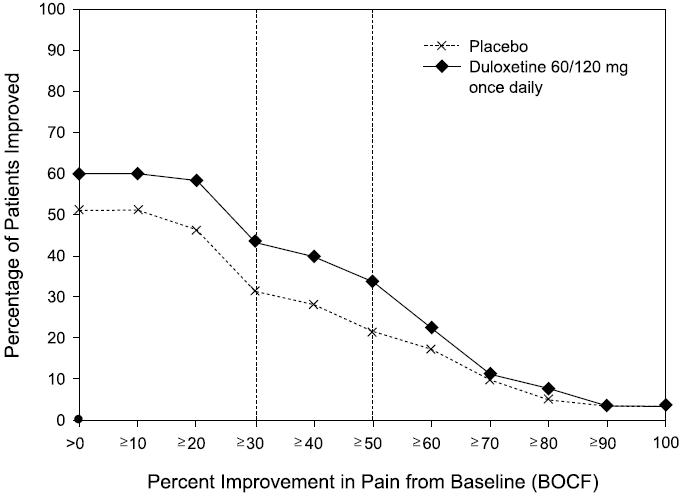
A line graph comparing the percentage of patients improved at various levels of percent improvement in pain from baseline (BOCF). The graph shows two lines: one for placebo and one for Duloxetine 60 mg once daily. The Duloxetine line consistently shows higher percentages of patient improvement across increasing pain improvement thresholds.*
FDA Label Image

Figure09 (Duloxetine Fig09)

Figure09 (Duloxetine Fig09)
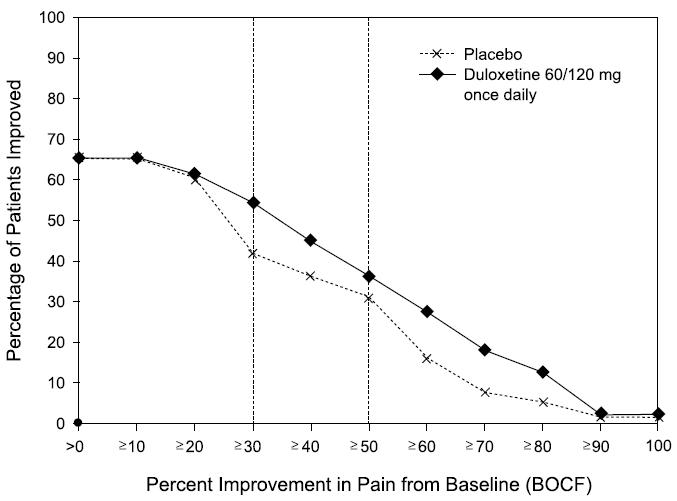
A line graph comparing the percentage of patients improved between placebo and Duloxetine 60/120 mg once daily. The x-axis shows percent improvement in pain from baseline, ranging from >0 to 100, and the y-axis indicates the percentage of patients improved, ranging from 0 to 100%. Duloxetine demonstrates higher patient improvement percentages across the improvement scale compared to placebo.*
FDA Label Image

Duloxetine-structure (Duloxetine Structure)

Duloxetine-structure (Duloxetine Structure)
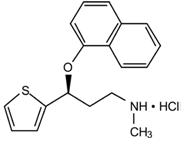
Chemical structure diagram of the active ingredient Duloxetine, showing its molecular composition including a thiophene ring, a naphthalene moiety, and an amine group with hydrochloride.*

* About these descriptions: Image descriptions on this page are generated by automated AI analysis of the product label images from the manufacturer's FDA label submission (SPL). They are provided for reference only and may contain errors or omissions. Always rely on the printed label itself and the official FDA labeling, and consult a pharmacist or healthcare professional with any questions about this product.