Aripiprazole Tablet
Product Images NDC 60760-691

View Photos of Packaging, Regulatory Labels, and Product Appearance

Product Visual Gallery

This gallery contains 13 technical images submitted to the FDA as part of the official labeling for Aripiprazole (NDC 60760-691). Unlike standard consumer photos, these assets often include clinical data figures, molecular chemical structures, and official manufacturer packaging layouts.

As provided by St. Mary's Medical Park Pharmacy, these visuals offer a comprehensive scientific overview of the product's physical and chemical identity, aiding pharmacists and researchers in product verification and study.

FDA Label Image

60760-691 (Aripiprazole 60760 691 30)
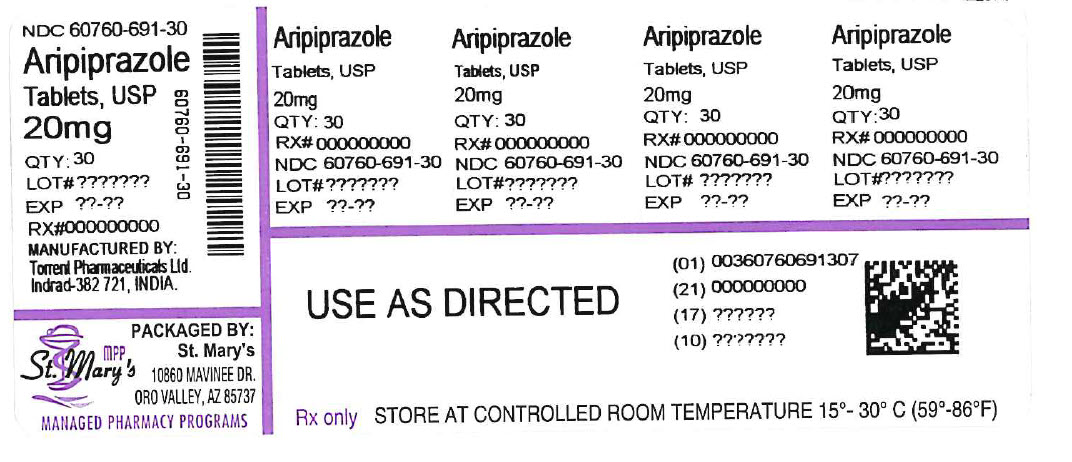
60760-691 (Aripiprazole 60760 691 30)
Aripiprazole Tablets, USP 20mg, NDC 60760-691-30, manufactured by Torren! Pharmaceuticals Ltd. in India. The tablets are packaged in quantities of 30 and should be stored at a controlled room temperature of 15°-30°C (59°-86°F). The medication is for prescription use only, with a prescription number of RX#000000000. The lot number and expiration dates are provided on the packaging.*
FDA Label Image

Image 1 (Figure 1)

Image 1 (Figure 1)
This is a figure showing "The Effect of Other Drugs on Aripiprazole Pharmacokinetics." It presents data on changes related to reference (no interacting drug) influenced by the effect of other drugs on Aripiprazole. The figure includes bars and lines representing different drugs and their impact on Aripiprazole pharmacokinetics.*
FDA Label Image

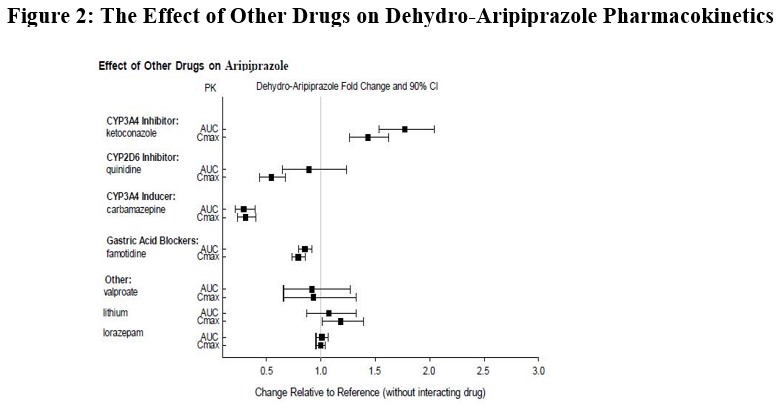
Image 2 (Figure 2)

Image 2 (Figure 2)
This is a description of Figure 2 illustrating the effects of other drugs on the pharmacokinetics of Dehydro-Aripiprazole. The figure shows the impact of various drugs on Aripiprazole, with details such as changes in absorption, clearance, and other pharmacokinetic parameters. The graph displays how different drugs influence the relative change compared to the reference (without interacting drugs).*
FDA Label Image

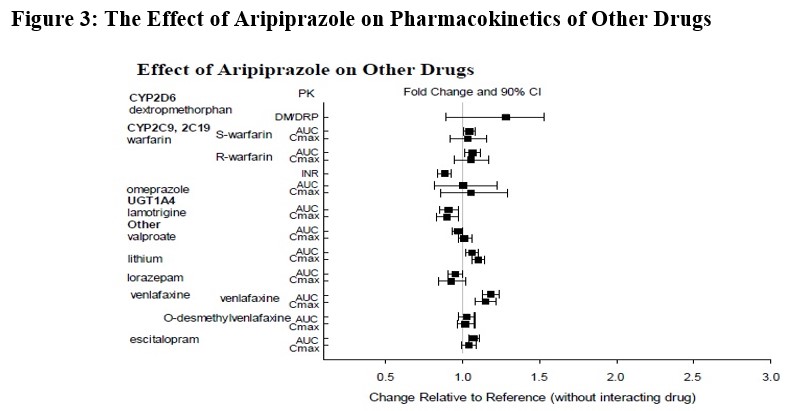
Image 3 (Figure 3)

Image 3 (Figure 3)
This text discusses the effect of Aripiprazole on the pharmacokinetics of other drugs. It includes a figure showing the fold change and 90% confidence interval for various drugs such as dextromethorphan, clozapine, omeprazole, and others when Aripiprazole is present. The data presented indicates the impact of Aripiprazole on the levels of these drugs compared to a reference state without the interacting drug.*
FDA Label Image

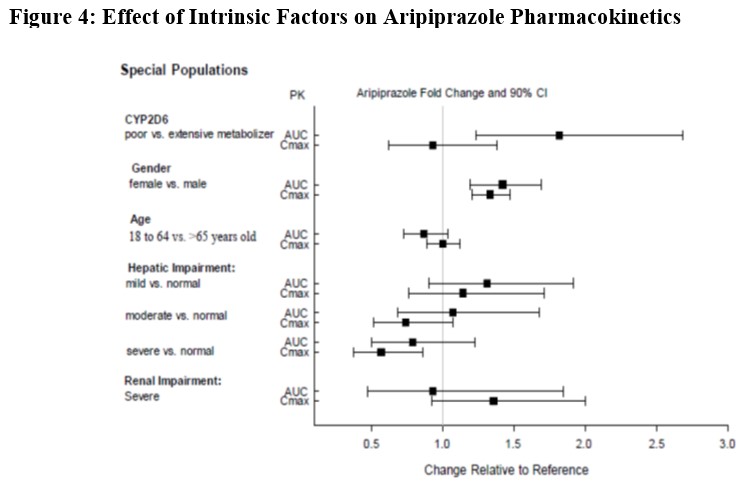
Image 4 (Figure 4)

Image 4 (Figure 4)
The text provides information on the effect of intrinsic factors on the pharmacokinetics of Aripiprazole. It includes data for special populations such as differences in pharmacokinetic parameters based on CYP2D6 metabolism status, gender, age groups, hepatic impairment levels, and renal impairment levels. The figure also shows Aripiprazole FOD change and 50% CI for the mentioned factors.*
FDA Label Image

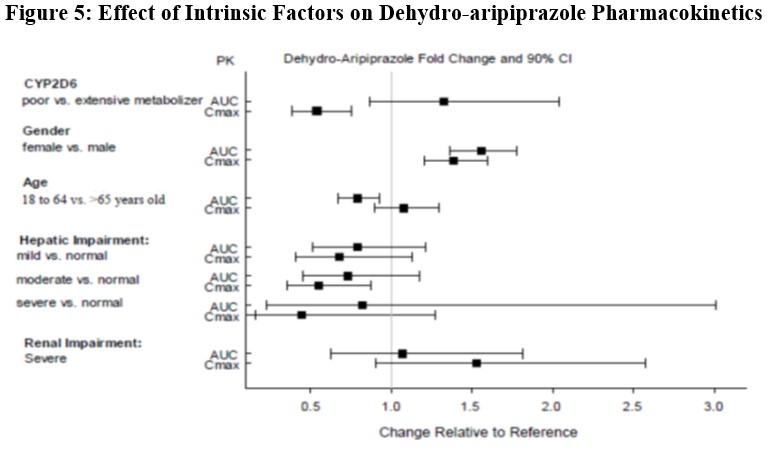
Image 5 (Figure 5)

Image 5 (Figure 5)
This is a comparison table showing the effect of intrinsic factors on Dehydro-aripiprazole pharmacokinetics. It includes factors such as metabolic rate, gender, age, hepatic impairment, and renal impairment. The table indicates the percent change in AUC and Cmax for Dehydro-aripiprazole based on different levels of these intrinsic factors.*
FDA Label Image

Fig-6 (Figure 6)

Fig-6 (Figure 6)
This is a Kaplan-Meier estimation graph showing the cumulative proportion of patients with relapse in a schizophrenia study. The graph compares patients on Aripiprazole with those on placebo over time (in days) from randomization. The number of subjects at risk is shown along with the proportion of relapse for each group.*
FDA Label Image

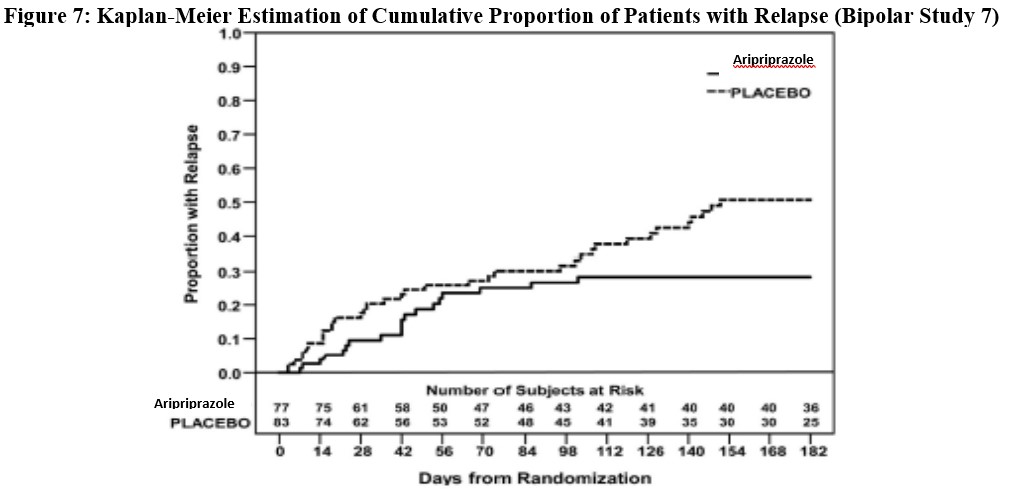
7 (Figure 7)

7 (Figure 7)
This is a Kaplan-Meier estimation of the cumulative proportion of patients with relapse in a Bipolar Study 7. The graph compares the relapse rates between Avipriprazole and Placebo over a certain period, with the number of subjects at risk indicated for each time point.*
FDA Label Image

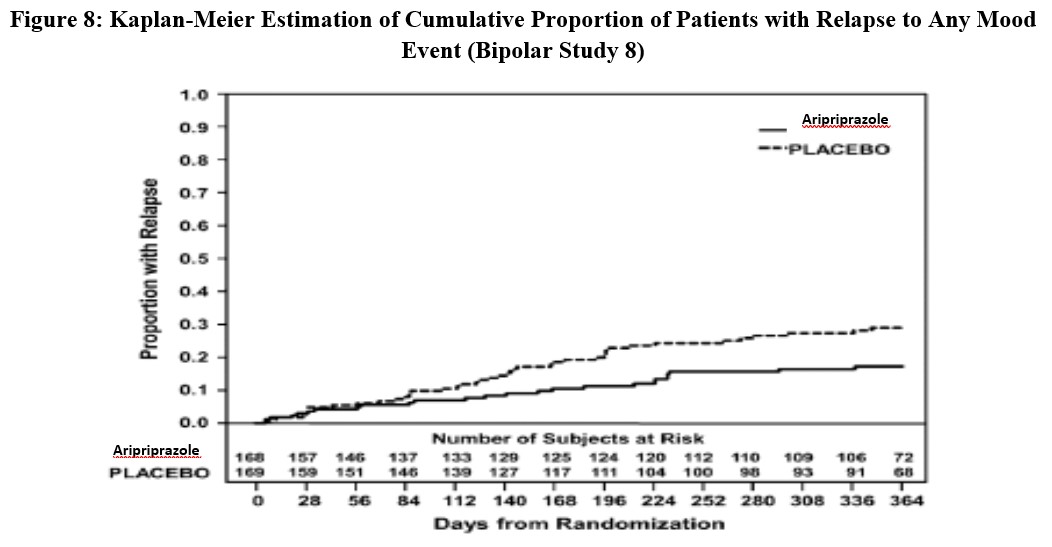
8 (Figure 8)

8 (Figure 8)
This figure shows the Kaplan-Meier Estimation of the Cumulative Proportion of Patients with Relapse to any mood event in Bipolar Study 8. The graph compares the relapse rates of patients treated with Aripiprazole and Placebo over time, as measured in days from randomization. The number of subjects at risk at various time points is also provided.*
FDA Label Image

9 (Figure 9)

FDA Label Image
FDA Label Image
FDA Label Image

Description Image (Structure)

* These product label images have been analyzed using experimental machine learning. Please verify findings with the primary label text.