Pregabalin Capsule
Product Images NDC 60760-750

View Photos of Packaging, Regulatory Labels, and Product Appearance

Product Visual Gallery

This gallery contains 14 technical images submitted to the FDA as part of the official labeling for Pregabalin (NDC 60760-750). Unlike standard consumer photos, these assets often include clinical data figures, molecular chemical structures, and official manufacturer packaging layouts.

As provided by St. Mary's Medical Park Pharmacy, these visuals offer a comprehensive scientific overview of the product's physical and chemical identity, aiding pharmacists and researchers in product verification and study.

FDA Label Image

60760-750 (Pregabalin 60760 750 60)
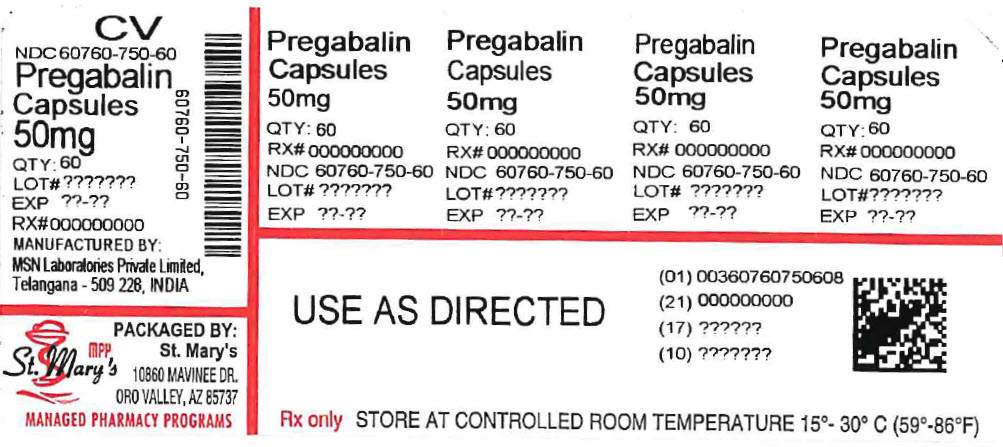
60760-750 (Pregabalin 60760 750 60)
This text pertains to a medication named Pregabalin in the form of capsules. It provides details such as the quantity (60 capsules of 50mg each), NDC (National Drug Code) numbers, expiration date, manufacturer information, pharmacy programs, and storage instructions (15°-30°C or 59°-86°F). The medication is prescribed as directed and manufactured by MSN Laboratores Pvt Limited in India.*
FDA Label Image

Equation (Pregabain Gault Equation)

Equation (Pregabain Gault Equation)
This text provides a formula for calculating the creatinine clearance (CLCr) in patients based on their age, weight, and serum creatinine levels. It includes a correction factor for female patients. The formula is: CLCr = 1140 - (age in years) x (weight in kg) or CLCr = 772 x (serum creatinine in mg/dL) (or multiplied by 0.85 for female patients).*
FDA Label Image

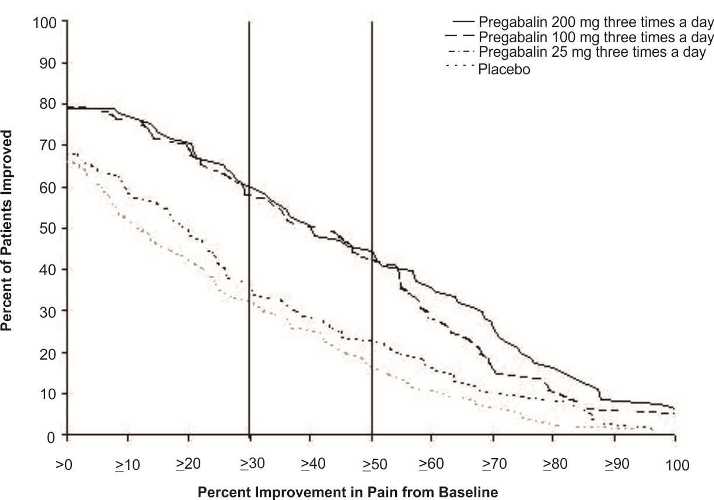
Fig-01 (Pregabalin Figure 01)

Fig-01 (Pregabalin Figure 01)
This text provides data on the percent of patients improved under various treatments including Pregabalin at different doses and a placebo. The graph shows the percentage improvement in pain from baseline for each treatment option.*
FDA Label Image

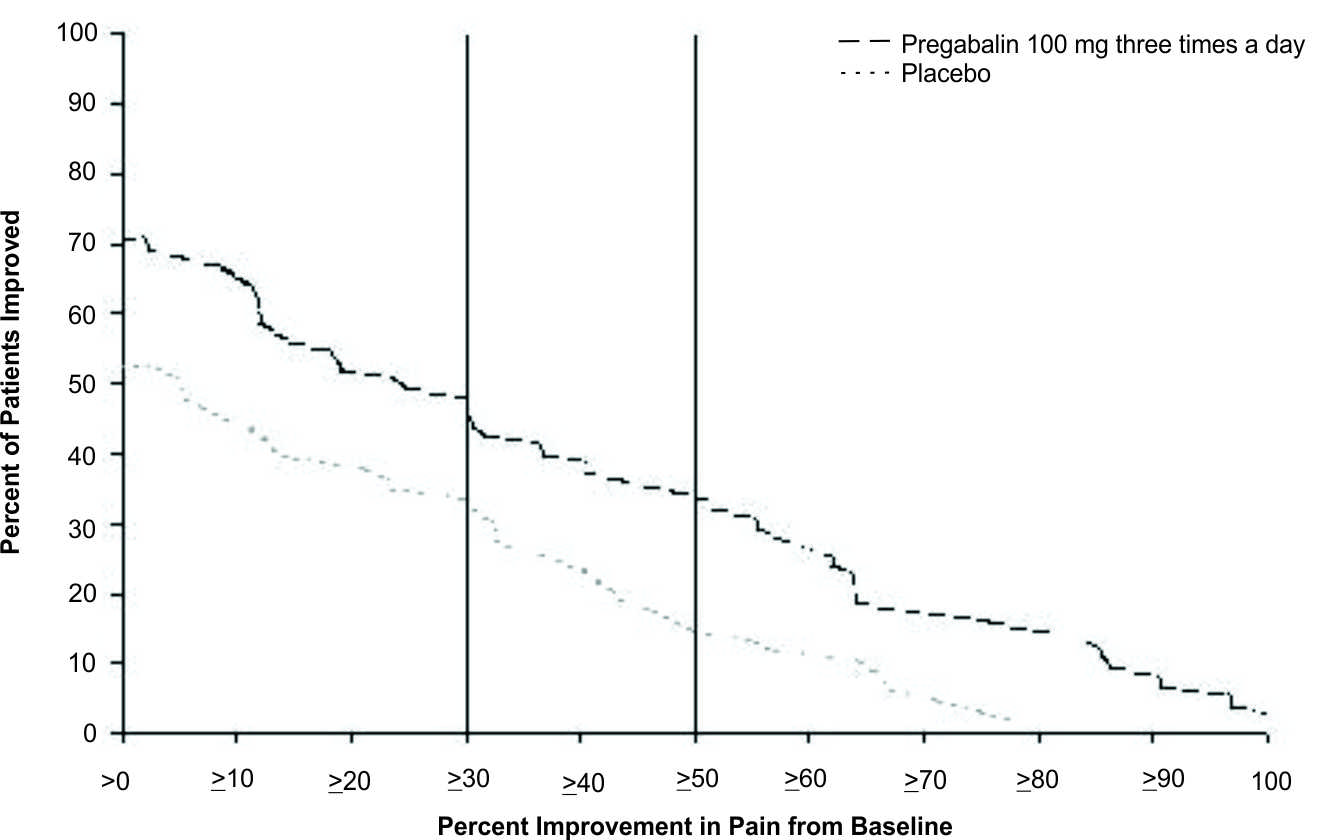
Fig-02 (Pregabalin Figure 02)

Fig-02 (Pregabalin Figure 02)
This text provides information on the percentage of patients who showed improvement after taking Pregabalin 100 mg three times a day compared to a placebo. It includes a graph showing the percent improvement in pain from baseline.*
FDA Label Image

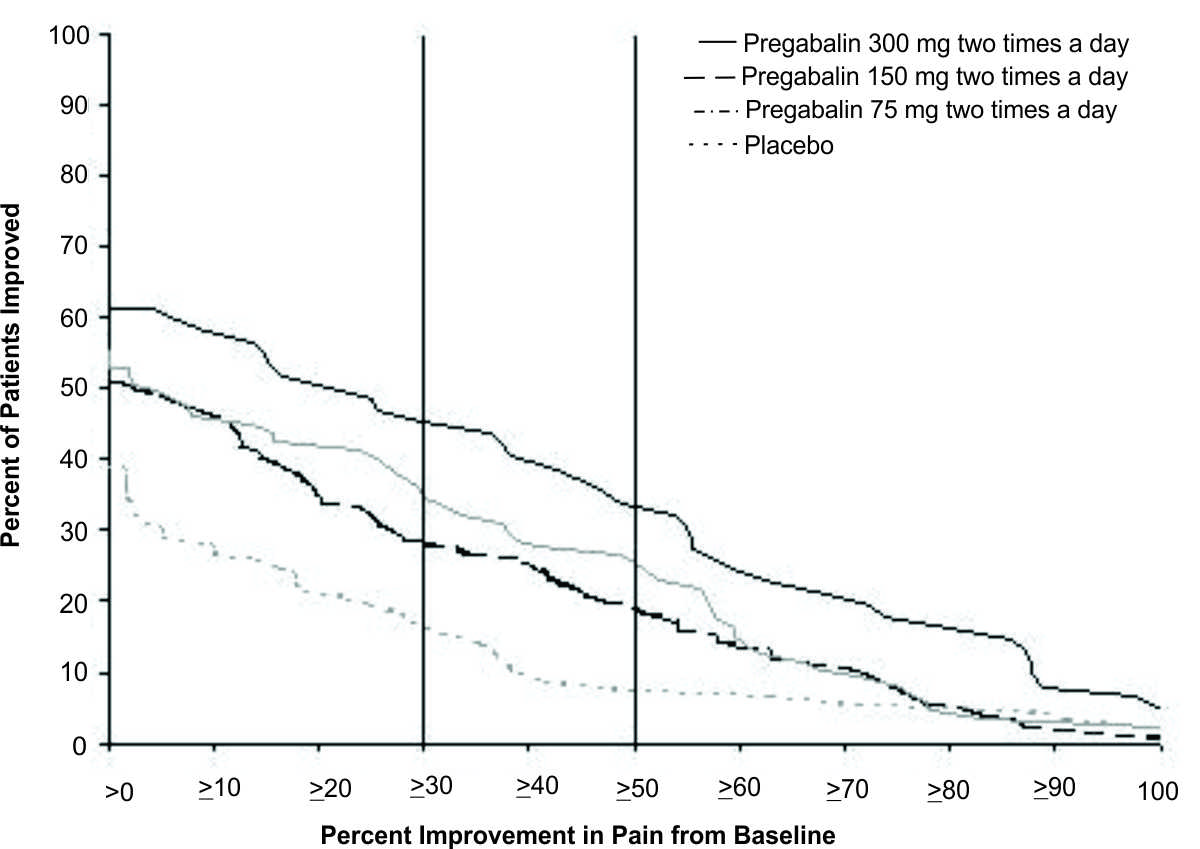
Fig-03 (Pregabalin Figure 03)

Fig-03 (Pregabalin Figure 03)
This data likely represents the percentage of patients showing improvement in pain levels after taking different doses of Pregabalin or a placebo for a certain period. The percentages range from less than 10% to 90% improvement in pain from baseline. The study evaluated the effects of Pregabalin at doses of 75 mg, 150 mg, and 300 mg taken twice a day, as well as a placebo.*
FDA Label Image

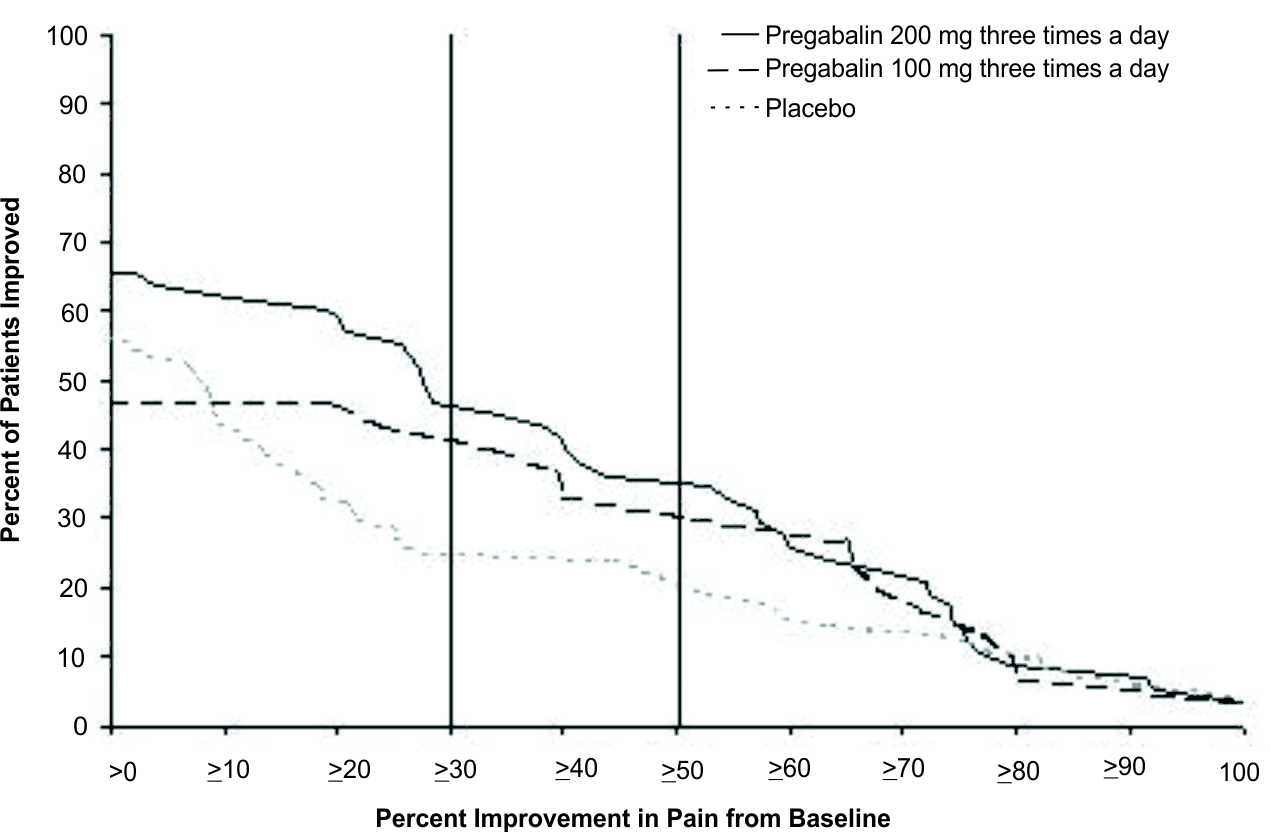
Fig-04 (Pregabalin Figure 04)

Fig-04 (Pregabalin Figure 04)
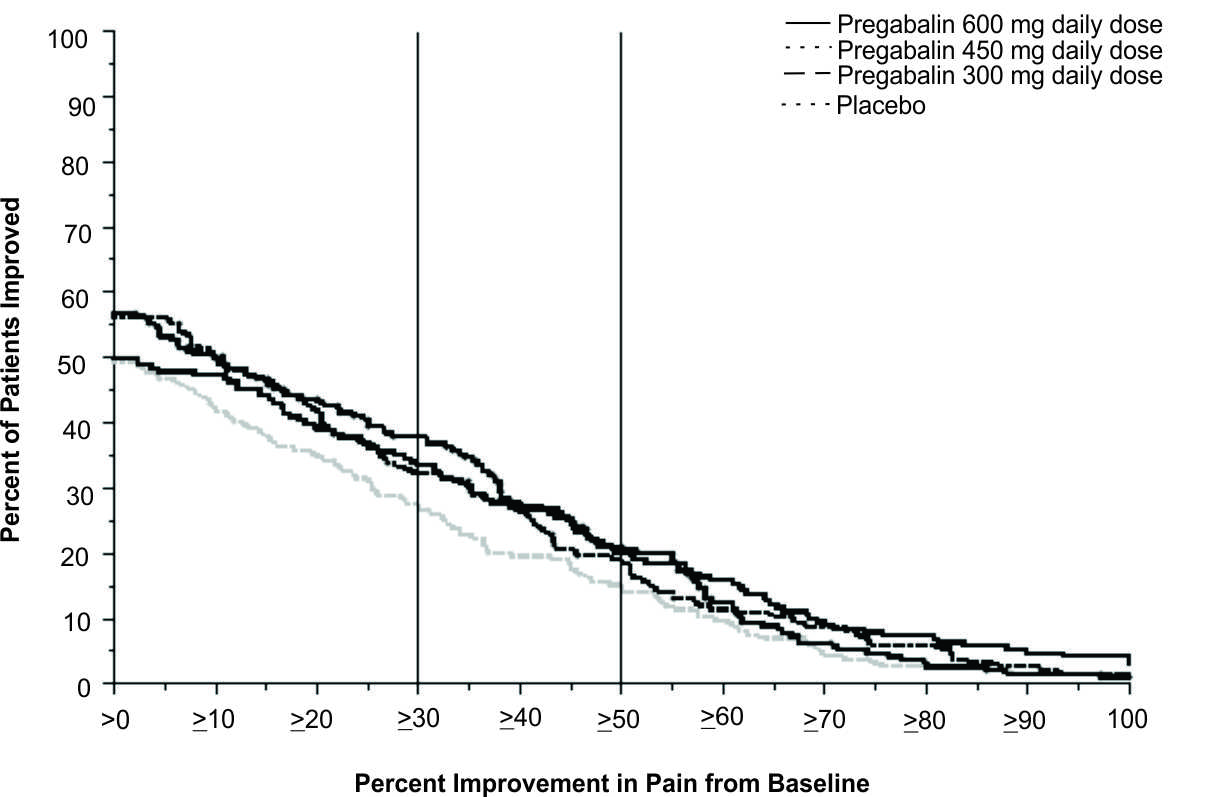
This text appears to be a chart or graph showing the percentage of patients who improved after taking different dosages of pregabalin and a placebo. It tracks the percentage of improvement in pain from baseline, ranging from 10% to 100%. The data suggests that higher dosages of pregabalin may be associated with greater improvement in pain compared to lower dosages or a placebo.*
FDA Label Image

Fig-05 (Pregabalin Figure 05)

Fig-05 (Pregabalin Figure 05)
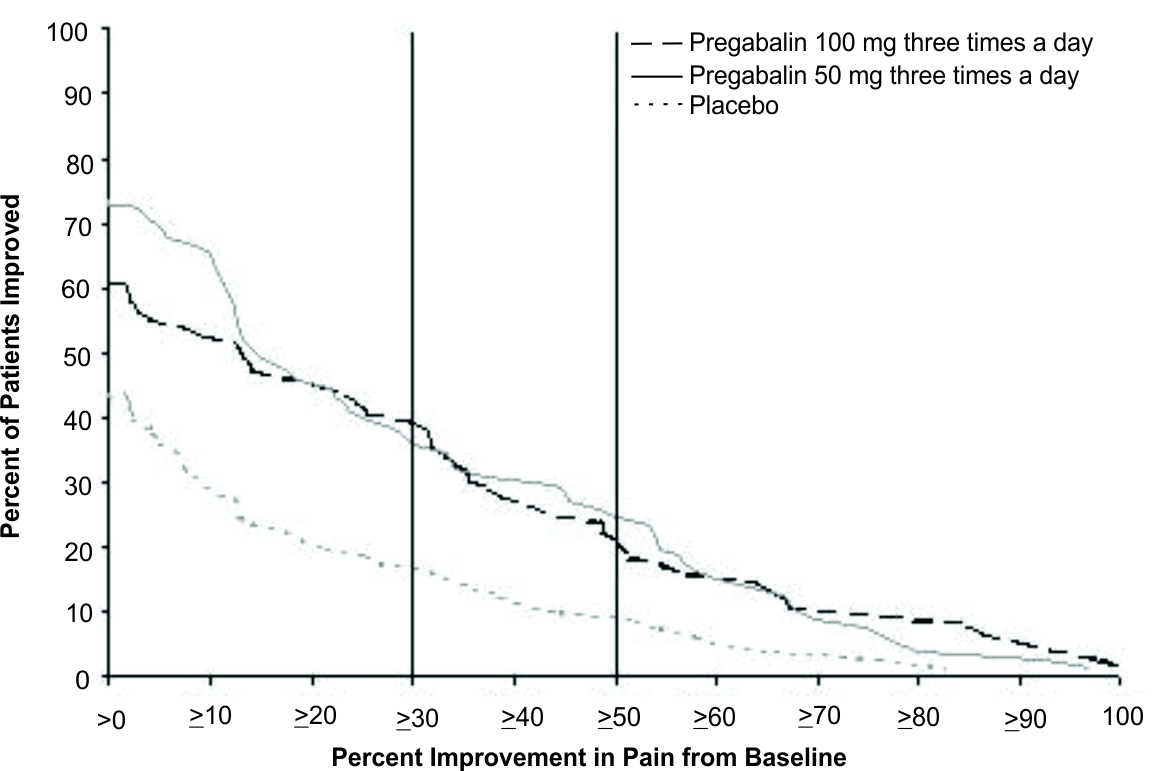
This text shows the percent of patients improved with different dosages of Pregabalin (100mg and 50mg three times a day) and a placebo in relation to the percent improvement in pain from baseline. The data indicates a progression in the level of improvement from less than 10% to greater than 90%.*
FDA Label Image

Fig-06 (Pregabalin Figure 06)

FDA Label Image

Fig-07 (Pregabalin Figure 07)

Fig-07 (Pregabalin Figure 07)
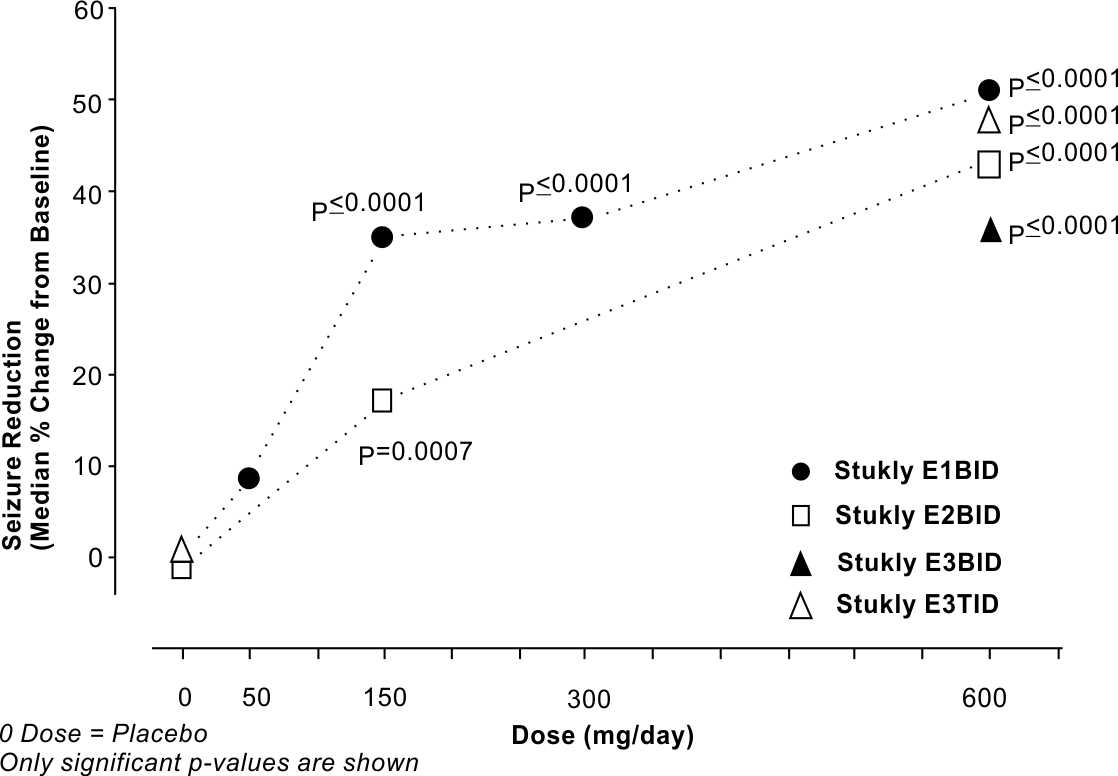
This data table shows significant p-values for different doses (mg/day) of a treatment compared to a placebo. The table helps in assessing the statistical significance of the treatment effect at each dose level. The values represented in the table are important in determining the effectiveness of the treatment in comparison to the placebo.*
FDA Label Image

Fig-09 (Pregabalin Figure 09)

Fig-09 (Pregabalin Figure 09)
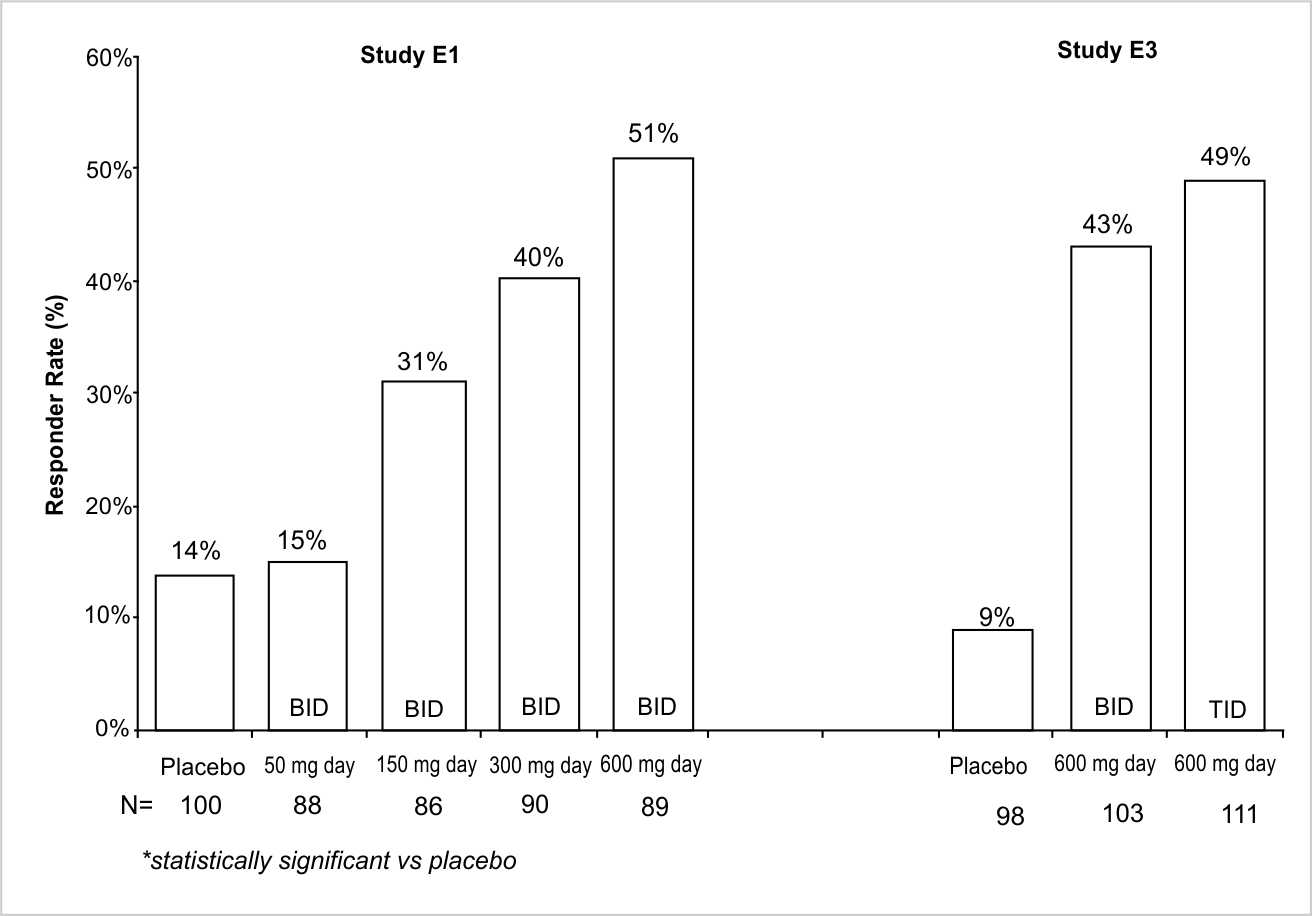
This data likely represents the percentage of patients who experienced pain improvement after different treatments. The bar graph shows the percentage of patients improved under different daily doses of Pregabalin and the placebo. The x-axis denotes the percentage of improvement in pain from baseline, while the y-axis represents the different treatment groups. The information suggests that higher doses of Pregabalin may lead to increased pain improvement compared to lower doses or a placebo.*
FDA Label Image

Fig-10 (Pregabalin Figure 10)

Fig-10 (Pregabalin Figure 10)
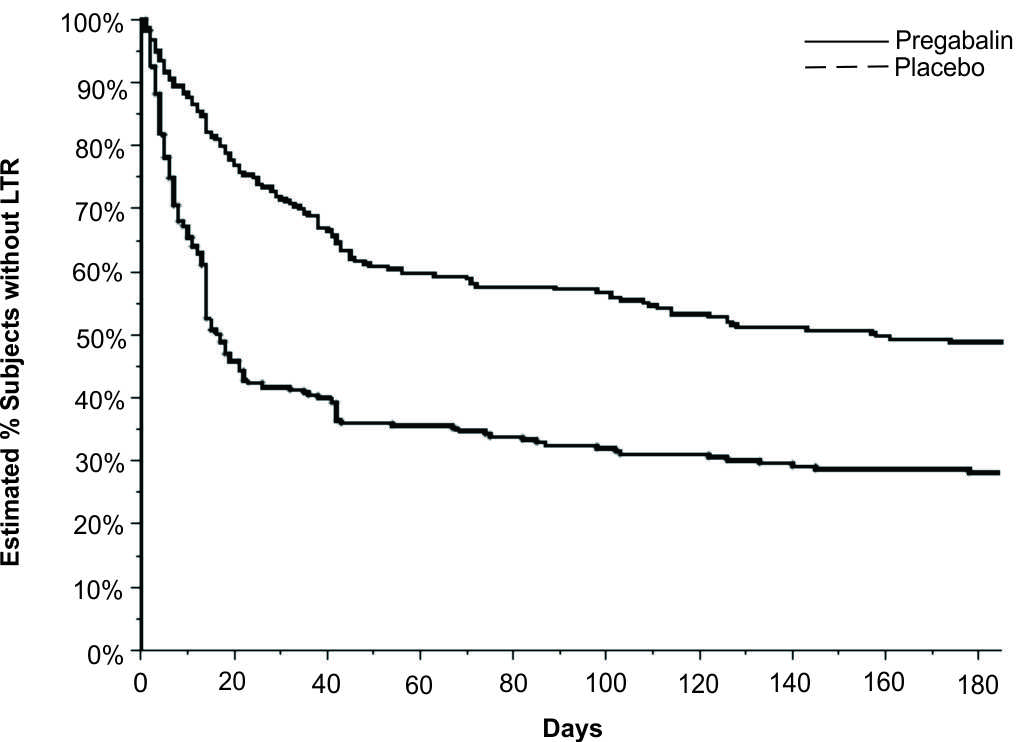
This is a table showing the estimated percentage of subjects without LIR (Likely Important Response) for different levels of dosing with Pregabalin versus Placebo over a period of 180 days. The data suggests a higher percentage of subjects without LIR with Pregabalin compared to Placebo.*
FDA Label Image

Fig-11 (Pregabalin Figure 11)

Fig-11 (Pregabalin Figure 11)
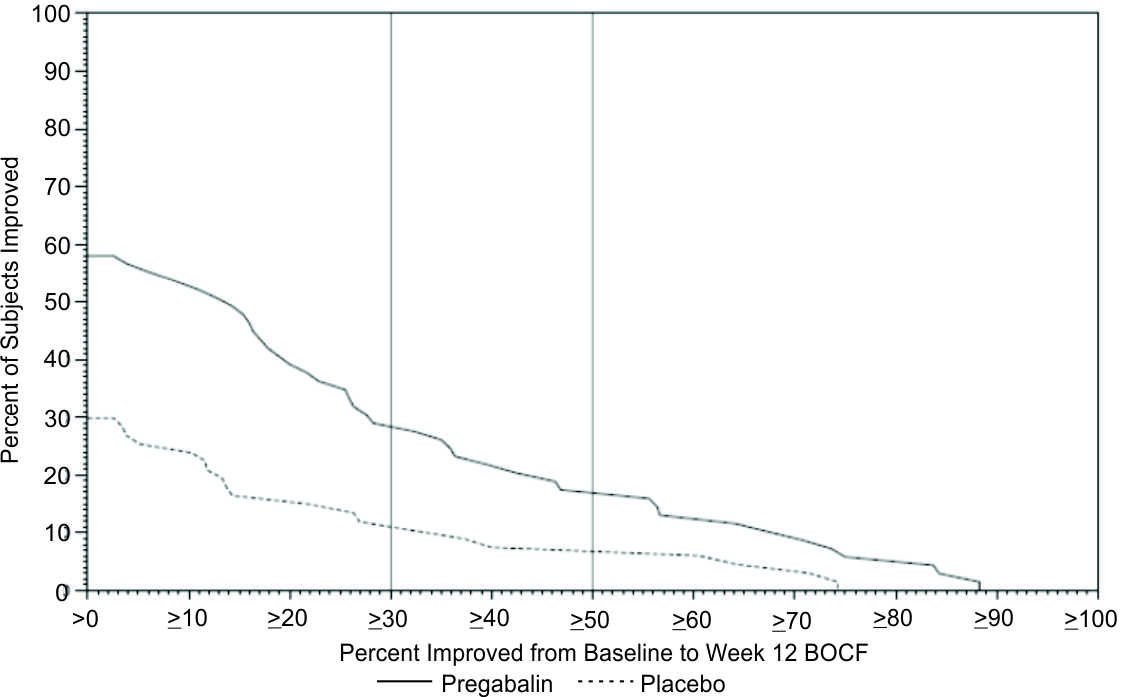
This is a chart showing the percentage of subjects who improved from baseline to week 12 using Pregabalin versus Placebo. The data suggests the effectiveness of Pregabalin compared to Placebo in improving the condition being evaluated.*
FDA Label Image

Fig-12 (Pregabalin Figure 12)

Fig-12 (Pregabalin Figure 12)
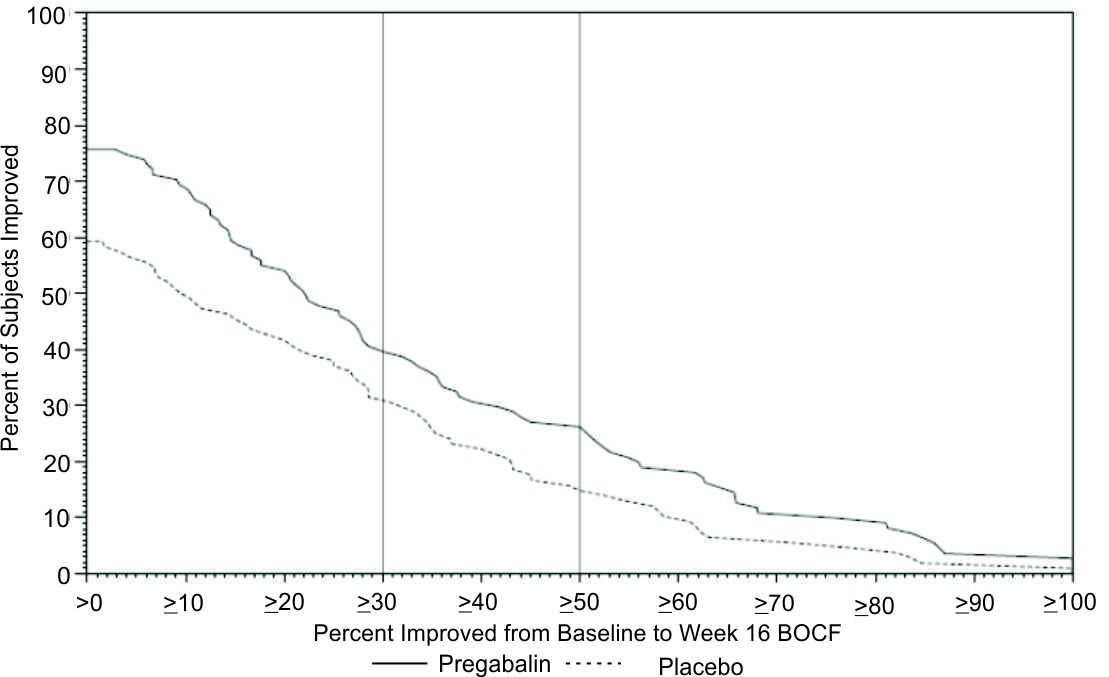
This text contains information about the percentage of subjects who showed improvement when taking Pregabalin compared to Placebo from baseline to week 16. The data includes different improvement levels categorized in percentiles such as over 10, 20, 30, 40, 50, 60, 70, and 80. The assessment shows how many subjects had improvement in relation to the two treatments mentioned.*
FDA Label Image

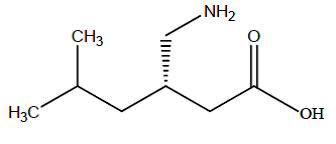
Str (Pregabalin Structure)

* These product label images have been analyzed using experimental machine learning. Please verify findings with the primary label text.