Pregabalin Capsule
Product Images NDC 60760-753
View Photos of Packaging, Regulatory Labels, and Product Appearance
Product Visual Gallery
This gallery contains 15 technical images submitted to the FDA as part of the official labeling for Pregabalin (NDC 60760-753). Unlike standard consumer photos, these assets often include clinical data figures, molecular chemical structures, and official manufacturer packaging layouts.
As provided by St. Mary's Medical Park Pharmacy, these visuals offer a comprehensive scientific overview of the product's physical and chemical identity, aiding pharmacists and researchers in product verification and study.
Product Images & Figures Index
Equation (Pregabain Gault Equation)
Fig-01 (Pregabalin Figure 01)
Fig-02 (Pregabalin Figure 02)
Fig-03 (Pregabalin Figure 03)
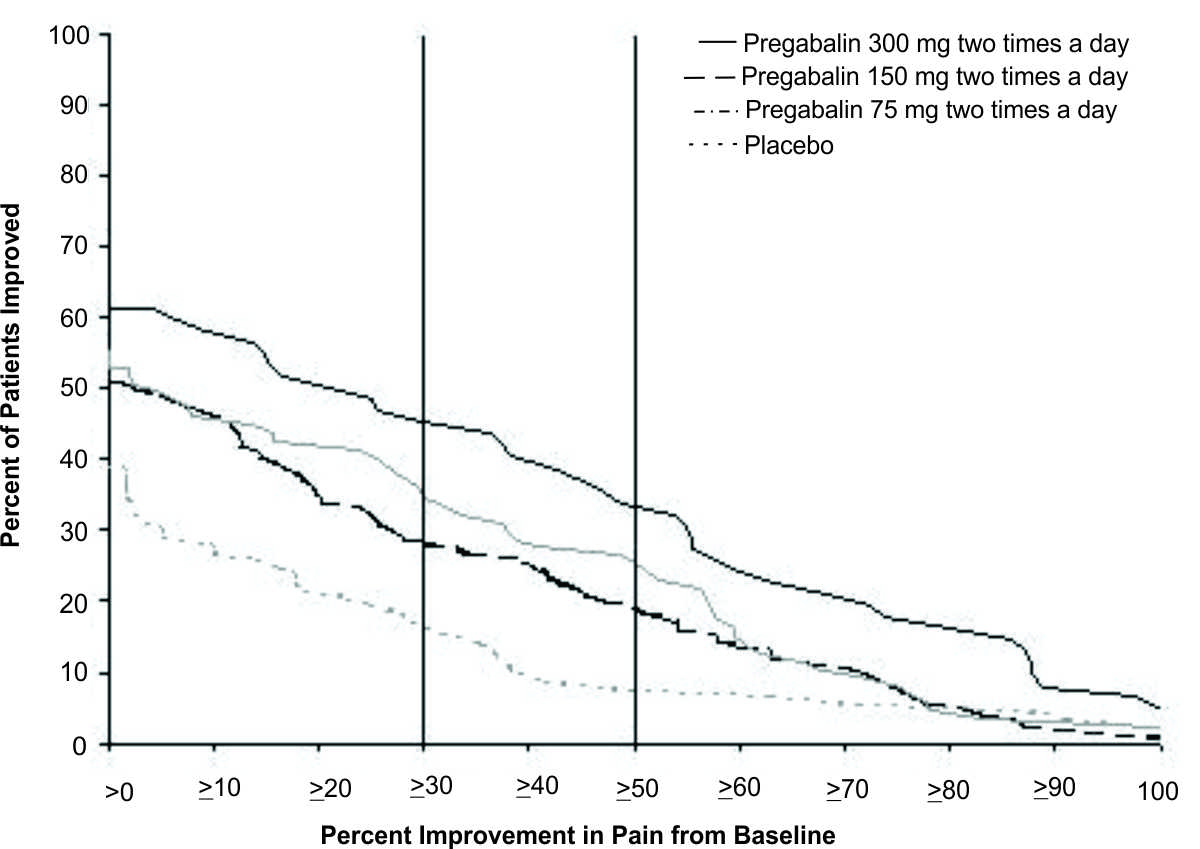
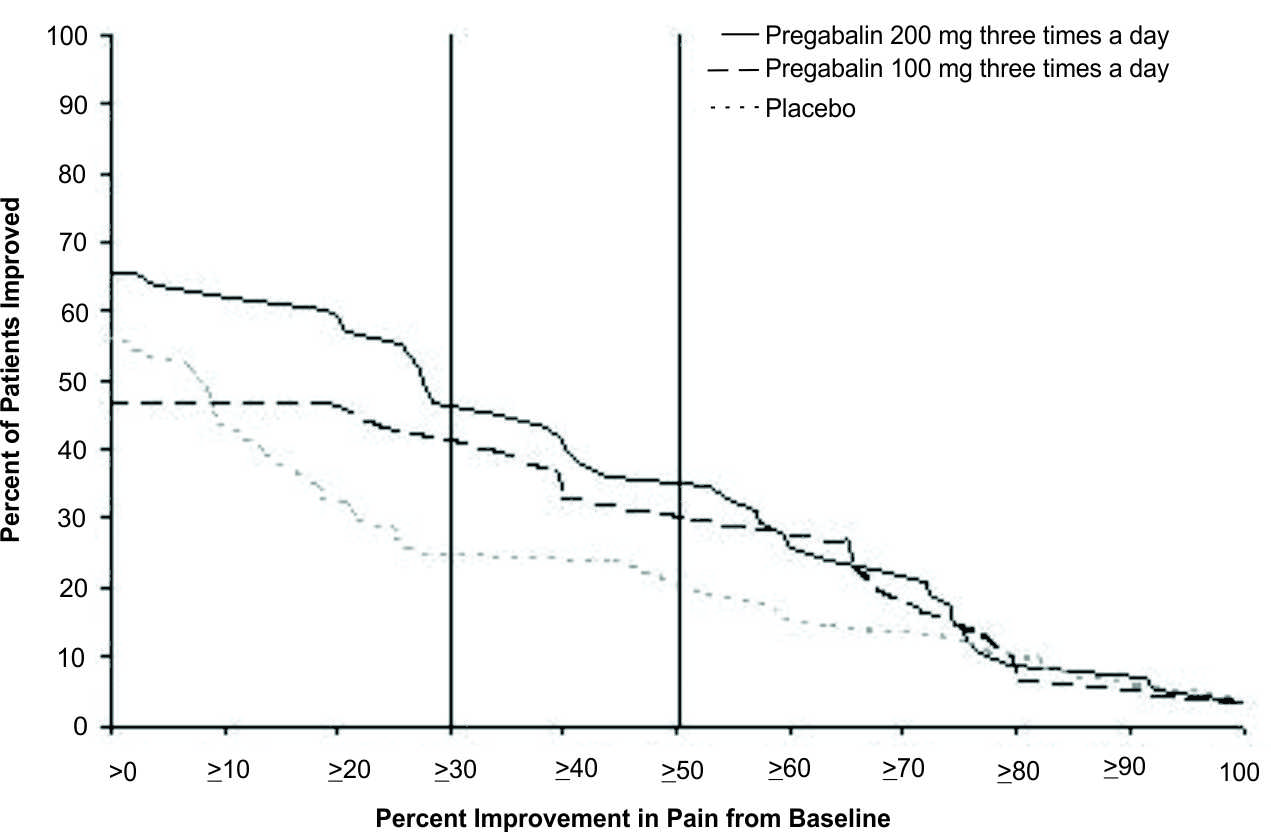
This chart shows the percent of patients who experienced improvement in pain from baseline when taking different dosages of Pregabalin or a placebo. The higher the dosage of Pregabalin, the greater the percentage of patients reporting improvement in pain. The chart highlights the effectiveness of Pregabalin in managing pain at varying dosage levels.*
Fig-04 (Pregabalin Figure 04)
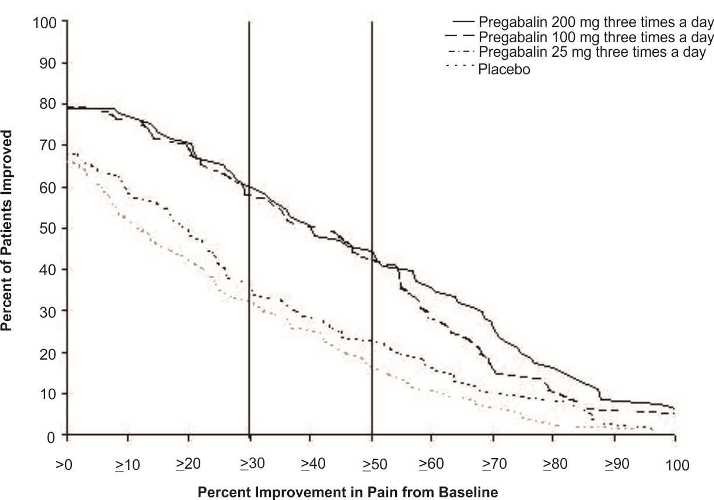
This text provides data on the percentage of patients who showed improvement with different doses of Pregabalin and Placebo in pain management. The chart displays the percent improvement in pain from baseline, ranging from less than 10% to over 90%. The highest improvement is seen with Pregabalin 200 mg three times a day compared to lower doses and placebo.*
Fig-05 (Pregabalin Figure 05)
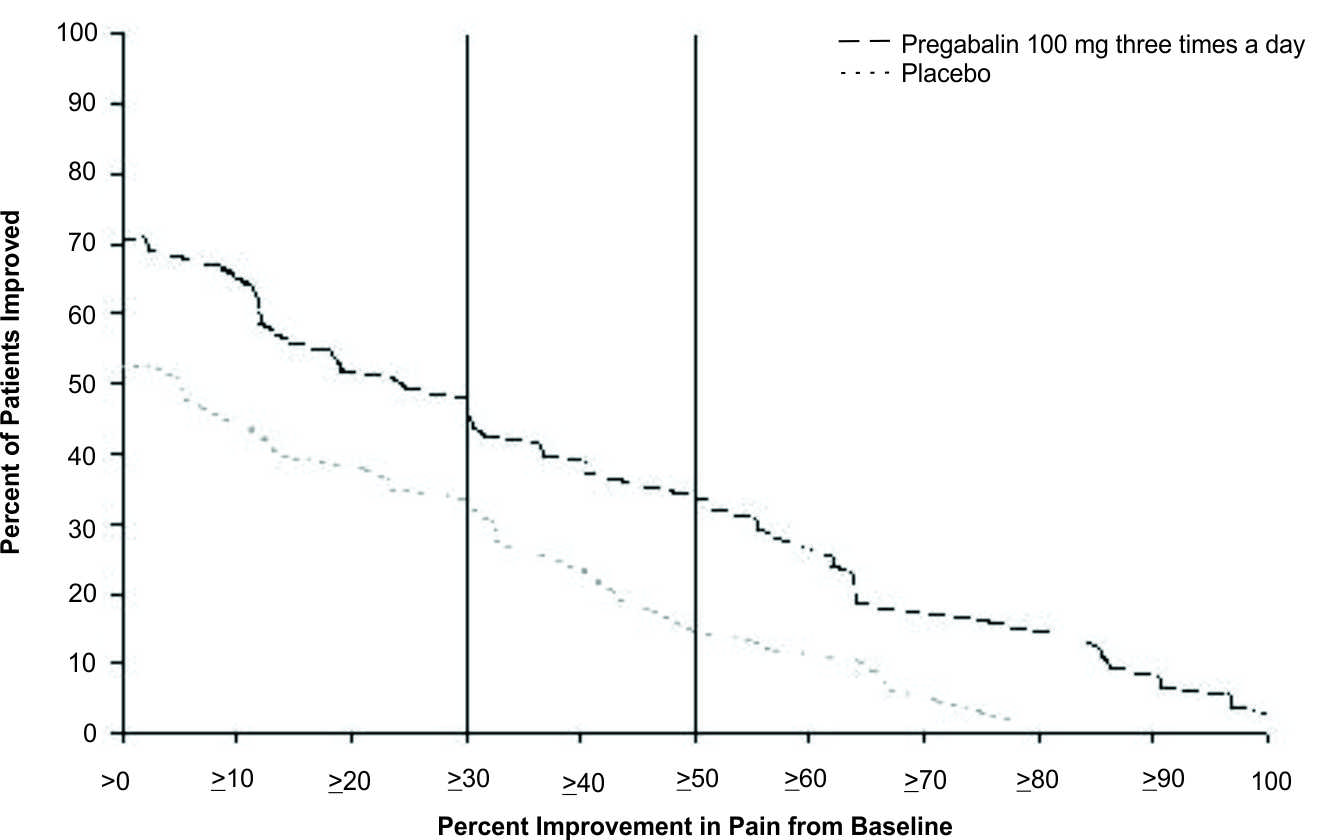
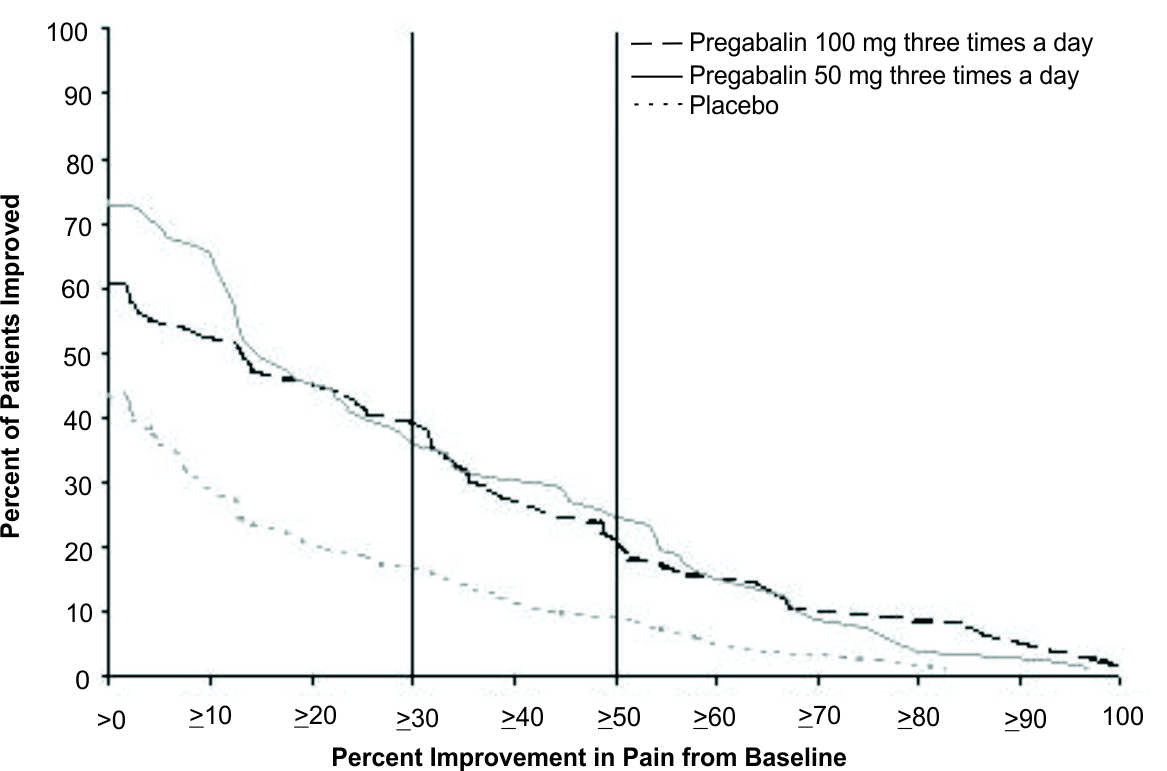
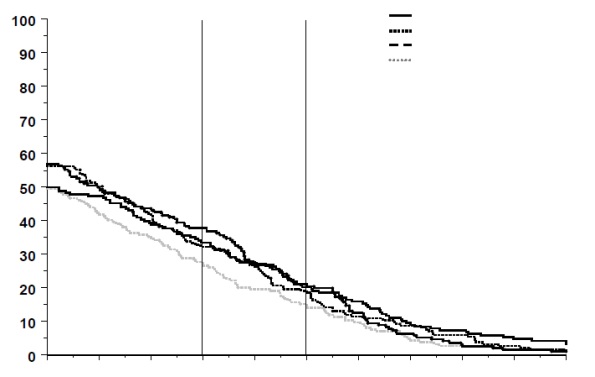
This text provides information on the percent of patients improved with different treatments for pain relief. It includes data for Pregabalin at different dosages and a placebo, as well as percentages for improvement in pain from baseline. The text suggests a comparison of the effectiveness of Pregabalin at different doses in managing pain.*
Fig-06 (Pregabalin Figure 06)
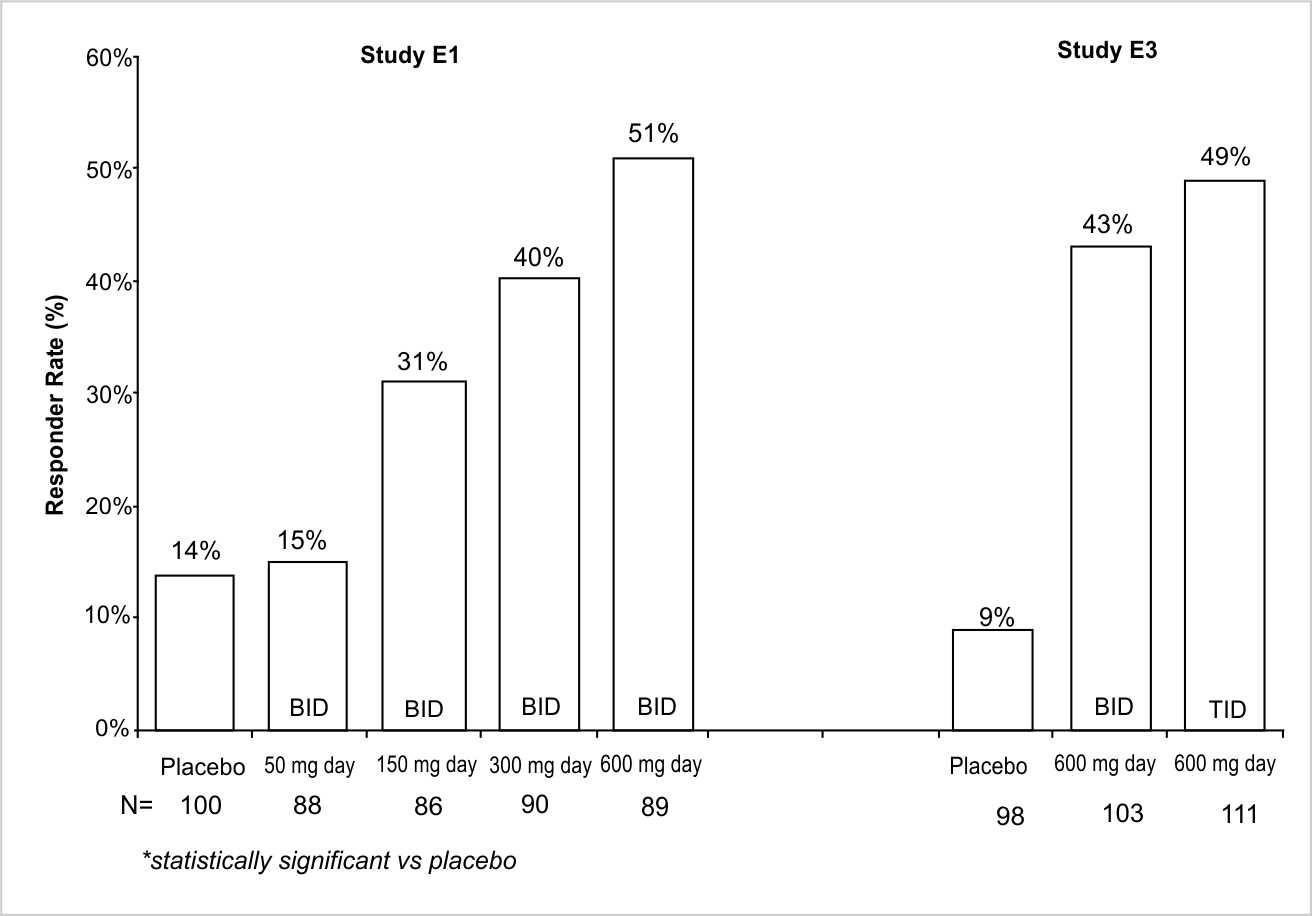
The text provides information on responder rates expressed as percentages for different dosages in a study. Responder rates are shown for various dosages of BID (twice a day) and TID (three times a day) administration in Study E1 and Study E3. The study includes different dosages (50 mg/day, 150 mg/day, 300 mg/day, 600 mg/day) and statistics indicating significant differences compared to a placebo group. The data suggests trends in response rates at different dosages of the medication being studied.*
Fig-07 (Pregabalin Figure 07)
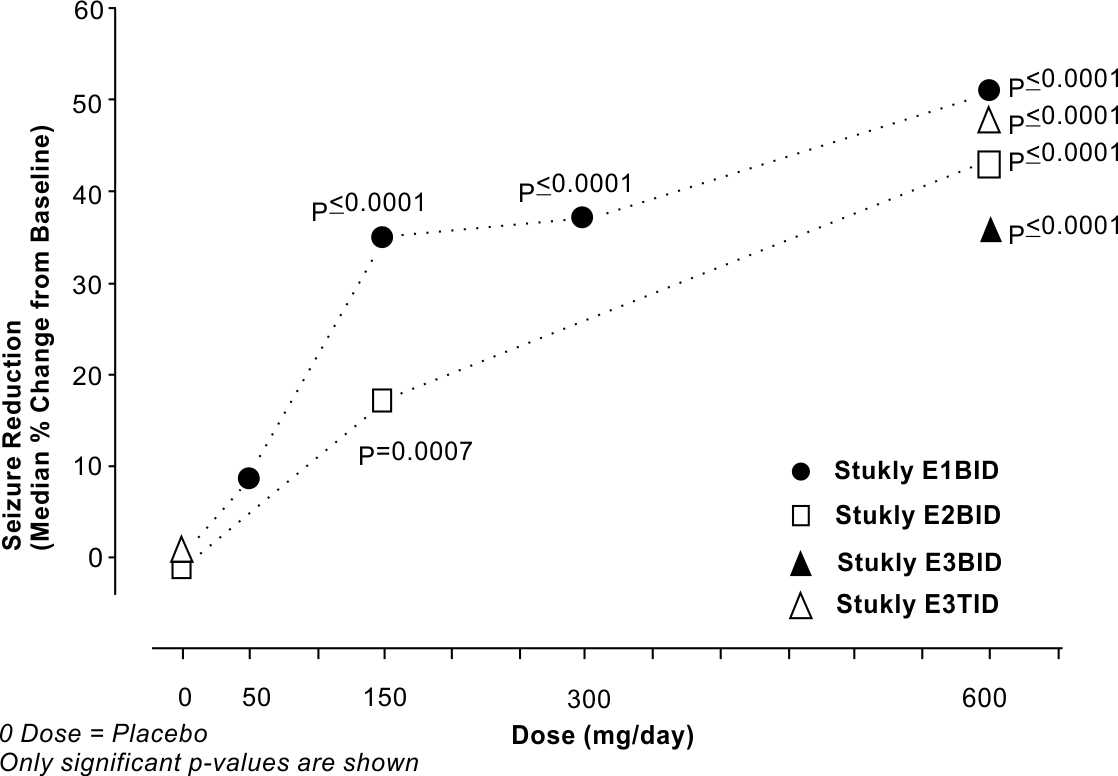
This information is a chart showing the results of a study or experiment comparing different doses of a treatment (possibly a medication) with a placebo. The chart displays p-values and different doses in milligrams per day. The results indicate that all p-values are significant at less than or equal to 0.0001, suggesting a strong statistical difference between the groups being studied.*
Pregabalin-figure-08 (Pregabalin Figure 08)
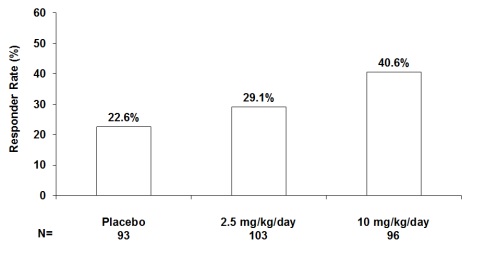
This text provides information on responder rates expressed in percentage for different treatments or conditions. It mentions rates such as 406%, 2.1%, 26%, placebo 25 mg/kg/day, and 10 mg/kg/day. The data seems to be related to the effectiveness or response rates of different treatments or interventions.*
Pregabalin-figure-09 (Pregabalin Figure 09)
Fig-10 (Pregabalin Figure 10)
Fig-11 (Pregabalin Figure 11)
Fig-12 (Pregabalin Figure 12)
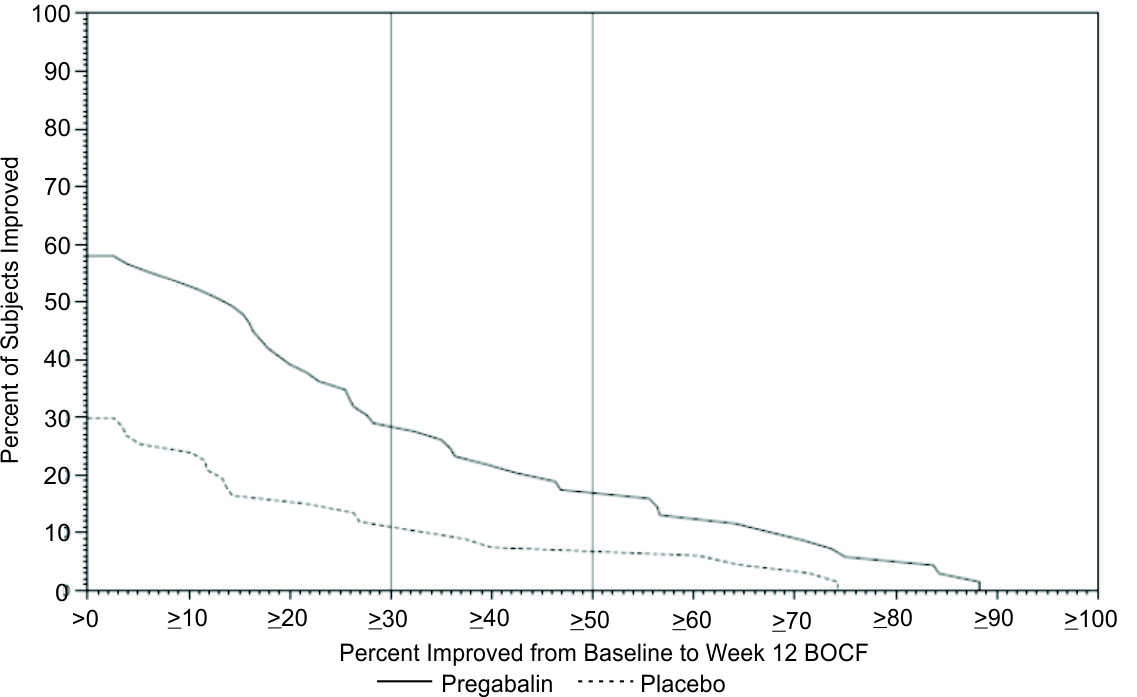
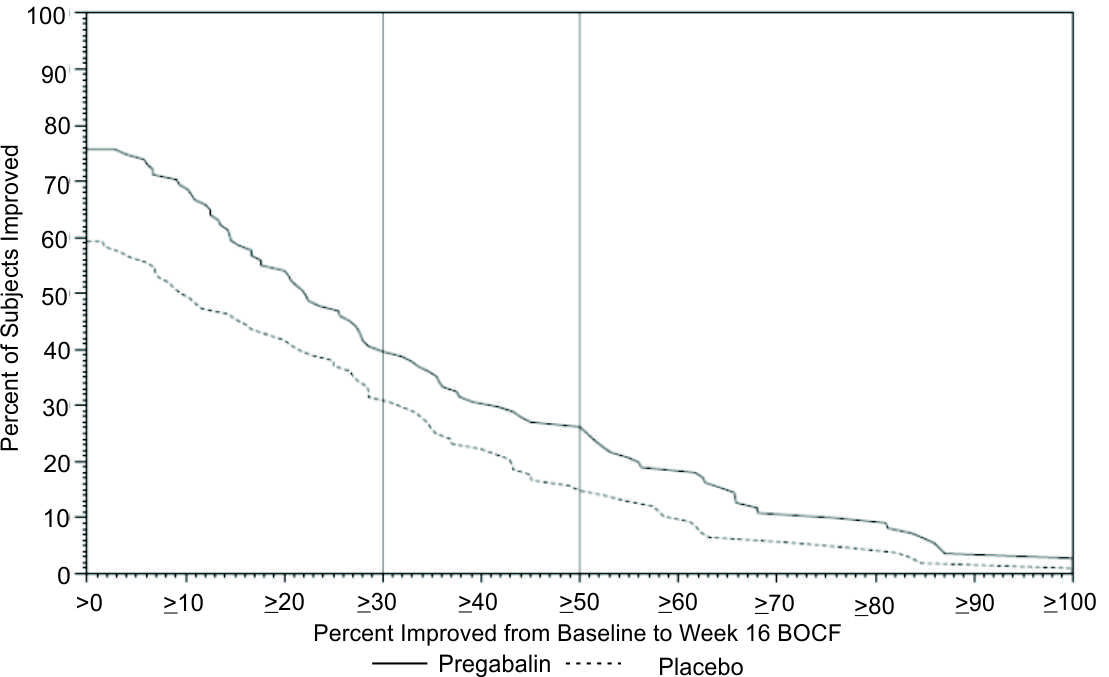
This text provides information on the percentage of subjects improved with pregabalin compared to a placebo from baseline to week 16 using a BOCF method. The data shows percentages of improvement in brackets at different intervals, such as over 10%, 20%, 30%, etc. This information can be useful for evaluating the effectiveness of pregabalin compared to a placebo in a clinical trial.*
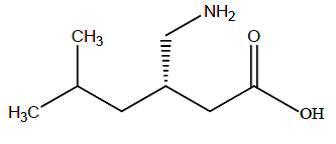
Str (Pregabalin Structure)
* These product label images have been analyzed using experimental machine learning. Please verify findings with the primary label text.