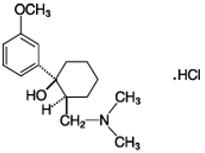
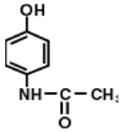
Warning: Addiction, Abuse, And Misuse; Risk Evaluation And Mitigation Strategy (Rems); Life-Threatening Respiratory Depression; Accidental Ingestion; Ultra-Rapid Metabolism Of Tramadol And Other Risk Factors For Life-Threatening Respiratory Depression In Children; Neonatal Opioid Withdrawal Syndrome; Interactions With Drugs Affecting Cytochrome P450 Isoenzymes; Hepatotoxicity; And Risks From Concomitant Use With Benzodiazepines Or Other Cns Depressants
Addiction, Abuse, and Misuse
Tramadol hydrochloride and acetaminophen exposes patients and other users to the risks of opioid addiction, abuse and misuse, which can lead to overdose and death. Assess each patient’s risk prior to prescribing tramadol hydrochloride and acetaminophen, and monitor all patients regularly for the development of these behaviors and conditions
[see
Warnings and Precautions (5.1)].
Opioid Analgesic Risk Evaluation and Mitigation Strategy (REMS)
To ensure that the benefits of opioid analgesics outweigh the risks of addiction, abuse, and misuse, the Food and Drug Administration (FDA) has required a REMS for these products
[see
Warnings and Precautions (5.2)]
. Under the requirements of the REMS, drug companies with approved opioid analgesic products must make REMS-compliant education programs available to healthcare providers. Healthcare providers are strongly encouraged to
- complete a REMS-compliant education program,
- counsel patients and/or their caregivers, with every prescription, on safe use, serious risks, storage, and disposal of these products,
- emphasize to patients and their caregivers the importance of reading the Medication Guide every time it is provided by their pharmacist, and
- consider other tools to improve patient, household, and community safety.
- Reserve concomitant prescribing of tramadol hydrochloride and acetaminophen and benzodiazepines or other CNS depressants for use in patients for whom alternative treatment options are inadequate.
- Limit dosages and durations to the minimum required.
- Follow patients for signs and symptoms of respiratory depression and sedation.
Life-Threatening Respiratory Depression
Serious, life-threatening, or fatal respiratory depression may occur with use of tramadol hydrochloride and acetaminophen. Monitor for respiratory depression, especially during initiation of tramadol hydrochloride and acetaminophen or following a dose increase
[see
Warnings and Precautions (5.3)].
Accidental Ingestion
Accidental ingestion of even one dose of tramadol hydrochloride and acetaminophen, especially by children, can result in a fatal overdose of tramadol
[see
Warnings and Precautions (5.3)].
Ultra-Rapid Metabolism of Tramadol and Other Risk Factors for Life-Threatening Respiratory Depression in Children
Life-threatening respiratory depression and death have occurred in children who received tramadol. Some of the reported cases occurred following tonsillectomy and/or adenoidectomy, and in at least one case, the child had evidence of being an ultra-rapid metabolizer of tramadol due to a CYP2D6 polymorphism
[see
Warnings and Precautions (5.4)]
. Tramadol hydrochloride and acetaminophen is contraindicated in children younger than 12 years of age and in children younger than 18 years of age following tonsillectomy and/or adenoidectomy
[see
Contraindications (4)]
. Avoid the use of tramadol hydrochloride and acetaminophen in adolescents 12 to 18 years of age who have other risk factors that may increase their sensitivity to the respiratory depressant effects of tramadol
[see
Warnings and Precautions (5.4)].
Neonatal Opioid Withdrawal Syndrome
Prolonged use of tramadol hydrochloride and acetaminophen during pregnancy can result in neonatal opioid withdrawal syndrome, which may be life-threatening if not recognized and treated, and requires management according to protocols developed by neonatology experts. If opioid use is required for a prolonged period in a pregnant woman, advise the patient of the risk of neonatal opioid withdrawal syndrome and ensure that appropriate treatment will be available
[see
Warnings and Precautions (5.5)].
Interactions with Drugs Affecting Cytochrome P450 Isoenzymes
The effects of concomitant use or discontinuation of cytochrome P450 3A4 inducers, 3A4 inhibitors, or 2D6 inhibitors with tramadol are complex. Use of cytochrome P450 3A4 inducers, 3A4 inhibitors, or 2D6 inhibitors with tramadol hydrochloride and acetaminophen requires careful consideration of the effects on the parent drug, tramadol, and the active metabolite, M1
[see
Warnings and Precautions (5.6),
Drug Interactions (7)].
Hepatotoxicity
Tramadol hydrochloride and acetaminophen tablets contain tramadol hydrochloride and acetaminophen. Acetaminophen has been associated with cases of acute liver failure, at times resulting in liver transplant and death. Most of the cases of liver injury are associated with the use of acetaminophen at doses that exceed 4,000 milligrams per day, and often involve more than one acetaminophen-containing product
[see
Warnings and Precautions (5.7)].
Risks from Concomitant Use with Benzodiazepines or Other CNS Depressants
Concomitant use of opioids with benzodiazepines or other central nervous system (CNS) depressants, including alcohol, may result in profound sedation, respiratory depression, coma, and death
[see
Warnings and Precautions (5.8) and
Drug Interactions (7)].