Eylea Injection, Solution
Product Images NDC 61755-005

View Photos of Packaging, Regulatory Labels, and Product Appearance

Product Visual Gallery

This gallery contains 22 technical images submitted to the FDA as part of the official labeling for Eylea (NDC 61755-005). Unlike standard consumer photos, these assets often include clinical data figures, molecular chemical structures, and official manufacturer packaging layouts.

As provided by Regeneron Pharmaceuticals, Inc., these visuals offer a comprehensive scientific overview of the product's physical and chemical identity, aiding pharmacists and researchers in product verification and study.

FDA Label Image

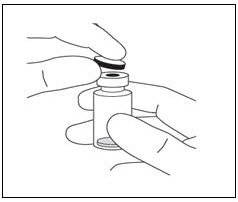
Figure 6 (Eylea 01)

Figure 6 (Eylea 01)
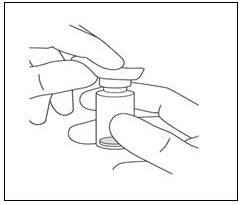
An instructional line drawing showing hands holding a vial with a rubber stopper. One hand is pressing down on the stopper, demonstrating how to access the vial's contents. The image likely relates to preparation or handling of an intravitreal injection solution.*
FDA Label Image

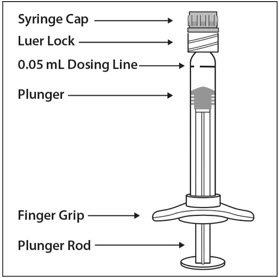
Figure 1 (Eylea 01a)

Figure 1 (Eylea 01a)
An instructional anatomical illustration of an intravitreal injection syringe labeled with parts including Syringe Cap, Luer Lock, 0.05 mL Dosing Line, Plunger, Finger Grip, and Plunger Rod. The image visually identifies components of a syringe for administering medication such as EYLEA (aflibercept) injection.*
FDA Label Image

Figure 2 (Eylea 01b)

Figure 2 (Eylea 01b)
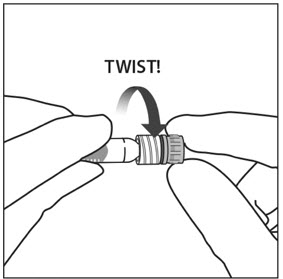
An instructional illustration showing how to twist the cap off a vial or syringe, depicted by hands holding the cap and vial with a twisting arrow and the word 'TWIST!' above.*
FDA Label Image

Figure 3 (Eylea 01c)

Figure 3 (Eylea 01c)
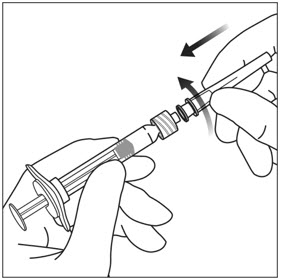
An instructional illustration showing two hands assembling a syringe with a vial or cartridge. One hand holds the syringe barrel and plunger, while the other hand attaches or removes a needle or cap, indicated by directional arrows.*
FDA Label Image

Figure 4 (Eylea 01d)

Figure 4 (Eylea 01d)
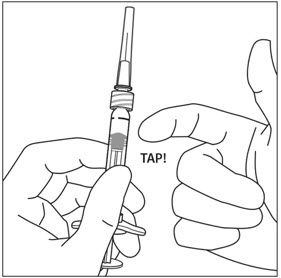
An instructional black and white line drawing showing hands holding a syringe used for EYLEA injection. One hand holds the syringe barrel, while the other hand is positioned to tap the syringe barrel labeled with the word 'TAP!'. The image illustrates part of the preparation or handling process for intravitreal injection of EYLEA (aflibercept) solution.*
FDA Label Image

Figure 5a (Eylea 01e)

Figure 5a (Eylea 01e)
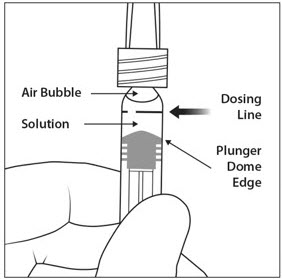
An instructional diagram depicting an intravitreal injection syringe labeled with an air bubble, solution, dosing line, and plunger dome edge. The illustration highlights key parts of the syringe with labels to assist with proper dosing.*
FDA Label Image

Figure 5b (Eylea 01f)

Figure 5b (Eylea 01f)
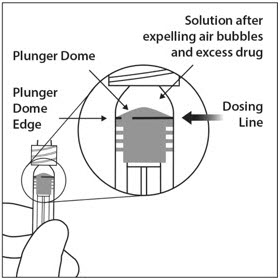
An instructional diagram showing a hand holding a syringe with labeled parts including the plunger dome, plunger dome edge, dosing line, and solution after expelling air bubbles and excess drug. The diagram focuses on proper syringe preparation for injection.*
FDA Label Image

Figure 7 (Eylea 02)

Figure 7 (Eylea 02)
An instructional line drawing showing hands removing the cap from a vial. The illustration is related to the preparation or administration of an injectable solution, such as EYLEA (aflibercept) injection.*
FDA Label Image

Figure 8 (Eylea 03)

Figure 8 (Eylea 03)
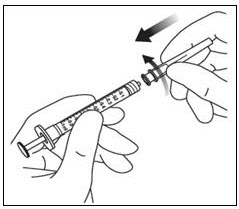
An instructional line drawing illustrating how to remove the cap from a syringe. The image shows two hands holding the syringe and pulling off the cap, indicated by arrows.*
FDA Label Image

Figure 9a (Eylea 04)

Figure 9a (Eylea 04)
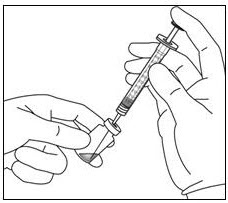
An instructional line drawing showing a syringe being filled from a vial. One hand holds the vial upside down, and the other hand pulls back the syringe plunger to draw liquid from the vial into the syringe.*
FDA Label Image

Figure 9b (Eylea 04a)

Figure 9b (Eylea 04a)
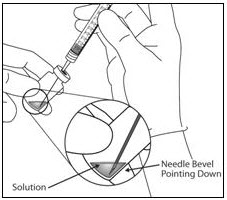
An instructional illustration showing a hand holding a syringe with the needle bevel pointing down, above a container labeled as solution. The image highlights proper needle orientation during preparation for intravitreal injection.*
FDA Label Image

Figure 10 (Eylea 05)

Figure 10 (Eylea 05)
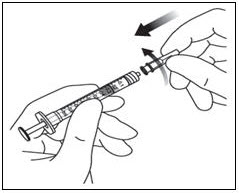
An instructional illustration showing two hands preparing an intravitreal injection syringe. One hand holds the syringe barrel, while the other removes the cap from the needle. The image includes an arrow indicating the direction for removing the needle cap, suggesting a step in medication administration or preparation.*
FDA Label Image

Figure 11 (Eylea 06)

Figure 11 (Eylea 06)
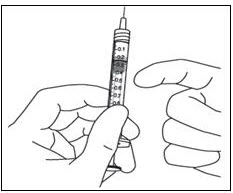
An instructional black and white line drawing showing hands preparing an intravitreal injection. One hand holds a syringe filled with liquid, while the other hand is positioned near the syringe, likely demonstrating the preparation or administration technique.*
FDA Label Image

Figure 12a (Eylea 07)

Figure 12a (Eylea 07)
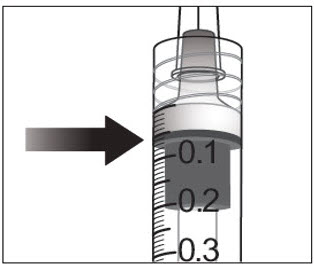
An instructional diagram showing a syringe with a solution inside. The syringe is marked with volume graduations, and a black arrow points to just above the 0.1 mL mark, highlighting the drawn solution level in the syringe barrel.*
FDA Label Image

Figure 12b (Eylea 07a)

Figure 12b (Eylea 07a)
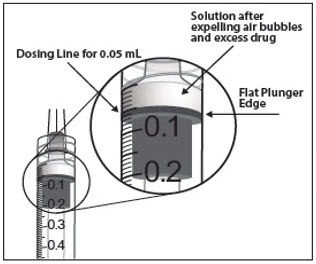
An instructional diagram showing a syringe with labeled parts: 'Dosing Line for 0.05 mL,' 'Solution after expelling air bubbles and excess drug,' and 'Flat Plunger Edge.' The focus is on the syringe barrel with dose markings and correct plunger positioning for accurate dosing.*
FDA Label Image

Figure 13 (Eylea 08)

Figure 13 (Eylea 08)
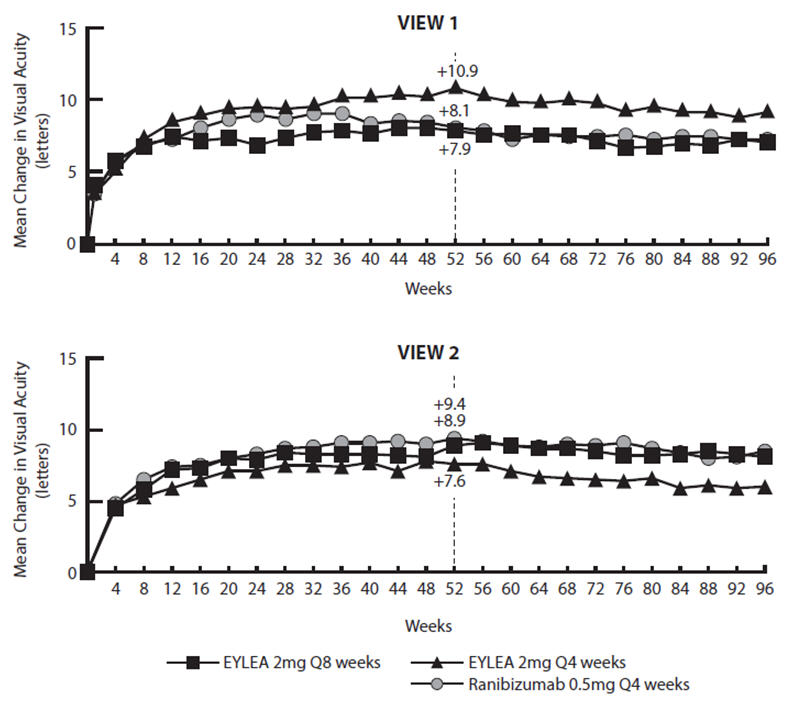
This figure contains two line graphs labeled VIEW 1 and VIEW 2, depicting mean change in visual acuity (measured in letters) over weeks up to 96. The graphs compare EYLEA 2mg dosed every 8 weeks, EYLEA 2mg dosed every 4 weeks, and Ranibizumab 0.5mg dosed every 4 weeks, showing trends in improvement at multiple time points.*
FDA Label Image

Figure 14 (Eylea 09)

Figure 14 (Eylea 09)
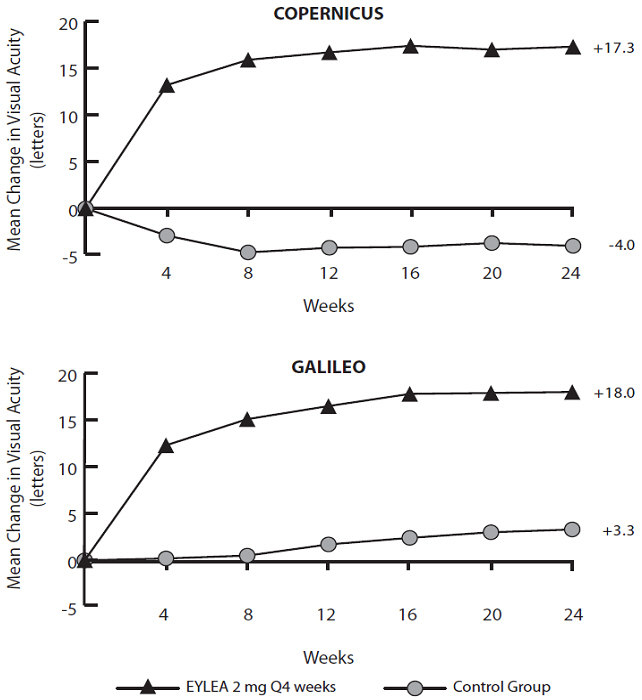
Two line graphs titled COPERNICUS and GALILEO show the mean change in visual acuity (letters) over 24 weeks. Both depict EYLEA 2 mg administered every 4 weeks versus a control group. The graphs illustrate visual acuity improvements with EYLEA increasing up to around +17 to +18 letters, while control groups show minimal or negative changes.*
FDA Label Image

Figure 15 (Eylea 10)

Figure 15 (Eylea 10)
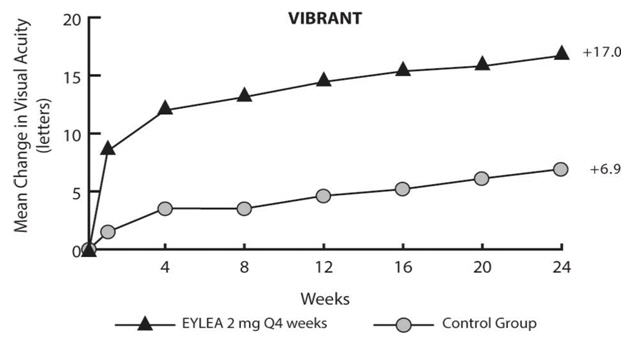
A line graph titled 'VIBRANT' showing mean change in visual acuity (letters) over 24 weeks. It compares two groups: EYLEA 2 mg administered every 4 weeks (represented by triangles) and a control group (represented by circles). The EYLEA group shows a greater increase in visual acuity than the control group over time.*
FDA Label Image

Figure 16 (Eylea 11)

Figure 16 (Eylea 11)
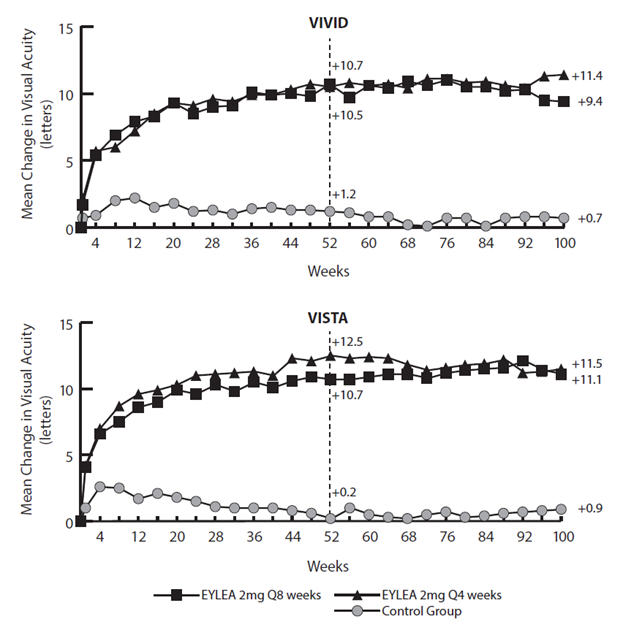
Two line graphs depicting mean change in visual acuity (letters) over 100 weeks from the VIVID and VISTA clinical trials. Both graphs compare EYLEA 2 mg given every 8 weeks, EYLEA 2 mg every 4 weeks, and a control group, showing visual acuity improvement trends in labeled groups over time.*
FDA Label Image

Figure 17 (Eylea 11a)

Figure 17 (Eylea 11a)
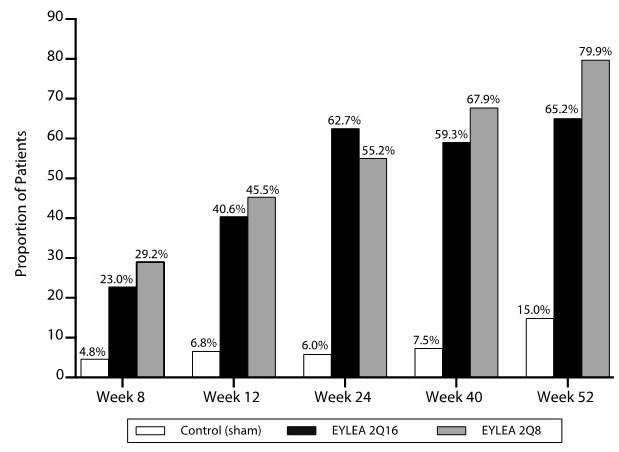
A vertical bar chart comparing the proportion of patients over time at weeks 8, 12, 24, 40, and 52 across three groups: Control (sham), EYLEA 2Q16, and EYLEA 2Q8. The chart shows patient proportions on the y-axis and weeks on the x-axis, with data labels above each bar indicating percentages.*
FDA Label Image

Principal Display Panel (2 mg/0.05 mL Vial Carton)

Principal Display Panel (2 mg/0.05 mL Vial Carton)
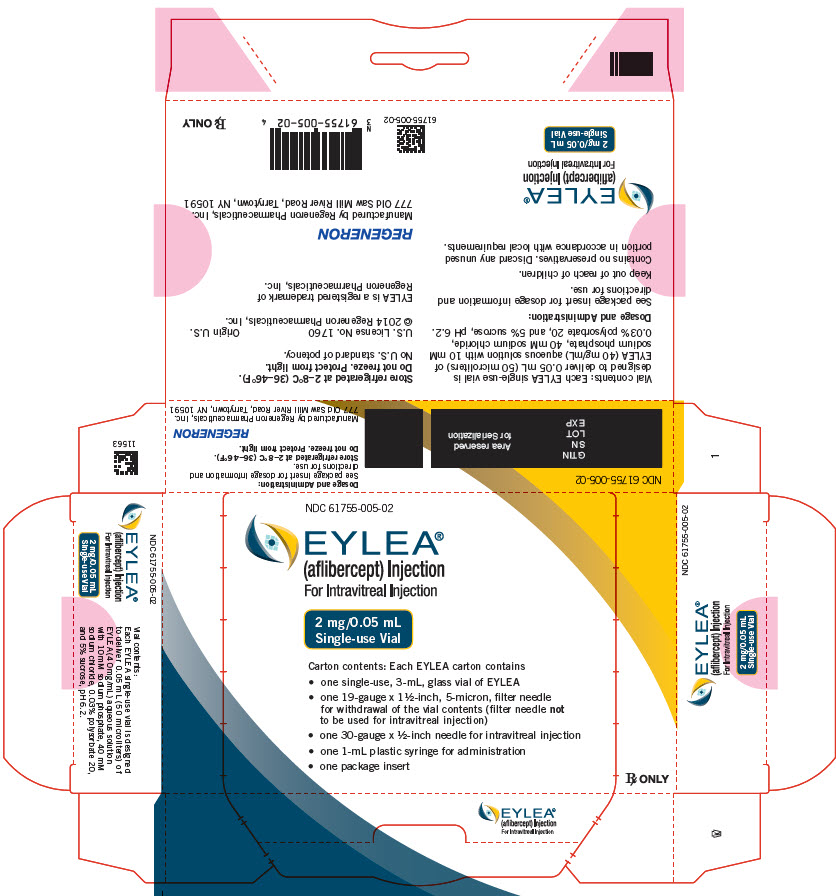
The image shows a carton label for EYLEA (aflibercept) Injection for Intravitreal Injection by Regeneron Pharmaceuticals, Inc. It specifies 2 mg/0.05 mL strength in a single-use vial. The label includes packaging details, including the inclusion of a 3-mL vial, needles, and a syringe, along with regulatory information and barcodes.*
FDA Label Image

Principal Display Panel (2 mg/0.05 mL Syringe Carton)

Principal Display Panel (2 mg/0.05 mL Syringe Carton)
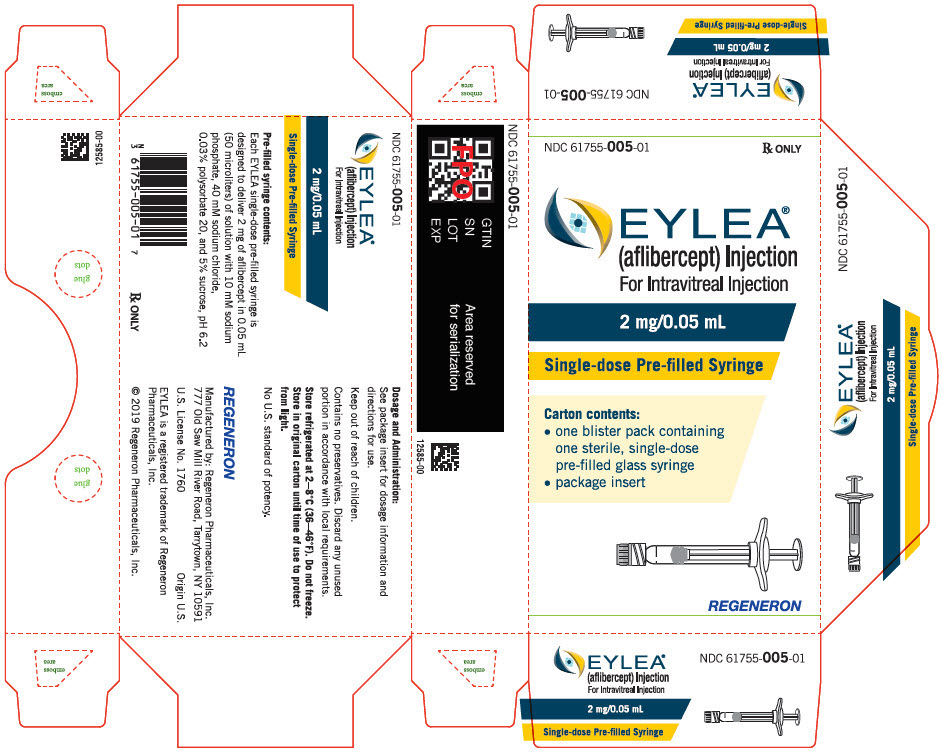
EYLEA (aflibercept) Injection 2 mg/0.05 mL single-dose pre-filled syringe carton label. The label states it is for intravitreal injection and contains one sterile, single-dose pre-filled glass syringe with solution. The labeler is Regeneron Pharmaceuticals, Inc. The packaging design includes product name, dosage, NDC code 61755-005-01, and a syringe illustration.*

* About these descriptions: Image descriptions on this page are generated by automated AI analysis of the product label images from the manufacturer's FDA label submission (SPL). They are provided for reference only and may contain errors or omissions. Always rely on the printed label itself and the official FDA labeling, and consult a pharmacist or healthcare professional with any questions about this product.