Drospirenone And Ethinyl Estradiol
Product Images NDC 61916-090

View Photos of Packaging, Regulatory Labels, and Product Appearance

Product Visual Gallery

This gallery contains 9 technical images submitted to the FDA as part of the official labeling for Drospirenone And Ethinyl Estradiol (NDC 61916-090). Unlike standard consumer photos, these assets often include clinical data figures, molecular chemical structures, and official manufacturer packaging layouts.

As provided by Pharmaceutics International, Inc. (pii), these visuals offer a comprehensive scientific overview of the product's physical and chemical identity, aiding pharmacists and researchers in product verification and study.

FDA Label Image

Figure 1 (Dro02 0006 01)
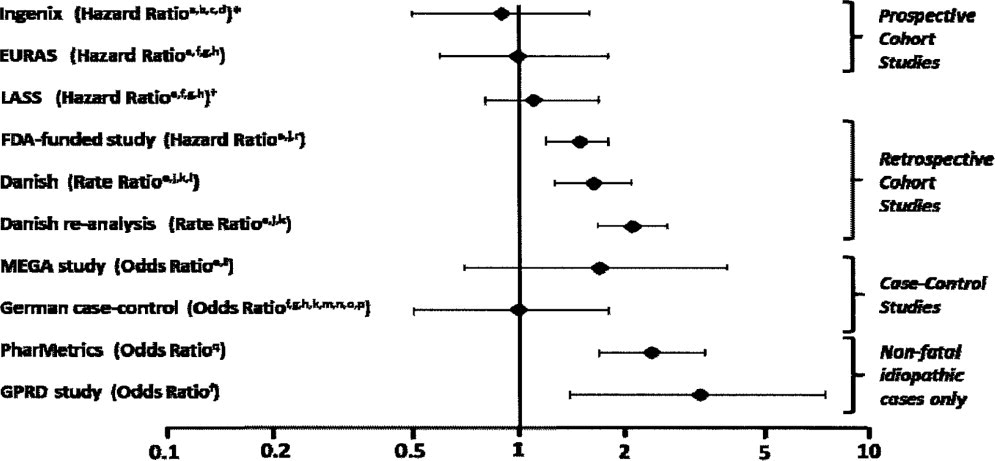
Figure 1 (Dro02 0006 01)
This appears to be a list of studies and their respective measures of association, such as hazard ratio, rate ratio, and odds ratio. The studies mentioned include Ingenix, EURAS, LASS, FDA-funded study, Danish study, Danish re-analysis, MEGA study, German case-control study, PharMetrics, and GPRD study. These measures of association are commonly used in epidemiological research to determine the strength of association between exposure to a risk factor and the development of a particular outcome.*
FDA Label Image

Figure 2 (Dro02 0006 02)

Figure 2 (Dro02 0006 02)
This appears to be a chart displaying clotting rates in non-pregnant and pregnant women. The numbers are presented as a range for non-pregnant women who are not using COC and for pregnant women up to 12 weeks only. The data is presented as the number of women with a blood clot out of 10,000 women years (WY). The pregnancy data takes into account the actual duration of the pregnancy in reference studies, and the rate is given based on a model assumption that pregnancy duration is nine months.*
FDA Label Image

Figure (Dro02 0006 03)

Figure (Dro02 0006 03)
Drospirenone Ethinyl estradiol is likely a medication used to prevent pregnancy.*
FDA Label Image

Pii Logo (Dro02 0006 04)

FDA Label Image

Figure (Dro02 0006 05)

Figure (Dro02 0006 05)
This text describes various methods of birth control and their effectiveness rates in terms of pregnancy prevention. It mentions methods such as implants, injections, intrauterine devices, sterilization, birth control pills, skin patches, vaginal rings, condoms, diaphragms, spermicide, withdrawal, and abstaining from sex during ovulation. It also notes the range of pregnancy rates per 100 women using these methods, from fewer than 1 pregnancy to 85 or more per year, as well as the absence of any birth control.*
FDA Label Image

Figure (Dro02 0006 06)

FDA Label Image

Figure (Dro02 0006 07)

Figure (Dro02 0006 07)
This table shows the range of blood clot incidents for non-pregnant women and women in different postpartum stages. The non-COC user range is from 115 out of 10,000 women years, while the COC user range is from e to v out of 10,000 women years. The Pregnancy rate is 7 to 27 per 10,000 WY, based on actual duration of pregnancy in the reference studies.*
FDA Label Image

Principal Display Panel (Drospirenone and Ethinyl Estradiol Tablets Carton Label)

FDA Label Image

Principal Display Panel (Drospirenone and Ethinyl Estradiol Tablets Label)

Principal Display Panel (Drospirenone and Ethinyl Estradiol Tablets Label)
Drospirenone and Ethinyl Estradiol tablets are a type of oral contraceptive used for preventing pregnancy by taking one tablet daily for 28 consecutive days per menstrual cycle in the order of 24 pink tablets followed by four white tablets. Each box contains detailed labeling for patients and a bister pack of 28 tablets, 24 pink tablets containing 3mg drospirenone and 0.02mg ethinyl estradiol, and 4 white meaningless tablets. This product does not protect against HIV infection or other sexually transmitted diseases. Store at room temperature and keep out of reach of children.*

* These product label images have been analyzed using experimental machine learning. Please verify findings with the primary label text.