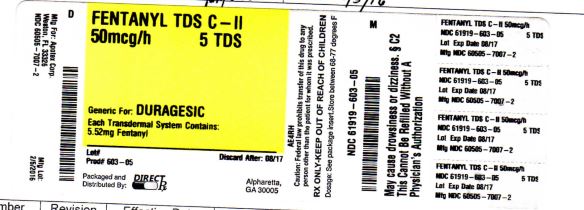
Warnings And Precautions Section
- WARNING: ADDICTION, ABUSE, AND MISUSE; LIFE-THREATENING, RESPIRATORY DEPRESSION, ACCIDENTAL EXPOSURE, NEONATAL OPIOID WITHDRAWAL SYNDROME; CYTOCHROME P450 3A4 INTERACTION; and EXPOSURE TO HEAT
Addiction, Abuse, and Misuse
Fentanyl transdermal system exposes patients and other users to the risks of opioid addiction, abuse, and misuse, which can lead to overdose and death. Assess each patient’s risk prior to prescribing Fentanyl transdermal system, and monitor all patients regularly for the development of these behaviors or conditions [see Warnings and Precautions (5.1)].
Life-threatening Respiratory Depression
Serious, life-threatening, or fatal respiratory depression may occur with use of fentanyl transdermal system, even when used as recommended. Monitor for respiratory depression, especially during initiation of fentanyl transdermal system or following a dose increase. Because of the risk of respiratory depression, fentanyl transdermal system is contraindicated for use as an as-needed analgesic, in non-opioid tolerant patients, in acute pain, and in postoperative pain [see Contraindications (4) and Warnings and Precautions (5.2)].
Accidental Exposure
Deaths due to a fatal overdose of fentanyl have occurred when children and adults were accidentally exposed to fentanyl transdermal system. Strict adherence to the recommended handling and disposal instructions is of the utmost importance to prevent accidental exposure [see Warnings and Precautions (5.3)].
Neonatal Opioid Withdrawal Syndrome
Prolonged use of fentanyl transdermal system during pregnancy can result in neonatal opioid withdrawal syndrome, which may be life-threatening if not recognized and treated, and requires management according to protocols developed by neonatology experts. If opioid use is required for a prolonged period in a pregnant woman, advise the patient of the risk of neonatal opioid withdrawal syndrome and ensure that appropriate treatment will be available [see Warnings and Precautions (5.4)].
Cytochrome P450 3A4 Interaction
The concomitant use of fentanyl transdermal system with all cytochrome P450 3A4 inhibitors may result in an increase in fentanyl plasma concentrations, which could increase or prolong adverse drug effects and may cause potentially fatal respiratory depression. In addition, discontinuation of a concomitantly used cytochrome P450 3A4 inducer may result in an increase in fentanyl plasma concentration. Monitor patients receiving fentanyl transdermal system and any CYP3A4 inhibitor or inducer [see Warnings and Precautions (5.10), and Clinical Pharmacology (12.3)].
Exposure To Heat
Exposure of the fentanyl transdermal system application site and surrounding area to direct external heat sources, such as heating pads or electric blankets, heat or tanning lamps, sunbathing, hot baths, saunas, hot tubs, and heated water beds may increase fentanyl absorption and has resulted in fatal overdose of fentanyl and death [see Warnings and Precautions (5.11)]. Patients wearing fentanyl transdermal systems who develop fever or increased core body temperature due to strenuous exertion are also at risk for increased fentanyl exposure and may require an adjustment in the dose of fentanyl transdermal system to avoid overdose and death [see Warnings and Precautions (5.12)].
- 5.1 Addiction, Abuse, and Misuse
Fentanyl transdermal system contains fentanyl, an opioid agonist and a Schedule II controlled substance. As an opioid, fentanyl transdermal system exposes users to the risks of addiction, abuse, and misuse [see Drug Abuse and Dependence (9)]. As modified-release products such as fentanyl transdermal system deliver the opioid over an extended period of time, there is a greater risk for overdose and death due to the larger amount of fentanyl present.
Although the risk of addiction in any individual is unknown, it can occur in patients appropriately prescribed fentanyl transdermal system and in those who obtain the drug illicitly. Addiction can occur at recommended doses and if the drug is misused or abused.
Assess each patient’s risk for opioid addiction, abuse, or misuse prior to prescribing fentanyl transdermal system, and monitor all patients receiving fentanyl transdermal system for the development of these behaviors or conditions. Risks are increased in patients with a personal or family history of substance abuse (including drug or alcohol addiction or abuse) or mental illness (e.g., major depression). The potential for these risks should not, however, prevent the prescribing of fentanyl transdermal system for the proper management of pain in any given patient. Patients at increased risk may be prescribed modified-release opioid formulations such as fentanyl transdermal system, but use in such patients necessitates intensive counseling about the risks and proper use of fentanyl transdermal system along with intensive monitoring for signs of addiction, abuse, and misuse.
Abuse or misuse of fentanyl transdermal system by placing it in the mouth, chewing it, swallowing it, or using it in ways other than indicated may cause choking, overdose, and death [see Overdosage (10)].
Opioid agonists such as fentanyl transdermal system are sought by drug abusers and people with addiction disorders and are subject to criminal diversion. Consider these risks when prescribing or dispensing fentanyl transdermal system. Strategies to reduce these risks include prescribing the drug in the smallest appropriate quantity and advising the patient on the proper disposal of unused drug [see Patient Counseling Information (17)]. Contact local state professional licensing board or state controlled substances authority for information on how to prevent and detect abuse or diversion of this product.
5.2 Life-Threatening Respiratory DepressionSerious, life-threatening, or fatal respiratory depression has been reported with the use of opioids, even when used as recommended. Respiratory depression from opioid use, if not immediately recognized and treated, may lead to respiratory arrest and death. Management of respiratory depression may include close observation, supportive measures, and use of opioid antagonists, depending on the patient’s clinical status [see Overdosage (10)]. Carbon dioxide (CO2) retention from opioid-induced respiratory depression can exacerbate the sedating effects of opioids.
Fentanyl transdermal system is indicated only in opioid tolerant patients because of the risk for respiratory depression and death. While serious, life-threatening, or fatal respiratory depression can occur at any time during the use of fentanyl transdermal system, the risk is greatest during the initiation of therapy or following a dose increase. Closely monitor patients for respiratory depression when initiating therapy with fentanyl transdermal system.
To reduce the risk of respiratory depression, proper dosing and titration of fentanyl transdermal system are essential [see Dosage and Administration (2)]. Overestimating the fentanyl transdermal system dose when converting patients from another opioid product can result in fatal overdose with the first dose.
Accidental exposure to fentanyl transdermal system, especially in children, can result in respiratory depression and death due to an overdose of fentanyl.
5.3 Accidental ExposureA considerable amount of active fentanyl remains in fentanyl transdermal system even after use as directed. Death and other serious medical problems have occurred when children and adults were accidentally exposed to fentanyl transdermal system. Accidental or deliberate application or ingestion by a child or adolescent will cause respiratory depression that can result in death. Placing fentanyl transdermal system in the mouth, chewing it, swallowing it, or using it in ways other than indicated may cause choking or overdose that could result in death. Improper disposal of fentanyl transdermal system in the trash has resulted in accidental exposures and deaths.
Advise patients about strict adherence to the recommended handling and disposal instructions in order to prevent accidental exposure to fentanyl transdermal system [see Dosage and Administration (2.4), (2.5)].
5.4 Neonatal Opioid Withdrawal SyndromeProlonged use of fentanyl transdermal system during pregnancy can result in withdrawal signs in the neonate. Neonatal opioid withdrawal syndrome, unlike opioid withdrawal syndrome in adults, may be life-threatening if not recognized and treated, and requires management according to protocols developed by neonatology experts. If opioid use is required for a prolonged period in a pregnant woman, advise the patient of the risk of neonatal opioid withdrawal syndrome and ensure that appropriate treatment will be available.
Neonatal opioid withdrawal syndrome presents as irritability, hyperactivity and abnormal sleep pattern, high pitched cry, tremor, vomiting, diarrhea and failure to gain weight. The onset, duration, and severity of neonatal opioid withdrawal syndrome vary based on the specific opioid used, duration of use, timing and amount of last maternal use, and rate of elimination of the drug by the newborn.
5.5 Interactions with Central Nervous System DepressantsHypotension, profound sedation, coma, respiratory depression, and death may result if fentanyl transdermal system is used concomitantly with alcohol or other central nervous system (CNS) depressants (e.g., sedatives, anxiolytics, hypnotics, neuroleptics, other opioids).
When considering the use of fentanyl transdermal system in a patient taking a CNS depressant, assess the duration use of the CNS depressant and the patient’s response, including the degree of tolerance that has developed to CNS depression. Additionally, evaluate the patient’s use of alcohol or illicit drugs that cause CNS depression. If the decision to begin fentanyl transdermal system is made, reduce the starting dose, monitor patients for signs of sedation and respiratory depression, and consider using a lower dose of the concomitant CNS depressant [see Drug Interactions (7.1)].
5.6 Use in Elderly, Cachectic, and Debilitated PatientsLife-threatening respiratory depression is more likely to occur in elderly, cachectic, or debilitated patients as they may have altered pharmacokinetics or altered clearance compared to younger, healthier patients. Monitor such patients closely, particularly when initiating and titrating fentanyl transdermal system and when fentanyl transdermal system is given concomitantly with other drugs that depress respiration [see Warnings and Precautions (5.2)].
5.7 Chronic Pulmonary DiseaseMonitor patients with significant chronic obstructive pulmonary disease or cor pulmonale, and patients having a substantially decreased respiratory reserve, hypoxia, hypercapnia, or pre-existing respiratory depression for respiratory depression, particularly when initiating therapy with fentanyl transdermal system, as in these patients, even usual therapeutic doses of fentanyl transdermal system may decrease respiratory drive to the point of apnea [see Warnings and Precautions (5.2)]. Consider the use of alternative non-opioid analgesics in these patients if possible.
5.8 Head Injuries and Increased Intracranial PressureAvoid use of fentanyl transdermal system in patients who may be particularly susceptible to the intracranial effects of CO2 retention such as those with evidence of increased intracranial pressure, impaired consciousness, or coma [see Warnings and Precautions (5.2)]. In addition, opioids may obscure the clinical course of patients with head injury. Monitor patients with brain tumors who may be susceptible to the intracranial effects of CO2 retention for signs of sedation and respiratory depression, particularly when initiating therapy with fentanyl transdermal system, as fentanyl transdermal system may reduce respiratory drive and CO2 retention can further increase intracranial pressure.
5.9 Hypotensive EffectsFentanyl transdermal system may cause severe hypotension including orthostatic hypotension and syncope in ambulatory patients. There is an increased risk in patients whose ability to maintain blood pressure has already been compromised by a reduced blood volume or concurrent administration of certain CNS depressant drugs (e.g., phenothiazines or general anesthetics) [see Drug Interactions (7.1)]. Monitor these patients for signs of hypotension after initiating or titrating the dose of fentanyl transdermal system.
5.10 Interactions with CYP3A4 Inhibitors and InducersSince the CYP3A4 isoenzyme plays a major role in the metabolism of fentanyl transdermal system, drugs that alter CYP3A4 activity may cause changes in clearance of fentanyl which could lead to changes in fentanyl plasma concentrations.
The concomitant use of fentanyl transdermal system with a CYP3A4 inhibitors (such as ritonavir, ketoconazole, itraconazole, troleandomycin, clarithromycin, nelfinavir, nefazadone, amiodarone, amprenavir, aprepitant, diltiazem, erythromycin, fluconazole, fosamprenavir, verapamil) may result in an increase in fentanyl plasma concentrations, which could increase or prolong adverse drug effects and may cause potentially fatal respiratory depression. Carefully monitor patients receiving fentanyl transdermal system and any CYP3A4 inhibitor for signs of sedation and respiratory depression for an extended period of time, and make dosage adjustments as needed.
CYP450 inducers, such as rifampin, carbamazepine, and phenytoin, may induce the metabolism of fentanyl and, therefore, may cause increased clearance of the drug which could lead to a decrease in fentanyl plasma concentrations, lack of efficacy or, possibly, development of an abstinence syndrome in a patient who had developed physical dependence to fentanyl.
If co-administration is necessary, caution is advised when initiating fentanyl transdermal system treatment in patients currently taking, or discontinuing, CYP3A4 inhibitors or inducers. Evaluate these patients at frequent intervals and consider dose adjustments until stable drug effects are achieved [see Drug Interactions (7.2) and Clinical Pharmacology (12.3)].
5.11 Application of External HeatExposure to heat may increase fentanyl absorption and there have been reports of overdose and death as a result of exposure to heat. A clinical pharmacology study conducted in healthy adult subjects has shown that the application of heat over the fentanyl transdermal system increased fentanyl exposure [see Clinical Pharmacology (12.3)].
Warn patients to avoid exposing the fentanyl transdermal system application site and surrounding area to direct external heat sources [see Dosage and Administration (2.3)].
5.12 Patients with FeverBased on a pharmacokinetic model, serum fentanyl concentrations could theoretically increase by approximately one-third for patients with a body temperature of 40°C (104°F) due to temperature-dependent increases in fentanyl released from the system and increased skin permeability. Monitor patients wearing fentanyl transdermal system who develop fever closely for opioid side effects and reduce the fentanyl transdermal system dose if necessary. Warn patients to avoid strenuous exertion that leads to increased core body temperature while wearing fentanyl transdermal system to avoid the risk of potential overdose and death.
5.13 Cardiac DiseaseFentanyl transdermal system may produce bradycardia. Monitor patients with bradyarrhythmias closely for changes in heart rate, particularly when initiating therapy with fentanyl transdermal system.
5.14 Hepatic ImpairmentA clinical pharmacology study with fentanyl transdermal system in patients with cirrhosis has shown that systemic fentanyl exposure increased in these patients. Because of the long half-life of fentanyl when administered as fentanyl transdermal system and hepatic metabolism of fentanyl, avoid use of fentanyl transdermal system in patients with severe hepatic impairment. Insufficient information exists to make precise dosing recommendations regarding the use of fentanyl transdermal system in patients with impaired hepatic function. Therefore, to avoid starting patients with mild to moderate hepatic impairment on too high of a dose, start with one half of the usual dosage of fentanyl transdermal system. Closely monitor for signs of sedation and respiratory depression, including at each dosage increase [see Dosing and Administration (2.2), Use in Specific Populations (8.6) and Clinical Pharmacology (12.3)].
5.15 Renal ImpairmentA clinical pharmacology study with intravenous fentanyl in patients undergoing kidney transplantation has shown that patients with high blood urea nitrogen level had low fentanyl clearance. Because of the long half-life of fentanyl when administered as fentanyl transdermal system, avoid the use of fentanyl transdermal system in patients with severe renal impairment. Insufficient information exists to make precise dosing recommendations regarding the use of fentanyl transdermal system in patients with impaired renal function. Therefore, to avoid starting patients with mild to moderate renal impairment on too high of a dose, start with one half of the usual dosage of fentanyl transdermal system. Closely monitor for signs of sedation and respiratory depression, including at each dosage increase [see Dosing and Administration (2.2), Use in Specific Populations (8.7) and Clinical Pharmacology (12.3)].
5.16 Use in Pancreatic/Biliary Tract DiseaseFentanyl transdermal system may cause spasm of the sphincter of Oddi. Monitor patients with biliary tract disease, including acute pancreatitis for worsened symptoms. Fentanyl transdermal system may cause increases in the serum amylase concentration.
5.17 Avoidance of WithdrawalAvoid the use of mixed agonist/antagonist (i.e., pentazocine, nalbuphine, and butorphanol) or partial agonist (buprenorphine) analgesics in patients who have received or are receiving a course of therapy with an opioid agonist analgesic, including fentanyl transdermal system. In these patients, mixed agonist/antagonist and partial agonist analgesics may reduce the analgesic effect and/or may precipitate withdrawal symptoms.
5.18 Driving and Operating MachineryStrong opioid analgesics impair the mental or physical abilities required for the performance of potentially dangerous tasks, such as driving a car or operating machinery. Warn patients not to drive or operate dangerous machinery unless they are tolerant to the effects of the fentanyl transdermal system.
- 5.1 Addiction, Abuse, and Misuse