Omeprazole Dr
Product Images NDC 61919-773

View Photos of Packaging, Regulatory Labels, and Product Appearance

Product Visual Gallery

This gallery contains 21 technical images submitted to the FDA as part of the official labeling for Omeprazole Dr (NDC 61919-773). Unlike standard consumer photos, these assets often include clinical data figures, molecular chemical structures, and official manufacturer packaging layouts.

As provided by Direct Rx, these visuals offer a comprehensive scientific overview of the product's physical and chemical identity, aiding pharmacists and researchers in product verification and study.

FDA Label Image

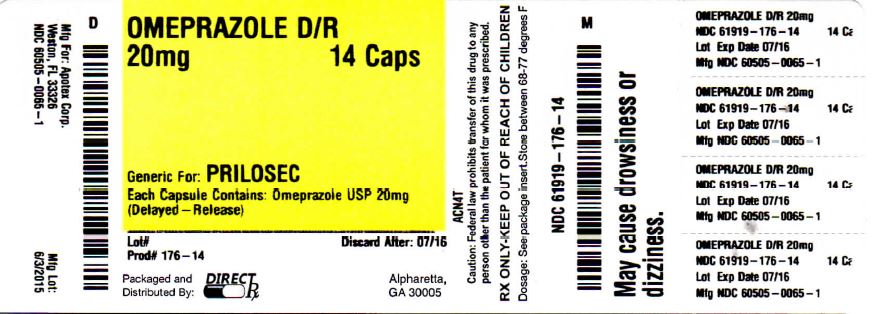
176 (176 14)

176 (176 14)
Label of OMEPRAZOLE D/R 20mg capsules, 14 count, labeled as generic for Prilosec. Distributed by Direct Rx, Alpharetta, GA. The label includes dosage information, caution about drowsiness or dizziness, and lot/expiry details with multiple NDC numbers visible. The design features a yellow section with key product details prominently displayed.*
FDA Label Image

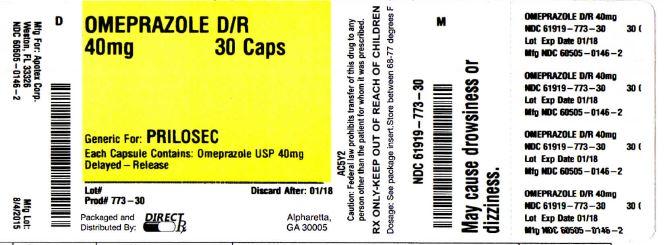
Image Description (40mglabel)

Image Description (40mglabel)
Packaging label for Omeprazole D/R 40mg capsules, containing 30 capsules per container. The label indicates it is a generic version of Prilosec with delayed-release Omeprazole USP 40mg per capsule. It is packaged and distributed by Direct Rx, with lot and expiration date information included. The label also warns that the product may cause drowsiness or dizziness and includes storage instructions and FDA request to keep from children.*
FDA Label Image

61919 847 60

61919 847 60
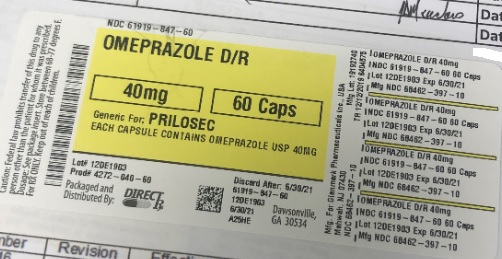
Packaging label for Omeprazole D/R capsules by Direct Rx. The label shows 40 mg strength with 60 capsules per bottle. It is identified as a generic for Prilosec and states each capsule contains Omeprazole USP 40 mg. The label includes lot, expiration, and distribution information.*
FDA Label Image

Image Description (Moleculestructure)

Image Description (Moleculestructure)
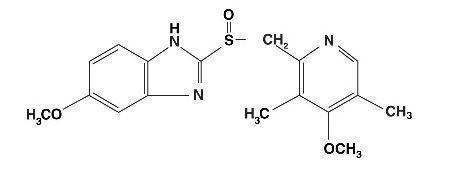
Chemical structure diagram of the active ingredient in OMEPRAZOLE DR, depicting its molecular composition and arrangement of atoms, including sulfoxide and benzimidazole groups.*
FDA Label Image

Image Description (Table1)

Image Description (Table1)
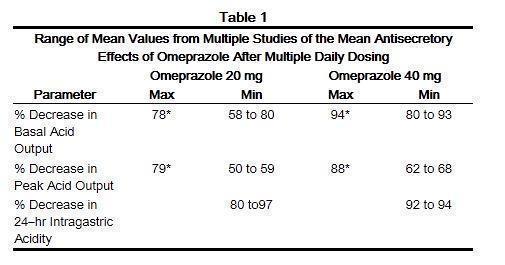
A table showing the range of mean values from multiple studies on the antisecretory effects of Omeprazole after multiple daily dosing. It compares parameters such as percent decrease in basal acid output, peak acid output, and 24-hour intragastric acidity for Omeprazole 20 mg and 40 mg doses.*
FDA Label Image

Image Description (Table10)

Image Description (Table10)
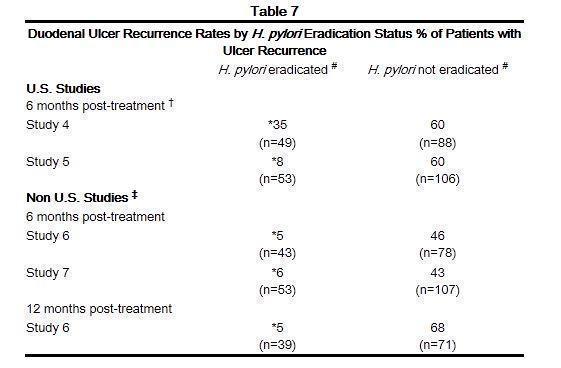
A data table titled 'Table 7' presenting duodenal ulcer recurrence rates by Helicobacter pylori eradication status, showing percentages of patients with ulcer recurrence from multiple U.S. and non-U.S. studies at 6 and 12 months post-treatment. The table compares results between patients with H. pylori eradicated and not eradicated, including sample sizes (n) for each study group.*
FDA Label Image

Image Description (Table12)

Image Description (Table12)
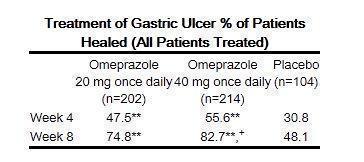
A data table titled 'Treatment of Gastric Ulcer % of Patients Healed (All Patients Treated)' showing healing percentages for patients treated with Omeprazole 20 mg once daily, Omeprazole 40 mg once daily, and Placebo at week 4 and week 8. The table includes sample sizes for each group and corresponding healing percentages at the two time points.*
FDA Label Image

Image Description (Table13)

Image Description (Table13)
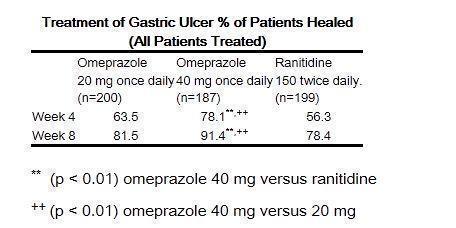
A data table titled 'Treatment of Gastric Ulcer % of Patients Healed (All Patients Treated)' comparing healing percentages at Week 4 and Week 8 for three groups: Omeprazole 20 mg once daily, Omeprazole 40 mg once daily, and Ranitidine 150 twice daily. The table includes statistical significance notes for Omeprazole 40 mg versus the other treatments.*
FDA Label Image

Image Description (Table14)

Image Description (Table14)
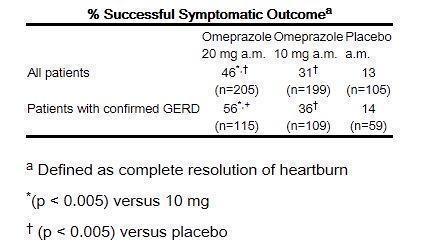
A data table titled "% Successful Symptomatic Outcome" comparing the percentage of patients achieving complete resolution of heartburn after treatment with Omeprazole delayed release at 20 mg a.m., 10 mg a.m., and placebo. The table includes outcomes for all patients and those with confirmed GERD, with statistical significance indicated for comparisons between treatment groups.*
FDA Label Image

Image Description (Table15)

Image Description (Table15)
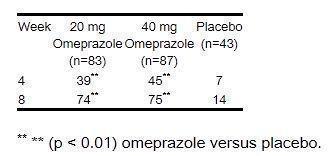
A data table comparing the effects of 20 mg and 40 mg Omeprazole versus placebo over weeks 4 and 8. The table shows participant numbers for each group and efficacy percentages with statistical significance noted between Omeprazole and placebo groups.*
FDA Label Image

Image Description (Table16)

Image Description (Table16)
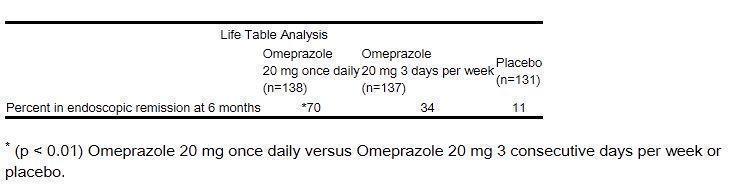
A data table titled 'Life Table Analysis' comparing percentage of endoscopic remission at 6 months for Omeprazole 20 mg once daily, Omeprazole 20 mg three days per week, and placebo groups, with sample sizes and remission percentages shown for each group.*
FDA Label Image

Image Description (Table17)

Image Description (Table17)
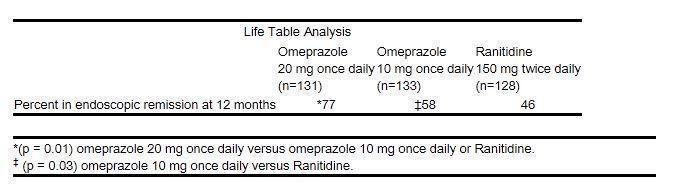
A data table titled 'Life Table Analysis' comparing the percent in endoscopic remission at 12 months among patients taking Omeprazole 20 mg once daily, Omeprazole 10 mg once daily, and Ranitidine 150 mg twice daily. The table includes sample sizes and remission percentages for each treatment group, as well as significance notes for statistical comparisons.*
FDA Label Image

Image Description (Table2)

Image Description (Table2)
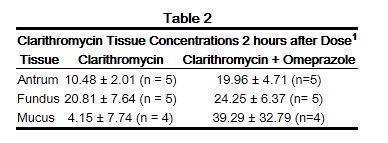
Table showing Clarithromycin tissue concentrations 2 hours after dose in different tissues (Antrum, Fundus, Mucus), comparing levels of Clarithromycin alone versus Clarithromycin combined with Omeprazole across sample sizes (n). The values include means with standard deviations.*
FDA Label Image

Image Description (Table5)

Image Description (Table5)
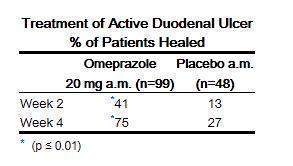
Data table titled 'Treatment of Active Duodenal Ulcer % of Patients Healed' comparing Omeprazole 20 mg morning dose (n=99) and placebo (n=48) at weeks 2 and 4. The table shows higher percentages of patients healed on Omeprazole at both time points, with statistical significance noted.*
FDA Label Image

Image Description (Table6)

Image Description (Table6)
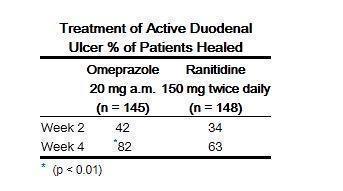
A data table titled 'Treatment of Active Duodenal Ulcer % of Patients Healed' comparing the healing percentages at week 2 and week 4 for Omeprazole 20 mg a.m. and Ranitidine 150 mg twice daily. The sample sizes are 145 for Omeprazole and 148 for Ranitidine, with Omeprazole showing higher percentages healed at both time points.*
FDA Label Image

Image Description (Table7)

Image Description (Table7)
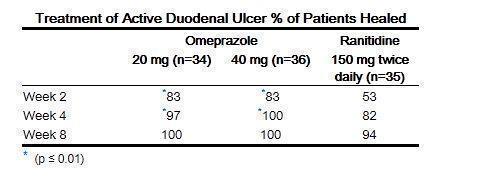
A data table titled 'Treatment of Active Duodenal Ulcer % of Patients Healed' comparing healing percentages over time. It lists Omeprazole doses 20 mg and 40 mg alongside Ranitidine 150 mg twice daily, with patient counts (n=34, n=36, n=35 respectively). Healing percentages are given for weeks 2, 4, and 8, showing higher rates for Omeprazole compared to Ranitidine. A statistical significance note indicates p ≤ 0.01.*
FDA Label Image

Image Description (Table8)

Image Description (Table8)
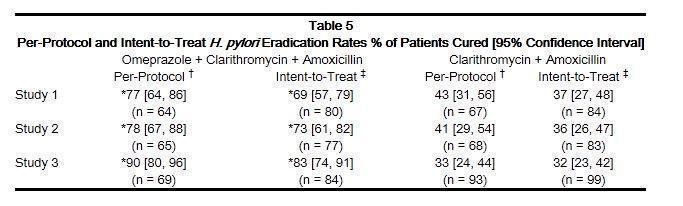
A data table presenting per-protocol and intent-to-treat Helicobacter pylori eradication rates as percentages of patients cured with 95% confidence intervals. The table compares treatment regimens including Omeprazole + Clarithromycin + Amoxicillin and Clarithromycin + Amoxicillin across three studies, with corresponding sample sizes for each group.*
FDA Label Image

Image Description (Table9)

Image Description (Table9)
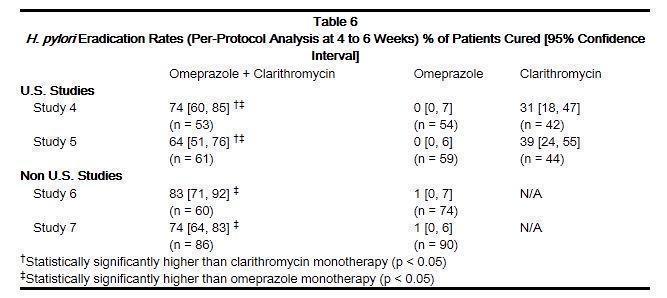
A data table presenting Helicobacter pylori eradication rates from U.S. and Non-U.S. studies comparing effectiveness of Omeprazole plus Clarithromycin, Omeprazole alone, and Clarithromycin alone. The table shows percentages of patients cured with 95% confidence intervals and sample sizes for each treatment group, highlighting statistically significant differences.*
FDA Label Image

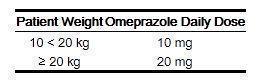
Image Description (Pediatrics)

Image Description (Pediatrics)
A dosing table titled 'Patient Weight Omeprazole Daily Dose' showing two weight categories: 10 to less than 20 kg with a daily dose of 10 mg, and 20 kg or more with a daily dose of 20 mg. The table is likely part of dosing instructions for Omeprazole DR by Direct Rx.*
FDA Label Image

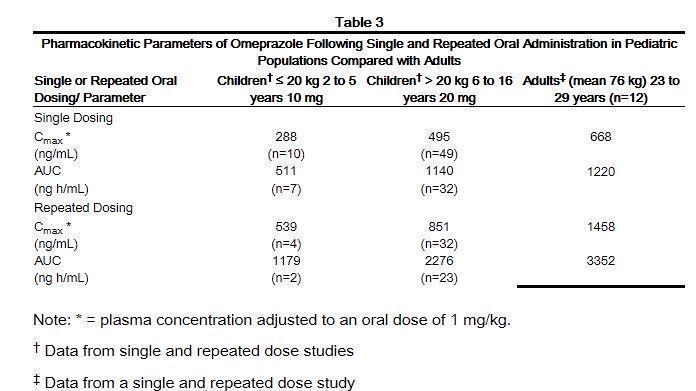
Image Description (Table3)

Image Description (Table3)
Table presenting pharmacokinetic parameters of Omeprazole following single and repeated oral administration in pediatric populations compared with adults. It shows Cmax and AUC values adjusted for a 1 mg/kg dose in children aged 2 to 5 years (10 mg), children aged 6 to 16 years (20 mg), and adults aged 23 to 29 years. The data distinguish single dosing and repeated dosing results with sample sizes indicated.*
FDA Label Image

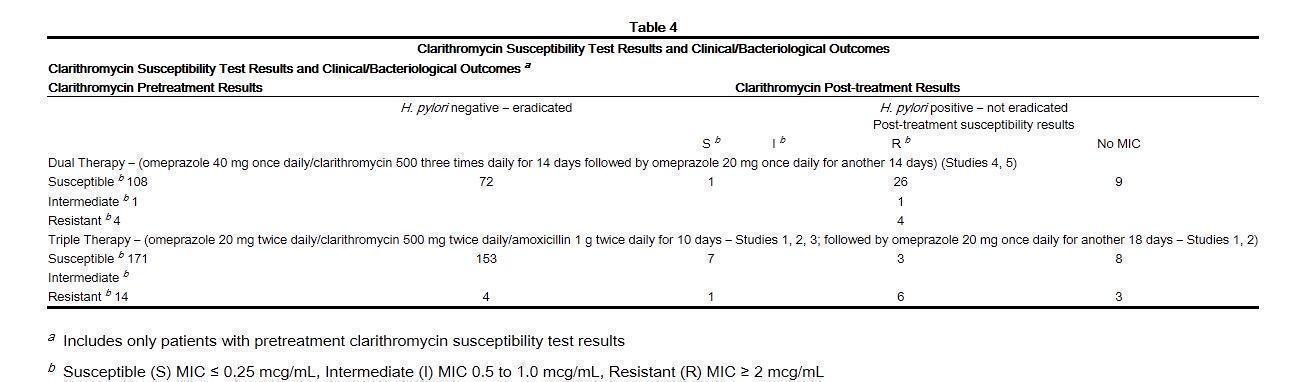
Image Description (Table4)

Image Description (Table4)
Table presenting clarithromycin susceptibility test results and clinical/bacteriological outcomes, including pre- and post-treatment results for dual and triple therapy involving omeprazole and clarithromycin, with categorized susceptibility levels (susceptible, intermediate, resistant) and related patient counts.*

* About these descriptions: Image descriptions on this page are generated by automated AI analysis of the product label images from the manufacturer's FDA label submission (SPL). They are provided for reference only and may contain errors or omissions. Always rely on the printed label itself and the official FDA labeling, and consult a pharmacist or healthcare professional with any questions about this product.