Levofloxacin
Product Images NDC 61919-992
View Photos of Packaging, Regulatory Labels, and Product Appearance
Product Visual Gallery
This gallery contains 30 technical images submitted to the FDA as part of the official labeling for Levofloxacin (NDC 61919-992). Unlike standard consumer photos, these assets often include clinical data figures, molecular chemical structures, and official manufacturer packaging layouts.
As provided by Direct Rx, these visuals offer a comprehensive scientific overview of the product's physical and chemical identity, aiding pharmacists and researchers in product verification and study.
Product Images & Figures Index
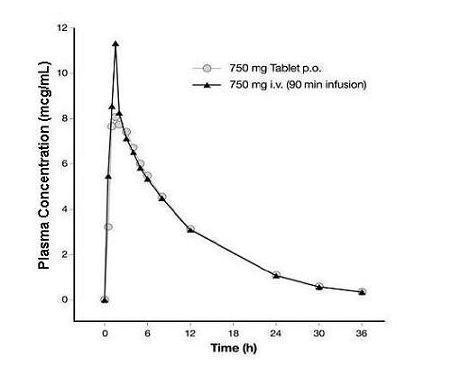
Image Description (Figure2)
Image Description (Figure3)
Image Description (Levofloxacin 500(2))
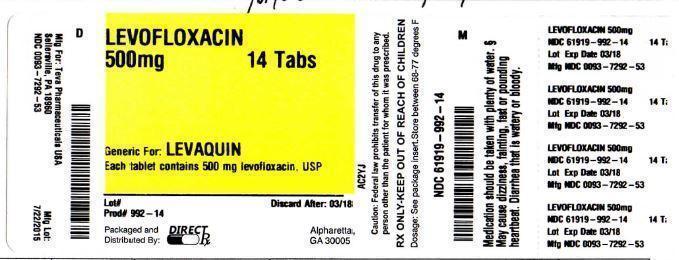
Image Description (Levofloxacin 500)
This appears to be a description of a medication called Levofloxacin, available in 500mg tablets. It is advised to drink plenty of water while taking it. Each tablet contains 500mg of Levofloxacin, which is a generic form of the brand name medication, Levaquin. The dosage instructions are not legible. This medication is only available with a prescription and should be kept out of reach of children.*
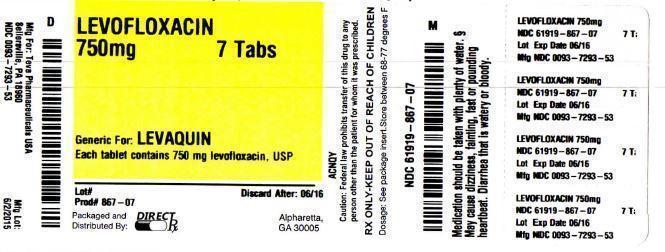
Image Description (Levofloxacin 750)
This is a medication called Levofloxacin, which is a generic for Levaquin. Each tablet contains 750mg of levofloxacin. There are various batches of the medication and their details are provided with different expiration dates. The details include lot numbers, expiration date and National Office of Clinical Trials (NOC) numbers.*
Image Description (Table 1)
Table 1 displays the recommended dosage for adult patients who have normal kidney function in various types of infections with different durations. The table includes dosages for pneumonia, sinusitis, infections, urinary tract infections as well as bacterial prostatis. The recommended dosages range from 250mg every 12 hours to 750mg every 24 hours, depending on the type of infection and duration. It also specifies dosages for adult and pediatric patients over 50kg for the plague and recommends referring Table 2 for patients below 50kg or under 6 months of age.*
Image Description (Table10)
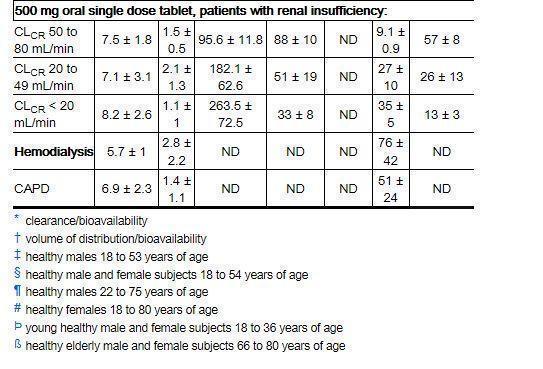
The table shows the mean and standard deviation values for various pharmacokinetic parameters of levofloxacin, including AUC, Cmax, Vd, t1/2, and Cl. The parameters were measured in individuals taking different doses of levofloxacin, ranging from 260mg to 500mg. The values reported are in megabytes, hours, and millimeters per minute.*
Image Description (Table10a)
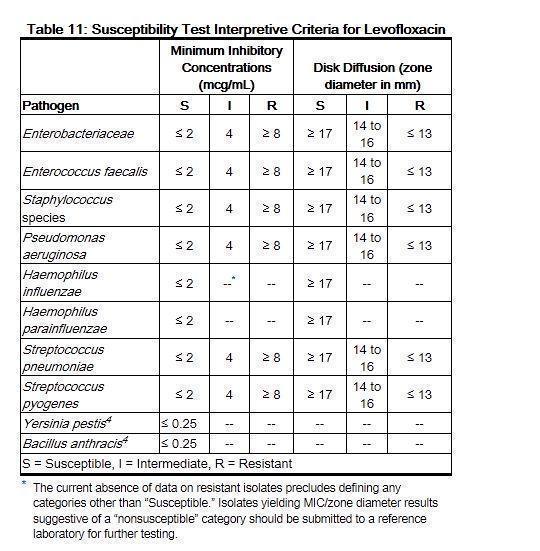
Image Description (Table11)
This is a table showing the criteria for interpreting susceptibility test results of levofloxacin against various bacteria. The table provides the minimum inhibitory concentration and diameter zone information for different bacteria, including Pseudomonas, Enterococcus, and Staphylococcus. The table also includes a note regarding the absence of data for defining resistant isolates for Bacillus anthracis. The table uses "S" for susceptible, "I" for intermediate, and "R" for resistant.*
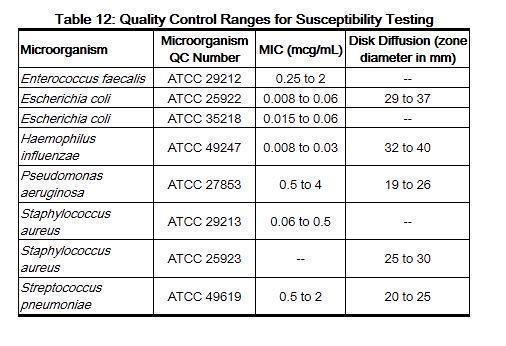
Image Description (Table12)
Image Description (Table13)
This is a table showing the clinical success rates and bacteriological eradication rates for Nosocomial Pneumonia. The data displays the success rates for patients treated with Levofloxacin and Imipenem/Cilastatin. Different pathogens were tested to evaluate the effectiveness of the treatment. The table indicates the number of patients and percentage of success and failure outcomes for each pathogen. The text also mentions that the observed differences in rates may be due to unaccounted factors in the study.*
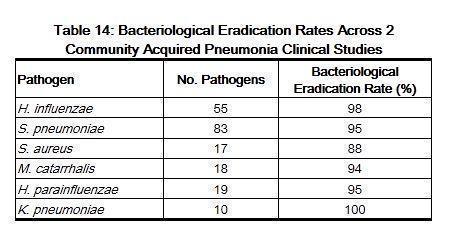
Image Description (Table14)
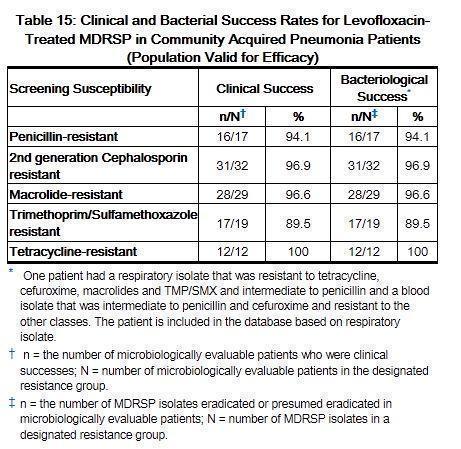
Image Description (Table15)
This is a table showing the clinical and bacterial success rates for community-acquired pneumonia patients treated with Levofloxacin in relation to different antibiotic resistance groups. The table provides the number of patients with different antibiotic resistance and the percentage of clinical success in each group. It also indicates the number of patients evaluated microbiologically and the number of eradicated MDRSP isolates. One patient had a respiratory isolate that was resistant to several antibiotics, and blood isolate that was intermediate to others.*
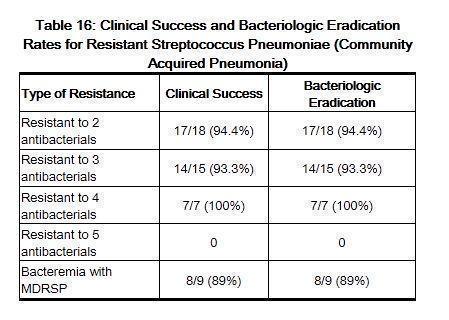
Image Description (Table16)
This is a table presenting clinical success rates and bacteriologic eradication rates for resistant Streptococcus pneumoniae in community-acquired pneumonia. The table categorizes the type of resistance, clinical success rate, and bacteriologic eradication rate. The types of resistance include resistance to 2 lantivacteriats, 103 lantibacterials THI5E3%, 04 lantibacterials ULI00%, and 5 antibacterials. However, there is no information about the methodology or the source of the data.*
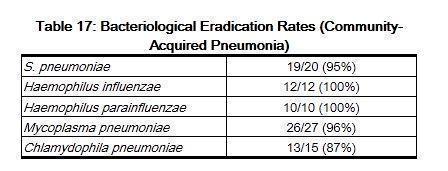
Image Description (Table17)
This appears to be a table showing the bacteriological eradication rates for different types of community-acquired pneumonia. The table includes data on the eradication rates for pneumonize, Haemophilus influenzae, Haemophilus parainfluenzae, Mycoplasma pneumoniae, and Chlamydophila pneumoniae. The percentages represent the percentage of patients who achieved eradication of the respective bacterium.*
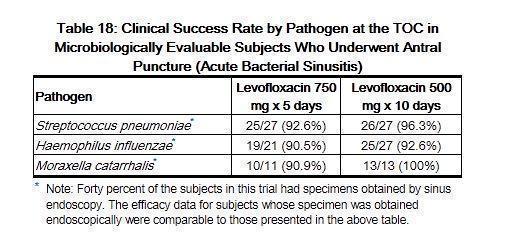
Image Description (Table18)
This is a table presenting clinical success rate by pathogen at the end of treatment in patients with acute bacterial sinusitis who underwent antral puncture. Two different doses of Levofloxacin (750 and 500) were used in the study. The table shows the success rates for three pathogens - Streptococcus pneumoniae, Haemophilus influenzae, and Moraxella catarrhalis. The study notes that 40% of the subjects had specimens obtained using sinus endoscopy, and the efficacy data for those subjects were comparable to the presented results.*
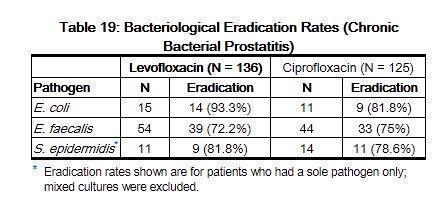
Image Description (Table19)
This is a table showing the bacteriological eradication rates of Levofloxacin and Ciprofloxacin for patients with Chronic Bacterial Prostatitis. The eradication rates are given in percentage for each type of pathogen. It is mentioned that the rates apply only for patients with a sole pathogen and not for mixed cultures.*
Image Description (Table1a)
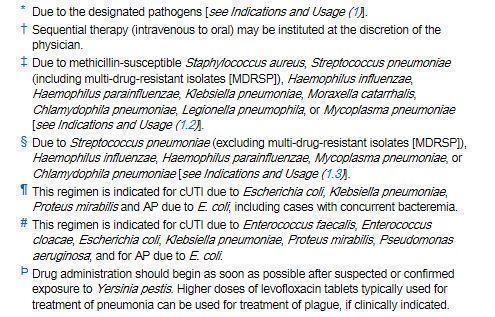
This appears to be a medication guide for different bacterial infections. It outlines the types of bacteria that the medication is effective against, and advises on the correct dosage and administration of the drugs. It also mentions that in some cases, higher doses may be required depending on the severity of the infection.*
Image Description (Table2)
This text provides dosage instructions for pediatric patients (above 6 months of age) for treating inhalational anthrax and plague infections using Levofloxacin tablets. For pediatric patients above 50 kg, a dose of 500 mg is recommended, whereas for those below 50 kg, dosages of 8 mg/kg or as directed by a physician are suggested. Sequential therapy can be given, but prolonged usage of Levofloxacin tablets in pediatric patients beyond 14 days is not studied and can lead to musculoskeletal adverse events. The administration of the drug should start as soon as possible after the exposure to anthrax and Yersinia pestis, respectively.*
Image Description (Table20)
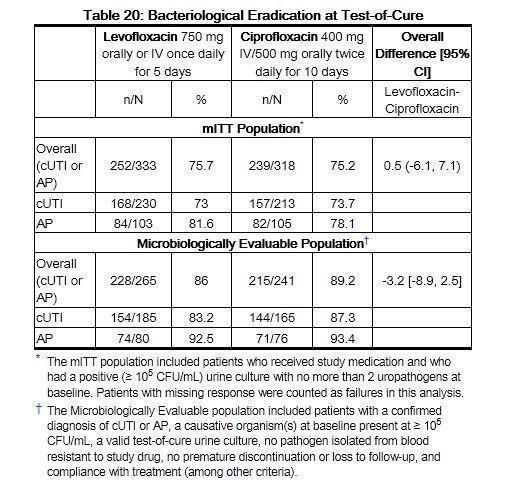
This is a table showing the results of bacteriological eradication at test-of-cure for patients who received different antibiotics for a urinary tract infection or acute pyelonephritis. The table compares the effectiveness of Levofloxacin to Ciprofloxacin in two populations, mITT Population and Microbiologically Evaluable Population. The table displays the number of patients in each population, the eradication rate, and the difference between the two antibiotics. Additionally, there are notes at the bottom of the table providing definitions of the populations and other criteria.*
Image Description (Table21)
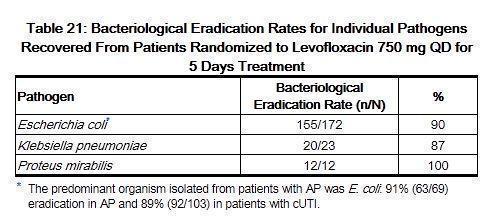
This text presents a table that shows the bacteriological eradication rates of individual pathogens recovered from patients who received treatment with Levofloxacin for 5 days. The table provides data on the percentage of eradication for different bacteria, including Escherichia coli, Klebsiella pneumoniae, and Proteus mirabilis. The text also mentions that the predominant organism found in patients with AP was E. coli, with a 91% eradication rate, while patients with cUTI had an 89% eradication rate.*
Image Description (Table22)
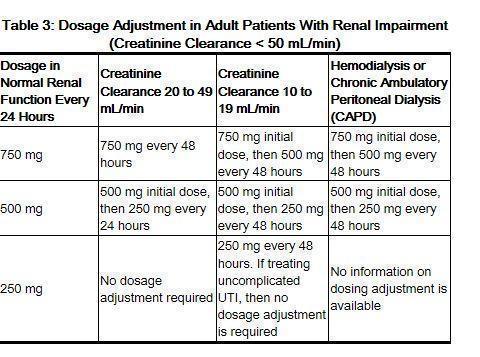
Image Description (Table3)
Image Description (Table6)
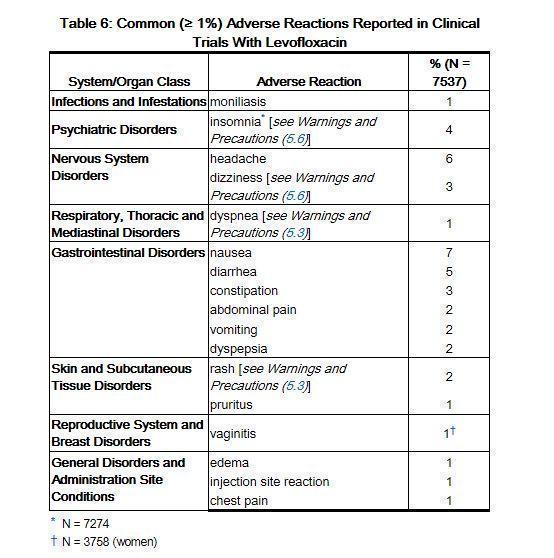
Table 6 shows the common (>1%) adverse reactions reported in clinical trials with Levofloxacin. The adverse reactions include insomnia, headache, diarrhea, nausea, constipation, pruritus, dizziness, abdominal pain, and chest pain, among others. There was also an injection site reaction that occurred in 1% of the cases. The clinical trials involved 7274 participants, and there were 3758 women among them.*
Image Description (Table7)
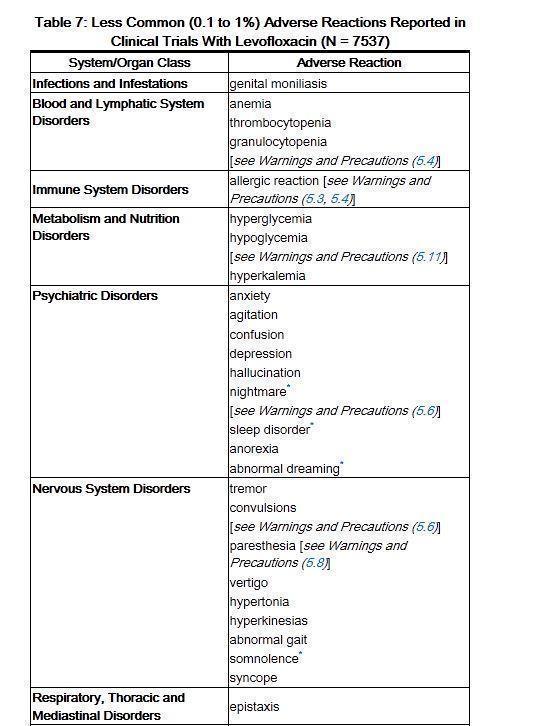
This is a table showing less common adverse reactions reported in clinical trials with Levofloxacin. The table lists several system and organ classes including infections and infestations, blood and lymphatic system disorders, metabolism and nutrition disorders, psychiatric disorders, nervous system disorders, respiratory, thoracic and mediastinal disorders. Some of the adverse effects listed are genital monilasis, anemia, thrombocytopenia, hyerglycemia, tremor, convulsions, and epistaxis.*
Image Description (Table7a)
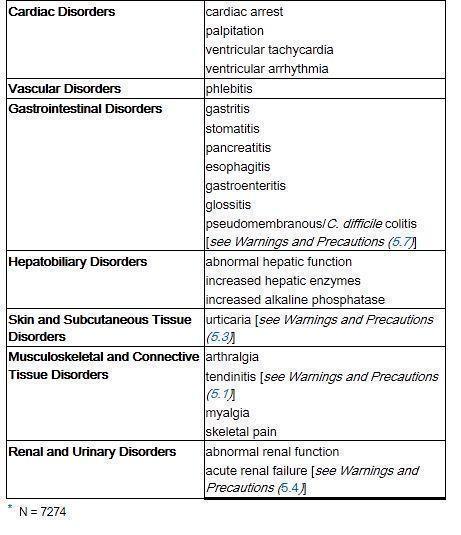
This text appears to be a list of disorders categorized by body system. The disorders listed include cardiac disorders such as arrhythmia and palpitations, vascular disorders such as pruritis, gastrointestinal disorders such as gastritis and colitis, hepatobiliary disorders such as abnormal liver function, skin and subcutaneous tissue disorders such as urticaria, and musculoskeletal and connective tissue disorders such as pain and myalgia. Additionally, renal and urinary disorders are listed including abnormal renal function and acute renal failure.*
Image Description (Table8)
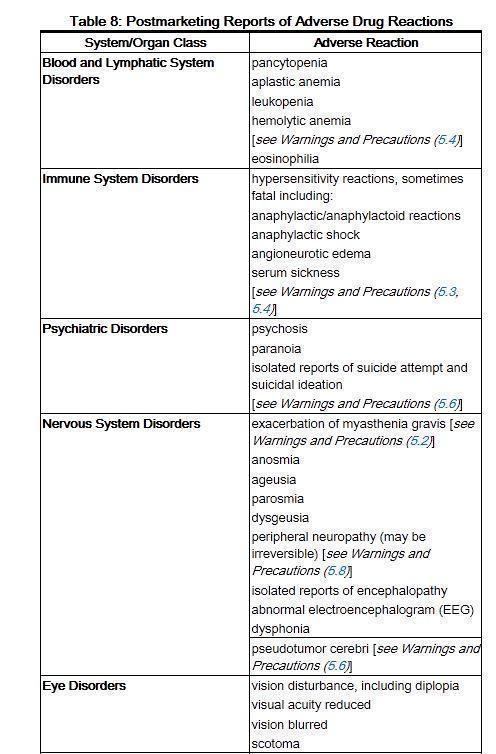
Table 8 provides a list of adverse drug reactions reported after marketing for different body organ systems, including blood and lymphatic system disorders. Reports include pancytopenia, anemia, and leukopenia, among others. The immune system disorders encompass hypersensitivity reactions, sometimes leading to fatal circumstances. Psychiatric disorders include psychosis and suicidal ideation, among others. Nervous system disorders include myasthenia gravis exacerbation and peripheral neuropathy, among others. Eye disorders include visual disturbances and reduced visual acuity.*
Image Description (Table8a)
This text describes the possible side effects of a medication that affect different organs and systems of the body. These effects range from eye disorders such as vision disturbance and diplopia, to skin disorders such as eruptions and photosensitivity, to cardiac disorders with reports of torsade de pointes. Other possible effects include hepatic failure, tendon rupture, and interstitial nephritis. The text also notes prolonged prothrombin time and increased muscle enzymes as potential effects. Users of this medication should also be aware of warnings and precautions related to these symptoms.*
Image Description (Table9)
The table presents the incidence of musculoskeletal disorders in pediatric clinical trials during a one-year follow-up period. The study included 1199 levofloxacin-treated and 804 non-fluoroquinolone-treated children. The incidence rate was 3.4% and 1.8% respectively, with a p-value of 0.025. The study considered all reported events during the specified period for all children enrolled, regardless of whether they completed the one-year evaluation visit.*
* These product label images have been analyzed using experimental machine learning. Please verify findings with the primary label text.