Clinical Trials in Adults with No Antiretroviral Treatment History
The primary safety assessment of BIKTARVY was based on data from two randomized, double-blind, active-controlled trials, Trial 1489 and Trial 1490, that enrolled 1274 adult participants with HIV-1 and no antiretroviral treatment history through Week 144. After Week 144, participants received open-label BIKTARVY in an optional extension phase for an additional 96 weeks (end of study). A total of 634 and 1025 participants received one tablet of BIKTARVY once daily during the double-blind (Week 144) and extension phases, respectively [see Clinical Studies (14.2)].
The most common adverse reactions (all Grades) reported in at least 5% of participants in the BIKTARVY group in either Trial 1489 or Trial 1490 were diarrhea, nausea, and headache. The proportion of participants who discontinued treatment through Week 144 with BIKTARVY, abacavir [ABC]/dolutegravir [DTG]/ lamivudine [3TC]), or DTG + FTC/TAF, due to adverse events, regardless of severity, was 1%, 2%, and 2%, respectively. Table 1 displays the frequency of adverse reactions (all Grades) greater than or equal to 2% in the BIKTARVY group.
Table 1 Adverse ReactionsFrequencies of adverse reactions are based on all adverse events attributed to trial drugs by the investigator. No adverse reactions of Grade 2 or higher occurred in > 1% of participants treated with BIKTARVY.
(All Grades) Reported in ≥ 2% of Adults with HIV-1 and No Antiretroviral Treatment History Receiving BIKTARVY in Trials 1489 or 1490 (Week 144 analysis) | Trial 1489 | Trial 1490 |
|---|
| Adverse Reactions | BIKTARVY
N=314 | ABC/DTG/3TC
N=315 | BIKTARVY
N=320 | DTG + FTC/TAF
N=325 |
|---|
| Diarrhea | 6% | 4% | 3% | 3% |
| Nausea | 6% | 18% | 3% | 5% |
| Headache | 5% | 5% | 4% | 3% |
| Fatigue | 3% | 4% | 2% | 2% |
| Abnormal dreams | 3% | 3% | <1% | 1% |
| Dizziness | 2% | 3% | 2% | 1% |
| Insomnia | 2% | 3% | 2% | <1% |
| Abdominal distention | 2% | 2% | 1% | 2% |
Additional adverse reactions (all Grades) occurring in less than 2% of participants administered BIKTARVY in Trials 1489 and 1490 included vomiting, flatulence, dyspepsia, abdominal pain, rash, and depression.
Suicidal ideation, suicide attempt, and depression suicidal occurred in 2% of participants administered BIKTARVY; these events occurred primarily in participants with a preexisting history of depression, prior suicide attempt or psychiatric illness.
The majority (84%) of adverse events associated with BIKTARVY were Grade 1.
Adverse reactions in the open-label extension phases of Trials 1489 and 1490 were similar to those observed in participants administered BIKTARVY in the Week 144 analysis.
Clinical Trials in Adults with Virologically-Suppressed HIV-1
The safety of BIKTARVY in virologically-suppressed adults was based on Week 48 data from 282 participants in a randomized, double-blind, active-controlled trial (Trial 1844) in which virologically-suppressed participants were switched from either DTG + ABC/3TC or ABC/DTG/3TC to BIKTARVY; Week 48 data from 290 participants in an open-label, active-controlled trial in which virologically-suppressed participants were switched from a regimen containing atazanavir (ATV) (given with cobicistat or ritonavir) or darunavir (DRV) (given with cobicistat or ritonavir) plus either FTC/TDF or ABC/3TC, to BIKTARVY (Trial 1878); and Week 48 data from a randomized, double-blind active-controlled trial in which 284 virologically-suppressed participants were switched from DTG plus either FTC/TAF or FTC/TDF, to BIKTARVY (Trial 4030). Overall, the safety profile in virologically-suppressed adult participants in Trials 1844, 1878, and 4030 was similar to that in participants with no antiretroviral treatment history [see Clinical Studies (14.3)].
Clinical Trial in Adults with End Stage Renal Disease (ESRD) Receiving Chronic Hemodialysis
The safety of FTC and TAF (components of BIKTARVY) was evaluated in a single arm, open-label trial (Trial 1825) in virologically-suppressed adults with ESRD (estimated creatinine clearance of less than 15 mL/min) on chronic hemodialysis treated with FTC+TAF in combination with elvitegravir and cobicistat as a fixed-dose combination tablet for 96 weeks (N=55). The most commonly reported adverse reaction (adverse event assessed as causally related by investigator and all grades) was nausea (7%). Serious adverse events were reported in 65% of participants and the most common serious adverse events were pneumonia (15%), fluid overload (7%), hyperkalemia (11%) and osteomyelitis (7%). Overall 7% of participants permanently discontinued treatment due to an adverse event. In an extension phase of Trial 1825 in which 10 participants switched to BIKTARVY for 48 weeks, the safety findings were similar to those in the initial phase of the open-label trial [see Use in Specific Populations (8.6), and Clinical Studies (14.3)].
Laboratory Abnormalities
The frequency of laboratory abnormalities (Grades 3–4) occurring in at least 2% of participants receiving BIKTARVY in Trials 1489 and 1490 are presented in Table 2.
Table 2 Laboratory Abnormalities (Grades 3–4) Reported in ≥ 2% of Participants Receiving BIKTARVY in Trials 1489 or 1490 (Week 144 analysis) | Trial 1489 | Trial 1490 |
|---|
| Laboratory Parameter Abnormality Frequencies are based on treatment-emergent laboratory abnormalities. | BIKTARVY
N=314 | ABC/DTG/3TC
N=315 | BIKTARVY
N=320 | DTG + FTC/TAF
N=325 |
|---|
| ULN = Upper limit of normal |
| Amylase (>2.0 × ULN) | 3% | 4% | 3% | 4% |
| ALT (>5.0 × ULN) | 2% | 2% | 3% | 1% |
| AST (>5.0 × ULN) | 5% | 3% | 2% | 3% |
| Creatine Kinase (≥10.0 × ULN) | 8% | 8% | 6% | 4% |
| Neutrophils (<750 mm3) | 3% | 4% | 3% | 2% |
| LDL-cholesterol (fasted) (>190 mg/dL) | 5% | 5% | 4% | 6% |
| Lipase (> 3.0 × ULN) Lipase test performed only in participants with serum amylase > 1.5 × ULN. | 2% | 2% | <1% | 2% |
| GGT (>5.0 × ULN) | 2% | 2% | 1% | 1% |
Changes in Serum Creatinine: BIC has been shown to increase serum creatinine due to inhibition of tubular secretion of creatinine without affecting renal glomerular function [see Clinical Pharmacology (12.2)]. Increases in serum creatinine occurred by Week 4 of treatment and remained stable through Week 144. In Trials 1489 and 1490, median (Q1, Q3) serum creatinine increased by 0.11 (0.03, 0.19) mg per dL from baseline to Week 144 in the BIKTARVY group and was similar to the comparator groups who received ABC/DTG/3TC, or DTG + FTC/TAF. There were no discontinuations due to renal adverse events and renal serious adverse events were encountered in less than 1% of participants treated with BIKTARVY through Week 144 in clinical trials.
Changes in Bilirubin: In Trials 1489 and 1490, total bilirubin increases were observed in 17% of participants administered BIKTARVY through Week 144. Increases were primarily Grade 1 (1.0 to 1.5 × ULN) (12%) and Grade 2 (1.5 to 2.5 x ULN) (4%). Graded bilirubin increases in the ABC/DTG/3TC, and DTG + FTC/TAF groups, were 7% and 8%, respectively. Increases were primarily Grade 1 (5% ABC/DTG/3TC and 7% DTG + FTC/TAF) or Grade 2 (2% ABC/DTG/3TC and 2% DTG + FTC/TAF). There were no discontinuations due to hepatic adverse events through Week 144 in BIKTARVY clinical studies.
Clinical Trials in Pediatric Participants
The safety of BIKTARVY was evaluated in participants with virologically-suppressed HIV-1 between the ages of 12 to less than 18 years and weighing at least 35 kg (N=50) through Week 48 (cohort 1), in virologically-suppressed participants between the ages of 6 to less than 12 years and weighing at least 25 kg (N=50) through Week 24 (cohort 2), and in virologically suppressed participants at least 2 years of age and weighing at least 14 to less than 25 kg (N=22) through Week 24 (cohort 3) in an open label clinical trial (Trial 1474) [see Clinical Studies (14.4)]. No new adverse reactions or laboratory abnormalities were identified compared to those observed in adults. Adverse reactions were reported in 11% of pediatric participants. The majority (76%) of adverse reactions were Grade 1. No Grade 3 or 4 adverse reactions were reported. The adverse reaction reported by more than one subject (regardless of severity) was abdominal discomfort (n=2). One subject (1%) had Grade 2 adverse reactions of insomnia and anxiety that led to discontinuation of BIKTARVY. The other adverse reactions that occurred in single participants were similar to those seen in adults.
Renal and Urinary Disorders
Acute renal failure, acute tubular necrosis, proximal renal tubulopathy, and Fanconi syndrome
Skin and Subcutaneous Tissue Disorders
Angioedema, Stevens-Johnson syndrome/toxic epidermal necrolysis, and urticaria
Investigations
Weight increased
Pregnancy Exposure Registry
There is a pregnancy exposure registry that monitors pregnancy outcomes in individuals exposed to BIKTARVY during pregnancy. Healthcare providers are encouraged to register patients by calling the Antiretroviral Pregnancy Registry (APR) at 1-800-258-4263.
Risk Summary
Available data from observational studies and the APR with BIC, FTC and TAF use during pregnancy have not established a drug-associated risk of major birth defects, miscarriage or other adverse maternal or fetal outcomes. Reports of pregnant individuals treated with products containing BIC, FTC, or TAF contribute to APR’s overall risk assessment for these components. Available data from the APR show no statistically significant difference in the overall risk of major birth defects for BIC, FTC, or TAF compared with the background rate for major birth defects of 2.7% in a U.S. reference population of the Metropolitan Atlanta Congenital Defects Program (MACDP) (see Data). The rate of miscarriage is not reported in the APR. The estimated background rate of miscarriage in the clinically recognized pregnancies in the U.S. general population is 15-20%.
BIKTARVY safety has also been evaluated in an open-label trial that demonstrated safety findings that were consistent with other trials in adults (see Data).
In animal reproduction studies, no evidence of adverse developmental outcomes was observed with the components of BIKTARVY at exposures that were either not maternally toxic (rabbits) or greater than (rats and mice) those in humans at the recommended human dose (RHD) (see Data). During organogenesis, systemic exposures (AUC) to BIC were approximately 36 (rats) and 0.6 times (rabbits), to FTC were approximately 60 (mice) and 108 times (rabbits), and to TAF were approximately 2 (rats) and 78 times (rabbits) the exposure at the RHD of BIKTARVY. In rat pre/postnatal development studies, maternal systemic exposures (AUC) were 30 times (BIC), 60 times (FTC), and 19 times (TDF) the exposures of each component in humans at the RHD.
Data
Human Data
BIKTARVY was evaluated in an open-label clinical trial of 33 virologically-suppressed (HIV-1 RNA < 50 copies/mL) pregnant adults with HIV-1 and no known substitutions associated with resistance to BIC, FTC, or TAF. Pregnant adults were administered BIKTARVY (containing 50 mg of BIC, 200 mg of FTC and 25 mg of TAF) once daily from the second or third trimester through postpartum. Exposures of BIC, FTC, and TAF were lower during pregnancy as compared to postpartum [see Clinical Pharmacology (12.3)]. All 32 adult participants who completed the study maintained viral suppression during pregnancy, at delivery, and through Week 18 postpartum. The median CD4+ cell count at baseline was 558 cells/µL, and the median change in CD4+ cell count from baseline to Week 12 postpartum was 159 cells/μL. All 29 neonate participants had negative/nondetectable HIV-1 PCR results at birth and/or at 4 to 8 weeks post-birth. The safety findings in this trial were consistent with other trials in adults.
BIKTARVY was only studied in pregnant individuals who were virologically-suppressed, and lower plasma exposures of BIKTARVY were observed during pregnancy compared to post-partum. Therefore, BIKTARVY is recommended in pregnant individuals who are virologically-suppressed on a stable antiretroviral regimen with no known substitutions associated with resistance to any of the individual components of BIKTARVY.
Bictegravir (BIC):
Based on prospective reports to the APR of over 500 exposures to a BIC-containing regimen during pregnancy resulting in live births (including 423 exposed in the first trimester and 113 exposed in the second/third trimester), the prevalence of birth defects in live births was 4.3% (95% CI: 2.5% to 6.6%) and 1.8% (0.2%, 6.2%) following first and second/third trimester exposure, respectively, to a BIC-containing regimen.
Emtricitabine (FTC):
Based on prospective reports to the APR of over 6,500 exposures to FTC-containing regimens during pregnancy resulting in live births (including over 4,800 exposed in the first trimester and over 1,700 exposed in the second/third trimester), the prevalence of birth defects in live births was 2.9% (95% CI: 2.5% to 3.4%) and 2.8% (95% CI: 2.1% to 3.7%) following first and second/third trimester exposure, respectively, to FTC-containing regimens.
Tenofovir Alafenamide (TAF):
Based on prospective reports to the APR of over 1,200 exposures to TAF-containing regimens during pregnancy resulting in live births (including over 1000 exposed in the first trimester and over 200 exposed in the second/third trimester), the prevalence of birth defects in live births was 3.9% (95% CI: 2.8% to 5.2%) and 4.8% (95% CI: 2.5% to 8.3%) following first and second/third trimester exposure, respectively, to TAF-containing regimens.
Methodological limitations of the APR include the use of MACDP as the external comparator group. The MACDP population is not disease-specific, evaluates individuals and infants from a limited geographic area, and does not include outcomes for births that occurred at less than 20 weeks gestation.
Animal Data
Bictegravir: BIC was administered orally to pregnant rats (5, 30, or 300 mg/kg/day) and rabbits (100, 300, or 1000 mg/kg/day) on gestation days 7 through 17, and 7 through 19, respectively. No adverse embryo-fetal effects were observed in rats and rabbits at BIC exposures (AUC) of up to approximately 36 (rats) and 0.6 (rabbits) times the exposure in humans at the RHD of BIKTARVY. Spontaneous abortion, increased clinical signs [fecal changes, thin body, and cold-to-touch], and decreased body weight were observed at a maternally toxic dose in rabbits (1000 mg/kg/day; approximately 1.4 times higher than human exposure at the RHD).
In a pre/postnatal development study, BIC was administered orally to pregnant rats (up to 300 mg/kg/day) from gestation days 6 to lactation/post-partum day 24. No significant adverse effects were observed in the offspring exposed daily from before birth (in utero) through lactation at maternal and pup exposures (AUC) of approximately 30 and 11 times higher, respectively, than human exposures at the RHD.
Emtricitabine: FTC was administered orally to pregnant mice (250, 500, or 1000 mg/kg/day) and rabbits (100, 300, or 1000 mg/kg/day) through organogenesis (on gestation days 6 through 15, and 7 through 19, respectively). No significant toxicological effects were observed in embryo-fetal toxicity studies performed with emtricitabine in mice at exposures approximately 60 times higher and in rabbits at approximately 108 times higher than human exposures at the RHD.
In a pre/postnatal development study with FTC, mice were administered doses up to 1000 mg/kg/day; no significant adverse effects directly related to drug were observed in the offspring exposed daily from before birth (in utero) through sexual maturity at daily exposures (AUC) of approximately 60 times higher than human exposures at the RHD.
Tenofovir alafenamide: TAF was administered orally to pregnant rats (25, 100, or 250 mg/kg/day) and rabbits (10, 30, or 100 mg/kg/day) through organogenesis (on gestation days 6 through 17, and 7 through 20, respectively). No adverse embryo-fetal effects were observed in rats and rabbits at TAF exposures of approximately 2 (rats) and 78 (rabbits) times higher than the exposure in humans at the recommended daily dose of BIKTARVY. TAF is rapidly converted to tenofovir; the observed tenofovir exposure in rats and rabbits were 55 (rats) and 86 (rabbits) times higher than human tenofovir exposures at the RHD. Since TAF is rapidly converted to tenofovir and lower tenofovir exposures in rats and mice were observed after TAF administration compared to TDF administration, a pre/postnatal development study in rats was conducted only with TDF. Doses up to 600 mg/kg/day were administered through lactation; no adverse effects were observed in the offspring on gestation day 7 [and lactation day 20] at tenofovir exposures of approximately 12 [19] times higher than the exposures in humans at the RHD of BIKTARVY.
Risk Summary
Data from the published literature report the presence of BIC, FTC, TAF, and tenofovir in human milk. There are no data on the effects of BIC on the breastfed child. Data from the published literature have not reported adverse effects of FTC or TAF on a breastfed child. There are no data on the effects of BIC, FTC or TAF on milk production.
Potential risks of breastfeeding include: (1) HIV-1 transmission to HIV-1–negative infants; (2) developing viral resistance in HIV-1–positive infants; and (3) adverse reactions in a breastfed infant similar to those seen in adults.
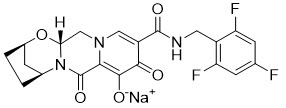
Bictegravir: The chemical name of bictegravir sodium is 2,5-Methanopyrido[1’,2’:4,5]pyrazino[2,1-b][1,3]oxazepine-10-carboxamide, 2,3,4,5,7,9,13,13a-octahydro-8-hydroxy-7,9-dioxo-N-[(2,4,6-trifluorophenyl)methyl]-, sodium salt (1:1), (2R,5S,13aR)-.
Bictegravir sodium has a molecular formula of C21H17F3N3NaO5 and a molecular weight of 471.4 and has the following structural formula:

Chemical Structure (Biktarvy 01)
Bictegravir sodium is an off-white to yellow solid with a solubility of 0.1 mg per mL in water at 20 °C.
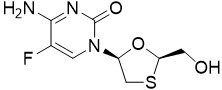
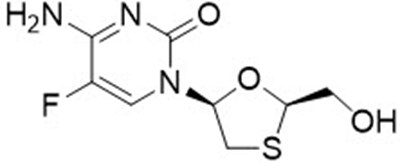
Emtricitabine: The chemical name of FTC is 4-amino-5-fluoro-1-(2R-hydroxymethyl-1,3-oxathiolan-5S-yl)-(1H)-pyrimidin-2-one. FTC is the (-)enantiomer of a thio analog of cytidine, which differs from other cytidine analogs in that it has a fluorine in the 5 position.
FTC has a molecular formula of C8H10FN3O3S and a molecular weight of 247.2 and has the following structural formula:
Chemical Structure (Biktarvy 02)
FTC is a white to off-white powder with a solubility of approximately 112 mg per mL in water at 25 °C.
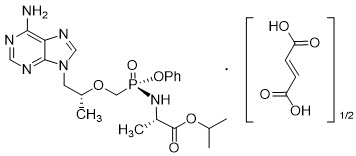
Tenofovir alafenamide: The chemical name of tenofovir alafenamide fumarate drug substance is L-alanine, N-[(S)-[[(1R)-2-(6-amino-9H-purin-9-yl)-1-methylethoxy]methyl]phenoxyphosphinyl]-, 1-methylethyl ester, (2E)-2-butenedioate (2:1).
Tenofovir alafenamide fumarate has an empirical formula of C21H29O5N6P•½(C4H4O4) and a formula weight of 534.5 and has the following structural formula:

Chemical Structure (Biktarvy 03)
Tenofovir alafenamide fumarate is a white to off-white or tan powder with a solubility of 4.7 mg per mL in water at 20 °C.
Cardiac Electrophysiology
In a thorough QT/QTc trial in 48 healthy participants, BIC at doses 1.5 and 6 times the recommended dose did not affect the QT/QTc interval and did not prolong the PR interval. In a thorough QT/QTc trial in 48 healthy participants, TAF at the recommended dose or at a dose 5 times the recommended dose, did not affect the QT/QTc interval and did not prolong the PR interval. The effect of FTC on the QT interval is not known.
Effects on Serum Creatinine
Mean change from baseline in serum creatinine in healthy participants who received BIC 75 mg (1.5 times the approved recommended dosage) once daily with food for 14 days was 0.1 mg per dL on Days 7 and 14 compared to placebo. BIC did not have a significant effect on the estimated creatinine clearance or on the actual glomerular filtration rate (determined by the clearance of probe drug, iohexol).
Specific Populations
Patients with Renal Impairment
No clinically relevant differences in the pharmacokinetics of BIC, TAF, or its metabolite tenofovir were observed between participants with severe renal impairment (estimated creatinine clearance of 15 to less than 30 mL/min, by Cockcroft-Gault method) and healthy participants in Phase 1 studies. In a separate Phase 1 study of FTC alone, FTC exposures were increased in participants with severe renal impairment.
The pharmacokinetics of BIC, FTC and TAF were evaluated in a subset of HIV-1 infected virologically-suppressed participants with ESRD (estimated creatinine clearance less than 15 mL/min, by Cockcroft-Gault method) receiving chronic hemodialysis in Trial 1825. The pharmacokinetics of TAF were similar between healthy participants and participants with ESRD receiving chronic hemodialysis; increases in FTC and tenofovir exposures in participants with ESRD were not considered clinically relevant. Median (minimum, maximum) BIC Ctrough values in participants (n=7) with ESRD who received BIKTARVY were 846 ng/mL (288, 1810) compared to 2540 ng/mL (757, 6499) in participants (N=584) with normal renal function. Despite significantly lower BIC Ctrough values in the virologically-suppressed ESRD population, virologic suppression was maintained [see Use in Specific Populations (8.6), and Clinical Studies (14.3)].
Patients with Hepatic Impairment
Bictegravir: Clinically relevant changes in the pharmacokinetics of BIC were not observed in participants with moderate (Child-Pugh Class B) hepatic impairment.
Emtricitabine: The pharmacokinetics of FTC has not been studied in participants with hepatic impairment; however, FTC is not significantly metabolized by liver enzymes, so the impact of hepatic impairment should be limited.
Tenofovir Alafenamide: Clinically relevant changes in the pharmacokinetics of TAF or its metabolite tenofovir were not observed in participants with mild or moderate (Child-Pugh Class A and B) hepatic impairment [see Use in Specific Populations (8.7)].
Hepatitis B and/or Hepatitis C Virus Coinfection
The pharmacokinetics of BIC, FTC, and TAF have not been evaluated in participants with hepatitis B and/or C virus.
Geriatric Patients
The pharmacokinetics of BIC, FTC, and TAF have not been fully evaluated in the elderly (65 years of age and older). Population pharmacokinetics analysis of HIV-infected participants in Phase 3 trials of BIKTARVY showed that age did not have a clinically relevant effect on exposures of BIC and TAF up to 74 years of age [see Use in Specific Populations (8.5)].
Pediatric Patients
Mean BIC Ctrough was lower in 50 pediatric patients aged 12 to less than 18 years and weighing at least 35 kg who received BIKTARVY in Trial 1474 relative to adults following administration of BIKTARVY, but was not considered clinically significant based on exposure-response relationships; exposures of FTC and TAF in these pediatric patients were similar to those in adults (Table 6).
Table 6 Multiple Dose PK Parameters of BIC, FTC, and TAF Following Oral Administration of BIKTARVY in Pediatric Participants with HIV-1 Aged 12 to less than 18 years| Parameter Mean (CV%) | Bictegravir From Population PK analysis of cohort 1 of Trial 1474 (n=50 for BIC; n=49 for TAF). | Emtricitabine From Intensive PK analysis of cohort 1 of Trial 1474 (n=24). | Tenofovir Alafenamide |
|---|
| CV=Coefficient of Variation; NA=Not Applicable |
Cmax
(microgram per mL) | 6.24 (27.1) | 2.69 (34.0) | 0.133 (70.2) |
AUCtau
(microgram•h per mL) | 89.1 (31.0) | 13.6 (21.7) | 0.196 (50.3) |
Ctrough
(microgram per mL) | 1.78 (44.4) | 0.064 (25.0) | NA |
Mean BIC Cmax, and exposures of FTC and TAF (AUCtau and Cmax) achieved in 50 pediatric patients between the ages of 6 to less than 12 years and weighing at least 25 kg, and in 22 pediatric patients at least 2 years of age and weighing at least 14 to less than 25 kg who received BIKTARVY in Trial 1474 were higher than exposures in adults; however, the increases were not considered clinically significant as the safety profiles were similar in adult and pediatric patients (Tables 7 and 8) [see Use in Specific Populations (8.4)].
Table 7 Multiple Dose PK Parameters of BIC, FTC, and TAF Following Oral Administration of BIKTARVY in Pediatric Participants with HIV-1 Aged 6 to less than 12 years| Parameter Mean (CV%) | Bictegravir From Population PK analysis of cohort 2 of Trial 1474 (n=50 for BIC; n=47 for TAF). | Emtricitabine From Intensive PK analysis of cohort 2 of Trial 1474 (n=25 except n=24 for Ctrough). | Tenofovir Alafenamide |
|---|
| CV=Coefficient of Variation; NA=Not Applicable |
Cmax
(microgram per mL) | 9.46 (24.3) | 3.89 (31.0) | 0.205 (44.6) |
AUCtau
(microgram•h per mL) | 128 (27.8) | 17.6 (36.9) | 0.278 (40.3) |
Ctrough
(microgram per mL) | 2.36 (39.0) | 0.227 (323) | NA |
Table 8 Multiple Dose PK Parameters of BIC, FTC, and TAF Following Oral Administration of BIKTARVY in Pediatric Participants with HIV-1 at Least 2 Years of AgeCohort 3 of Trial 1474 enrolled pediatric participants from 3 to 9 years of age.
and Weighing at Least 14 to Less than 25 kg| Parameter Mean (CV%) | Bictegravir From Population PK analysis of cohort 3 of Trial 1474 (n=22). | Emtricitabine From Intensive PK analysis of cohort 3 of Trial 1474 (n=12 except n=11 for Ctrough for FTC). | Tenofovir Alafenamide |
|---|
| CV=Coefficient of Variation; NA=Not Applicable |
Cmax
(microgram per mL) | 9.15 (44.8) | 3.85 (34.7) | 0.414 (31.0) |
AUCtau
(microgram•h per mL) | 126 (42.4) | 15.0 (21.9) | 0.305 (42.6) |
Ctrough
(microgram per mL) | 2.43 (40.1) | 0.210 (243) | NA |
Race and Gender
No clinically relevant changes in the pharmacokinetics of BIC, FTC, and TAF were observed based on gender or race.
Pregnancy
Plasma exposures (Ctrough and AUCtau) of BIC, FTC, and TAF after intake of BIKTARVY 50 mg/200 mg/25 mg were lower during pregnancy as compared to postpartum (Table 9). The exposure changes during pregnancy are not considered clinically significant in virologically suppressed pregnant individuals [see Drug Interactions (7.5)].
Table 9 Steady-state PK Parameters of BIC, FTC, and TAF Following Oral Administration of BIKTARVY in Virologically-Suppressed Pregnant Adults with HIV-1 in the Second and Third Trimesters and Week 12 Postpartum| Parameter Mean (%CV) | Second Trimester
(N=21) | Third Trimester
(N=30) | Week 12 Postpartum
(N=32) |
|---|
| CV = Coefficient of Variation; NA = Not Available |
| Bictegravir |
Cmax
(microgram per mL) | 5.82 (30.1) | 5.37 (25.9) | 11.03 (24.9) |
AUCtau
(microgram•h per mL) | 62.8 (32.2) | 60.2 (29.1) | 148.3 (28.5) |
Unbound AUCtau
(microgram•h per mL) | 0.224 (42.0) | 0.219 (33.9) | 0.374 (32.2) |
Ctrough
(microgram per mL) | 1.05 (45.2) | 1.07 (41.7) | 3.64 (34.1) |
| Emtricitabine |
Cmax
(microgram per mL) | 2.64 (36.6) | 2.59 (26.5) | 3.36 (26.9) |
AUCtau
(microgram•h per mL) | 10.3 (20.0) | 10.4 (20.3) | 15.3 (21.9) |
Ctrough
(microgram per mL) | 0.06 (103.9) | 0.05 (27.2) | 0.08 (33.7) |
| Tenofovir Alafenamide |
Cmax
(microgram per mL) | 0.33 (52.1) | 0.27 (42.1) | 0.49 (52.5) |
AUCtau
(microgram•h per mL) | 0.24 (45.6) | 0.21 (45.0) | 0.30 (31.8) |
Unbound AUCtau
(microgram•h per mL) | 0.015 (28.2) | 0.016 (28.4) | 0.017 (23.4) |
Drug Interaction Studies
As BIKTARVY is a complete regimen for the treatment of HIV-1 infection, comprehensive information regarding potential drug-drug interactions with other antiretroviral agents is not provided.
BIC is a substrate of CYP3A and UGT1A1.
BIC is an inhibitor of OCT2 and MATE1. At clinically relevant concentrations, BIC is not an inhibitor of hepatic transporters OATP1B1, OATP1B3, OCT1, BSEP, renal transporters OAT1 and OAT3, or CYP (including CYP3A) or UGT1A1 enzymes.
TAF is a substrate of P-gp and BCRP.
At clinically relevant concentrations, TAF is not an inhibitor of drug transporters P-gp, BCRP, hepatic transporters OATP1B1, OATP1B3, OCT1, BSEP, renal transporters OAT1, OAT3, OCT2, MATE1, or CYP (including CYP3A) or UGT1A1 enzymes.
Drug interaction studies were conducted with BIKTARVY or its components. Tables 10 and 11 summarize the pharmacokinetic effects of other drugs on BIC and TAF, respectively. Table 12 summarizes the pharmacokinetic effects of BIKTARVY or its components on other drugs.
Effect of Other Drugs on BIKTARVY Components
Table 10 Effect of Other Drugs on BICAll interaction studies conducted in healthy volunteers.
| Coadministered Drug | Dose of Coadministered Drug (mg) | BIC (mg) | Mean Ratio of BIC Pharmacokinetic Parameters (90% CI); No effect = 1.00 |
|---|
| Cmax | AUC | Cmin |
|---|
| NA= Not Applicable |
| Ledipasvir/Sofosbuvir (fed) | 90/400 once daily | 75 once daily | 0.98
(0.94, 1.03) | 1.00
(0.97, 1.03) | 1.04
(0.99, 1.09) |
Rifabutin
(fasted) | 300 once daily | 75 once daily | 0.80
(0.67, 0.97) | 0.62
(0.53, 0.72) | 0.44
(0.37, 0.52) |
Rifampin
(fed) | 600 once daily | 75 single dose | 0.72
(0.67, 0.78) | 0.25
(0.22, 0.27) | NA |
Sofosbuvir/ velpatasvir/ voxilaprevir
(fed) | 400/100/100+100 voxilaprevir Study conducted with additional voxilaprevir 100 mg to achieve voxilaprevir exposures expected in HCV-infected patients. once daily | 50 once daily | 0.98
(0.94, 1.01) | 1.07
(1.03, 1.10) | 1.10
(1.05, 1.17) |
Voriconazole
(fasted) | 300 twice daily | 75 single dose | 1.09
(0.96, 1.23) | 1.61
(1.41, 1.84) | NA |
Maximum strength antacid
(simultaneous administration, fasted) | 20 mL Maximum strength antacid contained 80 mg aluminum hydroxide, 80 mg magnesium hydroxide, and 8 mg simethicone, per mL. single dose (oral) | 50 single dose | 0.20
(0.16, 0.24) | 0.21
(0.18, 0.26) | NA |
Maximum strength antacid
(2 h after BIKTARVY fasted) | 20 mL single dose (oral) | 50 single dose | 0.93
(0.88, 1.00) | 0.87
(0.81, 0.93) | NA |
Maximum strength antacid
(2 h before BIKTARVY fasted) | 20 mL single dose (oral) | 50 single dose | 0.42
(0.33, 0.52) | 0.48
(0.38, 0.59) | NA |
Maximum strength antacid
(simultaneous administration, fedReference treatment administered under fasted conditions. ) | 20 mL single dose (oral) | 50 single dose | 0.51
(0.43, 0.62) | 0.53
(0.44, 0.64) | NA |
Calcium carbonate
(simultaneous administration, fasted) | 1200 single dose | 50 single dose | 0.58
(0.51, 0.67) | 0.67
(0.57, 0.78) | NA |
Calcium carbonate
(simultaneous administration, fed) | 1200 single dose | 50 single dose | 0.90
(0.78, 1.03) | 1.03
(0.89, 1.20) | NA |
Ferrous fumarate
(simultaneous administration, fasted) | 324 single dose | 50 single dose | 0.29
(0.26, 0.33) | 0.37
(0.33, 0.42) | NA |
Ferrous fumarate
(simultaneous administration, fed) | 324 single dose | 50 single dose | 0.75
(0.65, 0.87) | 0.84
(0.74, 0.95) | NA |
Table 11 Effect of Other Drugs on TAFAll interaction studies conducted in healthy volunteers.
| Coadministered Drug | Dose of Coadministered Drug (mg) | Tenofovir Alafenamide (mg) | Mean Ratio of Tenofovir Alafenamide Pharmacokinetic Parameters (90% CI); No effect = 1.00 |
|---|
| Cmax | AUC | Cmin |
|---|
| NA= Not Applicable |
| Carbamazepine | 300 twice daily | 25 single dose Study conducted with emtricitabine/tenofovir alafenamide. | 0.43
(0.36, 0.51) | 0.46
(0.40, 0.54) | NA |
| Ledipasvir/sofosbuvir | 90/400 once daily | 25 once daily | 1.17
(1.00, 1.38) | 1.27
(1.19, 1.34) | NA |
| Sofosbuvir/ velpatasvir/ voxilaprevir | 400/100/100 +100 voxilaprevir Study conducted with additional voxilaprevir 100 mg to achieve voxilaprevir exposures expected in HCV-infected patients. once daily | 25 once daily | 1.28
(1.09, 1.51) | 1.57
(1.44, 1.71) | NA |
Effect of BIKTARVY Components on Other Drugs
Table 12 Effect of Components of BIKTARVY on Other DrugsAll interaction studies conducted in healthy volunteers.
| Coadministered Drug | Dose of Coadministered Drug (mg) | BIC (mg) | TAF (mg) | Mean Ratio of Coadministered Drug Pharmacokinetic Parameters (90% CI); No effect = 1.00 |
|---|
| Cmax | AUC | Cmin |
|---|
| NA= Not Applicable |
| Ledipasvir | 90/400 once daily | 75 once daily | 25 once daily | 0.85
(0.81, 0.90) | 0.87
(0.83, 0.92) | 0.90
(0.84, 0.96) |
| Sofosbuvir | 1.11
(1.00, 1.24) | 1.07
(1.01, 1.13) | NA |
| GS-331007 The predominant circulating nucleoside metabolite of sofosbuvir. | 1.10
(1.07, 1.13) | 1.11
(1.08, 1.14) | 1.02
(0.99, 1.06) |
| Metformin | 500 twice daily | 50 once daily | 25 once daily | 1.28
(1.21, 1.36) | 1.39
(1.31, 1.48) | 1.36
(1.21, 1.53) |
| Midazolam | 2 single dose | 50 once daily | 25 once daily | 1.03
(0.87, 1.23) | 1.15
(1.00, 1.31) | NA |
| Norelgestromin | norgestimate 0.180/0.215/0.250 once daily / ethinyl estradiol 0.025 once daily | 75 once daily | - | 1.23
(1.14, 1.32) | 1.08
(1.05, 1.10) | 1.10
(1.05, 1.15) |
| Norgestrel | 1.15
(1.10, 1.21) | 1.13
(1.07, 1.19) | 1.14
(1.06, 1.22) |
| Ethinyl estradiol | 1.15
(1.03, 1.27) | 1.04
(0.99, 1.10) | 1.05
(0.95, 1.14) |
| Norelgestromin | norgestimate 0.180/0.215/0.250 once daily / ethinyl estradiol 0.025 once daily | - | 25 once daily Study conducted with emtricitabine/tenofovir alafenamide. | 1.17
(1.07,1.26) | 1.12
(1.07,1.17) | 1.16
(1.08, 1.24) |
| Norgestrel | 1.10
(1.02, 1.18) | 1.09
(1.01, 1.18) | 1.11
(1.03, 1.20) |
| Ethinyl estradiol | 1.22
(1.15, 1.29) | 1.11
(1.07, 1.16) | 1.02
(0.92, 1.12) |
| Sertraline | 50 single dose | - | 10 once daily Study conducted with elvitegravir/cobicistat/emtricitabine/tenofovir alafenamide. | 1.14
(0.94, 1.38) | 0.93
(0.77, 1.13) | NA |
| Sofosbuvir | 400/100/100+100 Study conducted with additional voxilaprevir 100 mg to achieve voxilaprevir exposures expected in HCV-infected patients. once daily | 50 once daily | 25 once daily | 1.14
(1.04,1.25) | 1.09
(1.02, 1.15) | NA |
| GS-331007 | 1.03
(0.99,1.06) | 1.03
(1.00,1.06) | 1.01
(0.98, 1.05) |
| Velpatasvir | 0.96
(0.91,1.01) | 0.96
(0.90, 1.02) | 0.94
(0.88, 1.01) |
| Voxilaprevir | 0.90
(0.76, 1.06) | 0.91
(0.80, 1.03) | 0.97
(0.88, 1.06) |
Mechanism of Action
Bictegravir: BIC inhibits the strand transfer activity of HIV-1 integrase (integrase strand transfer inhibitor; INSTI), an HIV-1 encoded enzyme that is required for viral replication. Inhibition of integrase prevents the integration of linear HIV-1 DNA into host genomic DNA, blocking the formation of the HIV-1 provirus and propagation of the virus.
Emtricitabine: FTC, a synthetic nucleoside analog of cytidine, is phosphorylated by cellular enzymes to form emtricitabine 5'-triphosphate. Emtricitabine 5'-triphosphate inhibits the activity of the HIV-1 RT by competing with the natural substrate deoxycytidine 5'-triphosphate and by being incorporated into nascent viral DNA which results in chain termination. Emtricitabine 5′-triphosphate is a weak inhibitor of mammalian DNA polymerases α, β, Ɛ, and mitochondrial DNA polymerase γ.
Tenofovir Alafenamide: TAF is a phosphonamidate prodrug of tenofovir (2′-deoxyadenosine monophosphate analog). Plasma exposure to TAF allows for permeation into cells and then TAF is intracellularly converted to tenofovir through hydrolysis by cathepsin A. Tenofovir is subsequently phosphorylated by cellular kinases to the active metabolite tenofovir diphosphate. Tenofovir diphosphate inhibits HIV-1 replication through incorporation into viral DNA by the HIV RT, which results in DNA chain-termination. Tenofovir diphosphate is a weak inhibitor of mammalian DNA polymerases that include mitochondrial DNA polymerase γ and there is no evidence of toxicity to mitochondria in cell culture.
Antiviral Activity in Cell Culture
The triple combination of BIC, FTC, and TAF was not antagonistic with respect to antiviral activity in cell culture.
Bictegravir: The antiviral activity of BIC against laboratory and clinical isolates of HIV-1 was assessed in lymphoblastoid cell lines, PBMCs, primary monocyte/macrophage cells, and CD4+ T-lymphocytes. In MT-4 cells (human lymphoblastoid T-cell line) acutely infected with HIV-1 IIIB, the mean 50% effective concentration (EC50) was 2.4±0.4 nM, and the protein-adjusted EC95 value was 361 nM (0.162 micrograms per mL). BIC displayed antiviral activity in activated PBMCs against clinical isolates of HIV-1 representing groups M, N, and O, including subtypes A, B, C, D, E, F, and G, with a median EC50 value of 0.55 nM (range <0.05 to 1.71 nM). The EC50 value against a single HIV-2 isolate was 1.1 nM.
Emtricitabine: The antiviral activity of FTC against laboratory and clinical isolates of HIV-1 was assessed in T lymphoblastoid cell lines, the MAGI-CCR5 cell line, and PBMCs. In PBMCs acutely infected with HIV-1 subtypes A, B, C, D, E, F, and G, the median EC50 value for FTC was 9.5 nM (range 1 to 30 nM) and against HIV-2 was 7 nM.
Tenofovir Alafenamide: The antiviral activity of TAF against laboratory and clinical isolates of HIV-1 subtype B was assessed in lymphoblastoid cell lines, PBMCs, primary monocyte/macrophage cells and CD4-T lymphocytes. The EC50 values for TAF ranged from 2.0 to 14.7 nM. TAF displayed antiviral activity in cell culture against all HIV-1 groups (M, N, O), including subtypes A, B, C, D, E, F, and G (EC50 values ranged from 0.1 to 12 nM) and strain specific activity against HIV-2 (EC50 values ranged from 0.9 to 2.6 nM).
Resistance
In Cell Culture
Bictegravir: HIV-1 isolates with reduced susceptibility to BIC have been selected in cell culture. In one selection with BIC, a virus pool emerged expressing amino acid substitutions M50I and R263K in the HIV-1 integrase. M50I, R263K, and M50I+R263K substitutions, when introduced into a wild-type virus by site-directed mutagenesis, conferred 1.3-, 2.2-, and 2.9-fold reduced susceptibility to BIC, respectively. In a second selection, emergence of amino acid substitutions T66I and S153F was detected, and 0.4-, 1.9-, and 0.5-fold reductions in BIC susceptibility were observed with T66I, S153F, and T66I+S153F, respectively. In addition, S24G and E157K substitutions emerged during the selection process.
Emtricitabine: HIV-1 isolates with reduced susceptibility to FTC were selected in cell culture and in participants treated with FTC. Reduced susceptibility to FTC was associated with M184V or I substitutions in HIV-1 RT.
Tenofovir Alafenamide: HIV-1 isolates with reduced susceptibility to TAF were selected in cell culture. HIV-1 isolates selected by TAF expressed a K65R substitution in HIV-1 RT, sometimes in the presence of S68N or L429I substitutions; in addition, a K70E substitution in HIV-1 RT was observed.
In Clinical Trials
In Participants with No Antiretroviral Treatment History: Pooled results of genotypic resistance analyses were performed on paired baseline and on-treatment HIV-1 isolates from participants receiving BIKTARVY in Trials 1489 and 1490 through Week 144 of the double-blind phase (N=634) or Week 96 of the extension phase (n=1025) [see Clinical Studies (14.2)] who had HIV-1 RNA greater than or equal to 200 copies/mL at the time of confirmed virologic failure or early study drug discontinuation. In the final resistance analysis population, no specific amino acid substitutions emerged consistently in the 11 participants with treatment failure and with evaluable genotypic resistance data and failed to establish an association with genotypic BIC resistance. There were no treatment-emergent NRTI resistance-associated substitutions detected in the 11 evaluated treatment failure isolates. Phenotypic resistance analyses of failure isolates found fold-changes in drug susceptibility below the biological or clinical cutoffs for BIC, FTC, and TFV, compared to wild-type reference HIV-1.
In Virologically-Suppressed Adult participants: In 2 of the switch trials, Trials 1844 and 1878, of virologically suppressed HIV-1 infected participants (n=572), only one participants with virologic rebound in the resistance analysis population had IN genotypic and phenotypic data, and 2 rebounders had RT genotypic and phenotypic data. No participants had HIV-1 with treatment-emergent genotypic or phenotypic resistance to BIC, FTC, or TAF. In Trial 4030, no participants receiving BIKTARVY had treatment-emergent phenotypic resistance to BIC, FTC, or TAF.
In Virologically-Suppressed Pediatric Participants: In Trial 1474 [see Clinical Studies (14.4)], two of 50 participants in cohort 1 were evaluated for the development of resistance through Week 48; no amino acid substitutions known to be associated with resistance to BIC, FTC, or TFV were detected. No participants in cohort 2 or 3 met the criteria for resistance analyses through Week 24.
Cross-Resistance
Bictegravir: Cross-resistance has been observed among INSTIs. The susceptibility of BIC was tested against 64 clinical isolates expressing known INSTI resistance-associated substitutions listed by IAS-USA (20 with single substitutions and 44 with 2 or more substitutions). Isolates with a single INSTI-resistance substitution including E92Q, T97A, Y143C/R, Q148R, and N155H showed less than 2-fold reduced susceptibility to BIC. All isolates (n=14) with more than 2.5-fold reduced susceptibility to BIC (above the biological cutoff for BIC) contained G140A/C/S and Q148H/R/K substitutions; the majority (64.3%, 9/14) had a complex INSTI resistance pattern with an additional INSTI-resistance substitution L74M, T97A, or E138A/K. Of those evaluated isolates containing G140A/C/S and Q148H/R/K substitutions in the absence of additional INSTI-resistance substitutions, 38.5% (5/13) showed more than 2.5-fold reduction. In addition, site-directed mutant viruses with G118R (dolutegravir and raltegravir treatment-emergent substitution) and G118R+T97A had 3.4- and 2.8-fold reduced susceptibility to BIC, respectively.
BIC demonstrated equivalent antiviral activity with less than 2-fold reductions in susceptibility against HIV-1 variants expressing substitutions associated with resistance to NNRTIs, NRTIs, and PIs, compared with the wild-type virus.
Emtricitabine: Cross-resistance has been observed among NRTIs. FTC-resistant viruses with an M184V/I substitution in HIV-1 RT were cross-resistant to lamivudine. HIV-1 isolates containing the K65R RT substitution, selected in vivo by abacavir, didanosine, and tenofovir, demonstrated reduced susceptibility to inhibition by FTC.
Tenofovir Alafenamide: Cross-resistance has been observed among NRTIs. Tenofovir resistance substitutions K65R and K70E result in reduced susceptibility to abacavir, didanosine, emtricitabine, lamivudine, and tenofovir. HIV-1 with multiple thymidine analog substitutions (M41L, D67N, K70R, L210W, T215F/Y, K219Q/E/N/R), or multinucleoside resistant HIV-1 with a T69S double insertion mutation or with a Q151M substitution complex including K65R, showed reduced susceptibility to TAF in cell culture.
Bictegravir
BIC was not carcinogenic in a 6-month rasH2 transgenic mouse study at doses of up to 100 mg/kg/day in males and 300 mg/kg/day in females. BIC was not carcinogenic in a 2-year rat study at doses up to 300 mg/kg/day, which resulted in exposures of approximately 31 times the exposure in humans at the recommended dose of BIKTARVY.
BIC was not genotoxic in the reverse mutation bacterial test (Ames test), mouse lymphoma or rat micronucleus assays.
BIC did not affect fertility, reproductive performance or embryonic viability in male and female rats at 29 times higher exposures (AUC) than in humans at the recommended dose of BIKTARVY.
Emtricitabine
In long-term carcinogenicity studies of FTC, no drug-related increases in tumor incidence were found in mice at doses up to 750 mg per kg per day (25 times the human systemic exposure at the recommended dose of BIKTARVY) or in rats at doses up to 600 mg per kg per day (30 times the human systemic exposure at the recommended dose of BIKTARVY).
FTC was not genotoxic in the reverse mutation bacterial test (Ames test), mouse lymphoma or mouse micronucleus assays.
FTC did not affect fertility in male rats at approximately 140 times or in male and female mice at approximately 60 times higher exposures (AUC) than in humans given the recommended dose of BIKTARVY. Fertility was normal in the offspring of mice exposed daily from before birth (in utero) through sexual maturity at daily exposures (AUC) of approximately 60 times higher than human exposures at the recommended dose of BIKTARVY.
Tenofovir Alafenamide
Since TAF is rapidly converted to tenofovir and a lower tenofovir exposure in rats and mice was observed after TAF administration compared to TDF administration, carcinogenicity studies were conducted only with TDF. Long-term oral carcinogenicity studies of TDF in mice and rats were carried out at exposures up to approximately 10 times (mice) and 4 times (rats) those observed in humans following a 300 mg dose of TDF. The tenofovir exposure in these studies was approximately 151 times (mice) and 51 times (rat) those observed in humans after administration of the daily recommended dose of BIKTARVY. At the high dose in female mice, liver adenomas were increased at tenofovir exposures approximately 151 times the exposure observed in humans at the recommended dose of BIKTARVY. In rats, the study was negative for carcinogenic findings.
TAF was not genotoxic in the reverse mutation bacterial test (Ames test), mouse lymphoma or rat micronucleus assays.
There were no effects on fertility, mating performance or early embryonic development when TAF was administered to male rats at a dose equivalent to 155 times the human dose of BIKTARVY based on body surface area comparisons for 28 days prior to mating and to female rats for 14 days prior to mating through Day 7 of gestation.
Cohort 1: Virologically-suppressed adolescents (12 to less than 18 years; at least 35 kg)
Participants in cohort 1 treated with BIKTARVY (containing 50 mg of BIC, 200 mg of FTC, and 25 mg of TAF) once daily had a mean age of 14 years (range: 12 to 17) and a mean baseline weight of 51.7 kg (range: 35 to 123), 64% were female, 27% were Asian and 65% were black. At baseline, median CD4+ cell count was 750 cells per mm3 (range: 337 to 1207), and median CD4+% was 33% (range: 19% to 45%).
After switching to BIKTARVY, 98% (49/50) of participants in cohort 1 remained suppressed (HIV-1 RNA < 50 copies/mL) at Week 48. The mean change from baseline in CD4+ cell count at Week 48 was -22 cells per mm3.
Cohort 2: Virologically-suppressed children (6 to less than 12 years; at least 25 kg)
Participants in cohort 2 treated with BIKTARVY once daily had a mean age of 10 years (range: 6 to 11) and a mean baseline weight of 31.9 kg (range: 25 to 69), 54% were female, 22% were Asian and 72% were black. At baseline, median CD4+ cell count was 898 cells per mm3 (range 390 to 1991) and median CD4+% was 37% (range: 19% to 53%).
After switching to BIKTARVY (containing 50 mg of BIC, 200 mg of FTC, and 25 mg of TAF), 100% (50/50) of participants in cohort 2 remained suppressed (HIV-1 RNA < 50 copies/mL) at Week 24. The mean change from baseline in CD4+ cell count at Week 24 was -24 cells per mm3.
Cohort 3: Virologically-suppressed children (at least 2 years; at least 14 to less than 25 kg)
Participants in cohort 3 treated with BIKTARVY (containing 30 mg of BIC, 120 mg of FTC, and 15 mg of TAF) once daily had a mean age of 5 years (range: 3 to 9) and a mean baseline weight of 18.8 kg (range: 14 to 24), 50% were female, 23% were Asian and 73% were black. At baseline, the mean CD4+ cell count (SD) was 1104 (440), and the mean CD4% (SD) was 33.4% (6.0%).
After switching to BIKTARVY, 91% (20/22) of participants in cohort 3 remained suppressed (HIV-1 RNA < 50 copies/mL) at Week 24. HIV-1 RNA was not collected at Week 24 for 2 participants because of COVID-19 pandemic-related study disruption. The mean change from baseline to Week 24 in CD4+ cell count (SD) was −126 (264.2) cells per mm3 ; and the mean change in CD4% (SD) from baseline to Week 24 was 0.2% (4.4%).
Bottle
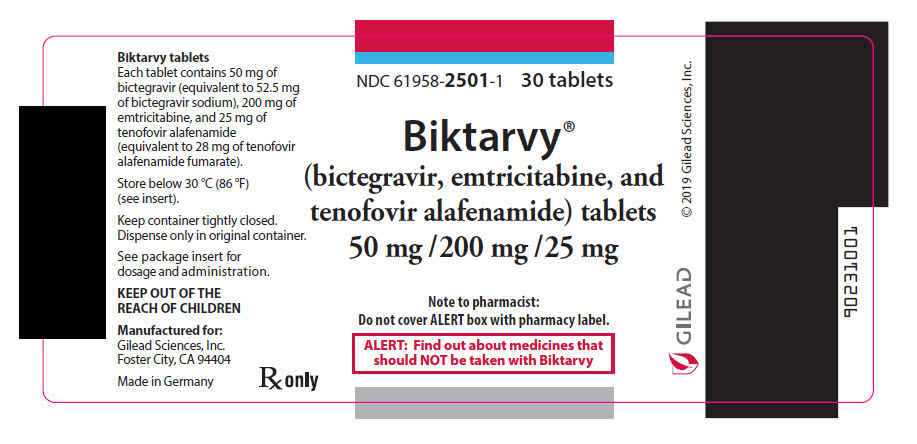
- 50 mg/200 mg/25 mg tablets each contain 50 mg of bictegravir (BIC), 200 mg of emtricitabine (FTC), and 25 mg of tenofovir alafenamide (TAF). These tablets are purplish brown, capsule-shaped, and film-coated with “GSI” debossed on one side and “9883” on the other side (NDC 61958-2501-1).
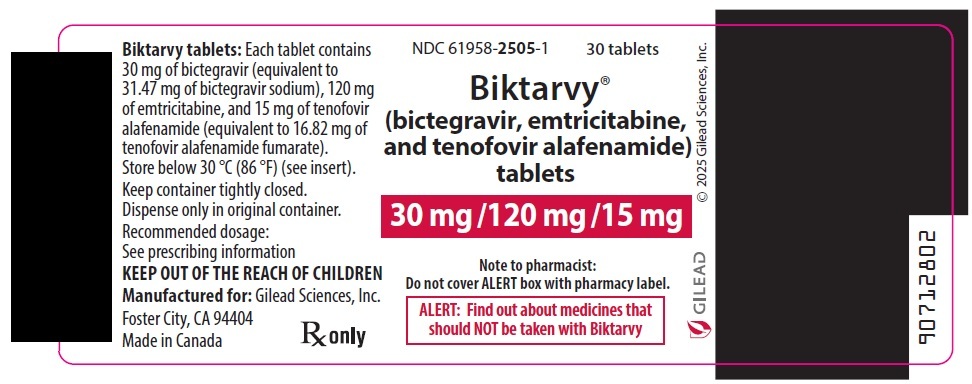
- 30 mg/120 mg/15 mg tablets each contain 30 mg of BIC,120 mg of FTC, and 15 mg of TAF. These tablets are pink, capsule-shaped, and film-coated with “GSI” debossed on one side and “B” on the other side (NDC 61958-2505-1).
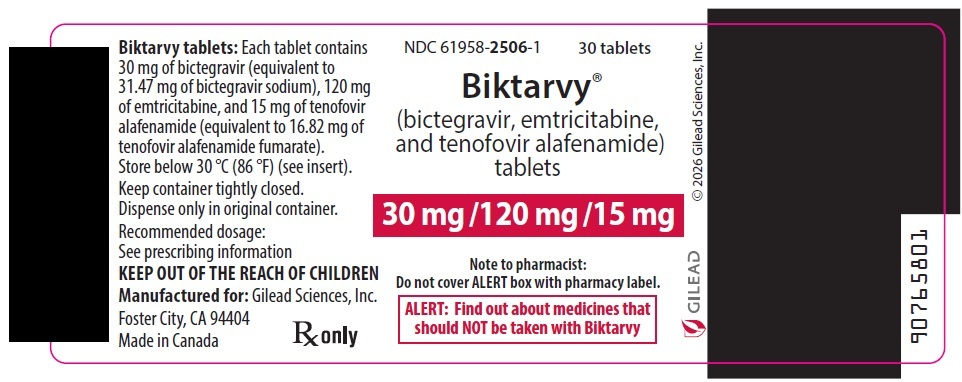
- 30 mg/120 mg/15 mg tablets each contain 30 mg of BIC,120 mg of FTC, and 15 mg of TAF. These tablets are pink, capsule-shaped, and film-coated with a non- functional bisecting score line on one side and “BVY” on the other side (NDC 61958-2506-1).
Each bottle contains 30 tablets, a silica gel desiccant, polyester coil, and is closed with a child-resistant closure. Do not remove the desiccant packet.
Blister Packs
50 mg/200 mg/25 mg tablets each contain 50 mg of BIC, 200 mg of FTC, and
25 mg of TAF. These tablets are purplish brown, capsule-shaped, and film-coated with “GSI” debossed on one side and “9883” on the other side.
- Blister pack containing 30 tablets (4 strips each containing 7 tablets and 1 strip containing 2 tablets) (NDC 61958-2501-3).
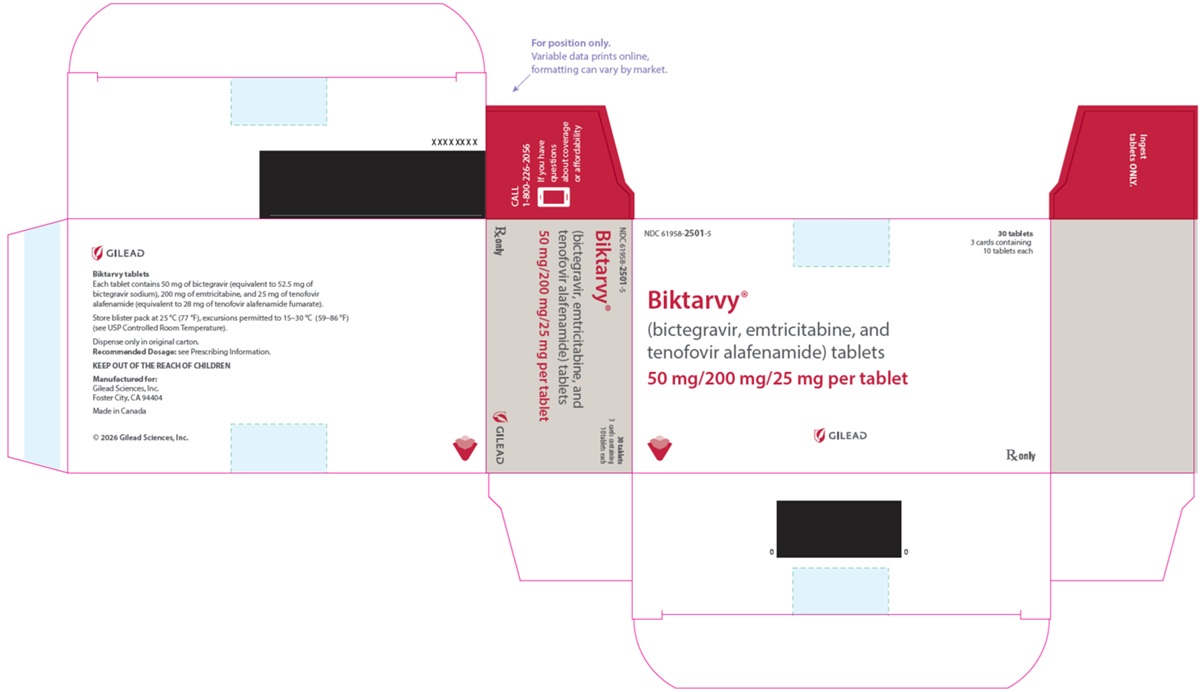
- Blister pack containing 30 tablets (3 strips each containing 10 tablets) (NDC 61958-2501-5).
Blister packs are sealed with a child-resistant laminated foil lidding material (peel-push), and each blister cavity contains a die-cut desiccant film which is heat staked to the foil lidding material.
Post-treatment Acute Exacerbation of Hepatitis B in Participants with HBV
Severe acute exacerbations of hepatitis B have been reported in patients with HBV and HIV-1 who have discontinued products containing FTC and/or TDF, and may likewise occur with discontinuation of BIKTARVY [see Warnings and Precautions (5.1)]. Advise the patient to not discontinue BIKTARVY without first informing their healthcare provider.
Drug Interactions
BIKTARVY may interact with certain drugs; therefore, advise patients to report to their healthcare provider the use of any other prescription or non-prescription medication or herbal products including St. John’s wort [see Contraindications (4) and Drug Interactions (7)].
Immune Reconstitution Syndrome
Advise patients to inform their healthcare provider immediately of any symptoms of infection, as in some patients with advanced HIV infection (AIDS), signs and symptoms of inflammation from previous infections may occur soon after anti-HIV treatment is started [see Warnings and Precautions (5.3)].
Renal Impairment
Advise patients to avoid taking BIKTARVY with concurrent or recent use of nephrotoxic agents. Postmarketing cases of renal impairment, including acute renal failure, have been reported [see Warnings and Precautions (5.4)].
Lactic Acidosis and Severe Hepatomegaly
Lactic acidosis and severe hepatomegaly with steatosis, including fatal cases, have been reported with use of drugs similar to BIKTARVY. Advise patients that they should stop BIKTARVY if they develop clinical symptoms suggestive of lactic acidosis or pronounced hepatotoxicity [see Warnings and Precautions (5.5)].
Missed Dosage
Inform patients that it is important to take BIKTARVY on a regular dosing schedule with or without food and to avoid missing doses as it can result in development of resistance [see Dosage and Administration (2.2)].
Tablet Splitting
Advise caregivers that, for children unable to swallow a whole tablet, the tablet can be split and each part taken separately as long as all parts are ingested within approximately 10 minutes [see Dosage and Administration (2.3)].
Pregnancy Registry
Inform patients that there is an antiretroviral pregnancy registry to monitor fetal outcomes of pregnant individuals exposed to BIKTARVY [see Use in Specific Populations (8.1)].
Lactation
Inform individuals with HIV-1 that the potential risks of breastfeeding include: (1) HIV-1 transmission to infants without HIV-1, (2) developing viral resistance in infants with HIV-1, and (3) adverse reactions in a breastfed infant similar to those seen in adults [see Use in Specific Populations (8.2)].
BIKTARVY is a trademark of Gilead Sciences, Inc., or its related companies. All other trademarks referenced herein are the property of their respective owners.
© 2026 Gilead Sciences, Inc. All rights reserved.