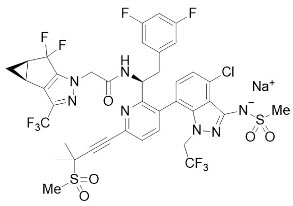
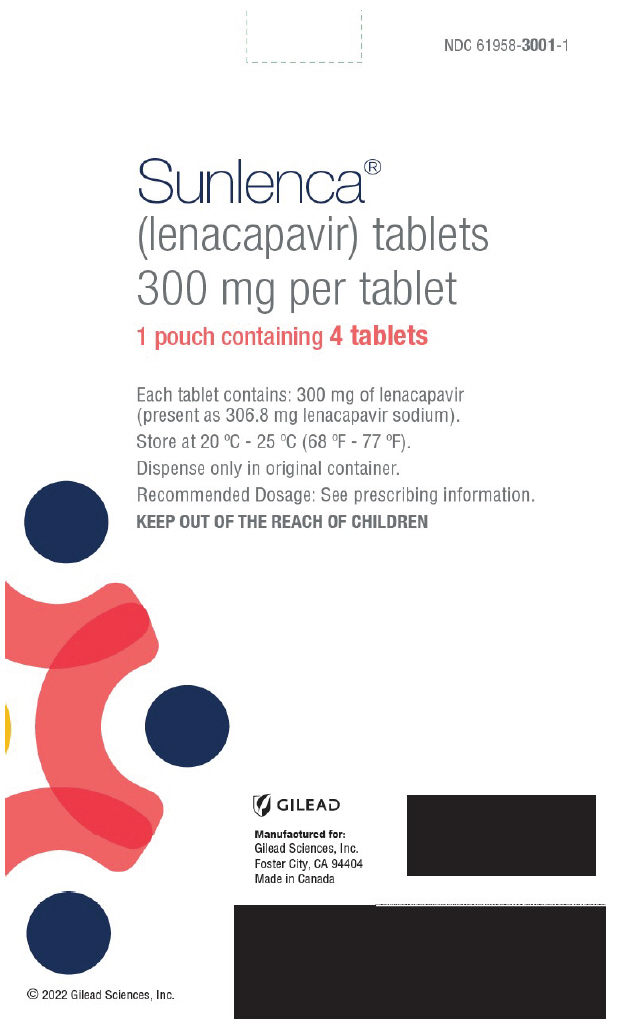
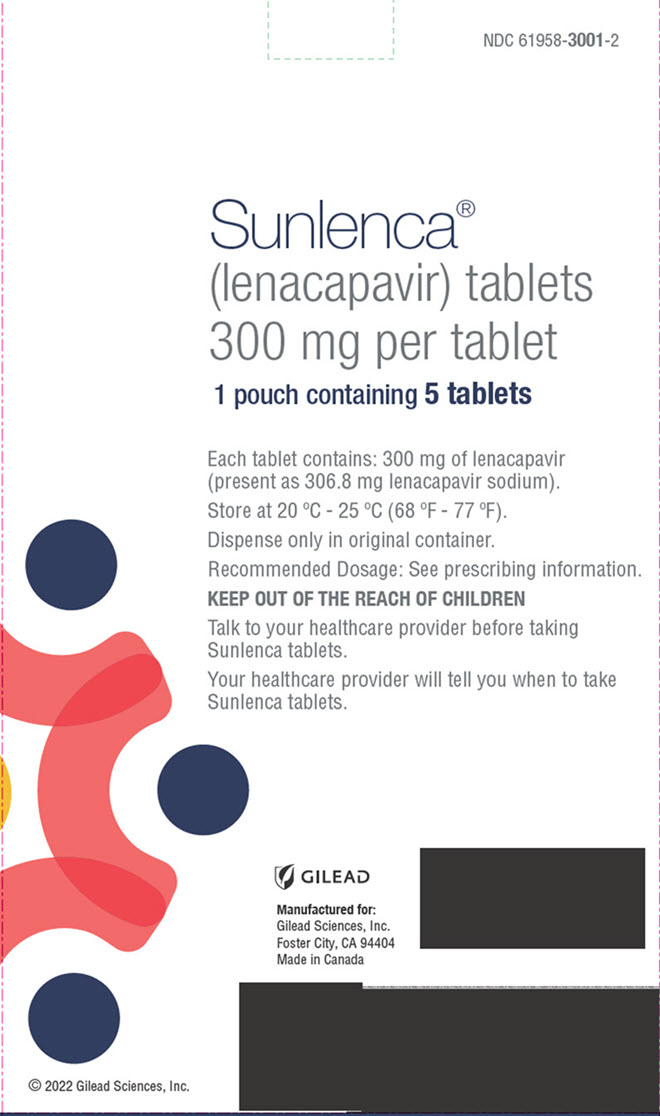
SUNLENCA tablets: Each tablet contains 300 mg of lenacapavir (present as 306.8 mg of lenacapavir sodium). The tablets are beige, capsule-shaped, film-coated, and debossed with 'GSI' on one side of the tablet and '62L' on the other side of the tablet.
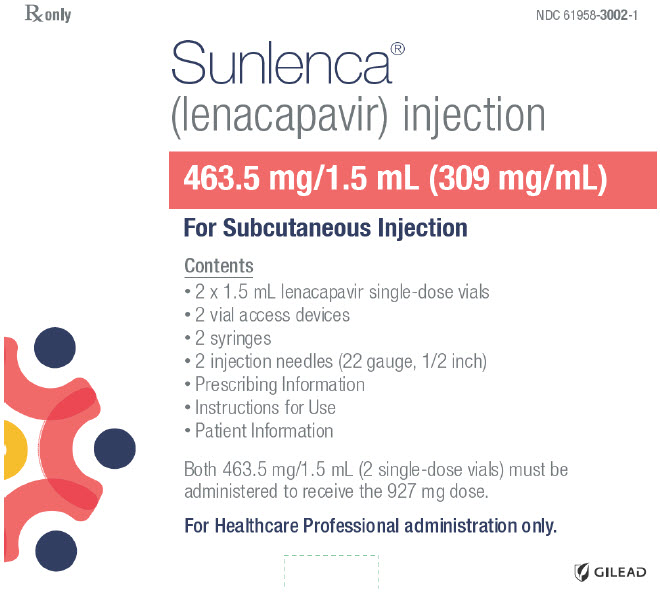
SUNLENCA injection: Each single-dose vial contains 463.5 mg/1.5 mL (309 mg/mL) of lenacapavir (present as 473.1 mg/1.5 mL of lenacapavir sodium). The lenacapavir injectable solution is sterile, preservative-free, clear, and yellow with no visible particles.
Injection-Associated Adverse Reactions
Local Injection Site Reactions (ISRs):
The most frequent adverse reactions were ISRs. Of the 72 subjects in CAPELLA, 65% had experienced an ISR attributed to study drug through at least the Week 52 visit. Most subjects had mild (Grade 1, 44%) or moderate (Grade 2, 17%) ISRs. Four percent of subjects experienced a severe (Grade 3) ISR (erythema, pain, swelling) that resolved within 15 days. The ISRs reported in more than 1% of subjects were swelling (36%), pain (31%), erythema (31%), nodule (25%), induration (15%), pruritus (6%), extravasation (3%) and mass (3%). ISRs reported in 1% of subjects included discomfort, hematoma, edema, and ulcer.
Nodules and indurations at the injection site took longer to resolve than other ISRs. The median time to resolution of all ISRs, excluding nodules and indurations, was 5 days (range: 1 to 183). The median time to resolution of nodules and indurations associated with the first injections of SUNLENCA was 148 (range: 41 to 727) and 70 (range: 3 to 252) days, respectively. After a median follow up of 553 days, 30% of nodules and 13% of indurations (in 10% and 1% of subjects, respectively) associated with the first injections of SUNLENCA had not fully resolved. Qualitative descriptions of injection site nodules and indurations were not routinely reported, but, where reported, the majority of injection site nodules and indurations were palpable but not visible. Measurements of injection site nodules and indurations were not routinely performed or standardized, but where measurements were reported, the maximum size for the majority of injection site nodules and indurations was approximately 1 to 4 cm [see Warnings and Precautions (5.3)].
Laboratory Abnormalities
The frequency of laboratory abnormalities (Grades 3 to 4) occurring in at least 2% of subjects in CAPELLA are presented in Table 4. A causal association between SUNLENCA and these laboratory abnormalities has not been established.
Table 4 Selected Laboratory Abnormalities (Grades 3 to 4) Reported in ≥ 2% of Subjects Receiving SUNLENCA in CAPELLA (Week 52 Analysis)| Laboratory Parameter Abnormality | SUNLENCA + Background Regimen
(N=72) Frequencies are based on treatment-emergent laboratory abnormalities in all subjects (cohorts 1 and 2) in CAPELLA. Percentages were calculated based on the number of subjects with post-baseline toxicity grades for each laboratory parameter (n=72 for all parameters except hyperglycemia fasting n=57). |
|---|
| ALT= alanine aminotransferase; AST= aspartate aminotransferase; ULN = upper limit of normal |
| Creatinine ( >1.8 × ULN or ≥1.5 × baseline) | 13% |
| Glycosuria (>2+) | 6% |
| Hyperglycemia (fasting) (>250 mg/dL) | 5% |
| Proteinuria (>2+) | 4% |
| ALT (≥5 × ULN) | 3% |
| AST (≥5 × ULN) | 3% |
| Direct Bilirubin (>ULN) | 3% |
Strong or Moderate CYP3A Inducers
Drugs that are strong or moderate inducers of CYP3A may significantly decrease plasma concentrations of lenacapavir [see Clinical Pharmacology (12.3)], which may result in loss of therapeutic effect of SUNLENCA and development of resistance. Concomitant administration of SUNLENCA with strong CYP3A inducers during SUNLENCA treatment is contraindicated [see Contraindications (4)]. Concomitant administration of SUNLENCA with moderate CYP3A inducers during SUNLENCA treatment is not recommended.
Combined P-gp, UGT1A1, and Strong CYP3A Inhibitors
Combined P-gp, UGT1A1, and strong CYP3A inhibitors may significantly increase plasma concentrations of SUNLENCA. Concomitant administration of SUNLENCA with these inhibitors is not recommended.
Pregnancy Exposure Registry
There is a pregnancy exposure registry that monitors pregnancy outcomes in individuals exposed to SUNLENCA during pregnancy. Healthcare providers are encouraged to register patients by calling the Antiretroviral Pregnancy Registry (APR) at 1-800-258-4263.
Risk Summary
There are insufficient human data on the use of SUNLENCA during pregnancy to inform a drug-associated risk of birth defects and miscarriage. In animal reproduction studies, no adverse developmental effects were observed when lenacapavir was administered to rats and rabbits at exposures (AUC) ≥16 times the exposure in humans at the recommended human dose (RHD) of SUNLENCA (see Data).
The background risk of major birth defects and miscarriage for the indicated population is unknown. The background rate of major birth defects in a U.S. reference population of the Metropolitan Atlanta Congenital Defects Program (MACDP) is 2.7%. The rate of miscarriage is not reported in the APR. The estimated background rate of miscarriage in clinically recognized pregnancies in the U.S. general population is 15 to 20%.
Data
Animal Data
Lenacapavir was administered intravenously to pregnant rabbits (up to 20 mg/kg/day on gestation days (GD) 7 to 19), orally to rats (up to 300 mg/kg/day on GD 6 to 17), and subcutaneously to rats (up to 300 mg/kg on GD 6). No significant toxicological effects on embryo-fetal (rats and rabbits) or pre/postnatal (rats) development were observed at exposures (AUC) approximately 16 times (rats) and 39 times (rabbits) the exposure in humans at the RHD of SUNLENCA.
Risk Summary
The Centers for Disease Control and Prevention recommend that HIV-1-infected mothers in the United States not breastfeed their infants to avoid risking postnatal transmission of HIV-1 infection.
It is not known whether SUNLENCA is present in human breast milk, affects human milk production, or has effects on the breastfed infant. After administration to pregnant rats, lenacapavir was detected in the plasma of nursing rat pups, without effects on these nursing pups (see Data).
Because of the potential for 1) HIV transmission (in HIV-negative infants); 2) developing viral resistance (in HIV-positive infants); and 3) adverse reactions in a breastfed infant similar to those seen in adults, instruct mothers not to breastfeed if they are receiving SUNLENCA.
Data
Animal Data
Lenacapavir was detected at low levels in the plasma of nursing rat pups in the pre/postnatal development study (post-natal day 10).
SUNLENCA tablets are for oral administration. Each film-coated tablet contains 300 mg of lenacapavir (present as 306.8 mg lenacapavir sodium) and the following inactive ingredients: copovidone, croscarmellose sodium, magnesium stearate, mannitol, microcrystalline cellulose, and poloxamer 407. The tablets are film-coated with a coating material containing iron oxide black, iron oxide red, iron oxide yellow, polyethylene glycol, polyvinyl alcohol, talc, and titanium dioxide.
SUNLENCA injection is for subcutaneous administration. Each single-dose vial contains 463.5 mg/1.5 mL (309 mg/mL) of lenacapavir (present as 473.1 mg/1.5 mL of lenacapavir sodium) as a sterile, preservative-free, clear, yellow solution and the following inactive ingredients: 896.3 mg of polyethylene glycol 300 (as solvent) and water for injection. The apparent pH range of the injection is 9.0–10.2.
The vial stoppers are not made with natural rubber latex.
Exposure-Response
In CAPELLA, oral loading doses (600 mg on Day 1 and Day 2, 300 mg on Day 8) followed by subcutaneous doses (927 mg every 6 months starting on Day 15) of SUNLENCA in heavily treatment-experienced subjects with multiclass resistant HIV-1, efficacy outcomes (change in plasma HIV-1 RNA from Day 1 to Day 14, and percentage of subjects with HIV-1 RNA less than 50 copies/mL at Week 26) were similar across the range of observed lenacapavir exposures.
Cardiac Electrophysiology
At supratherapeutic exposures of lenacapavir (9-fold higher than the therapeutic exposures of SUNLENCA), SUNLENCA does not prolong the QTcF interval to any clinically relevant extent.
Specific Populations
There were no clinically significant differences in the pharmacokinetics of lenacapavir based on age (18 to 78 years), sex, ethnicity (hispanic or non-hispanic), race (white, black, asian or other), body weight (41.4 to 164 kg), severe renal impairment (creatinine clearance of 15 to less than 30 mL per minute, estimated by Cockroft-Gault method), or moderate hepatic impairment (Child-Pugh Class B). The effect of end-stage renal disease (including dialysis), or severe hepatic impairment (Child-Pugh Class C), on the pharmacokinetics of lenacapavir is unknown. As lenacapavir is greater than 98.5% protein bound, dialysis is not expected to alter exposures of lenacapavir [see Use in Specific Populations (8.6)].
Drug Interaction Studies
Clinical Studies
Clinical drug-drug interaction study indicated that lenacapavir is a substrate of CYP3A, P-gp, and UGT1A1. Table 8 summarizes the pharmacokinetic effects of other drugs on lenacapavir.
Lenacapavir is a moderate inhibitor of CYP3A. Lenacapavir is an inhibitor of P-gp and BCRP but does not inhibit OATP. Table 9 summarizes the pharmacokinetic effects of lenacapavir on other drugs.
Table 8 Effect of Other Drugs on Lenacapavir Single dose of lenacapavir 300 mg administered orally.
,All interaction studies conducted in subjects without HIV-1.
| Coadministered Drug | Dose of Coadministered Drug (mg) | Mean Ratio of Lenacapavir Pharmacokinetic Parameters (90% CI); No effect = 1.00 |
|---|
| Cmax | AUC |
|---|
Cobicistat (fed)
(Inhibitor of CYP3A [strong] and P-gp) | 150 once daily | 2.10
(1.62, 2.72) | 2.28
(1.75, 2.96) |
Darunavir / cobicistat (fed)
(Inhibitor of CYP3A [strong] and inhibitor and inducer of P-gp) | 800/150 once daily | 2.30
(1.79, 2.95) | 1.94
(1.50, 2.52) |
Voriconazole (fasted)
(Inhibitor of CYP3A [strong]) | 400 twice daily, 200 twice daily 400 mg loading dose twice daily for a day, followed by 200 mg maintenance dose twice daily. | 1.09
(0.81, 1.47) | 1.41
(1.10, 1.81) |
Atazanavir / cobicistat (fed)
(Inhibitor of CYP3A [strong] and UGT1A1 and P-gp) | 300/150 once daily | 6.60
(4.99, 8.73) | 4.21
(3.19, 5.57) |
Rifampin (fasted)
(Inducer of CYP3A [strong] and P-gp and UGT) | 600 once daily | 0.45
(0.34, 0.60) | 0.16
(0.12, 0.20) |
Efavirenz (fasted)
(Inducer of CYP3A [moderate] and P-gp) | 600 once daily | 0.64
(0.45, 0.92) | 0.44
(0.32, 0.59) |
| Famotidine (2 hours before, fasted) | 40 once daily | 1.01
(0.75, 1.34) | 1.28
(1.00, 1.63) |
Table 9 Effect of Lenacapavir on Other Drugs All interaction studies conducted in subjects without HIV-1.
,Following 600 mg twice daily for 2 days, single 600 mg doses of lenacapavir were administered with each coadministered drug, resulting in lenacapavir exposures similar to or higher than those at the recommended dosage regimen.
| Coadministered Drug | Dose of Coadministered Drug (mg) | Mean Ratio of Coadministered Drug Pharmacokinetic Parameters (90% CI) All No Effect Boundaries are 70% to 143%. ; No effect = 1.00 |
|---|
| Cmax | AUC |
|---|
Tenofovir alafenamide (fed)
(substrate of P-gp) | 25 single dose | 1.24
(0.98, 1.58) | 1.32
(1.09, 1.59) |
| Tenofovir Tenofovir alafenamide is converted to tenofovir in vivo.
(substrate of P-gp) | | 1.23
(1.05, 1.44) | 1.47
(1.27, 1.71) |
Pitavastatin (simultaneous administration, fed)
(substrate of OATP) | 2 single dose | 1.00
(0.84, 1.19) | 1.11
(1.00, 1.25) |
Pitavastatin (3 days after lenacapavir, fed)
(substrate of OATP) | 2 single dose | 0.85
(0.69, 1.05) | 0.96
(0.87, 1.07) |
Rosuvastatin (fed)
(substrate of BCRP and OATP) | 5 single dose | 1.57
(1.38, 1.80) | 1.31
(1.19, 1.43) |
Midazolam (simultaneous administration, fed)
(substrate of CYP3A) | 2.5 single dose | 1.94
(1.81, 2.08) | 3.59
(3.30, 3.91) |
| 1-hydroxymidazolam Major active metabolite of midazolam.
(substrate of CYP3A) | | 0.54
(0.50, 0.59) | 0.76
(0.72, 0.80) |
Midazolam (1 day after lenacapavir, fed)
(substrate of CYP3A) | 2.5 single dose | 2.16
(2.02, 2.30) | 4.08
(3.77, 4.41) |
1-hydroxymidazolam
(substrate of CYP3A) | | 0.52
(0.48, 0.57) | 0.84
(0.80, 0.88) |
In Vitro Studies
Cytochrome P450 (CYP) Enzymes: Lenacapavir is not a substrate, inducer, or inhibitor of CYP1A2, CYP2B6, CYP2C8, CYP2C9, CYP2C19, and CYP2D6. Lenacapavir is not an inducer of CYP3A4.
Uridine diphosphate (UDP)-glucuronosyl transferase (UGT) Enzymes: Lenacapavir is not an inhibitor of UGT1A1.
Transporter Systems: Lenacapavir is not an inhibitor of organic anion transporter 1 (OAT1), OAT3, organic cation transporter (OCT)1, OCT2, multidrug and toxin extrusion transporter (MATE) 1, or MATE 2-K. Lenacapavir is not a substrate of BCRP, OATP1B1, or OATP1B3.
Mechanism of Action
Lenacapavir is a multistage, selective inhibitor of HIV-1 capsid function that directly binds to the interface between capsid protein (p24) subunits in hexamers. Surface plasmon resonance sensorgrams showed dose-dependent and saturable binding of lenacapavir to cross-linked wild-type capsid hexamer with an equilibrium binding constant (KD) of 1.4 nM. Lenacapavir inhibits HIV-1 replication by interfering with multiple essential steps of the viral lifecycle, including capsid-mediated nuclear uptake of HIV-1 proviral DNA (by blocking nuclear import proteins binding to capsid), virus assembly and release (by interfering with Gag/Gag-Pol functioning, reducing production of capsid protein subunits), and capsid core formation (by disrupting the rate of capsid subunit association, leading to malformed capsids).
Antiviral Activity in Cell Culture
Lenacapavir has antiviral activity that is specific to human immunodeficiency virus (HIV-1 and HIV-2). The antiviral activity of lenacapavir against laboratory and clinical isolates of HIV-1 was assessed in T-lymphoblastoid cell lines, PBMCs, primary monocyte/macrophage cells, and CD4+ T-lymphocytes with EC50 values ranging from 30 to 190 pM. Lenacapavir displayed antiviral activity in cell culture against all HIV-1 groups (M, N, O), including subtypes A, A1, AE, AG, B, BF, C, D, E, F, G with EC50 values ranging from 20 and 160 pM. The median EC50 value for subtype B isolates (n=8) was 40 pM. Lenacapavir was 15- to 25-fold less active against HIV-2 isolates relative to HIV-1.
In a study of lenacapavir in combination with representatives from the major classes of anti-retroviral agents (INSTIs, NNRTIs, NRTIs, and PIs), no antagonism of antiviral activity was observed.
Resistance
In Cell Culture
HIV-1 variants with reduced susceptibility to lenacapavir have been selected in cell culture. Resistance selections with lenacapavir identified 7 substitutions in capsid: L56I, M66I, Q67H, K70N, N74D/S, and T107N singly or in dual combination that conferred 4- to >3,226-fold reduced phenotypic susceptibility to lenacapavir relative to wild-type (WT) virus. The M66I substitution alone or in combination conferred >3,226-fold decreased susceptibility to lenacapavir in a single-cycle infectivity assay; substitutions Q67H and T107N, conferred 4- to 6.3-fold decreased susceptibility; K70N, N74D and Q67H/N74S conferred 22- to 32-fold decreased susceptibility; and L56I conferred 239-fold decreased susceptibility.
In Clinical Trials
In CAPELLA, 31% (22/72) of heavily treatment-experienced subjects met the criteria for resistance analyses through Week 52 (HIV-1 RNA ≥ 50 copies/mL at confirmed virologic failure [suboptimal virologic response at Week 4, virologic rebound, or viremia at last visit]) and were analyzed for lenacapavir resistance-associated substitution emergence. Lenacapavir resistance-associated capsid substitutions were found in 41% (n=9) of subjects with confirmed virologic failure who had post-baseline capsid genotypic resistance data (n=22). The M66I CA substitution was observed in 27% (6/22) of subjects, alone or in combination with other lenacapavir resistance-associated capsid substitutions including Q67Q/H, Q67Q/H/K/N, K70K/R, K70N/S, N74D, N74N/H, A105T, and T107A. The other 3 subjects with virologic failure had emergent lenacapavir resistance-associated capsid substitutions Q67K+K70H, Q67H+K70R+T107S, and Q67Q/H.
Phenotypic analyses of the confirmed virologic failure isolates with emergent lenacapavir resistance-associated substitutions showed 6- to >1428-fold decreases in lenacapavir susceptibility when compared to WT.
Among the 9 subjects with virologic failure who developed lenacapavir resistance-associated substitutions in capsid, 4 received SUNLENCA in combination with a background regimen with no fully active antiretrovirals based on the baseline genotypic and/or phenotypic resistance. Therefore, given the risk of developing resistance in situations of functional monotherapy, careful consideration should be given to having active drugs in addition to SUNLENCA in the treatment regimen.
Four subjects with virologic failure had emergent resistance substitutions to components of the optimized background regimen (OBR): emergent NRTI substitution M184I/V and NNRTI substitution K103N/Y with emtricitabine and doravirine plus atazanavir, bictegravir, and tenofovir alafenamide in OBR; emergent NNRTI substitution V106M from a mixture at baseline (in addition to lenacapavir resistance-associated substitutions M66I + T107A) with doravirine plus emtricitabine and ibalizumab in OBR; emergent NRTI substitutions K65R and S68N from mixtures at baseline (in addition to lenacapavir resistance-associated substitution M66I) with tenofovir alafenamide, plus emtricitabine, dolutegravir, darunavir/cobistat, and rilpivirine in OBR; and emergent NRTI substitution K65K/R with tenofovir disoproxil fumarate plus darunavir/cobistat, dolutegravir, and emtricitabine in OBR.
Cross-Resistance
The antiviral activity in cell culture of lenacapavir was determined against a broad spectrum of HIV-1 site-directed mutants and patient-derived HIV-1 isolates with resistance to the four main classes of anti-retroviral agents (INSTI, NNRTI, NRTI, and PI; n=58), as well as to viruses resistant to the gp120-directed attachment inhibitor fostemsavir, the CD4+-directed post-attachment inhibitor ibalizumab, the CCR5 co-receptor antagonist maraviroc, and the gp41 fusion inhibitor enfuvirtide (n=42). These data indicated that lenacapavir remained fully active against all variants tested, thereby demonstrating a non-overlapping resistance profile. In addition, the antiviral activity of lenacapavir in patient isolates was unaffected by the presence of naturally occurring Gag polymorphisms and substitutions at protease cleavage sites.
Carcinogenesis
Lenacapavir was not carcinogenic in a 6-month rasH2 transgenic mouse study in males or females at doses of up to 300 mg/kg/dose once every 13 weeks. A 2-year rat carcinogenicity study is ongoing.
Mutagenesis
Lenacapavir was not mutagenic in a battery of in vitro and in vivo genotoxicity assays, including microbial mutagenesis, chromosome aberration in human peripheral blood lymphocytes, and in in vivo rat micronucleus assays.
Impairment of Fertility
There were no effects on fertility, mating performance or early embryonic development when lenacapavir was administered to rats at systemic exposures (AUC) 5 times the exposure to humans at the RHD of SUNLENCA.
SUNLENCA tablets, 300 mg are beige, capsule-shaped, and film-coated with "GSI" debossed on one side and "62L" on the other side.
SUNLENCA tablets are packaged as follows:
- SUNLENCA 4-Tablets™ blister pack contains 4 tablets (NDC 61958-3001-1)
- SUNLENCA 5-Tablets™ blister pack contains 5 tablets (NDC 61958-3001-2)
Within the blister packs, tablets are packaged in a clear blister film sealed to a foil lidding material. The blister card is fitted between two paperboard cards, and packaged with silica gel desiccant in a sealed child-resistant flexible laminated pouch.
SUNLENCA injection is packaged in a dosing kit (NDC 61958-3002-1) containing:
- 2 single-dose clear glass vials, each containing sufficient volume to allow withdrawal of 463.5 mg/1.5 mL (309 mg/mL) of lenacapavir. The injection solution is sterile, preservative-free, clear, and yellow with no visible particles. Vials are sealed with a stopper and aluminium overseal with flip-off cap.
- 2 vial access devices, 2 disposable syringes, and 2 injection safety needles for subcutaneous injection (22-gauge, ½ inch).
The vial stoppers are not made with natural rubber latex.
Drug Interactions
SUNLENCA may interact with certain drugs; therefore, advise patients to report to their healthcare provider the use of any other prescription or non-prescription medication or herbal products, including St. John's wort, during treatment with SUNLENCA [see Contraindications (4) and Drug Interactions (7)].
If SUNLENCA is discontinued, advise patients that SUNLENCA may remain in the body and affect certain other drugs for up to 9 months after receiving their last injection [see Drug Interactions (7.2, 7.3)].
Immune Reconstitution Syndrome
Advise patients to inform their healthcare provider immediately of any symptoms of infection, as in some patients with advanced HIV infection (AIDS), signs and symptoms of inflammation from previous infections may occur soon after anti-HIV treatment is started [see Warnings and Precautions (5.1)].
Adherence to SUNLENCA
Counsel patients about the importance of continued medication adherence and scheduled visits to maintain viral suppression and to reduce risk of loss of virologic response and development of resistance. Advise patients to contact their healthcare provider immediately if they stop taking SUNLENCA or any other drug in their antiretroviral regimen [see Dosage and Administration (2.1) and Warnings and Precautions (5.2)].
Injection Site Reactions
Inform patients that injection site reactions (ISRs), such as swelling, pain, erythema, nodule, induration, pruritus, extravasation or mass, may occur. Nodules and indurations at the injection site may take longer to resolve than other ISRs and may be persistent. Instruct patients when to contact their healthcare provider about these reactions [see Warnings and Precautions (5.3)].
Pregnancy Registry
Inform patients that there is an antiretroviral pregnancy registry to monitor fetal outcomes of pregnant individuals exposed to SUNLENCA [see Use in Specific Populations (8.1)].
Lactation
Instruct individuals with HIV-1 infection not to breastfeed because HIV-1 can be passed to the baby in breast milk [see Use in Specific Populations (8.2)].
SUNLENCA is a trademark of Gilead Sciences, Inc., or its related companies. All other trademarks referenced herein are the property of their respective owners.
© 2022 Gilead Sciences, Inc. All rights reserved.