Bixlenvo Tablet, Film Coated
FDA Label NDC 61958-3601

Full FDA labeling including Indications, Dosage, Usage, and Precautions

Structured Product Label

The following Structured Product Label (SPL) was submitted to the FDA by Gilead Sciences, Inc. for the product Bixlenvo (NDC 61958-3601). This document serves as the official prescribing information, containing essential scientific data and clinical materials required for healthcare providers and patients.

This specific version of the label includes detailed information regarding 1 indications and usage, 2.1 recommended dosage, 2.2 recommended dosing schedule for missed dose, 2.3 bixlenvo use during pregnancy, 3 dosage forms and strengths, 4 contraindications, 5.1 risk of adverse reactions or loss of virologic response due to drug interactions, 6.1 clinical trials experience, and other regulatory disclosures. Use the navigation below to review specific sections of the FDA submission.

1 Indications And Usage

BIXLENVO is indicated as a complete regimen for the treatment of human immunodeficiency virus type 1 (HIV-1) infection in adults to replace the current antiretroviral regimen in those who are virologically suppressed (HIV-1 RNA less than 50 copies per mL) on a stable antiretroviral regimen with no known or suspected resistance to the individual components of BIXLENVO [see Clinical Studies (14)].

2.1 Recommended Dosage

The BIXLENVO dosing schedule in adults requires a two-day initiation regimen of BIXLENVO tablets plus SUNLENCA tablets taken orally, followed by a maintenance regimen of one tablet of BIXLENVO taken orally once daily (Table 1). BIXLENVO must be taken with SUNLENCA during the two-day initiation period. BIXLENVO and SUNLENCA tablets may be taken with or without food [see Clinical Pharmacology (12.3)].

Table 1 Recommended Treatment Regimen for BIXLENVO Initiation and Maintenance
Treatment Time
Dosage: Initiation
Day 1BIXLENVO 75 mg/50 mg (1 tablet) orally
and
SUNLENCA 600 mg orally (2 × 300 mg tablets)
Day 2BIXLENVO 75 mg/50 mg (1 tablet) orally
and
SUNLENCA 600 mg orally (2 × 300 mg tablets)
Dosage: Maintenance
Day 3
and thereafter
BIXLENVO 75 mg/50 mg (1 tablet) orally once daily

2.2 Recommended Dosing Schedule For Missed Dose

Missed Initiation Dose

During the initiation period, if the Day 1 or Day 2 doses of BIXLENVO or SUNLENCA are missed, patients should take them as soon as possible (see Table 1). Patients should not take Day 1 and Day 2 doses of SUNLENCA on the same day.

Missed Maintenance Dose

If a maintenance dose of BIXLENVO is missed, patients should take it as soon as possible. If more than 7 days have elapsed since the last maintenance dose, restart the initiation dosage regimen from Day 1, if clinically appropriate to continue BIXLENVO treatment (see Table 1).

3 Dosage Forms And Strengths

Each tablet contains 75 mg bictegravir (BIC) and 50 mg lenacapavir (LEN). The tablets are yellow, capsule-shaped, film-coated, and debossed with “GSI” on one side and “B/L” on the other side.

4 Contraindications

Concomitant administration of BIXLENVO is contraindicated with:

  • dofetilide due to the potential for increased dofetilide plasma concentrations and associated serious and/or life-threatening events.
  • strong CYP3A inducers due to decreased plasma concentrations of BIC and LEN, which may result in the loss of therapeutic effect and development of resistance to BIXLENVO.

5.1 Risk Of Adverse Reactions Or Loss Of Virologic Response Due To Drug Interactions

The concomitant use of BIXLENVO with certain other drugs may result in known or potentially significant drug interactions, some of which may lead to [see Contraindications (4), and Drug Interactions (7.4)]:

  • Loss of therapeutic effect of BIXLENVO and possible development of resistance.
  • Possible clinically significant adverse reactions from greater exposures of concomitant drugs.
  • See Table 4 for steps to prevent or manage these possible and known significant drug interactions, including dosing recommendations. Consider the potential for drug interactions prior to and during BIXLENVO therapy; review concomitant medications during BIXLENVO therapy; and monitor for the adverse reactions associated with the concomitant drugs.

6.1 Clinical Trials Experience

Because clinical trials are conducted under widely varying conditions, adverse reaction rates observed in the clinical trials of a drug cannot be directly compared to rates in the clinical trials of another drug and may not reflect the rates observed in practice.

The primary safety assessment of BIXLENVO in virologically suppressed adults with HIV-1 was based on 48-week data from participants in two Phase 3 randomized active-controlled clinical trials, ARTISTRY-1 (N=557) and ARTISTRY-2 (N=574) [see Clinical Studies (14)]. ARTISTRY-1 was an open-label trial that enrolled participants who had been on a stable baseline regimen for at least 6 months and were randomized to receive BIXLENVO or to continue their stable baseline regimen. ARTISTRY-2 was a blinded trial that enrolled participants who had been on BIKTARVY for at least 6 months at baseline and were randomized to receive BIXLENVO or to continue BIKTARVY.

The most common adverse reactions (all grades) reported in greater than or equal to 2% of participants in any treatment group from ARTISTRY-1 and ARTISTRY-2 through Week 48 are presented in Table 2. The side-by-side tabulation is to simplify presentation; direct comparison across trials should not be made due to differing trial designs.

Table 2 Adverse Reactions

Frequencies of adverse reactions are based on all adverse events attributed to trial drugs by the investigator.

(All Grades) Reported in ≥ 2% of Adults with HIV-1 Receiving BIXLENVO in Trials ARTISTRY-1 or ARTISTRY-2 (Week 48 Analysis).
ARTISTRY-1

ARTISTRY-1 was open-label with a stable baseline regimen as the comparator.

ARTISTRY-2

ARTISTRY-2 was blinded with BIKTARVY as the comparator.

Adverse ReactionsBIXLENVO
N=371
Stable Baseline Regimen
N=186
BIXLENVO
N=383
BIKTARVY
N=191
Headache4%01%0
Nausea3%03%4%
Diarrhea2%02%2%

Laboratory Abnormalities

Changes in Serum Creatinine

BIC has been shown to increase serum creatinine due to inhibition of tubular secretion of creatinine without affecting renal glomerular function [see Clinical Pharmacology 12.2].

ALT and AST Elevations

ALT and AST abnormalities from ARTISTRY-1 and ARTISTRY-2 trials are presented in Table 3.

Table 3 ALT and AST Abnormalities (All Grades) in ARTISTRY-1 or ARTISTRY-2 (Week 48 Analyses)
ARTISTRY-1

Frequencies are based on treatment-emergent laboratory abnormalities.

ARTISTRY-2
Laboratory Parameter AbnormalityBIXLENVO
N=371
Stable Baseline Regimen
N=186
BIXLENVO
N=383
BIKTARVY
N=191
ULN = Upper limit of normal
Alanine Aminotransferase (ALT)
   Grade 1:
   1.25 – <2.5 x ULN
12%1%5%9%
   Grade 2:
   2.5 – <5.0 x ULN
2%1%2%1%
   Grade 3:
   5.0 – <10.0 x ULN
001%0
   Grade 4:
   ≥10.0 x ULN
<1%0<1%0
Aspartate Aminotransferase (AST)
   Grade 1:
   1.25 – <2.5 x ULN
10%4%5%9%
   Grade 2:
   2.5 – <5.0 x ULN
2%2%2%2%
   Grade 3:
   5.0 – <10.0 x ULN
1%01%0
   Grade 4:
   ≥10.0 x ULN
<1%0<1%0

6.2 Postmarketing Experience

The following adverse reactions have been identified during postmarketing experience in patients receiving a bictegravir-containing regimen. Because these reactions are reported voluntarily from a population of uncertain size, it is not always possible to reliably estimate their frequency or establish a causal relationship to drug exposure.

Skin and Subcutaneous Tissue Disorders

Angioedema, urticaria, and Stevens-Johnson syndrome/toxic epidermal necrolysis

Investigations

Weight increased

7.1 Other Antiretroviral Medications

Because BIXLENVO is a complete regimen, coadministration with other antiretroviral medications for the treatment of HIV-1 infection is not recommended [see Indications and Usage (1)].

7.2 Potential For Bixlenvo To Affect Other Drugs

Bictegravir (BIC), a component of BIXLENVO, inhibits organic cation transporter 2 (OCT2) and multidrug and toxin extrusion transporter 1 (MATE1) in vitro. Coadministration of BIC with drugs that are substrates of OCT2 and MATE1 (e.g., dofetilide) may increase their plasma concentrations (see Table 4).

Lenacapavir (LEN), a component of BIXLENVO, is a moderate inhibitor of CYP3A and a P-gp inhibitor. Coadministration of LEN with sensitive substrates of CYP3A or P-gp may increase the concentrations of these substrates and result in the increased risk of their adverse events. See the prescribing information of these sensitive substrates for dosing recommendations or appropriate monitoring of safety.

7.3 Potential For Other Drugs To Affect The Components Of Bixlenvo

BIC is a substrate of CYP3A and UGT1A1. LEN is a substrate of P-gp, UGT1A1, and CYP3A.

Strong or Moderate CYP3A Inducers

A drug that is a strong inducer of CYP3A and also an inducer of UGT1A1 can substantially decrease the plasma concentrations of BIC. Drugs that are strong or moderate inducers of CYP3A may significantly decrease plasma concentrations of LEN [see Clinical Pharmacology (12.3)]. Strong or moderate CYP3A inducers may result in loss of therapeutic effect of BIXLENVO and development of resistance.

Concomitant administration of BIXLENVO with strong CYP3A inducers is contraindicated [see Contraindications (4)]. Concomitant administration of BIXLENVO with moderate CYP3A inducers is not recommended.

Combined P-gp, UGT1A1, and Strong CYP3A Inhibitors

Combined UGT1A1 and strong CYP3A inhibitors may significantly increase plasma concentrations of BIC. Combined P-gp, UGT1A1, and strong CYP3A inhibitors may significantly increase plasma concentrations of LEN. Concomitant administration of BIXLENVO with combined P-gp, UGT1A1, and strong CYP3A inhibitors is not recommended.

7.4 Established And Other Potentially Significant Drug Interactions

Table 4 provides a listing of established or potentially clinically significant drug interactions with recommended prevention or management strategies, but is not all inclusive. The drug interactions described are based on studies conducted with the components of BIXLENVO (BIC or LEN) as individual agents, or are drug interactions that may occur with BIXLENVO [see Contraindications (4), Warnings and Precautions (5.1), and Clinical Pharmacology (12.3)].

Table 4 Drug Interactions with BIXLENVO
Concomitant Drug Class:
Drug Name
Effect on Concentration

↑ = Increase, ↓ = Decrease

Clinical Comment
Antiarrhythmics:
digoxin
dofetilide
↑ digoxin
↑ dofetilide
Use digoxin with caution and monitor digoxin therapeutic concentration.

Coadministration with dofetilide is contraindicated due to the potential for serious and/or life-threatening events associated with dofetilide therapy [see Contraindications (4)].
Anticoagulants:
Direct Oral Anticoagulants (DOACs)
  rivaroxaban
  dabigatran
  edoxaban
↑ DOACRefer to the DOAC prescribing information for concomitant administration with moderate CYP3A inhibitors and/or P-gp inhibitors.
Anticonvulsants:
carbamazepine
oxcarbazepine
phenobarbital
phenytoin
↓ lenacapavir
↓ bictegravir
Concomitant administration with carbamazepine or phenytoin is contraindicated.

Concomitant administration with oxcarbazepine or phenobarbital is not recommended.
Antimycobacterials:
rifabutin

Drug-drug interaction study was conducted for components of BIXLENVO dosed as individual agents (BIC or LEN).


rifampin
rifapentine
↓ lenacapavir
↓ bictegravir
Concomitant administration with rifampin is contraindicated [see Contraindications (4)].

Concomitant administration with rifabutin or rifapentine is not recommended.
Corticosteroids (systemic):
cortisone/hydrocortisone
dexamethasone
↑ corticosteroids (systemic)
↓ lenacapavir (dexamethasone)
Concomitant administration with systemic corticosteroids whose exposures are significantly increased by CYP3A inhibitors can increase the risk for Cushing's syndrome and adrenal suppression. Initiate with the lowest starting dose and titrate carefully while monitoring for safety.

Alternative corticosteroids to dexamethasone should be considered, particularly for long-term use.
Ergot derivatives:
dihydroergotamine
ergotamine
methylergonovine
↑ dihydroergotamine
↑ ergotamine
↑ methylergonovine
Concomitant administration with dihydroergotamine, ergotamine or methylergonovine is not recommended.
Herbal Products:
St. John’s wort

The induction potency of St. John's wort may vary widely based on preparation.

(Hypericum perforatum)
↓ lenacapavir
↓ bictegravir
Concomitant administration with St. John's wort is contraindicated [see Contraindications (4)].
HMG-CoA Reductase Inhibitors:
lovastatin
simvastatin
↑ lovastatin
↑ simvastatin
Initiate lovastatin and simvastatin with the lowest starting dose and titrate carefully while monitoring for safety (e.g., myopathy).
Metformin↑ metforminRefer to the prescribing information of metformin for assessing the benefit and risk of concomitant use of BIXLENVO and metformin.
Narcotic analgesics metabolized by CYP3A:
e.g., fentanyl, oxycodone
↑ fentanyl
↑ oxycodone
Careful monitoring of therapeutic effects and adverse reactions associated with CYP3A-metabolized narcotic analgesics (including potentially fatal respiratory depression) is recommended with co-administration.
Tramadol↑ tramadolA decrease in dose may be needed for tramadol with concomitant use.
Narcotic analgesic for treatment of opioid dependence:
buprenorphine, methadone
buprenorphine: effects unknown

methadone: effects unknown
Initiation of buprenorphine or methadone in patients taking BIXLENVO: Carefully titrate the dose of buprenorphine or methadone to the desired effect; use the lowest feasible initial or maintenance dose.

Initiation of BIXLENVO in patients taking buprenorphine or methadone: A dose adjustment for buprenorphine or methadone may be needed. Monitor clinical signs and symptoms.
Opioid Antagonist:
Naloxegol
↑ naloxegolAvoid use with BIXLENVO; if unavoidable, decrease the dosage of naloxegol and monitor for adverse reactions.
Oral medications or supplements containing polyvalent cations (e.g., Mg, Al, Ca, Fe):
Calcium or iron supplements
Cation-containing antacids or laxatives
Sucralfate
Buffered medications
↓ bictegravirAntacids containing Al/Mg:
Take BIXLENVO at least 2 hours before or 6 hours after taking antacids containing Al/Mg.

Routine administration of BIXLENVO together with, or 2 hours after, antacids containing Al/Mg is not recommended.

Supplements or Antacids containing Calcium or Iron:
Take BIXLENVO and supplements or antacids containing calcium or iron together with food.

Routine administration of BIXLENVO under fasting conditions together with, or 2 hours after, supplements or antacids containing calcium or iron is not recommended.

In pregnant individuals:
Antacids containing Al/Mg:
Take BIXLENVO at least 2 hours before or 6 hours after antacids containing Al/Mg regardless of food intake.

Supplements or Antacids containing Calcium or Iron:
Take BIXLENVO and supplements or antacids containing calcium or iron together with food; but when taken on an empty stomach, BIXLENVO should be taken at least 2 hours before or 6 hours after supplements or antacids containing calcium or iron.
Phosphodiesterase-5
(PDE-5) Inhibitors:

sildenafil
tadalafil
vardenafil
↑ PDE-5 inhibitorsPDE-5 inhibitors for pulmonary arterial hypertension (PAH):
Concomitant administration with tadalafil for PAH is not recommended.

PDE-5 inhibitors for erectile dysfunction (ED):
Refer to the prescribing information of PDE-5 inhibitors for dose recommendations.
Sedatives/Hypnotics:
midazolam (oral)
triazolam
↑ midazolam (oral)
↑ triazolam
Use caution when midazolam or triazolam is concomitantly administered with BIXLENVO.

8.1 Pregnancy

Pregnancy Exposure Registry

There is a pregnancy exposure registry that monitors pregnancy outcomes in individuals exposed to BIXLENVO during pregnancy. Healthcare providers are encouraged to register patients by calling the Antiretroviral Pregnancy Registry (APR) at 1-800-258-4263.

Risk Summary

Available data from observational studies and the APR with BIC use during pregnancy have not established a drug-associated risk of major birth defects, miscarriage or other adverse maternal or fetal outcomes. Available data from the APR show no statistically significant difference in the overall risk of major birth defects for BIC compared with the background rate for major birth defects of 2.7% in a U.S. reference population of the Metropolitan Atlanta Congenital Defects Program (MACDP) (see Data). The rate of miscarriage is not reported in the APR. The estimated background rate of miscarriage in the clinically recognized pregnancies in the U.S. general population is 15-20%.

BIC safety has also been evaluated in an open-label trial in individuals with HIV-1 that demonstrated safety findings that were consistent with other trials in adults (see Data).

Available data from a randomized, controlled trial with LEN use during pregnancy in individuals without HIV-1 have not identified a drug-associated risk for miscarriage, or adverse maternal or fetal outcomes when compared to an active control (see Data). The rate of major birth defects in LEN-exposed pregnancies did not exceed the background prevalence rates. The risk estimates are imprecise due to small numbers of exposed pregnancies (see Data).

In animal reproduction studies, no evidence of adverse developmental outcomes was observed with BIC at exposures that were either not maternally toxic (rabbits) or greater than (rats and mice) those in humans at the recommended human dose (RHD) (see Data). During organogenesis, systemic exposures (AUC) to BIC were approximately 24 (rats) and 0.39 times (rabbits) the exposure at the RHD of BIXLENVO. In rat pre/postnatal development studies, maternal systemic exposures (AUC) were 20 times (BIC) the exposure in humans at the RHD.

In animal reproduction studies, no adverse developmental effects were observed when LEN was administered to rats and rabbits at exposures (AUC) ≥3 times the exposure in humans at the RHD of BIXLENVO (see Data).

Data

Human Data

Bictegravir

A BIC-containing regimen was evaluated in an open-label clinical trial of 33 virologically suppressed (HIV-1 RNA < 50 copies/mL) pregnant adults with HIV-1 and no known substitutions associated with resistance to BIC. Pregnant adults were administered a BIC-containing regimen once daily from the second or third trimester through postpartum. Exposures of BIC were lower during pregnancy as compared to postpartum. All 32 adult participants who completed the study maintained viral suppression during pregnancy, at delivery, and through Week 18 postpartum. The median CD4+ cell count at baseline was 558 cells/µL, and the median change in CD4+ cell count from baseline to Week 12 postpartum was 159 cells/μL. All 29 neonate participants had negative/nondetectable HIV-1 PCR results at birth and/or at 4 to 8 weeks post-birth. The safety findings in this trial were consistent with other trials of BIC-containing regimens in adults.

Based on prospective reports to the APR of over 500 exposures to a BIC-containing regimen during pregnancy resulting in live births (including 423 exposed in the first trimester and 113 exposed in the second/third trimester), the prevalence of birth defects in live births was 4.3% (95% CI: 2.5% to 6.6%) and 1.8% (0.2%, 6.2%) following first and second/third trimester exposure, respectively, to a BIC-containing regimen.

Lenacapavir

In a randomized, controlled trial of individuals without HIV-1 in Uganda and South Africa, there were 208 pregnancies exposed to LEN received via injection with known outcomes and 132 deliveries (both live and non-live). In the active control arm of this study, there were 109 pregnancies with known outcomes and 61 deliveries (both live and non-live). The adverse pregnancy outcomes of spontaneous abortion, stillbirth, preterm birth, and small for gestational age were similar across both treatment groups.

There were two major birth defects in the LEN arm. Both were ventricular septal defects. This resulted in a rate of major birth defects that fell within the background prevalence rate for major birth defects.

Concentrations of LEN received via injection during each trimester of pregnancy and postpartum were comparable to those in non-pregnant participants.

Animal Data

Bictegravir

BIC was administered orally to pregnant rats (5, 30, or 300 mg/kg/day) and rabbits (100, 300, or 1000 mg/kg/day) on gestation days 7 through 17, and 7 through 19, respectively. No adverse embryo-fetal effects were observed in rats and rabbits at BIC exposures (AUC) of up to approximately 24 (rats) and 0.39 (rabbits) times the exposure in humans at the RHD of BIXLENVO. Spontaneous abortion, increased clinical signs [fecal changes, thin body, and cold-to-touch], and decreased body weight were observed at a maternally toxic dose in rabbits (1000 mg/kg/day; approximately 0.90 times higher than human exposure at the RHD).

In a pre/postnatal development study, BIC was administered orally to pregnant rats (up to 300 mg/kg/day) from gestation days 6 to lactation/post-partum day 20. No significant adverse effects were observed in the offspring exposed daily from before birth (in utero) through lactation at maternal and pup exposures (AUC) of approximately 20 and 7.3 times higher, respectively, than human exposures at the RHD.

Lenacapavir

LEN was administered intravenously to pregnant rabbits (up to 20 mg/kg/day on gestation days (GD) 7 to 19), orally to rats (up to 300 mg/kg/day on GD 6 to 17), and subcutaneously to rats (up to 300 mg/kg on GD 6). No significant toxicological effects on embryo-fetal (rats and rabbits) or pre/postnatal (rats) development were observed at exposures (AUC) approximately ≥3 times (rats) and 75 times (rabbits) the exposure in humans at the RHD of BIXLENVO.

8.2 Lactation

Risk Summary

Bictegravir

Data from the published literature reports on the presence of BIC in human milk. There are no data on the effects of BIC on the breastfed child. There is no data on the effects of BIC on milk production.

Lenacapavir

LEN is present in human milk. LEN was detected at very low levels in infants who were breastfed by individuals who became pregnant while receiving LEN via injection (see Data). No adverse effects of LEN in breastfed infants have been observed. It is not known if LEN affects milk production.

Potential risks of breastfeeding include: (1) HIV-1 transmission to HIV-1–negative infants; (2) developing viral resistance in HIV-1–positive infants; and (3) adverse reactions in a breastfed infant similar to those seen in adults.

Data

Human data

Lenacapavir

The median LEN concentration in human breast milk to maternal plasma ratio in participants (n=8) who received LEN via injection was 0.63 (range: 0.29 to 1.90). The median infant-to-mother plasma ratio for LEN in infants (n=10) who were breastfed by individuals receiving LEN via injection from 0 to less than 13 weeks after delivery was 0.06 (range: 0.01 to 0.20). Data are not available in breastfeeding individuals receiving LEN orally.

8.4 Pediatric Use

The safety and effectiveness of BIXLENVO have not been established in patients less than 18 years of age.

8.5 Geriatric Use

Clinical studies included 159 (21%) participants 65 years and over who received BIXLENVO. Of the total number of BIXLENVO-treated patients in these studies, 148 (93%) were ages 65 to 74, and 11 (7%) were 75 to 84 years of age. No overall differences in safety or effectiveness were observed between participants 65 years of age and older and adult participants less than 65 years of age and other reported clinical experience has not identified differences in responses between the elderly and younger patients, but greater sensitivity of some older individuals cannot be ruled out.

8.6 Renal Impairment

No dosage adjustment of BIXLENVO is recommended in patients with mild, moderate or severe renal impairment (estimated creatinine clearance greater than or equal to 15 mL per minute). BIXLENVO has not been studied in patients with end-stage renal disease (ESRD; estimated creatinine clearance less than 15 mL per minute) [see Clinical Pharmacology (12.3)].

8.7 Hepatic Impairment

No dosage adjustment of BIXLENVO is recommended in patients with mild (Child-Pugh Class A) or moderate (Child-Pugh Class B) hepatic impairment. BIXLENVO has not been studied in patients with severe hepatic impairment (Child-Pugh Class C) [see Clinical Pharmacology (12.3)].

8.8 Hbv Co-Infection

BIXLENVO does not have activity against hepatitis B virus (HBV). Patients with HBV coinfection who switch to BIXLENVO from an antiretroviral regimen with activity against HBV, and patients on BIXLENVO who are newly diagnosed with HBV coinfection, should be closely monitored and specific anti-HBV therapy should be considered, as clinically appropriate.

10 Overdosage

No data are available on overdose of BIXLENVO in patients. If overdose occurs, monitor the patient for evidence of toxicity. Treatment of overdose with BIXLENVO consists of general supportive measures including monitoring of vital signs as well as observation of the clinical status of the patient. As BIC and LEN are highly bound to plasma proteins, they are unlikely to be significantly removed by dialysis.

11 Description

BIXLENVO tablets contain bictegravir (BIC) sodium and lenacapavir (LEN) sodium for oral administration [see Microbiology (12.4)].

  • BIC is an integrase strand-transfer inhibitor (INSTI).
  • LEN is a capsid inhibitor.
  • Bictegravir sodium:

    The chemical name of bictegravir sodium is
    2,5-Methanopyrido[1’,2’:4,5]pyrazino[2,1-b][1,3]oxazepine-10-carboxamide, 2,3,4,5,7,9,13,13a-octahydro-8-hydroxy-7,9-dioxo-N-[(2,4,6-trifluorophenyl)methyl]-, sodium salt (1:1), (2R,5S,13aR)-.

    Bictegravir sodium has a molecular formula of C21H17F3N3NaO5 and a molecular weight of 471.4 and has the following structural formula:

    Bictegravir sodium is an off-white to yellow solid with a solubility of 0.1 mg per mL in water at 20°C.

    Lenacapavir sodium:

    The chemical name of lenacapavir sodium is: Sodium (4-chloro-7-(2-((S)-1-(2-((3bS,4aR)-5,5-difluoro-3-(trifluoromethyl)-3b,4,4a,5-tetrahydro-1H-cyclopropa[3,4]cyclopenta[1,2-c]pyrazol-1-yl)acetamido)-2-(3,5-difluorophenyl)ethyl)-6-(3-methyl-3-(methylsulfonyl)but-1-yn-1-yl)pyridin-3-yl)-1-(2,2,2-trifluoroethyl)-1H-indazol-3-yl)(methylsulfonyl)amide.

    Lenacapavir sodium has a molecular formula of C39H31ClF10N7NaO5S2, a molecular weight of 990.3, and the following structural formula:

    Lenacapavir sodium is a light yellow to yellow solid and is practically insoluble in water.

    Each BIXLENVO tablet contains 75 mg of BIC (present as 78.55 mg of bictegravir sodium) and 50 mg of LEN (present as 51.13 mg of lenacapavir sodium) and the following inactive ingredients: copovidone, croscarmellose sodium, magnesium stearate, mannitol, microcrystalline cellulose, and poloxamer 407. The tablets are film-coated with a coating material containing iron oxide yellow, polyethylene glycol, polyvinyl alcohol, talc, and titanium dioxide.

12.1 Mechanism Of Action

BIXLENVO is a fixed dose combination of the antiretroviral drugs bictegravir (BIC) and lenacapavir (LEN) [see Microbiology (12.4)].

12.2 Pharmacodynamics

Cardiac Electrophysiology

BIC at exposures of 3-times those at the recommended dose of BIXLENVO did not affect the QT/QTc interval and did not prolong the PR interval. LEN at exposures of 10.8-times those at the recommended dose of BIXLENVO did not prolong the QTcF interval to any clinically relevant extent.

Effects on Serum Creatinine

Mean change from baseline in serum creatinine in healthy participants who received BIC 75 mg once daily with food for 14 days was 0.1 mg per dL on Days 7 and 14 compared to placebo. BIC did not have a significant effect on the estimated creatinine clearance or on the actual glomerular filtration rate (determined by the clearance of probe drug, iohexol).

Exposure-Response

In a Phase 2 trial evaluating lenacapavir over a dose range of 0.5-1 times the recommended dose of lenacapavir (in combination with the approved dose of bictegravir), no exposure-response relationship for efficacy was identified for lenacapavir.

12.3 Pharmacokinetics

The pharmacokinetic (PK) properties of BIXLENVO are provided in Table 5. The PK parameter estimates of the components of BIXLENVO following administration of the recommended BIXLENVO treatment regimen with or without food in adults with HIV-1 are provided in Table 6.

Table 5 Pharmacokinetic Properties of the Components of BIXLENVO
Bictegravir (BIC)Lenacapavir (LEN)
Absorption
  Tmax

Median values presented following administration of BIXLENVO with or without food.

2 hours4 hours
  Effect of high-fat meal
  (relative to fasting)

Values refer to geometric mean ratio [high-fat meal/fasting] in PK parameters and (90% confidence interval). A high-fat meal is approximately 800 kcal, 50% fat.

AUC ratio1.12 (1.01, 1.25)0.67 (0.53, 0.83)
Cmax ratio1.16 (1.07, 1.26)0.86 (0.67, 1.09)
Distribution
  % bound to human plasma proteins>99>98.5
  Blood-to-plasma ratio0.64

In vitro blood-to-plasma concentration ratio of bictegravir.

0.5 to 0.7

Values reflect the blood-to-plasma ratio of lenacapavir following a single dose intravenous administration of [14C] lenacapavir through 336 hours postdose.

Elimination
  t1/219.3 to 21.0 hours10.6 to 11.5 days
Metabolism
  Metabolic pathway(s)CYP3A
UGT1A1 (minor)
Excretion
  Major route of eliminationMetabolismExcretion of unchanged drug into feces
  % of dose excreted in urine

Dosing in mass balance studies: single dose oral administration of [14C] bictegravir 100 mg, and single dose intravenous administration of [14C] lenacapavir 20 mg.

35<1
  % of dose excreted in feces60.376
Table 6 PK Parameter Estimates

Empirical Bayes estimate derived PK parameters from Population PK analyses.

of Bictegravir and Lenacapavir Following Oral Administration of the BIXLENVO Recommended Treatment Regimen With or Without Food in Adults with HIV-1
Initiation Regimen,

Exposures corresponding to Day 2 of the recommended treatment regimen (N=806).

Maintenance Regimen

Steady-state exposures from Population PK analyses in ARTISTRY-1 and ARTISTRY-2 (N=754).

Parameter Mean (%CV)LenacapavirBictegravirLenacapavir
CV = Coefficient of Variation
Cmax
(ng/mL)
95.7 (186)8600 (29.0)99.3 (171)
AUCtau
(ng•h/mL)
2080 (182)154000 (33.3)2360 (178)
Ctrough
(ng/mL)
86.5 (185)4660 (39.8)96.6 (174)

Specific Populations

Patients with Renal Impairment

Bictegravir: No clinically relevant differences in the pharmacokinetics of BIC were observed between participants with severe renal impairment (creatinine clearance of 15 to less than 30 mL/min, estimated by Cockcroft-Gault method) and participants with normal renal function. In a study of virologically-suppressed participants with ESRD (estimated creatinine clearance less than 15 mL/min, by Cockcroft-Gault method) receiving chronic hemodialysis who were receiving a BIC-containing regimen, median BIC Ctrough values were lower compared to participants with normal renal function. Despite significantly lower BIC Ctrough values in this population, virologic suppression was maintained in this study.

Lenacapavir: There were no clinically significant differences in the pharmacokinetics of LEN in participants with severe renal impairment. The effect of end-stage renal disease (including dialysis) on the pharmacokinetics of lenacapavir is unknown. As lenacapavir is greater than 98.5% protein bound, dialysis is not expected to alter exposures of lenacapavir [see Use in Specific Populations (8.6)].

Patients with Hepatic Impairment

Clinically relevant changes in the pharmacokinetics of BIC and LEN were not observed in participants with moderate (Child-Pugh Class B) hepatic impairment [see Use in Specific Populations (8.7)].

Hepatitis B and/or Hepatitis C Virus Coinfection

The pharmacokinetics of BIC and LEN have not been evaluated in participants with hepatitis B and/or C virus.

Age, Race, Gender and Body Weight

There were no clinically significant differences in the pharmacokinetics of BIC and LEN based on age (18 to 84), sex, ethnicity (Hispanic or non-Hispanic), race (White, Black, Asian, or Other), or body weight (44 kg to 164 kg).

Pregnancy

Plasma exposures (Ctrough and AUCtau) of orally administered BIC were lower during pregnancy as compared to postpartum. The exposure changes during pregnancy are not considered clinically significant in virologically suppressed pregnant individuals [see Drug Interactions (7.4)]. Pregnancy was not shown to have a clinically significant impact on LEN exposure in individuals receiving LEN via injection. Pharmacokinetic data for oral LEN in pregnant individuals are limited.

Drug Interaction Studies

As BIXLENVO is a complete regimen for the treatment of HIV-1 infection, comprehensive information regarding potential drug-drug interactions with other HIV-1 antiretroviral agents is not provided.

Drug interaction studies were conducted with the components of BIXLENVO (BIC or LEN). Table 7 summarizes the pharmacokinetic effects of other drugs on BIC and Table 8 summarizes the pharmacokinetic effect of BIC on other drugs. Table 9 summarizes the pharmacokinetic effects of other drugs on LEN and Table 10 summarizes the pharmacokinetic effect of LEN on other drugs.

Table 7 Effect of Other Drugs on BIC

All interaction studies conducted in participants without HIV-1.

Coadministered DrugDose of Coadministered Drug (mg)Bictegravir
(mg)
Mean Ratio of Bictegravir Pharmacokinetic Parameters (90% CI); No effect = 1.00
CmaxAUCCmin
NA = Not Applicable
Ledipasvir/Sofosbuvir (fed)90/400 once daily75 once daily0.98
(0.94, 1.03)
1.00
(0.97, 1.03)
1.04
(0.99, 1.09)
Rifabutin (fasted) 300 once daily75 once daily0.80
(0.67, 0.97)
0.62
(0.53, 0.72)
0.44
(0.37, 0.52)
Rifampin (fed)600 once daily75 single dose0.72
(0.67, 0.78)
0.25
(0.22, 0.27)
NA
Sofosbuvir/velpatasvir/ voxilaprevir (fed)400/100/100+100 voxilaprevir

Study conducted with additional voxilaprevir 100 mg to achieve voxilaprevir exposures expected in patients with HCV.

once daily
50 once daily0.98
(0.94, 1.01)
1.07
(1.03, 1.10)
1.10
(1.05, 1.17)
Voriconazole
(fasted)
300 twice daily75 single dose1.09
(0.96, 1.23)
1.61
(1.41, 1.84)
NA
Maximum strength antacid (simultaneous administration, fasted)20 mL

Maximum strength antacid contained 80 mg aluminum hydroxide, 80 mg magnesium hydroxide, and 8 mg simethicone, per mL.

single dose (oral)
50 single dose0.20
(0.16, 0.24)
0.21
(0.18, 0.26)
NA
Maximum strength antacid (2 h after BIC/FTC/TAF fasted) 20 mL single dose (oral)50 single dose0.93
(0.88, 1.00)
0.87
(0.81, 0.93)
NA
Maximum strength antacid (2 h before BIC/FTC/TAF fasted) 20 mL single dose (oral)50 single dose0.42
(0.33, 0.52)
0.48
(0.38, 0.59)
NA
Maximum strength antacid (simultaneous administration, fed

Reference treatment administered under fasted conditions.

)
20 mL single dose (oral)50 single dose0.51
(0.43, 0.62)
0.53
(0.44, 0.64)
NA
Calcium carbonate (simultaneous administration, fasted) 1200 single dose50 single dose0.58
(0.51, 0.67)
0.67
(0.57, 0.78)
NA
Calcium carbonate (simultaneous administration, fed) 1200 single dose50 single dose0.90
(0.78, 1.03)
1.03
(0.89, 1.20)
NA
Ferrous fumarate (simultaneous administration, fasted)324 single dose50 single dose0.29
(0.26, 0.33)
0.37
(0.33, 0.42)
NA
Ferrous fumarate (simultaneous administration, fed) 324 single dose50 single dose0.75
(0.65, 0.87)
0.84
(0.74, 0.95)
NA
Table 8 Effect of BIC on Other Drugs

All interaction studies conducted in participants without HIV-1.

Coadministered DrugDose of Coadministered Drug (mg)Bictegravir (mg)

Study conducted with bictegravir/emtricitabine/tenofovir alafenamide.

Mean Ratio of Coadministered Drug Pharmacokinetic Parameters
(90% CI); No effect = 1.00
CmaxAUCCmin
NA = Not Applicable
Ledipasvir90/400 once daily75 once daily0.85
(0.81, 0.90)
0.87
(0.83, 0.92)
0.90
(0.84, 0.96)
Sofosbuvir1.11
(1.00, 1.24)
1.07
(1.01, 1.13)
NA
GS-331007

The predominant circulating nucleoside metabolite of sofosbuvir.

1.10
(1.07, 1.13)
1.11
(1.08, 1.14)
1.02
(0.99, 1.06)
Metformin500 twice daily50 once daily1.28
(1.21, 1.36)
1.39
(1.31, 1.48)
1.36
(1.21, 1.53)
Midazolam2 single dose50 once daily1.03
(0.87, 1.23)
1.15
(1.00, 1.31)
NA
Norelgestrominnorgestimate 0.180/0.215/0.250 once daily / ethinyl estradiol 0.025 once daily75 once daily1.23
(1.14, 1.32)
1.08
(1.05, 1.10)
1.10
(1.05, 1.15)
Norgestrel1.15
(1.10, 1.21)
1.13
(1.07, 1.19)
1.14
(1.06, 1.22)
Ethinyl estradiol1.15
(1.03, 1.27)
1.04
(0.99, 1.10)
1.05
(0.95, 1.14)
Sofosbuvir400/100/100 +100

Study conducted with additional voxilaprevir 100 mg to achieve voxilaprevir exposures expected in patients with HCV infection.

once daily
50 once
daily
1.14
(1.04, 1.25)
1.09
(1.02, 1.15)
NA
GS-3310071.03
(0.99, 1.06)
1.03
(1.00, 1.06)
1.01
(0.98, 1.05)
Velpatasvir0.96
(0.91, 1.01)
0.96
(0.90, 1.02)
0.94
(0.88, 1.01)
Voxilaprevir0.90
(0.76, 1.06)
0.91
(0.80, 1.03)
0.97
(0.88, 1.06)
Table 9 Effect of Other Drugs on Lenacapavir

Single dose of lenacapavir 300 mg administered orally.

,

All interaction studies conducted in participants without HIV-1.

Coadministered DrugDose of Coadministered Drug (mg)Mean Ratio of Lenacapavir Pharmacokinetic Parameters (90% CI); No effect = 1.00
Cmax AUC
Cobicistat (fed)
(Inhibitor of CYP3A [strong] and P-gp)
150
once daily
2.10
(1.62, 2.72)
2.28
(1.75, 2.96)
Darunavir / cobicistat (fed)
(Inhibitor of CYP3A [strong] and inhibitor and inducer of P-gp)
800/150
once daily
2.30
(1.79, 2.95)
1.94
(1.50, 2.52)
Voriconazole (fasted)
(Inhibitor of CYP3A [strong])
400 twice daily, 200 twice daily

400 mg loading dose twice daily for a day, followed by 200 mg maintenance dose twice daily.

1.09
(0.81, 1.47)
1.41
(1.10, 1.81)
Atazanavir / cobicistat (fed)
(Inhibitor of CYP3A [strong] and UGT1A1 and P-gp)
300/150
once daily
6.60
(4.99, 8.73)
4.21
(3.19, 5.57)
Rifampin (fasted)
(Inducer of CYP3A [strong] and P-gp and UGT)
600
once daily
0.45
(0.34, 0.60)
0.16
(0.12, 0.20)
Efavirenz (fasted)
(Inducer of CYP3A [moderate] and P-gp)
600
once daily
0.64
(0.45, 0.92)
0.44
(0.32, 0.59)
Famotidine (2 hours before, fasted)40 once daily1.01
(0.75, 1.34)
1.28
(1.00, 1.63)
Table 10 Effect of Lenacapavir on Other Drugs

All interaction studies conducted in participants without HIV-1.

,

Following 600 mg twice daily for 2 days, single 600 mg doses of lenacapavir were administered with each coadministered drug, resulting in lenacapavir exposures similar to or higher than those at the recommended BIXLENVO dosage regimen.

Coadministered DrugDose of Coadministered Drug (mg)Mean Ratio of Coadministered Drug Pharmacokinetic Parameters (90% CI)

All No Effect Boundaries are 70% to 143%.

;
No effect = 1.00
Cmax AUC
Tenofovir alafenamide (fed)
(substrate of P-gp)
25 single dose1.24
(0.98, 1.58)
1.32
(1.09, 1.59)
Tenofovir

Tenofovir alafenamide is converted to tenofovir in vivo.


(substrate of P-gp)
1.23
(1.05, 1.44)
1.47
(1.27, 1.71)
Pitavastatin (simultaneous administration, fed)
(substrate of OATP)
2 single dose 1.00
(0.84, 1.19)
1.11
(1.00, 1.25)
Pitavastatin (3 days after lenacapavir, fed) (substrate of OATP)2 single dose0.85
(0.69, 1.05)
0.96
(0.87, 1.07)
Rosuvastatin (fed)
(substrate of BCRP and OATP)
5 single dose1.57
(1.38, 1.80)
1.31
(1.19, 1.43)
Midazolam (simultaneous administration, fed)
(substrate of CYP3A)
2.5 single dose1.94
(1.81, 2.08)
3.59
(3.30, 3.91)
1-hydroxymidazolam

Major active metabolite of midazolam.


(substrate of CYP3A)
0.54
(0.50, 0.59)
0.76
(0.72, 0.80)
Midazolam (1 day after lenacapavir, fed) (substrate of CYP3A)2.5 single dose2.16
(2.02, 2.30)
4.08
(3.77, 4.41)
1-hydroxymidazolam
(substrate of CYP3A)
0.52
(0.48, 0.57)
0.84
(0.80, 0.88)

Based on drug interaction studies conducted with bictegravir, no clinically significant drug interactions have been observed or are expected with: ethinyl estradiol, ledipasvir/sofosbuvir, midazolam, norgestimate, sertraline, sofosbuvir, sofosbuvir/velpatasvir, and sofosbuvir/velpatasvir/voxilaprevir.

Based on drug interaction studies conducted with lenacapavir, no clinically significant drug interactions have been observed or are expected with: atorvastatin, famotidine, pitavastatin, rosuvastatin, tenofovir alafenamide, and voriconazole.

In Vitro Studies

Cytochrome P450 (CYP) Enzymes: BIC is a substrate of CYP3A and is not an inhibitor of CYP (including CYP3A). LEN is a substrate and moderate inhibitor of CYP3A. LEN is not a substrate, inducer, or inhibitor of CYP1A2, CYP2B6, CYP2C8, CYP2C9, CYP2C19, and CYP2D6. LEN is not an inducer of CYP3A4.

Uridine diphosphate (UDP)-glucuronosyl transferase (UGT) Enzymes: BIC and LEN are substrates of, and not inhibitors of, UGT1A1.

Transporter Systems: BIC is an inhibitor of organic cation transporter (OCT) 2 and multidrug and toxin extrusion transporter (MATE) 1. BIC is not an inhibitor of hepatic transporters OATP1B1, OATP1B3, OCT1, BSEP, or renal transporters OAT1 and OAT3. LEN is a substrate and inhibitor of P-gp. LEN is also an inhibitor of BCRP. LEN is not an inhibitor of organic anion transporter 1 (OAT1), OAT3, OCT1, OCT2, MATE1, or MATE 2-K. LEN is not a substrate of BCRP, OATP1B1, or OATP1B3.

12.4 Microbiology

Mechanism of Action

Bictegravir: BIC inhibits the strand-transfer activity of HIV-1 integrase (integrase strand-transfer inhibitor; INSTI) with a 50% inhibitory concentration (IC50) value of 7.5 nM. Inhibition of integrase prevents the integration of linear HIV-1 DNA into host genomic DNA, blocking the formation of the HIV-1 provirus and propagation of the virus.

Lenacapavir: LEN is a multistage, selective inhibitor of HIV-1 capsid function that directly binds to the interface between capsid protein (p24) subunits in hexamers. Surface plasmon resonance sensorgrams showed dose-dependent and saturable binding of lenacapavir to cross-linked wild-type capsid hexamer with an equilibrium binding constant (KD) of 1.4 nM. Lenacapavir inhibits HIV-1 replication by interfering with multiple essential steps of the viral lifecycle, including capsid-mediated nuclear uptake of HIV-1 proviral DNA (by blocking nuclear import proteins binding to capsid), virus assembly and release (by interfering with Gag/Gag-Pol functioning, reducing production of capsid protein subunits), and capsid core formation (by disrupting the rate of capsid subunit association, leading to malformed capsids).

Antiviral Activity in Cell Culture

The combination of BIC and LEN was not antagonistic with respect to antiviral activity in cell culture.

Bictegravir: The antiviral activity of BIC against laboratory and clinical isolates of HIV-1 was assessed in lymphoblastoid cell lines, PBMCs, primary monocyte/macrophage cells, and CD4+ T-lymphocytes. In MT-4 cells (human lymphoblastoid T-cell line) acutely infected with HIV-1 IIIB, the mean 50% effective concentration (EC50) value was 2.4±0.4 nM, and the protein-adjusted EC95 value was 361 nM (0.162 micrograms per mL).

BIC displayed antiviral activity in activated PBMCs against clinical isolates of HIV-1 representing groups M, N, and O, including subtypes A, B, C, D, E, F, and G, with a median EC50 value of 0.55 nM (range <0.05 to 1.71 nM). The EC50 value against a single HIV-2 isolate was 1.1 nM.

Lenacapavir: LEN has antiviral activity that is specific to human immunodeficiency virus (HIV-1 and HIV-2). The antiviral activity of lenacapavir against laboratory and clinical isolates of HIV-1 was assessed in T-lymphoblastoid cell lines, PBMCs, primary monocyte/macrophage cells, and CD4+ T-lymphocytes with EC50 values ranging from 30 to 190 pM.

Lenacapavir displayed antiviral activity in cell culture against all HIV-1 groups (M, N, O), including subtypes A, A1, AE, AG, B, BF, C, D, E, F, F1, G, H with EC50 values ranging from 20 and 160 pM. The median EC50 value for subtype B isolates (n=8) was 40 pM. Lenacapavir was 15- to 25-fold less active against HIV-2 isolates relative to HIV-1.

Resistance

In Cell Culture

Bictegravir: HIV-1 isolates with reduced susceptibility to BIC have been selected in cell culture. In one selection with BIC, a virus pool emerged expressing amino acid substitutions M50I and R263K in the HIV-1 integrase. M50I, R263K, and M50I+R263K substitutions, when introduced into a wild-type virus by site-directed mutagenesis, conferred 1.3-, 2.2-, and 2.9-fold reduced susceptibility to BIC, respectively. In a second selection, emergence of amino acid substitutions T66I and S153F was detected, and 0.4-, 1.9-, and 0.5-fold reductions in BIC susceptibility were observed with T66I, S153F, and T66I+S153F, respectively. In addition, S24G and E157K substitutions emerged during the selection process.

Lenacapavir: HIV-1 variants with reduced susceptibility to LEN have been selected in cell culture. Resistance selections with LEN identified 7 substitutions in capsid: L56I, M66I, Q67H, K70N, N74D/S, and T107N singly or in dual combination that conferred 4- to >3,226-fold reduced phenotypic susceptibility to LEN relative to wild-type (WT) virus. The M66I substitution alone or in combination conferred >3,226-fold decreased susceptibility to LEN in a single-cycle infectivity assay; substitutions Q67H and T107N, conferred 4- to 6.3-fold decreased susceptibility; K70N, N74D and Q67H/N74S conferred 22- to 32-fold decreased susceptibility; and L56I conferred 239-fold decreased susceptibility.

In Clinical Studies

In ARTISTRY-1, two of 371 (0.5%) participants in the BIXLENVO group met the criteria for resistance testing (HIV-1 RNA ≥ 200 copies/mL at confirmed virologic failure or last visit on study drugs) through Week 48. Resistance analyses showed that one of these participants had no detectable resistance in either capsid or integrase. The other participant had no detectable resistance in capsid and had transient emergence of a Q148R substitution in integrase at low level (13% mutant) at Week 24 that conferred a 1.2-fold reduction in bictegravir susceptibility; this substitution was not detected at Week 48.

In ARTISTRY-2, two of 383 (0.5%) participants in the BIXLENVO group met the criteria for resistance testing (HIV-1 RNA ≥ 200 copies/mL at confirmed virologic failure or last visit on study drugs) through Week 48. In one participant, no lenacapavir resistance substitutions were detected in capsid and a R263K substitution in integrase was detected that had 2-fold reduction in susceptibility to bictegravir in comparison to wild-type. The second participant had no detectable emergence of resistance in capsid or integrase.

Cross-Resistance

Bictegravir: Cross-resistance has been observed among INSTIs. The susceptibility of BIC was tested against 64 clinical isolates expressing known INSTI resistance-associated substitutions listed by IAS-USA (20 with single substitutions and 44 with 2 or more substitutions). Isolates with a single INSTI-resistance substitution including E92Q, T97A, Y143C/R, Q148R, and N155H showed less than 2-fold reduced susceptibility to BIC. All isolates (n=14) with more than 2.5-fold reduced susceptibility to BIC (above the biological cutoff for BIC) contained G140A/C/S and Q148H/R/K substitutions; the majority (64.3%, 9/14) had a complex INSTI resistance pattern with an additional INSTI-resistance substitution L74M, T97A, or E138A/K. Of those evaluated isolates containing G140A/C/S and Q148H/R/K substitutions in the absence of additional INSTI-resistance substitutions, 38.5% (5/13) showed more than 2.5-fold reduction. In addition, site-directed mutant viruses with G118R (dolutegravir and raltegravir treatment-emergent substitution) and G118R+T97A had 3.4- and 2.8-fold reduced susceptibility to BIC, respectively. BIC showed no cross-resistance in mutants with resistance to LEN or other ARV classes (NNRTIs, NRTIs, PIs).

Lenacapavir: The antiviral activity in cell culture of LEN was determined against a broad spectrum of HIV-1 site-directed mutants and patient-derived HIV-1 isolates with resistance to the four main classes of anti-retroviral agents (INSTI, NNRTI, NRTI, and PI; n=58), as well as to viruses resistant to the gp120-directed attachment inhibitor fostemsavir, the CD4+-directed post-attachment inhibitor ibalizumab, the CCR5 co-receptor antagonist maraviroc, and the gp41 fusion inhibitor enfuvirtide (n=42). These data indicated that LEN remained fully active against all variants tested, thereby demonstrating a non-overlapping resistance profile. In addition, the antiviral activity of LEN in patient isolates was unaffected by the presence of naturally occurring Gag polymorphisms and substitutions at protease cleavage sites.
13.1 Carcinogenesis, Mutagenesis, Impairment Of Fertility

Carcinogenesis

Bictegravir: BIC was not carcinogenic in a 6-month rasH2 transgenic mouse study at doses of up to 100 mg/kg/day in males and 300 mg/kg/day in females. BIC was not carcinogenic in a 2-year rat study at doses up to 300 mg/kg/day, which resulted in exposures of approximately 21 times the exposure in humans at the recommended dose of BIXLENVO.

Lenacapavir: LEN was not carcinogenic in a 6-month rasH2 transgenic mouse study in males or females at doses of up to 300 mg/kg/dose once every 13 weeks.

A 104-week carcinogenicity study was conducted in male and female rats at lenacapavir doses of 0, 102, 309, or 927 mg/kg by subcutaneous injection once every 13 weeks. A treatment-related increase in the incidence of malignant sarcoma at the injection site was observed in males and a treatment-related increase in combined benign fibroma and malignant fibrosarcoma at the injection site was observed in females, at the highest dose (927 mg/kg). This dose in rats resulted in an exposure approximately 19 times the human exposure at the RHD of BIXLENVO, based on AUC. These tumors are considered to be a secondary response to chronic tissue irritation and granulomatous inflammation, due to the depot effect of lenacapavir following subcutaneous injection. No findings of clinical relevance to orally administered BIXLENVO were observed in this study.

Mutagenesis

Bictegravir: BIC was not genotoxic in the bacterial reverse mutation assay (Ames test), chromosome aberration test in human lymphocytes or rat micronucleus assay.

Lenacapavir: LEN was not mutagenic in a battery of in vitro and in vivo genotoxicity assays, including the bacterial reverse mutation assay (Ames test), chromosome aberration test in human peripheral blood lymphocytes, and in in vivo rat micronucleus assay.

Impairment of Fertility

Bictegravir: BIC did not affect fertility, reproductive performance or embryonic viability in male and female rats at 24 times the exposures (AUC) than in humans at the recommended dose of BIXLENVO.

Lenacapavir: There were no effects on fertility, mating performance or early embryonic development when LEN was administered to rats at systemic exposures (AUC) ≥3 times the exposure in humans at the RHD of BIXLENVO.

14 Clinical Studies

The efficacy and safety of BIXLENVO in virologically suppressed adults with HIV-1 are based on data through Week 48 from two randomized, active-controlled studies, GS-US-621-6289 (ARTISTRY-1) (N=557) and GS-US-621-6290 (ARTISTRY-2) (N= 574). In both studies, participants must have been suppressed (HIV-1 RNA < 50 copies/mL) on their baseline regimen for at least 6 months prior to study entry. Participants with chronic HBV were excluded from these studies.

ARTISTRY-1, an open-label study, evaluated the efficacy and safety of switching from a complex Stable Baseline Regimen (SBR) to BIXLENVO. A complex SBR was defined as a regimen containing a Protease Inhibitor (PI) or Non-Nucleoside Reverse Transcriptase Inhibitor (NNRTI) plus at least 1 other third agent; or ≥ 2 pills/day or more than once daily dosing; or a regimen with a non-long-acting injectable parenteral agent plus oral agents. Among randomized participants who received at least one dose of study drug, 71% were on a regimen containing both an INSTI and a PI, 19% were on an INSTI-containing regimen without a PI, 6% were on a PI-containing regimen without an INSTI, and 4% were on other ARV regimens. At baseline, participants were taking a mean of 3.5 oral pills per day (range 2–11). Participants were randomized in a 2:1 ratio to either switch to BIXLENVO (N=371) or stay on their SBR (N=186). Participants had a mean age of 59 years (range 22–84), 82% were male, 69% were White, 17% were Black, 4% were Asian and 3% were other. 22% of participants identified as Hispanic/Latino. The mean baseline CD4+ cell count was 653 cells/mm3 (range 52–1643).

ARTISTRY-2, a double-blind study, evaluated the efficacy and safety of switching from BIKTARVY to BIXLENVO. Participants were randomized in a 2:1 ratio to either switch to BIXLENVO (N=383) or stay on BIKTARVY (N=191). Participants had a mean age of 49 years (range 23–77), 81% were male, 54% were White, 27% were Black, 13% were Asian, and 5% were other. 27% of participants identified as Hispanic/Latino. The mean baseline CD4+ cell count was 742 cells/mm3 (range 139–2073).

Treatment outcomes of ARTISTRY-1 and ARTISTRY-2 at Week 48 are presented in Table 11.

Table 11 Virologic Outcomes of ARTISTRY-1 and ARTISTRY-2 at Week 48

Week 48 window was between Days 295 and 378 (inclusive).

ARTISTRY-1ARTISTRY-2
BIXLENVO
(N=371)
Stable Baseline Regimen
(N=186)
BIXLENVO
(N=383)
BIKTARVY
(N=191)
HIV-1 RNA ≥50 copies/mL

Includes participants who had ≥ 50 copies/mL in the Week 48 window; participants who discontinued early due to lack of efficacy; participants who discontinued for reasons other than an adverse event (AE), death or lack of efficacy, and at the time of discontinuation had a viral value of ≥ 50 copies/mL.

  1%  1%  1%  1%
  Treatment Difference (95.002% CI)

CI was constructed using Mantel-Haenszel stratum weights and the Koch variance estimator, adjusted for geographic region (US vs. Ex-US). The 95.002% CI corresponds to α = 0.04998, reflecting the allocation of α = 0.00001 to each of the two interim efficacy analyses conducted prior to the primary efficacy analysis.

−0.3% (−2.3% to 1.8%)0.3% (−1.9% to 2.4%)
HIV-1 RNA <50 copies/mL96%94%93%91%
No Virologic Data at
Week 48 Window
3%5%5%8%
  Discontinued Study Drug Due to AE or Death2%1%2%2%
  Discontinued Study Drug Due to Other Reasons and Last Available HIV-1 RNA <50 copies/mL

Includes participants who discontinued for reasons other than an AE, death or lack of efficacy, e.g., withdrew consent, loss to follow-up, etc.

1%4%4%6%
  Missing Data During Window but on Study Drug0%1%0%0%

Treatment outcomes in ARTISTRY-1 and in ARTISTRY-2 were similar across subgroups by age, sex, race, ethnicity, and region.

In ARTISTRY-1, the mean change from baseline in CD4+ count at Week 48 was 19 cells per mm3 in participants who switched to BIXLENVO and 1 cell per mm3 in participants who stayed on their baseline regimen. In ARTISTRY-2, the mean change from baseline in CD4+ count at Week 48 was –22 cells per mm3 in participants who switched to BIXLENVO and –13 cells per mm3 in participants who stayed on BIKTARVY.

16 How Supplied/Storage And Handling

BIXLENVO tablets are yellow, capsule-shaped, film-coated tablets, debossed with “GSI” on one side and “B/L” on the other side of the tablet. Each tablet contains 75 mg of BIC and 50 mg of LEN.

Each BIXLENVO bottle (NDC 61958-3601-1) contains 30 tablets, a silica gel desiccant, and is closed with a child-resistant closure. Do not remove the desiccant canister.

Store BIXLENVO tablets at 20 °C to 25 °C (68 °F to 77 °F), excursions permitted between 15 °C to 30 °C (59 °F to 86 °F) (see USP Controlled Room Temperature).

Keep bottle tightly closed. Dispense and store only in the original container to protect from moisture.

17 Patient Counseling Information

Advise the patient to read the FDA-approved patient labeling (Patient Information).

Drug Interactions

BIXLENVO may interact with certain drugs; therefore, advise patients to report to their healthcare provider the use of any other prescription or non-prescription medication or herbal products, including St. John’s wort, during treatment with BIXLENVO [see Contraindications (4) and Drug Interactions (7)].

Dosing: Initiation Regimen and Missed Dose

Counsel patients that it is important to take both BIXLENVO and SUNLENCA tablets during the initiation period which is the first two days of treatment.

Counsel patients to take BIXLENVO on a regular dosing schedule with or without food and to avoid missing doses as it can result in development of resistance. Patients should contact their healthcare provider if more than 7 days have elapsed since their last dose of BIXLENVO [see Dosage and Administration (2.2)].

Pregnancy Registry

Inform patients that there is an antiretroviral pregnancy registry to monitor fetal outcomes of pregnant individuals exposed to BIXLENVO [see Use in Specific Populations (8.1)].

Lactation

Inform individuals with HIV-1 that the potential risks of breastfeeding include: (1) HIV-1 transmission (in infants without HIV-1), (2) developing viral resistance (in infants with HIV), and (3) adverse reactions in a breastfed infant similar to those seen in adults [see Use in Specific Populations (8.2)].

Other

BIXLENVO, SUNLENCA, and BIKTARVY are trademarks of Gilead Sciences, Inc., or its related companies. All other trademarks referenced herein are the property of their respective owners.

Manufactured for and distributed by: Gilead Sciences, Inc., Foster City, CA 94404

© 2026 Gilead Sciences, Inc. All rights reserved.

Spl Patient Package Insert

PATIENT INFORMATION
BIXLENVO™ (bix-LEN-vo)
(bictegravir and lenacapavir)
tablets, for oral use
This Patient Information has been approved by the U.S. Food and Drug Administration.Issued: 08/2026

What is BIXLENVO?

BIXLENVO is a prescription medicine that is used to treat Human Immunodeficiency Virus-1 (HIV-1) in adults to replace their current HIV-1 medicines when their healthcare provider determines that they meet certain requirements.

HIV-1 is the virus that causes Acquired Immune Deficiency Syndrome (AIDS).
It is not known if BIXLENVO is safe and effective in children.

Do not take BIXLENVO if you take dofetilide or certain other medicines called strong CYP3A inducers. Ask your healthcare provider if you are not sure.

Before taking BIXLENVO, tell your healthcare provider about all your medical conditions, including if you:
  • have hepatitis B virus (HBV).
  • are pregnant or plan to become pregnant.
    • Tell your healthcare provider if you become pregnant during treatment with BIXLENVO.
    • Pregnancy Exposure Registry: There is a pregnancy exposure registry for women who take BIXLENVO during pregnancy. The purpose of this registry is to collect information about the health of you and your baby. Talk with your healthcare provider about how you can take part in this registry.
    • are breastfeeding or plan to breastfeed. BIXLENVO passes to your baby in your breastmilk. Talk with your healthcare provider about the following risks to your baby from breastfeeding during treatment with BIXLENVO:
      • The HIV-1 virus may pass to your baby if your baby does not have HIV-1.
      • The HIV-1 virus may become harder to treat if your baby has HIV-1.
      • Your baby may get side effects from BIXLENVO.
      • Tell your healthcare provider about all the medicines you take, including prescription and over-the-counter medicines, vitamins, and herbal supplements, including St. John’s wort. Some medicines may interact with BIXLENVO. Keep a list of your medicines and show it to your healthcare provider and pharmacist when you get a new medicine.
        • You can ask your healthcare provider or pharmacist for a list of medicines that interact with BIXLENVO.
        • Do not start a new medicine without telling your healthcare provider. Your healthcare provider can tell you if it is safe to take BIXLENVO with other medicines.
How should I take BIXLENVO?
  • Take BIXLENVO exactly as your healthcare provider tells you to take it.
  • Your treatment includes BIXLENVO tablets and, for the first 2 days only, another medicine called SUNLENCA tablets.
  • Take BIXLENVO and SUNLENCA tablets by mouth, with or without food.
  • Your dosing schedule will start as follows:
    • On Day 1, take 1 BIXLENVO tablet and 2 SUNLENCA tablets.
    • On Day 2, take 1 BIXLENVO tablet and 2 SUNLENCA tablets.
    • It is very important that you take BIXLENVO with SUNLENCA on these first 2 days. Contact your healthcare provider if you have questions.
    • Your dosing schedule will then continue as follows:
      • On Day 3 and each day after, take 1 BIXLENVO tablet each day.
      • If you take antacids that contain aluminum or magnesium, take BIXLENVO at least 2 hours before or 6 hours after you take these antacids.
      • If you take supplements or antacids that contain iron or calcium, take BIXLENVO with food at the same time that you take these supplements or antacids.
      • If you are pregnant and take supplements or antacids that contain aluminum, magnesium, iron or calcium, talk to your healthcare provider about how to take BIXLENVO along with these supplements or antacids.
      • If you miss a dose of BIXLENVO or SUNLENCA on Day 1 or Day 2, take it as soon as possible. Do not take Day 1 and Day 2 doses of SUNLENCA on the same day.
      • If you miss a dose of BIXLENVO on Day 3 and each day after, take it as soon as possible. If more than 7 days have passed since your last dose of BIXLENVO, contact your healthcare provider as your healthcare provider will need to determine how to continue your HIV-1 treatment.
      • If you take too much BIXLENVO, call your healthcare provider or go to the nearest hospital emergency room right away.
      • When your BIXLENVO supply starts to run low, get more from your healthcare provider or pharmacy. This is very important because the amount of virus in your blood may increase if the medicine is stopped for even a short time. The virus may develop resistance to BIXLENVO and become harder to treat.

What are the possible side effects of BIXLENVO?
The most common side effects of BIXLENVO
are headache, nausea, and diarrhea.

These are not all the possible side effects of BIXLENVO.
Call your doctor for medical advice about side effects. You may report side effects to FDA at 1-800-FDA-1088.

How should I store BIXLENVO?
  • Store BIXLENVO tablets at room temperature between 68 °F to 77 °F (20 °C to 25 °C).
  • BIXLENVO bottle contains a desiccant canister to help keep your medicine dry (protect it from moisture). Keep the desiccant canister in the bottle. Do not eat the desiccant canister.
  • Keep BIXLENVO tablets in their original bottle.
  • Keep the bottle tightly closed.
  • BIXLENVO bottle has a child resistant cap closure.
  • Keep BIXLENVO and all medicines out of the reach of children.

General information about the safe and effective use of BIXLENVO.

Medicines are sometimes prescribed for purposes other than those listed in a Patient Information leaflet. Do not use BIXLENVO for a condition for which it was not prescribed. Do not give BIXLENVO to other people, even if they have the same symptoms that you have. It may harm them. You can ask your pharmacist or healthcare provider for information about BIXLENVO that is written for health professionals.

What are the ingredients in BIXLENVO?

Active ingredients: bictegravir sodium and lenacapavir sodium

Inactive ingredients: copovidone, croscarmellose sodium, magnesium stearate, mannitol, microcrystalline cellulose, and poloxamer 407. The tablets are film-coated with a coating material containing iron oxide yellow, polyethylene glycol, polyvinyl alcohol, talc, and titanium dioxide.

Manufactured for and distributed by: Gilead Sciences, Inc. Foster City, CA 94404
BIXLENVO and SUNLENCA are trademarks of Gilead Sciences, Inc., or its related companies. All other trademarks referenced herein are the property of their respective owners.
© 2026 Gilead Sciences, Inc. All rights reserved. 221104-GS-000

For more information, call 1-800-445-3235 or go to www.BIXLENVO.com.

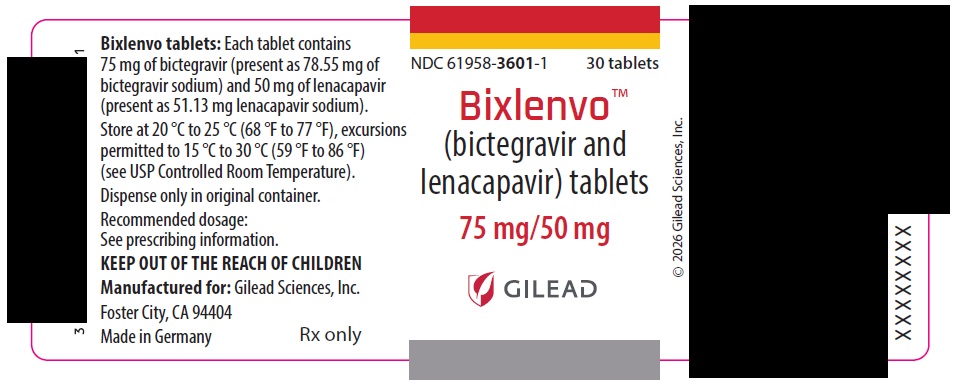
Principal Display Panel - 75 Mg/50 Mg Tablet Bottle Label

NDC 61958-3601-1
30 tablets

Bixlenvo
(bictegravir and
lenacapavir) tablets

75 mg/50 mg

GILEAD

© 2026 Gilead Sciences, Inc.

Bixlenvo-01 (Bixlenvo 01)

Bixlenvo-01 (Bixlenvo 01)

* Please review the disclaimer below.