Body Time Anti-aging Day Cream Spf 30
Product Images NDC 61979-001

View Photos of Packaging, Regulatory Labels, and Product Appearance

Product Visual Gallery

This gallery contains 3 technical images submitted to the FDA as part of the official labeling for Body Time Anti-aging Day Cream Spf 30 (NDC 61979-001). Unlike standard consumer photos, these assets often include clinical data figures, molecular chemical structures, and official manufacturer packaging layouts.

As provided by Bela Vida Holdings, Llc Dba Body Time, these visuals offer a comprehensive scientific overview of the product's physical and chemical identity, aiding pharmacists and researchers in product verification and study.

FDA Label Image

Back (Back)

Back (Back)
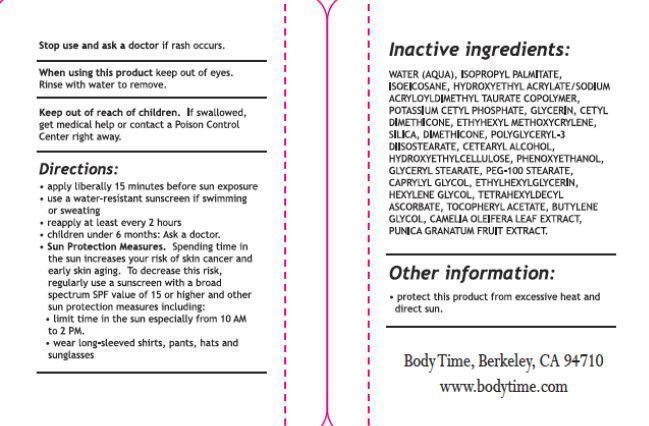
This is a sun protection product with directions for use and caution statements. It should be applied 15 minutes before sun exposure and reapplied every 2 hours. It contains water, cetyl dimenthicone, and various other ingredients. The product should be kept away from children and if swallowed, medical attention should be sought. It also suggests other sun protection measures, such as wearing long-sleeved shirts, pants, hats, and sunglasses. The product is manufactured by Body Time in Berkeley, CA.*
FDA Label Image

Box (Box)

Box (Box)
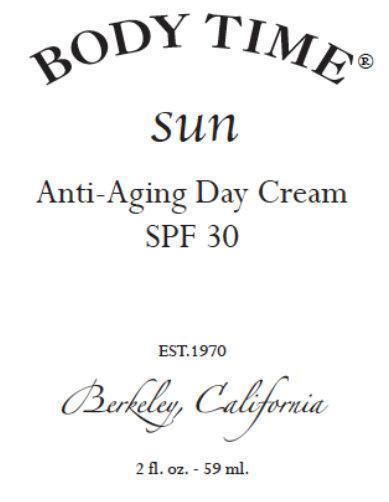
This text appears to be a product label for an anti-aging day cream with SPF 30, manufactured by a company established in 1970. The size of the product is 1oz or 59ml. However, some characters are not recognizable.*
FDA Label Image

Front (Front)

Front (Front)
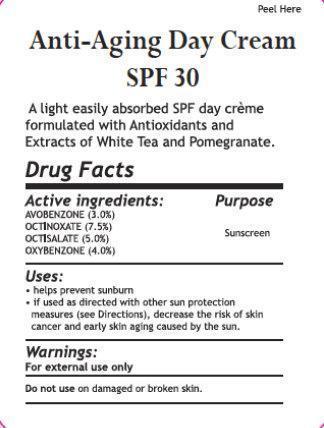
This is a description of an Anti-Aging Day Cream with SPF 30 made with antioxidants and extracts of White Tea and Pomegranate that can be easily absorbed by the skin. The cream's active ingredients include AVOBENZONE, OCTINOXATE, OCTISALATE, and OXYBENZONE. It functions to prevent sunburn and decrease the risk of skin cancer and early skin aging caused by the sun. Other sun protection measures should be taken alongside using the cream as directed.*

* These product label images have been analyzed using experimental machine learning. Please verify findings with the primary label text.