Clopidogrel Bisulfate
Product Images NDC 62034-015

10 FDA label images from Blenheim Pharmacal, Inc. · Packaging, Regulatory Labels, and Product Appearance

Product Visual Gallery

This gallery contains 10 technical images submitted to the FDA as part of the official labeling for Clopidogrel Bisulfate (NDC 62034-015). Unlike standard consumer photos, these assets often include clinical data figures, molecular chemical structures, and official manufacturer packaging layouts.

As provided by Blenheim Pharmacal, Inc., these visuals offer a comprehensive scientific overview of the product's physical and chemical identity, aiding pharmacists and researchers in product verification and study.

FDA Label Image

Label Graphic-clopidogrel 75mg 100s (Label Clopidogreltabs 75mg Bpi(62034 015 77) Apotex(60505 0253 3) Rev1)

Label Graphic-clopidogrel 75mg 100s (Label Clopidogreltabs 75mg Bpi(62034 015 77) Apotex(60505 0253 3) Rev1)
Clopidogrel bisulfate 75 mg tablets label from Blenheim Pharmacal, Inc. The label shows the product name, strength, dosage form, and contains instructions for pharmacists to dispense the medication guide. It includes storage instructions and a barcode. Each package contains 100 unit-dose tablets, arranged 10 by 10.*
FDA Label Image

Clopiodgrel-01 (Image 01)

Clopiodgrel-01 (Image 01)
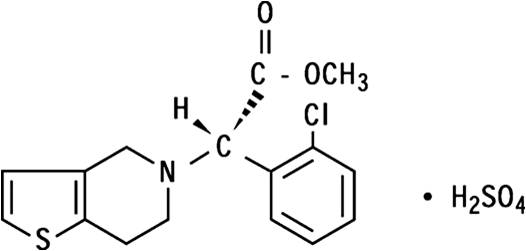
Chemical structure of clopidogrel bisulfate showing the molecular arrangement including a thiophene ring, a cyclopentane nitrogen, a chlorophenyl group, and a sulfate moiety (H2SO4).*
FDA Label Image

Figure-01 (Image 02)

Figure-01 (Image 02)
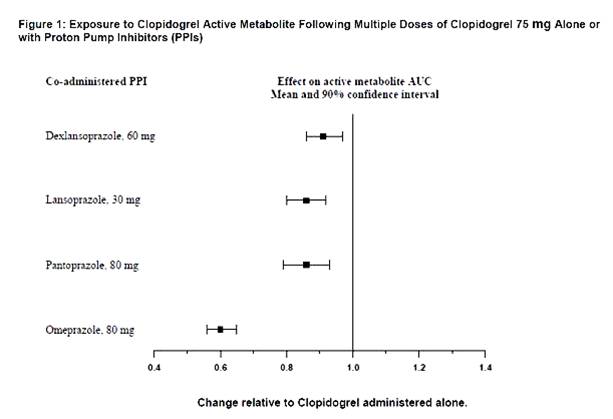
A horizontal error bar chart titled 'Exposure to Clopidogrel Active Metabolite Following Multiple Doses of Clopidogrel 75 mg Alone or with Proton Pump Inhibitors (PPIs).' It shows the effect on active metabolite AUC (mean and 90% confidence interval) for four co-administered PPIs: Dexlansoprazole 60 mg, Lansoprazole 30 mg, Pantoprazole 80 mg, and Omeprazole 80 mg, relative to Clopidogrel administered alone. Values range approximately from 0.6 to 1.0 on a scale with 1.0 indicating no change.*
FDA Label Image

Figure2 (Image 03)

Figure2 (Image 03)
A line graph titled 'Cardiovascular Death, Myocardial Infarction, and Stroke in the CURE Study' showing cumulative event rates (%) over 12 months of follow-up. It compares two groups: placebo plus aspirin and clopidogrel plus aspirin. The clopidogrel plus aspirin group shows a lower cumulative event rate throughout the follow-up period. A p-value of 0.00009 is noted, indicating statistical analysis. An asterisk notes that other standard therapies were used as appropriate.*
FDA Label Image

Figure 3 (Image 04)

Figure 3 (Image 04)
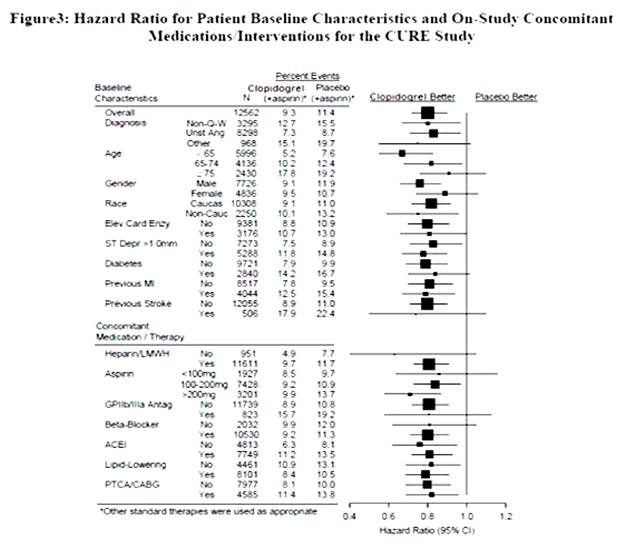
A forest plot titled 'Hazard Ratio for Patient Baseline Characteristics and On-Study Concomitant Medications/Interventions for the CLUE Study' compares hazard ratios between clopidogrel and placebo groups across various patient characteristics and treatments. It includes a list of baseline features, percentages of events for clopidogrel and placebo, and graphical hazard ratio estimates with 95% confidence intervals for each category.*
FDA Label Image

Figure4 (Image 05)

Figure4 (Image 05)
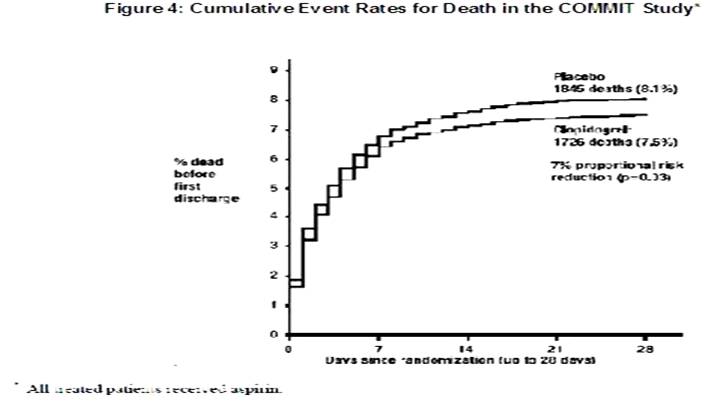
A line graph titled 'Cumulative Event Rates for Death in the COMMIT Study,' showing percentage dead before first discharge on the y-axis versus days since randomization on the x-axis. It compares death rates between a placebo group and a treatment group labeled 'Tageingrel,' with corresponding death counts and a noted 7% proportional risk reduction.*
FDA Label Image

Figure5 (Image 06)

Figure5 (Image 06)
A cumulative event rate graph showing combined endpoints of re-infarction, stroke, or death in the COMMIT study. The y-axis represents the percentage of patients with these events before first discharge, and the x-axis shows days since randomization (up to 28 days). The graph compares placebo and clopidogrel groups, indicating event percentages and proportional risk reduction.*
FDA Label Image

Figure6 (Image 07)

Figure6 (Image 07)
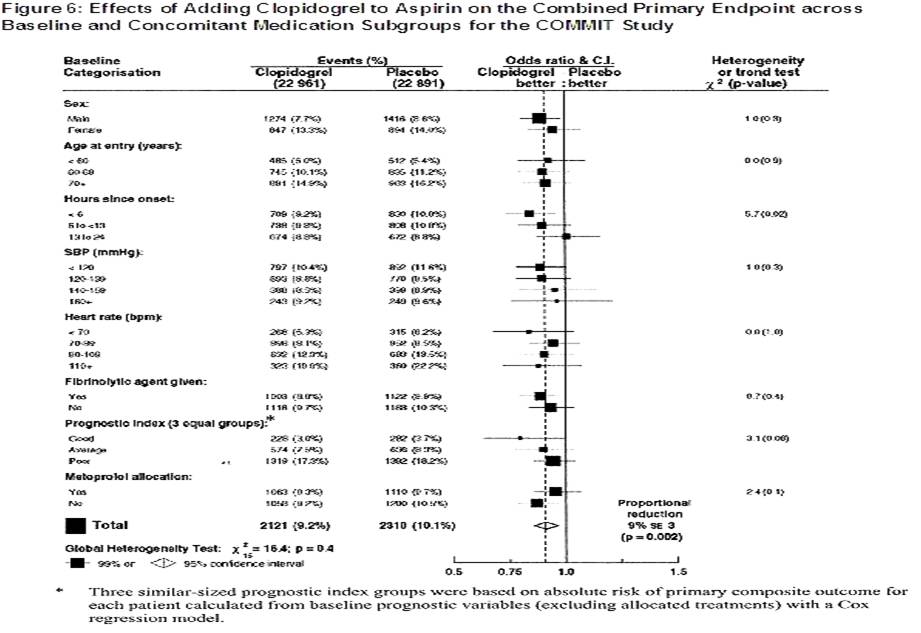
A forest plot figure illustrating the effects of adding clopidogrel to aspirin on combined primary endpoints across baseline and concomitant medication subgroups from the COMMIT study. The plot includes variables such as sex, age, hours since onset, systolic blood pressure, heart rate, fibrinolytic agent use, prognostic index, and metoprolol allocation, showing event percentages, odds ratios with confidence intervals, and heterogeneity test results.*
FDA Label Image

Figure7 (Image 08)

Figure7 (Image 08)
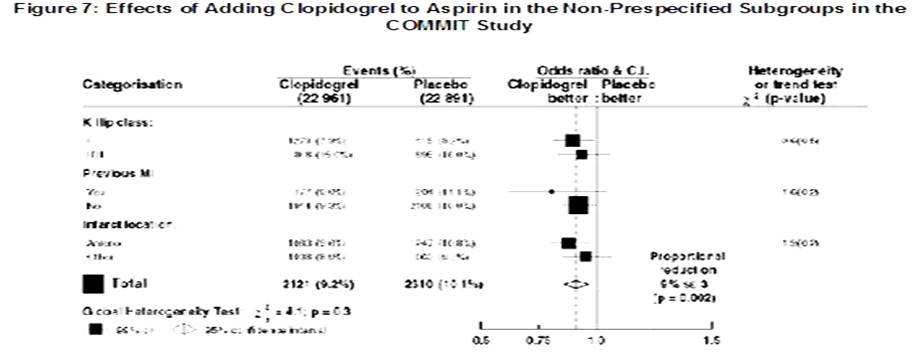
A forest plot titled 'Effects of Adding Clopidogrel to Aspirin in the Non-Prespecified Subgroups in the COMMIT Study,' showing odds ratios with confidence intervals comparing Clopidogrel to placebo across various subgroups. The chart includes data categories of Killip class, previous myocardial infarction (MI), and infarct location, along with total events and heterogeneity statistics.*
FDA Label Image

Figure 8 (Image 09)

Figure 8 (Image 09)
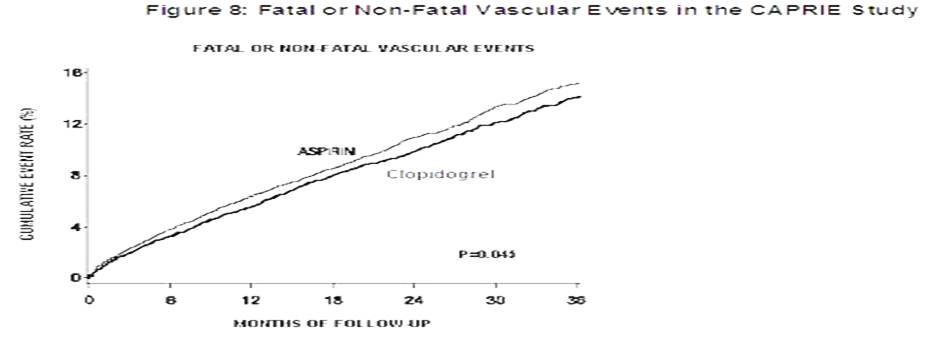
A line graph showing cumulative event rates of fatal or non-fatal vascular events over months of follow-up. Two lines represent groups treated with Aspirin and Clopidogrel bisulfate, respectively, with the vertical axis showing cumulative event rate (%) and the horizontal axis showing follow-up duration in months. The graph includes a p-value of 0.05, indicating statistical comparison between the two treatments.*

* About these descriptions: Image descriptions on this page are generated by automated AI analysis of the product label images from the manufacturer's FDA label submission (SPL). They are provided for reference only and may contain errors or omissions. Always rely on the printed label itself and the official FDA labeling, and consult a pharmacist or healthcare professional with any questions about this product.