Duloxetine
Product Images NDC 62034-021

View Photos of Packaging, Regulatory Labels, and Product Appearance

Product Visual Gallery

This gallery contains 8 technical images submitted to the FDA as part of the official labeling for Duloxetine (NDC 62034-021). Unlike standard consumer photos, these assets often include clinical data figures, molecular chemical structures, and official manufacturer packaging layouts.

As provided by Blenheim Pharmacal, Inc., these visuals offer a comprehensive scientific overview of the product's physical and chemical identity, aiding pharmacists and researchers in product verification and study.

FDA Label Image

60mg 10x10ud 100ct (62034 021 77)

60mg 10x10ud 100ct (62034 021 77)
Label for Duloxetine Delayed-Release Capsules USP 60 mg by Blenheim Pharmacal, Inc. The label shows unit-dose packaging with 100 capsules (10 x 10), displaying an orange and green capsule image marked '748.' Instructions include pharmacist dispensing guidance, dosage reference to package insert, and storage conditions. The National Drug Code (NDC) is 62034-021-77. The label also notes the package is not child resistant and includes marketing information for Blenheim Pharmacal, Inc.*
FDA Label Image

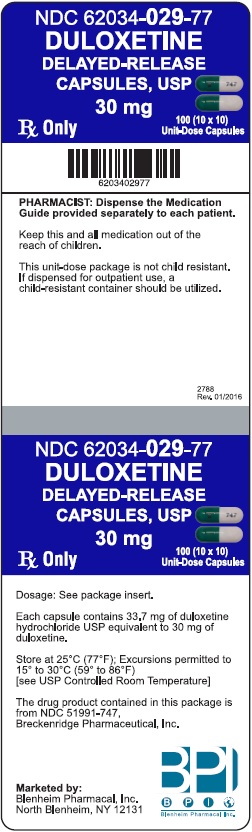
30mg 10x10ud 100ct (62034 029 77)

30mg 10x10ud 100ct (62034 029 77)
Label for Duloxetine Delayed-Release Capsules USP 30 mg by Blenheim Pharmacal, Inc. The label shows the product name, dosage strength, and capsule image in green and blue colors. It indicates the package contains 100 unit-dose capsules (10x10), includes an NDC number 62034-029-77, and provides dispensing and storage instructions. The label advises pharmacists to dispense medication guides separately and notes child resistance information.*
FDA Label Image

Structure (Duloxetine 01)

Structure (Duloxetine 01)
Chemical structure of duloxetine hydrochloride, the active ingredient in DULOXETINE DELAYED-RELEASE by Blenheim Pharmacal, Inc. The diagram shows the molecular connectivity including a naphthalene group, thiophene ring, and amine hydrochloride moiety.*
FDA Label Image

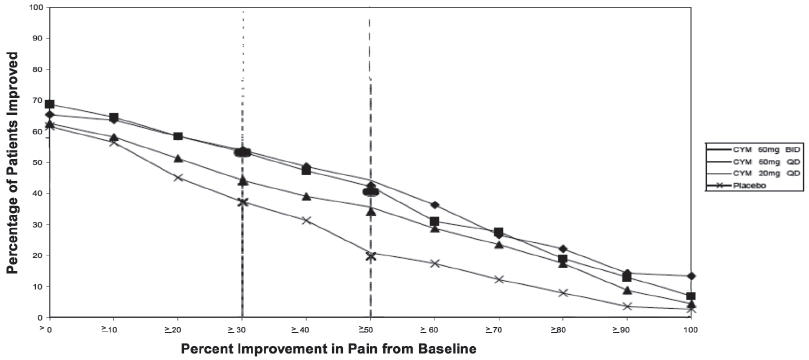
Figure 1 (Duloxetine 02)

Figure 1 (Duloxetine 02)
A line graph depicting the percentage of patients improved versus percent improvement in pain from baseline. The graph compares four groups labeled CYM 60mg BID, CYM 60mg QD, CYM 20mg QD, and Placebo, showing trends in pain improvement across different thresholds.*
FDA Label Image

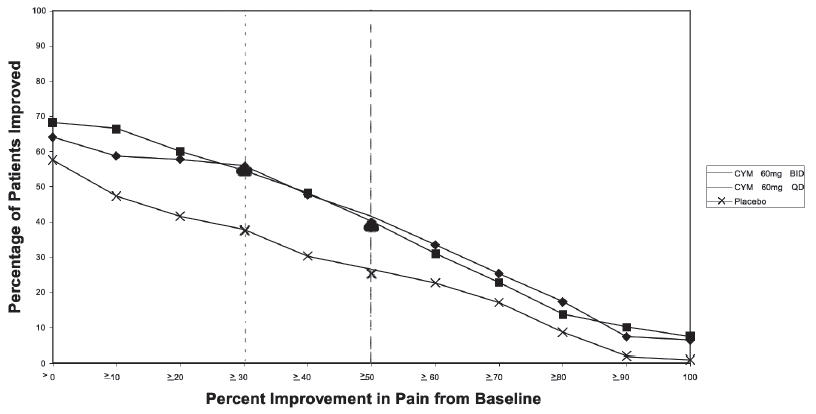
Figure 2 (Duloxetine 03)

Figure 2 (Duloxetine 03)
A line graph showing the percentage of patients improved versus percent improvement in pain from baseline. It compares three groups: CYM 60mg BID, CYM 60mg QD, and Placebo, with curves depicting patient improvement at various pain reduction percentages.*
FDA Label Image

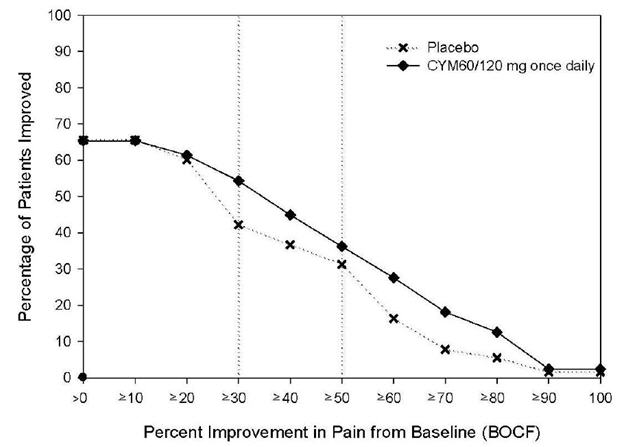
Figure 3 (Duloxetine 04)

Figure 3 (Duloxetine 04)
A line graph showing the percentage of patients improved plotted against the percent improvement in pain from baseline (BOCF). It compares two groups: placebo and CYM60/120 mg once daily, with the CYM60/120 mg group consistently showing a higher percentage of patients improved at various pain improvement thresholds.*
FDA Label Image

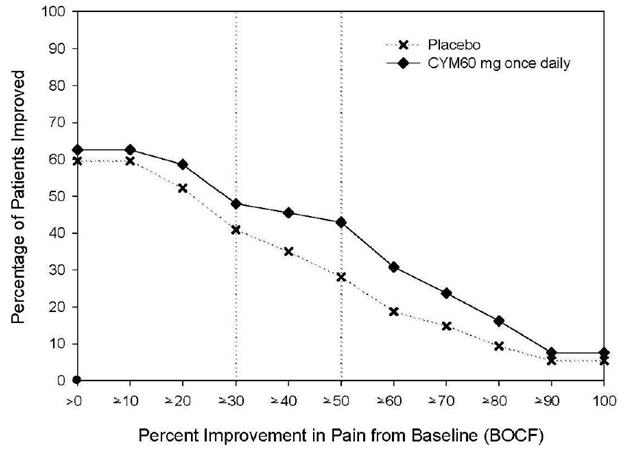
Figure 4 (Duloxetine 05)

Figure 4 (Duloxetine 05)
A line graph comparing the percentage of patients improved over varying levels of percent improvement in pain from baseline (BOCF). It shows two data series: one for placebo and one for CYP60 mg once daily. The vertical axis represents the percentage of patients improved, and the horizontal axis shows the percent improvement in pain, ranging from greater than 0 to 100%.*
FDA Label Image

Figure 5 (Duloxetine 06)

Figure 5 (Duloxetine 06)
A line graph comparing the percentage of patients improved versus percent improvement in pain from baseline (BOCF) for DULOXETINE DELAYED-RELEASE 60/120 mg once daily (CYM) and placebo. The graph shows two lines marked with symbols for placebo (x) and active drug (diamonds), with percentage improvement on the x-axis and percentage of patients improved on the y-axis.*

* About these descriptions: Image descriptions on this page are generated by automated AI analysis of the product label images from the manufacturer's FDA label submission (SPL). They are provided for reference only and may contain errors or omissions. Always rely on the printed label itself and the official FDA labeling, and consult a pharmacist or healthcare professional with any questions about this product.