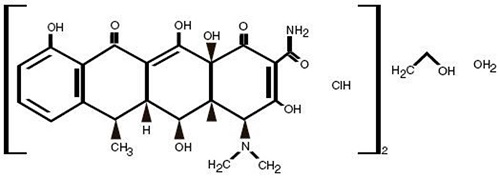
Prescribing Doxycycline Hyclate Tablets, USP in the absence of a proven or strongly suspected bacterial infection or a prophylactic indication is unlikely to provide benefit to the patient and increases the risk of the development of drug-resistant bacteria.
While no overgrowth by opportunistic microorganisms such as yeast were noted during clinical studies, as with other antimicrobials, doxycycline hyclate tablets therapy may result in overgrowth of non-susceptible microorganisms including fungi.
The use of tetracyclines may increase the incidence of vaginal candidiasis.
Doxycycline hyclate tablets should be used with caution in patients with a history or predisposition to oral candidiasis. The safety and effectiveness of doxycycline hyclate tablets has not been established for the treatment of periodontitis in patients with coexistent oral candidiasis.
If superinfection is suspected, appropriate measures should be taken.
Information for Patients:
Patients should be counseled that antibacterial drugs including Doxycycline Hyclate Tablets, USP should only be used to treat bacterial infections. They do not treat viral infections (e.g., the common cold). When Doxycycline Hyclate Tablets, USP are prescribed to treat a bacterial infection, patients should be told that although it is common to feel better early in the course of therapy, the medication should be taken exactly as directed. Skipping doses or not completing the full course of therapy may (1) decrease the effectiveness of the immediate treatment and (2) increase the likelihood that bacteria will develop resistance and will not be treatable by Doxycycline Hyclate Tablets, USP or other antibacterial drugs in the future.
Laboratory Tests:
In long term therapy, periodic laboratory evaluations of organ systems, including hematopoietic, renal, and hepatic studies should be performed.
Drug Interactions:
Because tetracyclines have been shown to depress plasma prothrombin activity, patients who are on anticoagulant therapy may require downward adjustment of their anticoagulant dosage.
Since bacterial antibiotics, such as the tetracycline class of antibiotics, may interfere with the bactericidal action of members of the β-lactam (e.g. penicillin) class of antibiotics, it is not advisable to administer these antibiotics concomitantly.
Absorption of tetracyclines is impaired by antacids containing aluminum, calcium, or magnesium, and iron containing preparations, and by bismuth subsalicylate.
Barbiturates, carbamazepine, and phenytoin decrease the half-life of doxycycline.
The concurrent use of tetracycline and methoxyflurane has been reported to result in fatal renal toxicity. Concurrent use of tetracyclines may render oral contraceptives less effective.
Drug/Laboratory Test Interactions:
False elevations of urinary catecholamine levels may occur due to interference with the fluorescence test.
Carcinogenesis, Mutagenesis, Impairment of Fertility:
Doxycycline hyclate has not been evaluated for carcinogenic potential in long-term animal studies. Evidence of oncogenic activity was obtained in studies with related compounds, i.e., oxytetracycline (adrenal and pituitary tumors), and minocycline (thyroid tumors).
Doxycycline hyclate demonstrated no potential to cause genetic toxicity in an
in vitro point mutation study with mammalian cells (CHO/HGPRT forward mutation assay) or in an
in vivo micronucleus assay conducted in CD-1 mice. However, data from an
in vitro assay with CHO cells for potential to cause chromosomal aberrations suggest that doxycycline hyclate is a weak clastogen.
Oral administration of doxycycline hyclate to male and female Sprague-Dawley rats adversely affected fertility and reproductive performance, as evidenced by increased time for mating to occur, reduced sperm motility, velocity, and concentration, abnormal sperm morphology, and increased pre-and post-implantation losses. Doxycycline hyclate induced reproductive toxicity at all dosages that were examined in this study, as even the lowest dosage tested (50 mg/kg/day) induced a statistically significant reduction in sperm velocity. Note that 50 mg/kg/day is approximately 10 times the amount of doxycycline hyclate contained in the recommended daily dose of doxycycline hyclate tablets for a 60 kg human when compared on the basis of body surface area estimates (mg/m
2). Although doxycycline impairs the fertility of rats when administered at sufficient dosage, the effect of doxycycline hyclate tablets on human fertility is unknown.
Pregnancy:
Teratogenic Effects:
Pregnancy Category D. (See
WARNINGS section). Results from animal studies indicate that doxycycline crosses the placenta and is found in fetal tissues.
Nonteratogenic effects:
(See
WARNINGS section).
Labor and Delivery:
The effect of tetracyclines on labor and delivery is unknown.
Nursing Mothers:
Tetracyclines are excreted in human milk. Because of the potential for serious adverse reactions in nursing infants from doxycycline, the use of doxycycline hyclate tablets in nursing mothers is contraindicated (See
WARNINGS section).
Pediatric Use:
The use of doxycycline hyclate tablets in infancy and childhood is contraindicated (See
WARNINGS section).