Duloxetine Hydrochloride Capsule, Delayed Release
Product Images NDC 62332-280

View Photos of Packaging, Regulatory Labels, and Product Appearance

Product Visual Gallery

This gallery contains 14 technical images submitted to the FDA as part of the official labeling for Duloxetine Hydrochloride (NDC 62332-280). Unlike standard consumer photos, these assets often include clinical data figures, molecular chemical structures, and official manufacturer packaging layouts.

As provided by Alembic Pharmaceuticals Inc., these visuals offer a comprehensive scientific overview of the product's physical and chemical identity, aiding pharmacists and researchers in product verification and study.

FDA Label Image

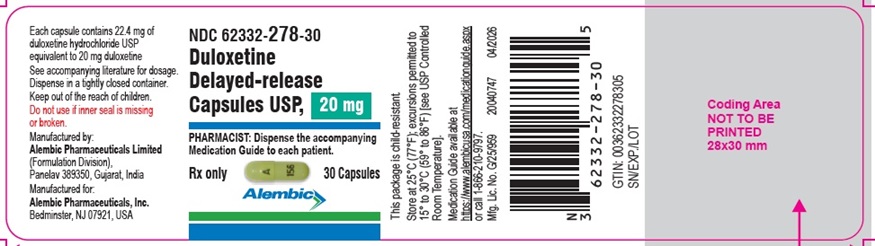
30 Capsules (Duloxetine 20 mg)
FDA Label Image

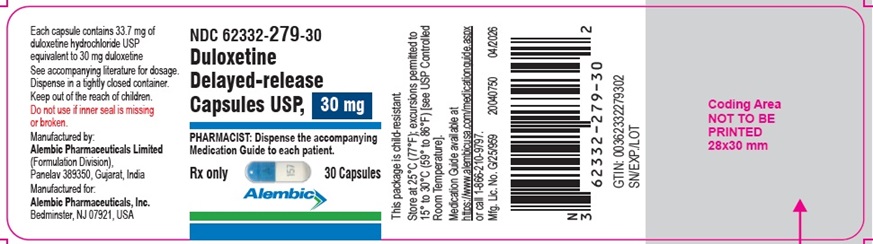
30 Capsules (Duloxetine 30 mg)

FDA Label Image

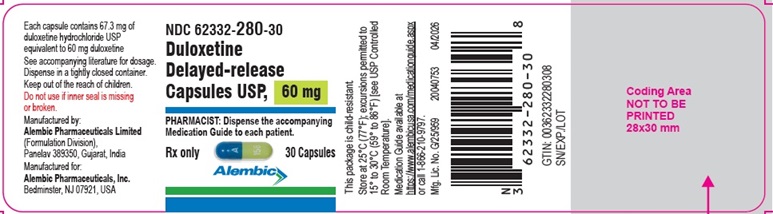
30 Capsules (Duloxetine 60 mg)

FDA Label Image

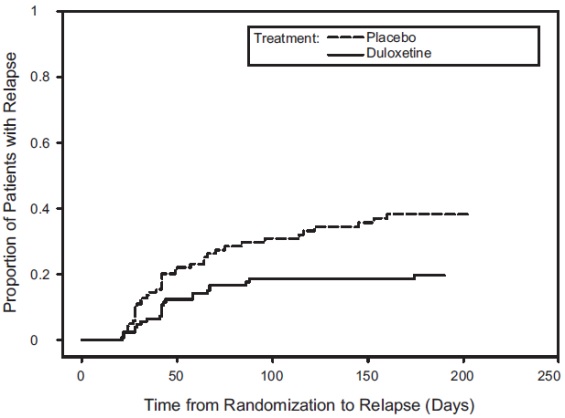
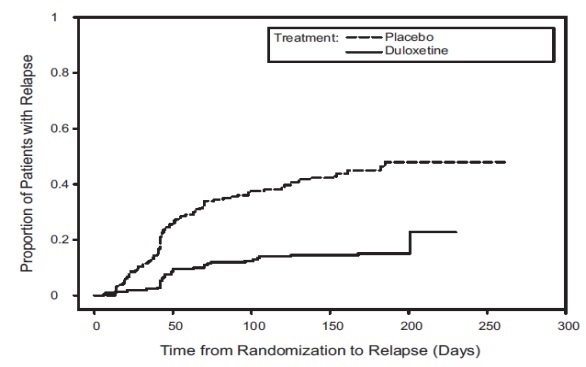
Duloxetine-fig1.jpg (Duloxetine Fig1)

Duloxetine-fig1.jpg (Duloxetine Fig1)
This text appears to provide information about a study comparing the treatment of placebo versus Duloxetine. The chart likely shows the time from randomization to relapse in days for the two treatments. The graph may dynamically display how long it took for participants to experience a relapse under each treatment.*
FDA Label Image

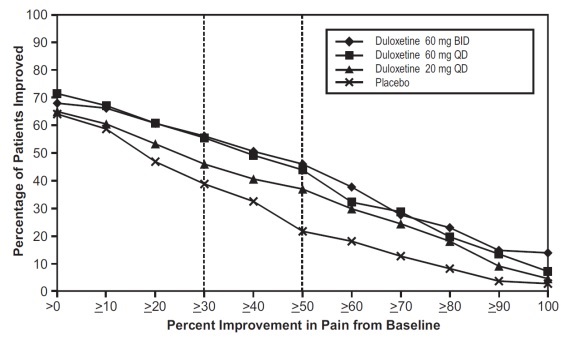
Duloxetine-fig10.jpg (Duloxetine Fig10)

Duloxetine-fig10.jpg (Duloxetine Fig10)
This text provides information about the percentage of patients who experienced improvement in pain levels when taking either a placebo or duloxetine at different doses. The data shows the percentage improvement in pain from baseline for these two treatments.*
FDA Label Image

Duloxetine-fig2.jpg (Duloxetine Fig2)

Duloxetine-fig2.jpg (Duloxetine Fig2)
This text provides data on the proportion of patients with relapse over time in a study comparing the effect of placebo and Duloxetine treatment. The chart shows the time from randomization to relapse in days, with values ranging from 50 to 300. It helps to analyze the effectiveness of the treatments in preventing relapse.*
FDA Label Image

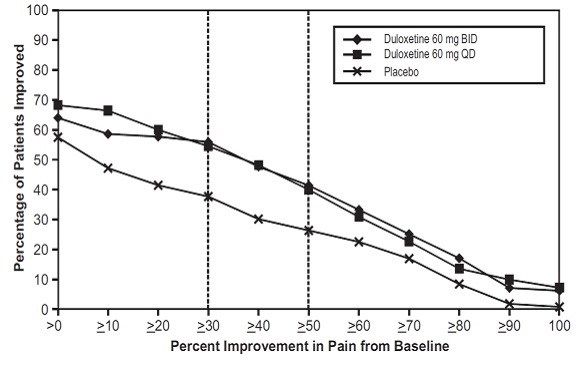
Duloxetine-fig3.jpg (Duloxetine Fig3)

Duloxetine-fig3.jpg (Duloxetine Fig3)
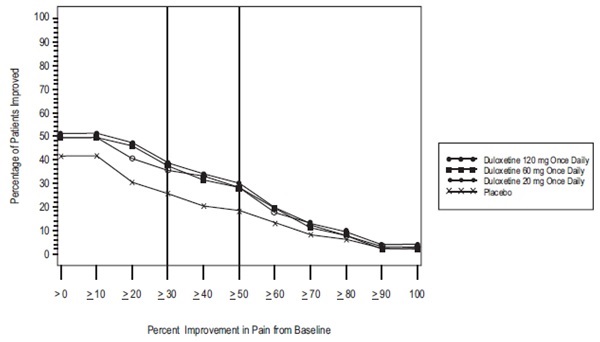
This text appears to contain information about different dosages of medication (Duweine and Duloseine) in milligrams (mg) prescribed multiple times a day (BID), once a day (OD), and once daily (QD). It also mentions the percentage of patients improved in relation to the improvement in pain from baseline.*
FDA Label Image

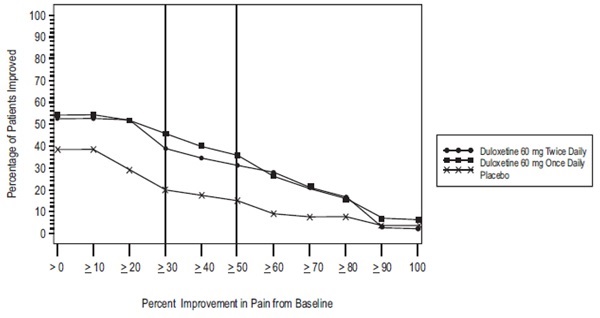
Duloxetine-fig4.jpg (Duloxetine Fig4)

Duloxetine-fig4.jpg (Duloxetine Fig4)
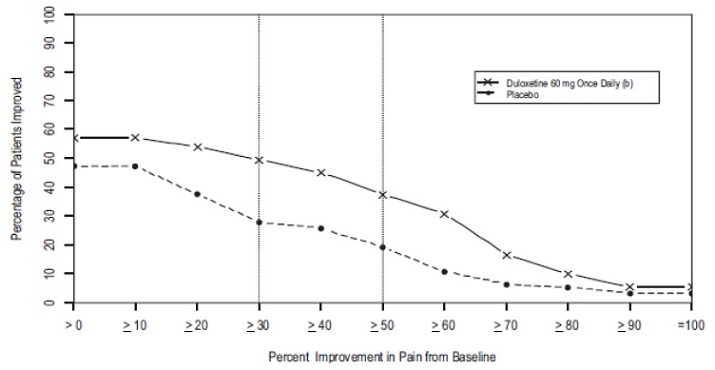
This information shows the percentage of patients improved with different treatment doses, specifically Duoeine 6mgBD, Duoeine 80mgQD, and Paceto. The graph also displays the percentage improvement in pain from baseline for various data points ranging from 210 to 290.*
FDA Label Image

Duloxetine-fig5.jpg (Duloxetine Fig5)

FDA Label Image

Duloxetine-fig6.jpg (Duloxetine Fig6)

FDA Label Image

Figure 7 (Duloxetine Fig7)

FDA Label Image

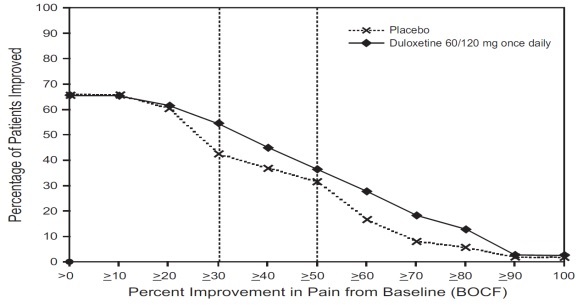
Duloxetine-fig8.jpg (Duloxetine Fig8)

Duloxetine-fig8.jpg (Duloxetine Fig8)
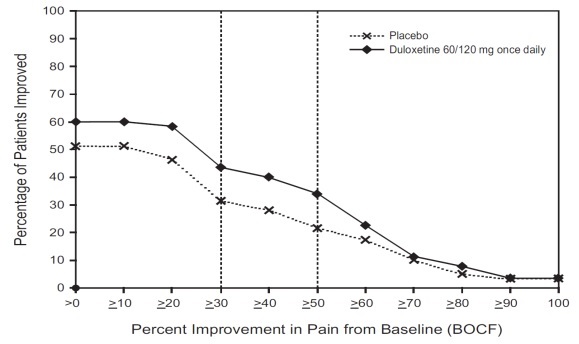
This text shows data related to the percentage of patients who improved when taking a placebo versus duloxetine at a dosage of 60-120 mg once daily. It presents the percent improvement in pain from baseline using the BOCF method.*
FDA Label Image

Duloxetine-fig9.jpg (Duloxetine Fig9)

Duloxetine-fig9.jpg (Duloxetine Fig9)
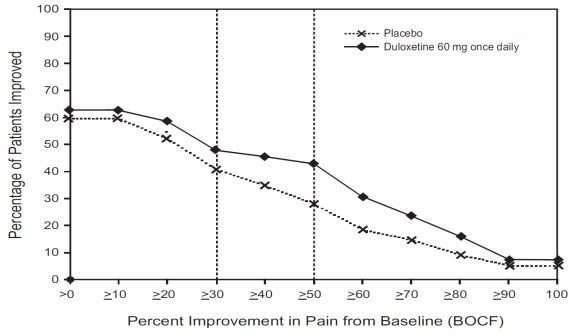
This is a chart displaying the percentage of patients improved in pain after taking either a placebo or duloxetine 60 mg once daily. The x-axis shows the percent improvement in pain from baseline (BOCF) while the y-axis represents the percentage of patients improved. The graph indicates the effectiveness of the medication in pain management.*
FDA Label Image

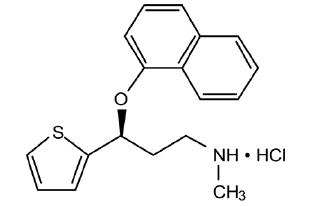
Duloxetine-structure (Duloxetine Structure)

* These product label images have been analyzed using experimental machine learning. Please verify findings with the primary label text.