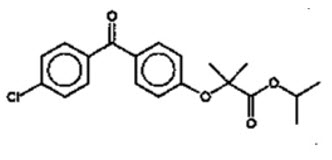
- Markedly elevated levels of serum TG (e.g., ≥ 2,000 mg/dL) may increase the risk of developing pancreatitis. The effect of fenofibrate therapy on reducing this risk has not been determined [see Warnings and Precautions (5.7)].
- Fenofibrate did not reduce coronary heart disease morbidity and mortality in two large, randomized controlled trials of patients with type 2 diabetes mellitus [see Warnings and Precautions (5.1) and Clinical Studies (14.4)].
Risk Factors for Myopathy
Risk factors for myopathy include age 65 years or older, uncontrolled hypothyroidism, renal impairment, and concomitant use with certain other drugs [see Drug Interactions (7) and Use in Specific Populations (8.6)].
Steps to Prevent or Reduce the Risk of Myopathy and Rhabdomyolysis
Data from observational studies indicate that the risk for rhabdomyolysis is increased when fibrates, including fenofibrates, are co-administered with a statin. Avoid concomitant use unless the benefit of further alterations in TG levels is likely to outweigh the increased risk of this drug combination [see Drug Interactions (7), Clinical Pharmacology (12.3), and Clinical Studies (14.4)].
Cases of myopathy, including rhabdomyolysis, have been reported with fenofibrates, including LIPOFEN, co-administered with colchicine. Consider whether the benefit of using colchicine concomitantly with LIPOFEN outweighs the increased risk of myopathy [see Drug Interactions (7)].
Discontinue LIPOFEN if markedly elevated CK levels occur or if myopathy is either diagnosed or suspected. Muscle symptoms and CK elevations may resolve if LIPOFEN is discontinued. Temporarily discontinue LIPOFEN in patients experiencing an acute or serious condition at high risk of developing renal failure secondary to rhabdomyolysis (e.g., sepsis; shock; severe hypovolemia; major surgery; trauma; severe metabolic, endocrine, or electrolyte disorders; or uncontrolled epilepsy).
Inform patients of the risk of myopathy and rhabdomyolysis when starting or increasing the LIPOFEN dosage. Instruct patients to promptly report any unexplained muscle pain, tenderness or weakness, particularly if accompanied by malaise or fever.
Acute Hypersensitivity
Anaphylaxis and angioedema have been reported with postmarketing use of fenofibrates. In some cases, reactions were life-threatening and required emergency treatment. If a patient develops signs or symptoms of an acute hypersensitivity reaction, advise them to seek immediate medical attention and discontinue LIPOFEN. LIPOFEN is contraindicated in patients with a hypersensitivity to fenofibrate, fenofibric acid, or any of the ingredients in LIPOFEN.
Delayed Hypersensitivity
Severe cutaneous adverse drug reactions (SCAR), including Stevens-Johnson syndrome, Toxic Epidermal Necrolysis, and Drug Reaction with Eosinophilia and Systemic Symptoms (DRESS), have been reported with post-marketing use of fenofibrates, occurring days to weeks after treatment initiation. The cases of DRESS were associated with cutaneous reactions (such as rash or exfoliative dermatitis) and a combination of eosinophilia, fever, systemic organ involvement (renal, hepatic, or respiratory). Discontinue LIPOFEN and treat patients appropriately if SCAR is suspected.
Other Adverse Reactions
Urticaria
Urticaria was seen in 1.1% vs. 0% and rash in 1.4% vs. 0.8% of fenofibrate and placebo patients respectively in controlled trials.
Increases in Liver Enzymes
In a pooled analysis of 10 placebo controlled trials, increases to > 3 times the upper limit of normal in ALT occurred in 5.3% of patients taking either an intermediate or the maximum recommended daily dosage of fenofibrate versus 1.1% of patients treated with placebo. In an 8-week trial, the incidence of ALT or AST elevations ≥ 3 times the upper limit of normal was 13% in patients receiving an intermediate daily dosage or the maximum recommended daily dosage of fenofibrate and was 0% in those receiving the lowest recommended daily dosage of fenofibrate or placebo [see Warnings and Precautions (5.2)].
Risk Summary
Limited available data with fenofibrate use in pregnant women are insufficient to determine a drug associated risk of major birth defects, miscarriage or adverse maternal or fetal outcomes. In animal reproduction studies, no evidence of embryo-fetal toxicity was observed with oral administration of fenofibrate in rats and rabbits during organogenesis at doses less than or comparable to the maximum recommended clinical dosage of 150 mg daily, based on body surface area (mg/m2). Adverse reproductive outcomes occurred at higher doses in the presence of maternal toxicity (see Data). LIPOFEN should be used during pregnancy only if the potential benefit justifies the potential risk to the fetus.
The estimated background risk of major birth defects and miscarriage for the indicated population is unknown. In the U.S. general population, the estimated background risk of major birth defects and miscarriage in clinically recognized pregnancies is 2 to 4% and 15 to 20%, respectively.
Data
Animal Data
In pregnant rats given oral dietary doses of 14 mg/kg/day, 127 mg/kg/day, and 361 mg/kg/day from gestation day 6 to 15 during the period of organogenesis, no adverse developmental findings were observed at 14 mg/kg/day (less than the clinical exposure at the maximum recommended human dose [MRHD] of 300 mg fenofibrate daily, comparable to 150 mg LIPOFEN daily, based on body surface area comparisons). Increased fetal skeletal malformations were observed at maternally toxic doses (361 mg/kg/day, corresponding to 12 times the clinical exposure at the MRHD) that significantly suppressed maternal body weight gain.
In pregnant rabbits given oral gavage doses of 15 mg/kg/day, 150 mg/kg/day, and 300 mg/kg/day from gestation day 6 to 18 during the period of organogenesis and allowed to deliver, no adverse developmental findings were observed at 15 mg/kg/day (a dose that approximates the clinical exposure at the MRHD, based on body surface area comparisons). Aborted litters were observed at maternally toxic doses (≥ 150 mg/kg/day, corresponding to ≥ 10 times the clinical exposure at the MRHD) that suppressed maternal body weight gain.
In pregnant rats given oral dietary doses of 15 mg/kg/day, 75 mg/kg/day, and 300 mg/kg/day from gestation day 15 through lactation day 21 (weaning), no adverse developmental effects were observed at 15 mg/kg/day (less than the clinical exposure at the MRHD, based on body surface area comparisons), despite maternal toxicity (decreased weight gain). Post-implantation loss was observed at ≥ 75 mg/kg/day (≥ 2 times the clinical exposure at the MRHD) in the presence of maternal toxicity (decreased weight gain). Decreased pup survival was noted at 300 mg/kg/day (10 times the clinical exposure at the MRHD), which was associated with decreased maternal body weight gain/maternal neglect.
Risk Summary
There is no available information on the presence of fenofibrate in human milk, effects of the drug on the breastfed infant, or the effects on milk production. Fenofibrate is present in the milk of rats, and is therefore likely to be present in human milk. Because of the potential for serious adverse reactions in breastfed infants, such as disruption of infant lipid metabolism, women should not breastfeed during treatment with LIPOFEN and for 5 days after the final dose
Absorption
The absolute bioavailability of fenofibrate cannot be determined as the compound is virtually insoluble in aqueous media suitable for injection. However, fenofibrate is well absorbed from the gastrointestinal tract. Peak plasma levels of fenofibric acid occur within approximately 5 hours after oral administration.
In a single dose and multiple dose study with LIPOFEN capsules 200 mg, the extent of absorption (AUC) of fenofibric acid, the principal metabolite of fenofibrate, was 42% larger at steady state compared to single-dose administration. The rate of absorption (Cmax) of fenofibric acid was 73% greater after multiple-dose than after single-dose administration.
The extent of absorption of LIPOFEN in terms of AUC value of fenofibric acid increased in a less than proportional manner while the rate of absorption in terms of Cmax value of fenofibric acid increased proportionally related to dose.
Effect of Food
The absorption of fenofibrate is increased when administered with food. With LIPOFEN, the extent of absorption is increased by approximately 58% and 25% under high-fat fed and low-fat fed conditions as compared to fasting conditions, respectively.
Distribution
Upon multiple dosing of fenofibrate, fenofibric acid steady state is achieved after 5 days. Plasma concentrations of fenofibric acid at steady state are approximately double of those following a single dose. Serum protein binding was approximately 99% in normal and hyperlipidemic subjects.
Elimination
Fenofibric acid is eliminated with a half-life of approximately 20 hours allowing once daily dosing of LIPOFEN.
Metabolism
Following oral administration, fenofibrate is rapidly hydrolyzed by esterases to the active metabolite, fenofibric acid; unchanged fenofibrate is detected at low concentrations in plasma compared to fenofibric acid over most of the single dose and multiple dosing periods.
Fenofibric acid is primarily conjugated with glucuronic acid and then excreted in urine. A small amount of fenofibric acid is reduced at the carbonyl moiety to a benzhydrol metabolite which is, in turn, conjugated with glucuronic acid and excreted in urine.
In vitro and in vivo metabolism data indicate that neither fenofibrate nor fenofibric acid undergo oxidative metabolism (e.g., cytochrome P450) to a significant extent.
Excretion
After absorption, fenofibrate is mainly excreted in the urine in the form of metabolites, primarily fenofibric acid and fenofibric acid glucuronide. After oral administration of a single dose of radiolabeled fenofibrate in healthy volunteers, approximately 60% of the dose appeared in the urine, primarily as fenofibric acid and its glucuronide conjugate, and 25% was excreted in feces.
Use in Specific Populations
Geriatric Patients
In geriatric volunteers 77 to 87 years of age, the apparent oral clearance of fenofibric acid following a single oral dose of fenofibrate was 1.2 L/h, which compares to 1.1 L/h in young adults. This indicates that a similar dosage regimen can be used in geriatric patients with normal renal function, without increasing accumulation of the drug or metabolites [see Dosage and Administration (2) and Use in Specific Populations (8)].
Pediatric Patients
Pharmacokinetics of LIPOFEN has not been studied in pediatric patients.
Male and Female Patients
No pharmacokinetic difference between males and females has been observed for fenofibrate.
Racial or Ethnic Groups
The influence of race on the pharmacokinetics of fenofibrate has not been studied, however fenofibrate is not metabolized by enzymes known for exhibiting inter-ethnic variability.
Patients with Renal Impairment
The pharmacokinetics of fenofibric acid were examined in patients with mild, moderate and severe renal impairment. Patients with severe renal impairment (creatinine clearance [CrCl ≤30 mL/min] <30 mL/min or estimated glomerular filtration rate [eGFR] <30 mL/min/1.73m2) showed a 2.7-fold increase in exposure for fenofibric acid and increased accumulation of fenofibric acid during chronic dosing compared to that of healthy subjects. Patients with mild to moderate renal impairment (CrCl 30 mL/min to 80 mL/min or eGFR 30 to 59 mL/min/1.73m2) had similar exposure but an increase in the half-life for fenofibric acid compared to that of healthy subjects.
Patients with Hepatic Impairment
No pharmacokinetic studies have been conducted in patients with hepatic impairment.
Drug Interaction Studies
In vitro studies using human liver microsomes indicate that fenofibrate and fenofibric acid are not inhibitors of cytochrome (CYP) P450 isoforms CYP3A4, CYP2D6, CYP2E1, or CYP1A2. They are weak inhibitors of CYP2C8, CYP2C19 and CYP2A6, and mild to moderate inhibitors of CYP2C9 at therapeutic concentrations.
Table 3 describes the effects of co-administered drugs on fenofibric acid systemic exposure.
Table 4 describes the effects of co-administered fenofibrate or fenofibric acid on systemic exposure of other drugs.
Table 3: Effects of Co-Administered Drugs on Fenofibric Acid Systemic Exposure from Fenofibrate Administration| Co-Administered Drug | Dosage Regimen of Co-Administered Drug | Dosage Regimen of Fenofibrate | Changes in Fenofibric Acid Exposure |
|---|
| AUC | Cmax |
|---|
| Lipid-lowering medications |
| Atorvastatin | 20 mg once daily for 10 days | Fenofibrate 160 mg TriCor (fenofibrate) oral tablet once daily for 10 days | ↓2% | ↓4% |
| Pravastatin | 40 mg as a single dose | Fenofibrate 3 × 67 mg TriCor (fenofibrate) oral micronized capsule as a single dose | ↓1% | ↓2% |
| Fluvastatin | 40 mg as a single dose | Fenofibrate 160 mg as a single dose | ↓2% | ↓10% |
| Anti-diabetic medications |
| Glimepiride | 1 mg as a single dose | Fenofibrate 145 mg once daily for 10 days | ↑1% | ↓1% |
| Metformin | 850 mg three times daily for 10 days | Fenofibrate 54 mg three times daily for 10 days | ↓9% | ↓6% |
| Rosiglitazone | 8 mg once daily for 5 days | Fenofibrate 145 mg once daily for 14 days | ↑10% | ↑3% |
Table 4: Effects of Fenofibrate on Systemic Exposure of Other DrugsDosage Regimen of
Fenofibrate | Dosage Regimen of Co-Administered Drug | Changes in Co-Administered Drug Exposure |
|---|
| Analyte | AUC | Cmax |
|---|
| Lipid-lowering medications |
| Fenofibrate 160 mg TriCor (fenofibrate) oral tablet once daily for 10 days | Atorvastatin, 20 mg once daily for 10 days | Atorvastatin | ↓17% | 0% |
| Fenofibrate 3 × 67 mg TriCor (fenofibrate) oral micronized capsule as a single dose | Pravastatin, 40 mg as a single dose | Pravastatin | ↑13% | ↑13% |
| | 3α-Hydroxyl-iso-pravastatin | ↑26% | ↑29% |
| Fenofibrate 160 mg as a single dose | Fluvastatin, 40 mg as a single dose | (+)-3R, 5S-Fluvastatin | ↑15% | ↑16% |
| Anti-diabetic medications |
| Fenofibrate 145 mg once daily for 10 days | Glimepiride, 1 mg as a single dose | Glimepiride | ↑35% | ↑18% |
| Fenofibrate 54 mg three times daily for 10 days | Metformin, 850 mg three times daily for 10 days | Metformin | ↑3% | ↑6% |
| Fenofibrate 145 mg once daily for 14 days | Rosiglitazone, 8 mg once daily for 5 days | Rosiglitazone | ↑6% | ↓1% |
Carcinogenesis: Two dietary carcinogenicity studies have been conducted in rats with fenofibrate. In the first 24-month study, Wistar rats were dosed with fenofibrate at 10 mg/kg/day, 45 mg/kg/day, and 200 mg/kg/day, approximately 0.3 times, 1 time, and 6 times the maximum recommended human dose (MRHD) based on body surface area comparisons (mg/m2). At a dose of 200 mg/kg/day (at 6 times the MRHD), the incidence of liver carcinomas was significantly increased in both sexes. A statistically significant increase in pancreatic carcinomas was observed in males at 1 and 6 times the MRHD; an increase in pancreatic adenomas and benign testicular interstitial cell tumors was observed at 6 times the MRHD in males. In a second 24-month study in a different strain of rats (Sprague-Dawley), doses of 10 mg/kg/day and 60 mg/kg/day (0.3 and 2 times the MRHD) produced significant increases in the incidence of pancreatic acinar adenomas in both sexes and increases in testicular interstitial cell tumors in males at 2 times the MRHD.
A 117-week carcinogenicity study was conducted in rats comparing three drugs: fenofibrate 10 mg/kg/day and 60 mg/kg/day (0.3 and 2 times the MRHD), clofibrate (400 mg/kg/day; 2 times the human dose), and gemfibrozil (250 mg/kg/day; 2 times the human dose, based on mg/m2 surface area). Fenofibrate increased pancreatic acinar adenomas in both sexes. Clofibrate increased hepatocellular carcinoma and pancreatic acinar adenomas in males and hepatic neoplastic nodules in females. Gemfibrozil increased hepatic neoplastic nodules in males and females, while all three drugs increased testicular interstitial cell tumors in males.
In a 21-month study in CF-1 mice, fenofibrate 10 mg/kg/day, 45 mg/kg/day, and 200 mg/kg/day (approximately 0.2 times, 1 time, and 3 times the MRHD on the basis of mg/m2 surface area) significantly increased the liver carcinomas in both sexes at 3 times the MRHD. In a second 18-month study at 10 mg/kg/day, 60 mg/kg/day, and 200 mg/kg/day, fenofibrate significantly increased the liver carcinomas in male mice and liver adenomas in female mice at 3 times the MRHD.
Electron microscopy studies have demonstrated peroxisomal proliferation following fenofibrate administration to the rat. An adequate study to test for peroxisome proliferation in humans has not been done, but changes in peroxisome morphology and numbers have been observed in humans after treatment with other members of the fibrate class when liver biopsies were compared before and after treatment in the same individual.
Mutagenesis: Fenofibrate has been demonstrated to be devoid of mutagenic potential in the following tests: Ames, mouse lymphoma, chromosomal aberration and unscheduled DNA synthesis in primary rat hepatocytes.
Impairment of Fertility: In fertility studies rats were given oral dietary doses of fenofibrate, males received 61 days prior to mating and females 15 days prior to mating through weaning which resulted in no adverse effect on fertility at doses up to 300 mg/kg/day (approximately 10 times the MRHD, based on body surface area comparisons).
Hepatotoxicity
Inform patients that LIPOFEN may cause liver enzyme elevations and possibly liver failure. Advise patients to promptly report fatigue, anorexia, right upper abdominal discomfort, dark urine or jaundice [see Contraindications (4) and Warnings and Precautions (5.2)].
Myopathy and Rhabdomyolysis
Advise patients that LIPOFEN may cause myopathy and rhabdomyolysis. Inform patients that the risk is also increased when taking certain types of medication and they should discuss all medication, both prescription and over the counter, with their healthcare provider. Instruct patients to inform other healthcare providers prescribing a new medication or increasing the dosage of an existing medication that they are taking LIPOFEN. Instruct patients to promptly report any unexplained muscle pain, tenderness, or weakness particularly if accompanied by malaise or fever [see Warnings and Precautions (5.3) and Drug Interactions (7)].
Increased Bleeding Risk with Coumarin Anticoagulants
Inform patients that the concomitant use of LIPOFEN with coumarin-type anticoagulants may increase the risk of bleeding. Advise patients if they are taking or planning to take coumarin-type anticoagulants to inform their healthcare providers and that increased monitoring may be necessary [see Warnings and Precautions (5.6) and Drug Interactions (7)].
Hypersensitivity Reactions
Inform patients that serious hypersensitivity reactions, such as anaphylaxis and angioedema, have been reported with fenofibrates. Advise patients to report immediately any signs or symptoms suggesting allergic reaction, and to discontinue drug until they have consulted prescribing physicians [see Warnings and Precautions (5.9)].
Pregnancy
Advise patients to inform their healthcare provider of a known or suspected pregnancy to discuss if LIPOFEN should be discontinued [see Use in Specific Populations (8.1)].
Lactation
Advise patients that breastfeeding during treatment with LIPOFEN is not recommended [see Use in Specific Populations (8.2)].
Missed Doses
If a dose is missed, advise patients not take an extra dose and to resume treatment with the next dose.
Distributed by:
ANI Pharmaceuticals, Inc.
Baudette, MN 56623