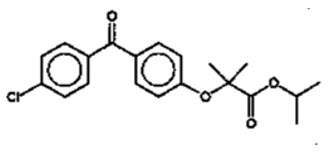
Acute Hypersensitivity
Anaphylaxis and angioedema have been reported post-marketing with fenofibrate. In some cases, reactions were life-threatening and required emergency treatment. If a patient develops signs or symptoms of an acute hypersensitivity reaction, advise them to seek immediate medical attention and discontinue fenofibrate.
Delayed Hypersensitivity
Severe cutaneous adverse drug reactions (SCAR), including Stevens-Johnson Syndrome, Toxic Epidermal Necrolysis, and Drug Reaction with Eosinophilia and Systemic Symptoms (DRESS) have been reported post-marketing, occurring days to weeks after initiation of fenofibrate. The cases of DRESS were associated with cutaneous reactions (such as rash or exfoliative dermatitis) and a combination of eosinophilia, fever, systemic organ involvement (renal, hepatic, or respiratory). Discontinue fenofibrate and treat patients appropriately if SCAR is suspected.
Increases in Liver Enzymes
In a pooled analysis of 10 placebo-controlled trials, increases to > 3 times the upper limit of normal in ALT occurred in 5.3% of patients taking fenofibrate at doses equivalent to 100 mg to 150 mg LIPOFEN daily versus 1.1% of patients treated with placebo.
Risk Summary
Limited available data with fenofibrate use in pregnant women are insufficient to determine a drug associated risk of major birth defects, miscarriage or adverse maternal or fetal outcomes. In animal reproduction studies, no evidence of embryo-fetal toxicity was observed with oral administration of fenofibrate in rats and rabbits during organogenesis at doses less than or equivalent to the maximum recommended clinical dose of 150 mg daily, based on body surface area (mg/m2). Adverse reproductive outcomes occurred at higher doses in the presence of maternal toxicity (see Data). LIPOFEN should be used during pregnancy only if the potential benefit justifies the potential risk to the fetus.
The estimated background risk of major birth defects and miscarriage for the indicated population is unknown. In the U.S. general population, the estimated background risk of major birth defects and miscarriage in clinically recognized pregnancies is 2-4% and 15-20%, respectively.
Data
Animal Data
In pregnant rats given oral dietary doses of 14, 127, and 361 mg/kg/day from gestation day 6-15 during the period of organogenesis, no adverse developmental findings were observed at 14 mg/kg/day (less than the clinical exposure at the maximum recommended human dose [MRHD] of 300 mg fenofibrate daily, equivalent to 150 mg LIPOFEN daily, based on body surface area comparisons). Increased fetal skeletal malformations were observed at maternally toxic doses (361 mg/kg/day, corresponding to 12 times the clinical exposure at the MRHD) that significantly suppressed maternal body weight gain.
In pregnant rabbits given oral gavage doses of 15, 150, and 300 mg/kg/day from gestation day 6-18 during the period of organogenesis and allowed to deliver, no adverse developmental findings were observed at 15 mg/kg/day (a dose that approximates the clinical exposure at the MRHD, based on body surface area comparisons). Aborted litters were observed at maternally toxic doses (≥ 150 mg/kg/day, corresponding to ≥ 10 times the clinical exposure at the MRHD) that suppressed maternal body weight gain.
In pregnant rats given oral dietary doses of 15, 75, and 300 mg/kg/day from gestation day 15 through lactation day 21 (weaning), no adverse developmental effects were observed at 15 mg/kg/day (less than the clinical exposure at the MRHD, based on body surface area comparisons), despite maternal toxicity (decreased weight gain). Post-implantation loss was observed at ≥ 75 mg/kg/day (≥ 2 times the clinical exposure at the MRHD) in the presence of maternal toxicity (decreased weight gain). Decreased pup survival was noted at 300 mg/kg/day (10 times the clinical exposure at the MRHD), which was associated with decreased maternal body weight gain/maternal neglect.
Risk Summary
There is no available information on the presence of fenofibrate in human milk, effects of the drug on the breastfed infant, or the effects on milk production. Fenofibrate is present in the milk of rats, and is therefore likely to be present in human milk. Because of the potential for serious adverse reactions in breastfed infants, such as disruption of infant lipid metabolism, women should not breastfeed during treatment with LIPOFEN and for 5 days after the final dose [see Contraindications (4)].
Infertility
In fertility studies rats were given oral dietary doses of fenofibrate, males received 61 days prior to mating and females 15 days prior to mating through weaning which resulted in no adverse effect on fertility at doses up to 300 mg/kg/day (approximately 10 times the MRHD, based on mg/m2 surface area comparisons) [see Carcinogenesis, Mutagenesis, Impairment of Fertility (13.1)].
Absorption: The absolute bioavailability of fenofibrate cannot be determined as the compound is virtually insoluble in aqueous media suitable for injection. However, fenofibrate is well absorbed from the gastrointestinal tract. Following oral administration in healthy volunteers, approximately 60% of a single dose of radiolabeled fenofibrate appeared in urine, primarily as fenofibric acid and its glucuronate conjugate, and 25% was excreted in the feces. Peak plasma levels of fenofibric acid occur within approximately 5 hours after oral administration.
The absorption of fenofibrate is increased when administered with food. With LIPOFEN, the extent of absorption is increased by approximately 58% and 25% under high-fat fed and low-fat fed conditions as compared to fasting conditions, respectively.
In a single dose and multiple dose bioavailability study with LIPOFEN capsules 200 mg, the extent of absorption (AUC) of fenofibric acid, the principal metabolite of fenofibrate, was 42% larger at steady state compared to single-dose administration. The rate of absorption (Cmax) of fenofibric acid was 73% greater after multiple-dose than after single-dose administration.
The extent of absorption of LIPOFEN in terms of AUC value of fenofibric acid increased in a less than proportional manner while the rate of absorption in terms of Cmax value of fenofibric acid increased proportionally related to dose.
Distribution: Upon multiple dosing of fenofibrate, fenofibric acid steady state is achieved after 5 days. Plasma concentrations of fenofibric acid at steady state are slightly more than double those following a single dose. Serum protein binding was approximately 99% in normal and hyperlipidemic subjects.
Metabolism: Following oral administration, fenofibrate is rapidly hydrolyzed by esterases to the active metabolite, fenofibric acid; unchanged fenofibrate is detected at low concentrations in plasma compared to fenofibric acid over most of the single dose and multiple dosing periods.
Fenofibric acid is primarily conjugated with glucuronic acid and then excreted in urine. A small amount of fenofibric acid is reduced at the carbonyl moiety to a benzhydrol metabolite which is, in turn, conjugated with glucuronic acid and excreted in urine.
In vitro and in vivo metabolism data indicate that neither fenofibrate nor fenofibric acid undergo oxidative metabolism (e.g., cytochrome P450) to a significant extent.
Elimination: After absorption, fenofibrate is mainly excreted in the urine in the form of metabolites, primarily fenofibric acid and fenofibric acid glucuronide. After administration of radiolabeled fenofibrate, approximately 60% of the dose appeared in the urine and 25% was excreted in feces.
Fenofibric acid is eliminated with a half-life of approximately 20 hours allowing once daily dosing.
Geriatrics: In elderly volunteers 77 to 87 years of age, the apparent oral clearance of fenofibric acid following a single oral dose of fenofibrate was 1.2 L/h, which compares to 1.1 L/h in young adults. This indicates that an equivalent dose of LIPOFEN can be used in elderly subjects with normal renal function, without increasing accumulation of the drug or metabolites [see Dosage and Administration (2.5) and Use in Specific Populations (8.5)].
Pediatrics: Pharmacokinetics of LIPOFEN has not been studied in pediatric patients.
Gender: No pharmacokinetic difference between males and females has been observed for fenofibrate.
Race: The influence of race on the pharmacokinetics of fenofibrate has not been studied, however fenofibrate is not metabolized by enzymes known for exhibiting inter-ethnic variability.
Renal Impairment: The pharmacokinetics of fenofibric acid was examined in patients with mild, moderate and severe renal impairment. Patients with mild (estimated glomerular filtration rate eGFR 60-89 ml/min/1.73m2) to moderate (eGFR 30-59 mL/min/1.73m2) renal impairment had similar exposure but an increase in the half-life for fenofibric acid was observed as compared to that of healthy subjects. Patients with severe renal impairment (eGFR <30 mL/min/1.73m2) showed a 2.7-fold increase in exposure for fenofibric acid and increased accumulation of fenofibric acid during chronic dosing compared to that of healthy subjects. In patients with mild to moderate renal impairment, treatment with LIPOFEN should be initiated at a dose of 50 mg per day and increased only after evaluation of the effects on renal function and lipid levels at this dose. Based on these findings, the use of LIPOFEN should be avoided in patients who have severe renal impairment.
Hepatic Impairment: No pharmacokinetic studies have been conducted in patients having hepatic impairment.
Drug-Drug Interactions: In vitro studies using human liver microsomes indicate that fenofibrate and fenofibric acid are not inhibitors of cytochrome P450 (CYP) isoforms CYP3A4, CYP2D6, CYP2E1, or CYP1A2. They are weak inhibitors of CYP2C8, CYP2C19 and CYP2A6, and mild to moderate inhibitors of CYP2C9 at therapeutic concentrations.
Table 2 describes the effects of co-administered drugs on fenofibric acid systemic exposure. Table 3 describes the effects of fenofibrate on co-administered drugs.
Table 2: Effects of Co-Administered Drugs on Fenofibric Acid Systemic Exposure from Fenofibrate Administration| Co-Administered Drug | Dosage Regimen of Co-Administered Drug | Dosage Regimen of Fenofibrate | Changes in Fenofibric Acid Exposure |
|---|
| AUC | Cmax |
|---|
| Lipid-lowering agents |
| Atorvastatin | 20 mg once daily for 10 days | Fenofibrate 160 mg TriCor (fenofibrate) oral tablet once daily for 10 days | ↓2% | ↓4% |
| Pravastatin | 40 mg as a single dose | Fenofibrate 3 × 67 mg TriCor (fenofibrate) oral micronized capsule as a single dose | ↓1% | ↓2% |
| Fluvastatin | 40 mg as a single dose | Fenofibrate 160 mg as a single dose | ↓2% | ↓10% |
| Anti-diabetic agents |
| Glimepiride | 1 mg as a single dose | Fenofibrate 145 mg once daily for 10 days | ↑1% | ↓1% |
| Metformin | 850 mg three times daily for 10 days | Fenofibrate 54 mg three times daily for 10 days | ↓9% | ↓6% |
| Rosiglitazone | 8 mg once daily for 5 days | Fenofibrate 145 mg once daily for 14 days | ↑10% | ↑3% |
Table 3: Effects of Fenofibrate on Systemic Exposure of Co-Administered DrugsDosage Regimen of
Fenofibrate | Dosage Regimen of Co-Administered Drug | Change in Co-Administered Drug Exposure |
|---|
| Analyte | AUC | Cmax |
|---|
| Lipid-lowering agents |
| Fenofibrate 160 mg TriCor (fenofibrate) oral tablet once daily for 10 days | Atorvastatin, 20 mg once daily for 10 days | Atorvastatin | ↓17% | 0% |
| Fenofibrate 3 × 67 mg TriCor (fenofibrate) oral micronized capsule as a single dose | Pravastatin, 40 mg as a single dose | Pravastatin | ↑13% | ↑13% |
| | 3α-Hydroxyl-iso-pravastatin | ↑26% | ↑29% |
| Fenofibrate 160 mg as a single dose | Fluvastatin, 40 mg as a single dose | (+)-3R, 5S-Fluvastatin | ↑15% | ↑16% |
| Anti-diabetic agents |
| Fenofibrate 145 mg once daily for 10 days | Glimepiride, 1 mg as a single dose | Glimepiride | ↑35% | ↑18% |
| Fenofibrate 54 mg three times daily for 10 days | Metformin, 850 mg three times daily for 10 days | Metformin | ↑3% | ↑6% |
| Fenofibrate 145 mg once daily for 14 days | Rosiglitazone, 8 mg once daily for 5 days | Rosiglitazone | ↑6% | ↓1% |