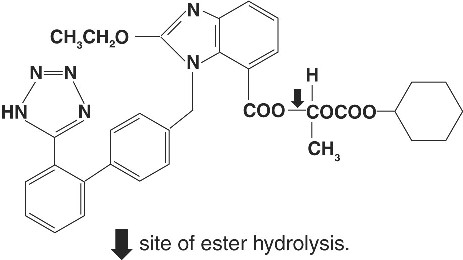
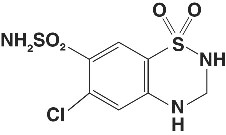
Because candesartan is not significantly metabolized by the cytochrome P450 system and at therapeutic concentrations has no effects on P450 enzymes, interactions with drugs that inhibit or are metabolized by those enzymes would not be expected.
Interactions common to both Candesartan Cilexetil and Hydrochlorothiazide
Non-Steroidal Anti-Inflammatory Agents including Selective Cyclooxygenase-2 Inhibitors (COX-2 Inhibitors)
In patients who are elderly, volume-depleted (including those on diuretic therapy), or with compromised renal function, co-administration of NSAIDs, including selective COX-2 inhibitors, with angiotensin II receptor antagonists, including candesartan, may result in deterioration of renal function, including possible acute renal failure. These effects are usually reversible. Monitor renal function periodically in patients receiving candesartan and NSAID therapy.
The antihypertensive effect of angiotensin II receptor antagonists, including candesartan may be attenuated by NSAIDs including selective COX-2 inhibitors.
Lithium
Increases in serum lithium concentrations and lithium toxicity have been reported during concomitant administration of lithium with angiotensin II receptor antagonists or hydrochlorothiazide. Monitor serum lithium levels during concomitant use.
Interactions with Candesartan Cilexetil
Dual Blockade of the Renin-Angiotensin System (RAS)
Dual blockade of the RAS with angiotensin receptor blockers, ACE inhibitors, or aliskiren is associated with increased risks of hypotension, hyperkalemia, and changes in renal function (including acute renal failure) compared to monotherapy. Closely monitor blood pressure, renal function and electrolytes in patients on candesartan cilexetil and hydrochlorothiazide tablets and other agents that affect the RAS.
Co-administration of candesartan cilexetil and hydrochlorothiazide tablets with potassium sparing diuretics, potassium supplements, potassium-containing salt substitutes or other drugs that raise serum potassium levels may result in hyperkalemia. Monitor serum potassium in such patients.
Do not co-administer aliskiren with candesartan cilexetil and hydrochlorothiazide tablets in patients with diabetes. Avoid use of aliskiren with candesartan cilexetil and hydrochlorothiazide tablets in patients with renal impairment (GFR <60 mL/min) (see CONTRAINDICATIONS).
Interactions with Hydrochlorothiazide
Alcohol, barbiturates, or narcotics − Potentiation of orthostatic hypotension may occur.
Antidiabetic drugs (oral agents and insulin) − Dosage adjustment of the antidiabetic drug may be required.
Diazoxide − the hyperglycemic effect of diazoxide may be enhanced by thiazides.
Ion Exchange resins − Single doses of either cholestyramine or colestipol resins bind the hydrochlorothiazide and reduce its absorption from the gastrointestinal tract by up to 85% and 43%, respectively. Stagger the dosage of hydrochlorothiazide and ion exchange resins such that hydrochlorothiazide is administered at least 4 hours before or 4-6 hours after the administration of resins.
Skeletal muscle relaxants, nondepolarizing (e.g., tubocurarine) − Possible increased responsiveness to muscle relaxants such as curare derivatives.
Digitalis − Thiazide-induced hypokalemia or hypomagnesemia may predispose to digoxin toxicity.
Noradrenaline – Thiazides may decrease arterial responsiveness to noradrenaline, but not enough to preclude effectiveness of the pressor agent for therapeutic use.
Steroids or Adrenocorticotropic Hormone – Hypokalemia may develop during concomitant use of steroids or adrenocorticotropic hormone (ACTH).
Cytotoxic products – Thiazides may reduce the renal excretion of cytotoxic medicinal products (e.g. cyclophosphamide, methotrexate) and potentiate their myelosuppressive effects.
Cyclosporine − Concomitant treatment with cyclosporine may increase the risk of hyperuricemia and gout-type complications.