The following adverse events are based on the experience of 592 adult patients (295 treated with amphotericin B liposome for injection and 297 treated with amphotericin B deoxycholate) and 95 pediatric patients (48 treated with amphotericin B liposome for injection and 47 treated with amphotericin B deoxycholate) in Study 94-0-002, a randomized double-blind, multicenter study in febrile, neutropenic patients. Amphotericin B liposome for injection and amphotericin B were infused over two hours.
The incidence of common adverse events (incidence of 10% or greater) occurring with amphotericin B liposome for injection compared to amphotericin B deoxycholate, regardless of relationship to study drug, is shown in the following table:
Empirical Therapy Study 94-0-002 Common Adverse Events
Adverse Event by Body System
| Amphotericin B Liposome for Injection
N=343
%
| Amphotericin B
N=344
%
|
Body as a Whole
|
Abdominal pain
| 19.8
| 21.8
|
Asthenia
| 13.1
| 10.8
|
Back pain
| 12
| 7.3
|
Blood product transfusion reaction
| 18.4
| 18.6
|
Chills
| 47.5
| 75.9
|
Infection
| 11.1
| 9.3
|
Pain
| 14
| 12.8
|
Sepsis
| 14
| 11.3
|
Cardiovascular System
|
Chest pain
| 12
| 11.6
|
Hypertension
| 7.9
| 16.3
|
Hypotension
| 14.3
| 21.5
|
Tachycardia
| 13.4
| 20.9
|
Digestive System
|
Diarrhea
| 30.3
| 27.3
|
Gastrointestinal hemorrhage
| 9.9
| 11.3
|
Nausea
| 39.7
| 38.7
|
Vomiting
| 31.8
| 43.9
|
Metabolic and Nutritional Disorders
|
Alkaline phosphatase increased
| 22.2
| 19.2
|
ALT (SGPT) increased
| 14.6
| 14
|
AST (SGOT) increased
| 12.8
| 12.8
|
Bilirubinemia
| 18.1
| 19.2
|
BUN increased
| 21
| 31.1
|
Creatinine increased
| 22.4
| 42.2
|
Edema
| 14.3
| 14.8
|
Hyperglycemia
| 23
| 27.9
|
Hypernatremia
| 4.1
| 11
|
Hypervolemia
| 12.2
| 15.4
|
Hypocalcemia
| 18.4
| 20.9
|
Hypokalemia
| 42.9
| 50.6
|
Hypomagnesemia
| 20.4
| 25.6
|
Peripheral edema
| 14.6
| 17.2
|
Nervous System
|
Anxiety
| 13.7
| 11
|
Confusion
| 11.4
| 13.4
|
Headache
| 19.8
| 20.9
|
Insomnia
| 17.2
| 14.2
|
Respiratory System
|
Cough increased
| 17.8
| 21.8
|
Dyspnea
| 23
| 29.1
|
Epistaxis
| 14.9
| 20.1
|
Hypoxia
| 7.6
| 14.8
|
Lung disorder
| 17.8
| 17.4
|
Pleural effusion
| 12.5
| 9.6
|
Rhinitis
| 11.1
| 11
|
Skin and Appendages
|
Pruritus
| 10.8
| 10.2
|
Rash
| 24.8
| 24.4
|
Sweating
| 7
| 10.8
|
Urogenital System
|
Hematuria
| 14
| 14
|
Amphotericin B liposome for injection was well tolerated. Amphotericin B liposome for injection had a lower incidence of chills, hypertension, hypotension, tachycardia, hypoxia, hypokalemia, and various events related to decreased kidney function as compared to amphotericin B deoxycholate.
In pediatric patients (16 years of age or less) in this double-blind study, amphotericin B liposome for injection compared to amphotericin B deoxycholate had a lower incidence of hypokalemia (37% versus 55%), chills (29% versus 68%), vomiting (27% versus 55%), and hypertension (10% versus 21%). Similar trends, although with a somewhat lower incidence, were observed in open-label, randomized Study 104-14 involving 205 febrile neutropenic pediatric patients (141 treated with amphotericin B liposome for injection and 64 treated with amphotericin B deoxycholate). Pediatric patients appear to have more tolerance than older individuals for the nephrotoxic effects of amphotericin B deoxycholate.
The following adverse events are based on the experience of 244 patients (202 adult and 42 pediatric patients) of whom 85 patients were treated with amphotericin B liposome for injection 3 mg/kg, 81 patients were treated with amphotericin B liposome for injection 5 mg/kg and 78 patients were treated with amphotericin B lipid complex 5 mg/kg in Study 97-0-034, a randomized double-blind, multicenter study in febrile, neutropenic patients. Amphotericin B liposome for injection and amphotericin B lipid complex were infused over two hours. The incidence of adverse events occurring in more than 10% of subjects in one or more arms regardless of relationship to study drug are summarized in the following table:
Empirical Therapy Study 97-0-034 Common Adverse Events
Adverse Event by Body System
| Amphotericin B Liposome for Injection
3 mg/kg/day
N=85
%
| Amphotericin B Liposome for Injection
5 mg/kg/day
N=81
%
| Amphotericin B Lipid Complex
5 mg/kg/day
N=78
%
|
Body as a Whole
|
Abdominal pain
| 12.9
| 9.9
| 11.5
|
Asthenia
| 8.2
| 6.2
| 11.5
|
Chills/rigors
| 40
| 48.1
| 89.7
|
Sepsis
| 12.9
| 7.4
| 11.5
|
Transfusion reaction
| 10.6
| 8.6
| 5.1
|
Cardiovascular System
|
Chest pain
| 8.2
| 11.1
| 6.4
|
Hypertension
| 10.6
| 19.8
| 23.1
|
Hypotension
| 10.6
| 7.4
| 19.2
|
Tachycardia
| 9.4
| 18.5
| 23.1
|
Digestive System
|
Diarrhea
| 15.3
| 17.3
| 14.1
|
Nausea
| 25.9
| 29.6
| 37.2
|
Vomiting
| 22.4
| 25.9
| 30.8
|
Metabolic and Nutritional Disorders
|
Alkaline phosphatase increased
| 7.1
| 8.6
| 12.8
|
Bilirubinemia
| 16.5
| 11.1
| 11.5
|
BUN increased
| 20
| 18.5
| 28.2
|
Creatinine increased
| 20
| 18.5
| 48.7
|
Edema
| 12.9
| 12.3
| 12.8
|
Hyperglycemia
| 8.2
| 8.6
| 14.1
|
Hypervolemia
| 8.2
| 11.1
| 14.1
|
Hypocalcemia
| 10.6
| 4.9
| 5.1
|
Hypokalemia
| 37.6
| 43.2
| 39.7
|
Hypomagnesemia
| 15.3
| 25.9
| 15.4
|
Liver function tests abnormal
| 10.6
| 7.4
| 11.5
|
Nervous System
|
Anxiety
| 10.6
| 7.4
| 9
|
Confusion
| 12.9
| 8.6
| 3.8
|
Headache
| 9.4
| 17.3
| 10.3
|
Respiratory System
|
Dyspnea
| 17.6
| 22.2
| 23.1
|
Epistaxis
| 10.6
| 8.6
| 14.1
|
Hypoxia
| 7.1
| 6.2
| 20.5
|
Lung disorder
| 14.1
| 13.6
| 15.4
|
Skin and Appendages
|
Rash
| 23.5
| 22.2
| 14.1
|
The following adverse events are based on the experience of 267 patients (266 adult patients and 1 pediatric patient) of whom 86 patients were treated with amphotericin B liposome for injection 3 mg/kg, 94 patients were treated with amphotericin B liposome for injection 6 mg/kg and 87 patients treated with amphotericin B deoxycholate 0.7 mg/kg in Study 94-0-013 a randomized, double-blind, comparative multicenter trial, in the treatment of cryptococcal meningitis in HIV positive patients. The incidence of adverse events occurring in more than 10% of subjects in one or more arms regardless of relationship to study drug are summarized in the following table:
Cryptococcal Meningitis Therapy Study 94-0-013 Common Adverse Events
Adverse Event by Body System
| Amphotericin B Liposome for Injection
3 mg/kg/day
N=86
%
| Amphotericin B Liposome for Injection
6 mg/kg/day
N=94
%
| Amphotericin B
0.7 mg/kg/day
N=87
%
|
Body as a Whole
|
Abdominal pain
| 7
| 7.4
| 10.3
|
Infection
| 12.8
| 11.7
| 6.9
|
Procedural Complication
| 8.1
| 9.6
| 10.3
|
Cardiovascular System
|
Phlebitis
| 9.3
| 10.6
| 25.3
|
Digestive System
|
Anorexia
| 14
| 9.6
| 11.5
|
Constipation
| 15.1
| 14.9
| 20.7
|
Diarrhea
| 10.5
| 16
| 10.3
|
Nausea
| 16.3
| 21.3
| 25.3
|
Vomiting
| 10.5
| 21.3
| 20.7
|
Hemic and Lymphatic System
|
Anemia
| 26.7
| 47.9
| 43.7
|
Leukopenia
| 15.1
| 17
| 17.2
|
Thrombocytopenia
| 5.8
| 12.8
| 6.9
|
Metabolic and Nutritional Disorders
|
Bilirubinemia
| 0
| 8.5
| 12.6
|
BUN increased
| 9.3
| 7.4
| 10.3
|
Creatinine increased
| 18.6
| 39.4
| 43.7
|
Hyperglycemia
| 9.3
| 12.8
| 17.2
|
Hypocalcemia
| 12.8
| 17
| 13.8
|
Hypokalemia
| 31.4
| 51.1
| 48.3
|
Hypomagnesemia
| 29.1
| 48.9
| 40.2
|
Hyponatremia
| 11.6
| 8.5
| 9.2
|
Liver Function Tests Abnormal
| 12.8
| 4.3
| 9.2
|
Nervous System
|
Dizziness
| 7
| 8.5
| 10.3
|
Insomnia
| 22.1
| 17
| 20.7
|
Respiratory System
|
Cough Increased
| 8.1
| 2.1
| 10.3
|
Skin and Appendages
|
Rash
| 4.7
| 11.7
| 4.6
|
Infusion Related Reactions
In Study 94-0-002, the large, double-blind study of pediatric and adult febrile neutropenic patients, no premedication to prevent infusion related reaction was administered prior to the first dose of study drug (Day 1). Amphotericin B liposome for injection-treated patients had a lower incidence of infusion related fever (17% versus 44%), chills/rigors (18% versus 54%) and vomiting (6% versus 8%) on Day 1 as compared to amphotericin B deoxycholate-treated patients.
The incidence of infusion related reactions on Day 1 in pediatric and adult patients is summarized in the following table:
Incidence of Day 1 Infusion Related Reactions (IRR) By Patient Age
| Pediatric Patients (≤ 16 years of age)
| Adult Patients (>16 years of age)
|
| Amphotericin B Liposome for Injection 3 mg/kg/day
| Amphotericin B 0.6 mg/kg/day
| Amphotericin B Liposome for Injection 3 mg/kg/day
| Amphotericin B 0.6 mg/kg/day
|
Total number of patients receiving at least one dose of study drug
| 48
| 47
| 295
| 297
|
Patients with fever†
Increase ≥1.0°C
| 6 (13%)
| 22 (47%)
| 52 (18%)
| 128 (43%)
|
Patients with chills/rigors
| 4 (8%)
| 22 (47%)
| 59 (20%)
| 165 (56%)
|
Patients with nausea
| 4 (8%)
| 4 (9%)
| 38 (13%)
| 31 (10%)
|
Patients with vomiting
| 2 (4%)
| 7 (15%)
| 19 (6%)
| 21 (7%)
|
Patients with other reactions
| 10 (21%)
| 13 (28%)
| 47 (16%)
| 69 (23%)
|
†Day 1 body temperature increased above the temperature taken within 1 hour prior to infusion (preinfusion temperature) or above the lowest infusion value (no preinfusion temperature recorded).
Cardiorespiratory events, except for vasodilatation (flushing), during all study drug infusions were more frequent in amphotericin B-treated patients as summarized in the following table:
Incidence of Infusion Related Cardiorespiratory Events
Event
| Amphotericin B Liposome for Injection 3 mg/kg/day N=343
| Amphotericin B 0.6 mg/kg/day
N=344
|
Hypotension
| 12 (3.5%)
| 28 (8.1%)
|
Tachycardia
| 8 (2.3%)
| 43 (12.5%)
|
Hypertension
| 8 (2.3%)
| 39 (11.3%)
|
Vasodilatation
| 18 (5.2%)
| 2 (0.6%)
|
Dyspnea
| 16 (4.7%)
| 25 (7.3%)
|
Hyperventilation
| 4 (1.2%)
| 17 (4.9%)
|
Hypoxia
| 1 (0.3%)
| 22 (6.4%)
|
The percentage of patients who received drugs either for the treatment or prevention of infusion related reactions (e.g., acetaminophen, diphenhydramine, meperidine and hydrocortisone) was lower in amphotericin B liposome for injection-treated patients compared with amphotericin B deoxycholate-treated patients.
In the empirical therapy study 97-0-034, on Day 1, where no premedication was administered, the overall incidence of infusion related events of chills/rigors was significantly lower for patients administered amphotericin B liposome for injection compared with amphotericin B lipid complex. Fever, chills/rigors and hypoxia were significantly lower for each amphotericin B liposome for injection group compared with the amphotericin B lipid complex group. The infusion related event hypoxia was reported for 11.5% of amphotericin B lipid complex-treated patients compared with 0% of patients administered 3 mg/kg per day amphotericin B liposome for injection and 1.2% of patients treated with 5 mg/kg per day amphotericin B liposome for injection.
Incidence of Day 1 Infusion Related Reactions (IRR) Chills/Rigors Empirical Therapy Study 97-0-034
| Amphotericin B Liposome for Injection
| Amphotericin B lipid complex 5 mg/kg/day
|
3 mg/kg/day
| 5 mg/kg/day
| BOTH
|
Total number of patients
| 85
| 81
| 166
| 78
|
Patients with Chills/Rigors (Day1)
| 16 (18.8%)
| 19 (23.5%)
| 35 (21.1%)
| 62 (79.5%)
|
Patients with other notable reactions: Fever (>1.0°C increase in temperature)
| 20 (23.5%)
| 16 (19.8%)
| 36 (21.7%)
| 45 (57.7%)
|
Nausea
| 9 (10.6%)
| 7 (8.6%)
| 16 (9.6%)
| 9 (11.5%)
|
Vomiting
| 5 (5.9%)
| 5 (6.2%)
| 10 (6%)
| 11 (14.1%)
|
Hypertension
| 4 (4.7%)
| 7 (8.6%)
| 11 (6.6%)
| 12 (15.4%)
|
Tachycardia
| 2 (2.4%)
| 8 (9.9%)
| 10 (6%)
| 14 (17.9%)
|
Dyspnea
| 4 (4.7%)
| 8 (9.9%)
| 12 (7.2%)
| 8 (10.3%)
|
Hypoxia
| 0
| 1 (1.2%)
| 1 (<1%)
| 9 (11.5%)
|
Day 1 body temperature increased above the temperature taken within 1 hour prior to infusion (preinfusion temperature) or above the lowest infusion value (no preinfusion temperature recorded).
Patients were not administered premedications to prevent infusion related reactions prior to the Day 1 study drug infusion.
In Study 94-0-013, a randomized double-blind multicenter trial comparing amphotericin B liposome for injection and amphotericin B deoxycholate as initial therapy for cryptococcal meningitis, premedications to prevent infusion related reactions were permitted. Amphotericin B liposome for injection treated patients had a lower incidence of fever, chill/rigors and respiratory adverse events as summarized in the following table:
Incidence of Infusion-Related Reactions Study 94-0-013
|
| Amphotericin B Liposome for Injection 3 mg/kg/day
| Amphotericin B Liposome for Injection 6 mg/kg/day
| Amphotericin B 0.7 mg/kg/day
|
Total number of patients receiving at least one dose of study drug
| 86
| 94
| 87
|
Patients with fever increase of >1°C
| 6 (7%)
| 8 (9%)
| 24 (28%)
|
Patients with chills/rigors
| 5 (6%)
| 8 (9%)
| 42 (48%)
|
Patients with nausea
| 11 (13%)
| 13 (14%)
| 18 (20%)
|
Patients with vomiting
| 14 (16%)
| 13 (14%)
| 16 (18%)
|
Respiratory adverse events
| 0
| 1 (1%)
| 8 (9%)
|
There have been a few reports of flushing, back pain with or without chest tightness, and chest pain associated with amphotericin B liposome for injection administration; on occasion this has been severe. Where these symptoms were noted, the reaction developed within a few minutes after the start of infusion and disappeared rapidly when the infusion was stopped. The symptoms do not occur with every dose and usually do not recur on subsequent administrations when the infusion rate is slowed.
Toxicity and Discontinuation of Dosing
In Study 94-0-002, a significantly lower incidence of grade 3 or 4 toxicity was observed in the amphotericin B liposome for injection group compared with the amphotericin B group. In addition, nearly three times as many patients administered amphotericin B required a reduction in dose due to toxicity or discontinuation of study drug due to an infusion related reaction compared with those administered amphotericin B liposome for injection.
In empirical therapy study 97-0-034, a greater proportion of patients in the amphotericin B lipid complex group discontinued the study drug due to an adverse event than in the amphotericin B liposome for injection groups.
Less Common Adverse Events
The following adverse events also have been reported in 2% to 10% of amphotericin B liposome for injection-treated patients receiving chemotherapy or bone marrow transplantation, or had HIV disease in six comparative, clinical trials:
Body as a Whole
Abdomen enlarged, allergic reaction, cellulitis, cell mediated immunological reaction, face edema, graft versus host disease, malaise, neck pain, and procedural complication.
Cardiovascular System
Arrhythmia, atrial fibrillation, bradycardia, cardiac arrest, cardiomegaly, hemorrhage, postural hypotension, valvular heart disease, vascular disorder, and vasodilatation (flushing).
Digestive System
Anorexia, constipation, dry mouth/nose, dyspepsia, dysphagia, eructation, fecal incontinence, flatulence, hemorrhoids, gum/oral hemorrhage, hematemesis, hepatocellular damage, hepatomegaly, liver function test abnormal, ileus, mucositis, rectal disorder, stomatitis, ulcerative stomatitis, and veno-occlusive liver disease.
Hemic & Lymphatic System
Anemia, coagulation disorder, ecchymosis, fluid overload, petechia, prothrombin decreased, prothrombin increased, and thrombocytopenia.
Metabolic & Nutritional Disorders
Acidosis, amylase increased, hyperchloremia, hyperkalemia, hypermagnesemia, hyperphosphatemia, hyponatremia, hypophosphatemia, hypoproteinemia, lactate dehydrogenase increased, nonprotein nitrogen (NPN) increased, and respiratory alkalosis.
Musculoskeletal System
Arthralgia, bone pain, dystonia, myalgia, and rigors.
Nervous System
Agitation, coma, convulsion, cough, depression, dysesthesia, dizziness, hallucinations, nervousness, paresthesia, somnolence, thinking abnormality, and tremor.
Respiratory System
Asthma, atelectasis, hemoptysis, hiccup, hyperventilation, influenza-like symptoms, lung edema, pharyngitis, pneumonia, respiratory insufficiency, respiratory failure, and sinusitis.
Skin & Appendages
Alopecia, dry skin, herpes simplex, injection site inflammation, maculopapular rash, purpura, skin discoloration, skin disorder, skin ulcer, urticaria, and vesiculobullous rash.
Special Senses
Conjunctivitis, dry eyes, and eye hemorrhage.
Urogenital System
Abnormal renal function, acute kidney failure, acute renal failure, dysuria, kidney failure, toxic nephropathy, urinary incontinence, and vaginal hemorrhage.
Postmarketing Experience
The following infrequent adverse experiences have been reported in postmarketing surveillance, in addition to those mentioned above: angioedema, erythema, urticaria, bronchospasm, cyanosis/hypoventilation, pulmonary edema, agranulocytosis, hemorrhagic cystitis, and rhabdomyolysis.
Clinical Laboratory Values
The effect of amphotericin B liposome for injection on renal and hepatic function and on serum electrolytes was assessed from laboratory values measured repeatedly in Study 94-0-002. The frequency and magnitude of hepatic test abnormalities were similar in the amphotericin B liposome for injection and amphotericin B groups. Nephrotoxicity was defined as creatinine values increasing 100% or more over pretreatment levels in pediatric patients, and creatinine values increasing 100% or more over pretreatment levels in adult patients provided the peak creatinine concentration was >1.2 mg/dL. Hypokalemia was defined as potassium levels ≤2.5 mmol/L any time during treatment.
Incidence of nephrotoxicity, mean peak serum creatinine concentration, mean change from baseline in serum creatinine, and, incidence of hypokalemia in the double-blind randomized study were lower in the amphotericin B liposome for injection group as summarized in the following table:
Study 94-0-002 Laboratory Evidence of Nephrotoxicity
| Amphotericin B Liposome for Injection 3 mg/kg/day
| Amphotericin B 0.6 mg/kg/day
|
Total number of patients receiving at least one dose of study drug
| 343
| 344
|
Nephrotoxicity
| 64 (18.7%)
| 116 (33.7%)
|
Mean peak creatinine
| 1.24 mg/dL
| 1.52 mg/dL
|
Mean change from baseline in creatinine
| 0.48 mg/dL
| 0.77 mg/dL
|
Hypokalemia
| 23 (6.7%)
| 40 (11.6%)
|
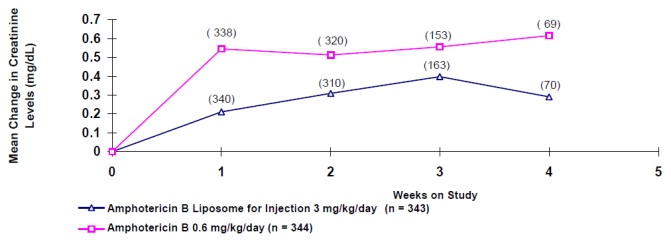
The effect of amphotericin B liposome for injection (3 mg/kg/day) vs. amphotericin B (0.6 mg/kg/day) on renal function in adult patients enrolled in this study is illustrated in the following figure:
Mean Change in Creatinine Over Time in Study 94-0-002

Spl-figure1 (Spl Figure1)
In empirical therapy study 97-0-034, the incidence of nephrotoxicity as measured by increases of serum creatinine from baseline was significantly lower for patients administered amphotericin B liposome for injection (individual dose groups and combined) compared with amphotericin B lipid complex.
Incidence of Nephrotoxicity Empirical Therapy Study 97-0-034
| Amphotericin B Liposome for Injection
| Amphotericin B lipid complex 5 mg/kg/day
|
| 3 mg/kg/day
| 5 mg/kg/day
| BOTH
|
Total number of patients
| 85
| 81
| 166
| 78
|
Number with nephrotoxicity
|
1.5X baseline serum creatinine value
| 25 (29.4%)
| 21 (25.9%)
| 46 (27.7%)
| 49 (62.8%)
|
2X baseline serum creatinine value
| 12 (14.1%)
| 12 (14.8%)
| 24 (14.5%)
| 33 (42.3%)
|
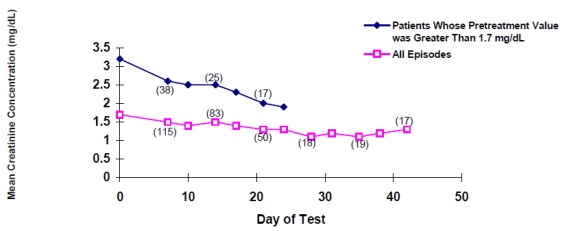
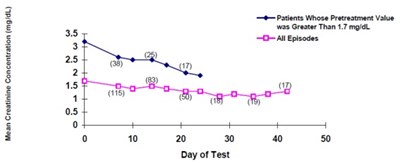
The following graph shows the average serum creatinine concentrations in the compassionate use study and shows that there is a drop from pretreatment concentrations for all patients, especially those with elevated (greater than 1.7 mg/dL) pretreatment creatinine concentrations.
Mean Creatinine Concentrations Over Time
Spl-figure2 (Spl Figure2)
The incidence of nephrotoxicity in Study 94-0-013, comparative trial in cryptococcal meningitis was lower in the amphotericin B liposome for injection groups as shown in the following table:
Laboratory Evidence of Nephrotoxicity Study 94-0-013
|
| Amphotericin B Liposome for Injection 3 mg/kg/day
| Amphotericin B Liposome for Injection 6 mg/kg/day
| Amphotericin B 0.7 mg/kg/day
|
Total number of patients receiving at least one dose of study drug
| 86
| 94
| 87
|
Number with Nephrotoxicity (%)
|
1.5X baseline serum creatinine
| 30 (35%)
| 44 (47%)
| 52 (60%)
|
2 X baseline serum creatinine
| 12 (14%)
| 20 (21%)
| 29 (33%)
|