Capecitabine Tablet, Film Coated
Product Images NDC 62756-239

View Photos of Packaging, Regulatory Labels, and Product Appearance

Product Visual Gallery

This gallery contains 10 technical images submitted to the FDA as part of the official labeling for Capecitabine (NDC 62756-239). Unlike standard consumer photos, these assets often include clinical data figures, molecular chemical structures, and official manufacturer packaging layouts.

As provided by Sun Pharmaceutical Industries, Inc., these visuals offer a comprehensive scientific overview of the product's physical and chemical identity, aiding pharmacists and researchers in product verification and study.

FDA Label Image

150mglabel (150mglabel)
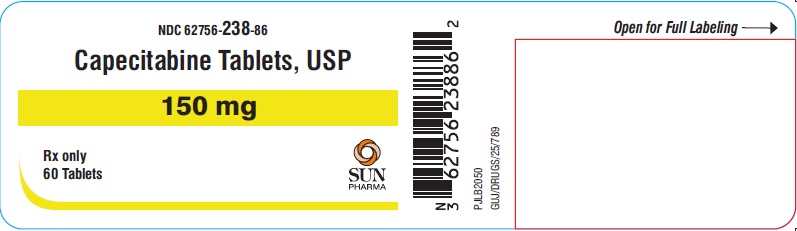
150mglabel (150mglabel)
This is a prescription medication labeled as Capecitabine Tablets with a strength of 150mg. It comes in a bottle containing 60 tablets and has an NDC number of 62756-238-86. The manufacturer appears to be SUN, and there are additional codes, including PUB2050 and CUIDRUGS25780, that might be useful for identification purposes. The full labeling information is available for review.*
FDA Label Image

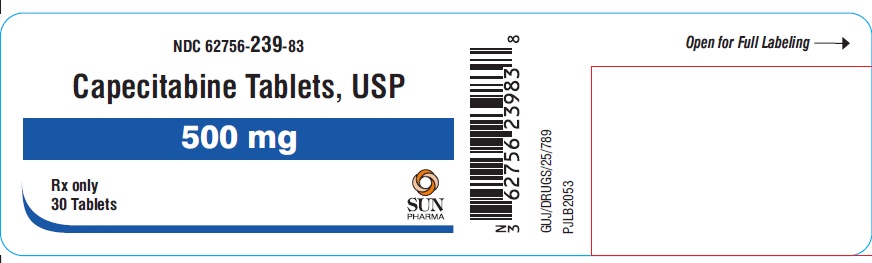
500mglabel (500mglabel)

500mglabel (500mglabel)
This appears to be the label of a bottle of Capecitabine Tablets, USP with NDC 62756-239-83. The bottle contains 30 tablets and is open for full labeling. There is also a code GUJ/DRUGS/25/789 and PJLB2053 present.*
FDA Label Image

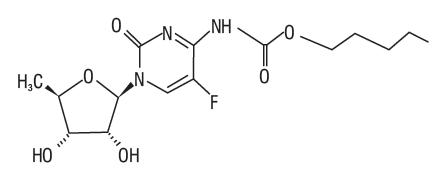
Chemical-structure (Chemical Structure)

FDA Label Image

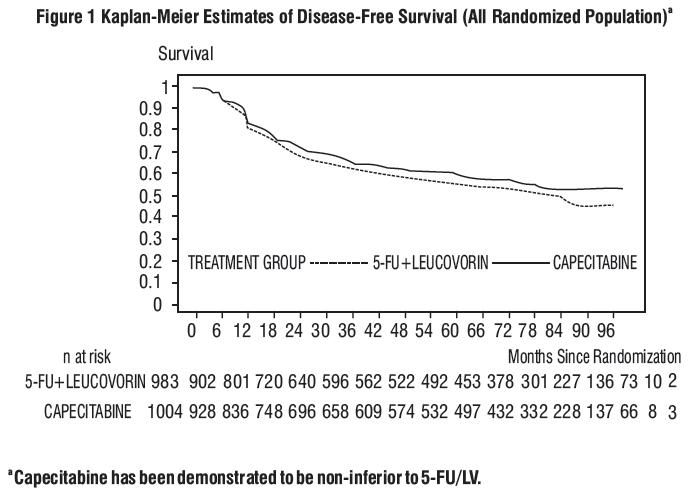
Figure1 (Figure1)

Figure1 (Figure1)
The figure shows the Kaplan-Meier estimates of disease-free survival for two treatment groups - 5-FU+LEUCOVORIN and Capecitabine. The estimates are based on the survival data of the randomized population over 96 months since randomization. The text suggests that Capecitabine has been found to be not inferior to 5-FU/LV in terms of its efficacy.*
FDA Label Image

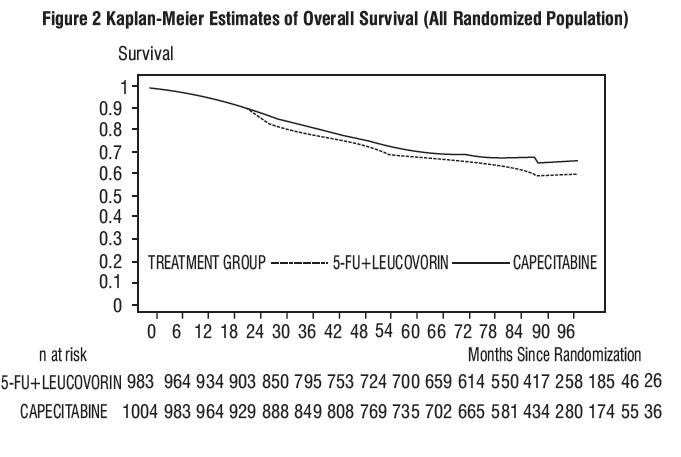
Figure2 (Figure2)

Figure2 (Figure2)
This is a graph (Figure 2) that shows the Kaplan-Meier Estimates of Overall Survival of two treatment groups (5-FU+LEUCOVORIN and CAPECITABINE) over time (measured in months). The survival rates are plotted on the y-axis from 0 to 1 with an increment of 0.1, and the months since randomization are plotted on the x-axis from 0 to 96. The data suggests that overall survival in the CAPECITABINE group was slightly better than in the 5-FU+LEUCOVORIN group.*
FDA Label Image

Figure3 (Figure3)

Figure3 (Figure3)
The text describes a Kaplan-Meier Curve for Overall Survival of Pooled Data from two studies. The graph shows estimated probability in X group with different treatment regimens. The first regimen is 5-FU-+Leucovorin (Mayo Regimen) while the second regimen is Capecitabine 1250 (mg/sqm twice daily) intermittent. The x-axis represents Time (Days) and the y-axis represents Estimated Probability. There are some unreadable characters in the text.*
FDA Label Image

Figure4 (Figure4)

Figure4 (Figure4)
This is a graph showing Kaplan-Meier estimates for time to disease progression comparing Capecitabine and Docetaxel vs Docetaxel alone. The estimated probability of disease progression is shown on the y-axis and time in days is shown on the x-axis. The treatment regimen for Capecitabine and Docetaxel is described in the text.*
FDA Label Image

Figure5 (Figure5)

Figure5 (Figure5)
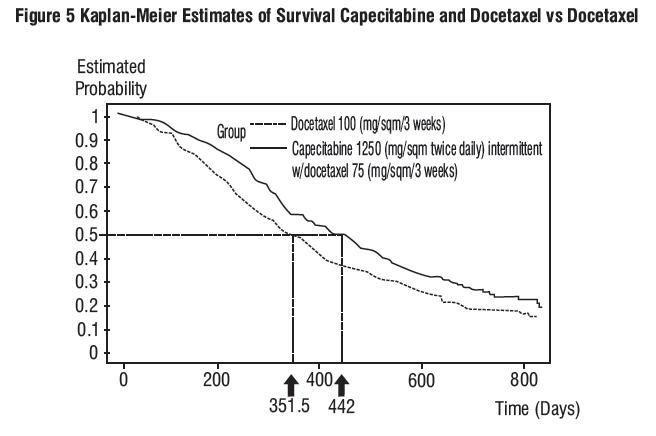
The text describes a figure showing Kaplan-Meier Estimates of Survival for Capecitabine and Docetaxel vs Docetaxel. The figure includes estimated probabilities of survival with values ranging from 0.5 to 1.0. The treatments used were Docetaxel, Capecitabine, and a combination of both. The dosage for each treatment is also mentioned in the figure. The figure shows the estimated survival probability over time measured in days.*
FDA Label Image

Formula (Formula)

FDA Label Image

Formula1 (Formula1)

Formula1 (Formula1)
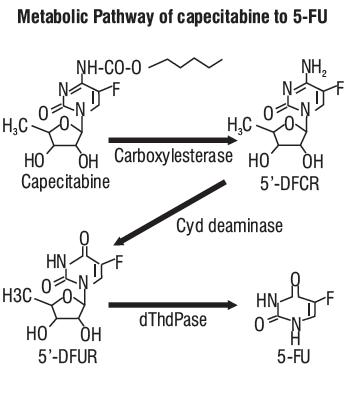
This is a diagram of the metabolic pathway that capecitabine follows to be converted to 5-FU. It involves several enzymes, including carboxylesterase, cytidine deaminase, and dThdPase. The end product of the pathway is 5-FU.*

* These product label images have been analyzed using experimental machine learning. Please verify findings with the primary label text.