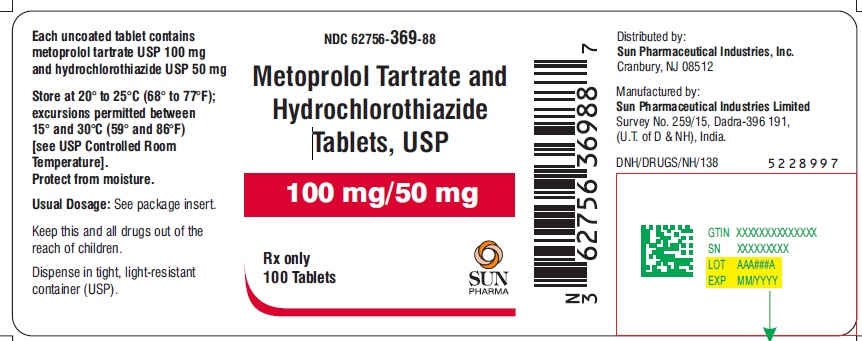
Metoprolol Tartrate and Hydrochlorothiazide
The following adverse reactions were reported in controlled clinical studies of the combination of metoprolol and hydrochlorothiazide.
Body as a Whole: Fatigue or lethargy and flu syndrome have each been reported in about 10 in 100 patients.
Nervous System: Dizziness or vertigo, drowsiness or somnolence, and headache have each occurred in about 10 in 100 patients. Nightmare has occurred in 1 in 100 patients.
Cardiovascular: Bradycardia has occurred in about 6 in 100 patients. Decreased exercise tolerance and dyspnea have each occurred in about 1 of 100 patients.
Digestive: Diarrhea, digestive disorder, dry mouth, nausea or vomiting, and constipation have each occurred in about 1 in 100 patients.
Metabolic and Nutritional: Hypokalemia has occurred in fewer than 10 in 100 patients. Edema, gout, and anorexia have each occurred in 1 in 100 patients.
Special Senses: Blurred vision, tinnitus, and earache have each been reported in 1 in 100 patients.
Skin: Sweating and purpura have each occurred in 1 in 100 patients.
Urogenital: Impotence has occurred in 1 in 100 patients.
Musculoskeletal: Muscle pain has occurred in 1 in 100 patients.
Metoprolol
Most adverse effects have been mild and transient.
Central Nervous System: Tiredness and dizziness have occurred in about 10 of 100 patients. Depression has been reported in about 5 of 100 patients. Mental confusion and short-term memory loss have been reported. Headache, nightmares, and insomnia have also been reported, but a drug relationship is not clear.
Cardiovascular: Shortness of breath and bradycardia have occurred in approximately 3 of 100 patients. Cold extremities; arterial insufficiency, usually of the Raynaud type; palpitations; and congestive heart failure have been reported. Gangrene in patients with preexisting severe peripheral circulatory disorders has also been reported very rarely (see CONTRAINDICATIONS, WARNINGS, and PRECAUTIONS).
Respiratory: Wheezing (bronchospasm) has been reported in fewer than 1 of 100 patients (see WARNINGS). Rhinitis has also been reported.
Gastrointestinal: Diarrhea has occurred in about 5 of 100 patients. Nausea, gastric pain, constipation, flatulence, and heartburn have been reported in 1 of 100, or fewer, patients. Vomiting was a common occurrence. Postmarketing experience reveals very rare reports of hepatitis, jaundice and non-specific hepatic dysfunction. Isolated cases of transaminase, alkaline phosphatase, and lactic dehydrogenase elevations have also been reported.
Hypersensitive Reactions: Pruritus has occurred in fewer than 1 of 100 patients. Rash has been reported. Very rarely, photosensitivity and worsening of psoriasis has been reported.
Miscellaneous: Peyronie’s disease has been reported in fewer than 1 of 100,000 patients. Alopecia has been reported. There have been very rare reports of weight gain, arthritis, and retroperitoneal fibrosis (relationship to metoprolol has not been definitely established).
The oculomucocutaneous syndrome associated with the beta-blocker practolol has not been reported with metoprolol.
Potential Adverse Reactions
A variety of adverse reactions not listed above have been reported with other beta-adrenergic blocking agents and should be considered potential adverse reactions to metoprolol.
Central Nervous System: Reversible mental depression progressing to catatonia; visual disturbances; hallucinations; an acute reversible syndrome characterized by disorientation for time and place, short-term memory loss, emotional lability, slightly clouded sensorium, and decreased performance on neuropsychometrics.
Cardiovascular: Intensification of AV block (see CONTRAINDICATIONS).
Hematologic: Agranulocytosis, nonthrombocytopenic purpura, thrombocytopenic purpura.
Hypersensitive Reactions: Fever combined with aching and sore throat, laryngospasm, and respiratory distress.
Postmarketing Experience
The following adverse reactions have been reported during postapproval use of metoprolol: confusional state, an increase in blood triglycerides and a decrease in High Density Lipoprotein (HDL). Because these reports are from a population of uncertain size and are subject to confounding factors, it is not possible to reliably estimate their frequency.
Non-melanoma Skin Cancer: Hydrochlorothiazide is associated with an increased risk of non-melanoma skin cancer. In a study conducted in the Sentinel System, increased risk was predominantly for squamous cell carcinoma (SCC) and in white patients taking large cumulative doses. The increased risk for SCC in the overall population was approximately 1 additional case per 16,000 patients per year, and for white patients taking a cumulative dose of ≥50,000mg the risk increase was approximately 1 additional SCC case for every 6,700 patients per year.
Hydrochlorothiazide
The following adverse reactions have been observed, but there has not been enough systematic collection of data to support an estimate of their frequency. Consequently the reactions are categorized by organ systems and are listed in decreasing order of severity and not frequency.
Digestive: Pancreatitis, jaundice (intrahepatic cholestatic), sialadenitis, vomiting, diarrhea, cramping, nausea, gastric irritation, constipation, anorexia.
Cardiovascular: Orthostatic hypotension (may be potentiated by alcohol, barbiturates, or narcotics).
Neurologic: Vertigo, dizziness, transient blurred vision, headache, paresthesia, xanthopsia, weakness, restlessness.
Musculoskeletal: Muscle spasm.
Hematologic: Aplastic anemia, agranulocytosis, leukopenia, thrombocytopenia.
Metabolic: Hyperglycemia, glycosuria, hyperuricemia.
Hypersensitive Reactions: Necrotizing angiitis, Stevens-Johnson syndrome, respiratory distress including pneumonitis and pulmonary edema, purpura, urticaria, rash, photosensitivity.
To report SUSPECTED ADVERSE REACTIONS, contact Sun Pharmaceutical Industries, Inc. at 1-800-818-4555 or FDA at 1-800-FDA-1088 or www.fda.gov/medwatch