Other
Arterial Occlusive Events:
- Arterial occlusive events (AOEs), including fatalities, have occurred in ICLUSIG-treated patients. AOEs included fatal myocardial infarction, stroke, stenosis of large arterial vessels of the brain, severe peripheral vascular disease, and the need for urgent revascularization procedures. Patients with and without cardiovascular risk factors, including patients age 50 years or younger, experienced these events. Monitor for evidence of AOEs. Interrupt or discontinue ICLUSIG based on severity. Consider benefit-risk to guide a decision to restart ICLUSIG [see Dosage and Administration (2.2), Warnings and Precautions (5.1)].
- Venous thromboembolic events (VTEs) have occurred in ICLUSIG-treated patients. Monitor for evidence of VTEs. Interrupt or discontinue ICLUSIG based on severity [see Dosage and Administration (2.2), Warnings and Precautions (5.2)].
- Heart failure, including fatalities, occurred in ICLUSIG-treated patients. Monitor for heart failure and manage patients as clinically indicated. Interrupt or discontinue ICLUSIG for new or worsening heart failure [see Dosage and Administration (2.2), Warnings and Precautions (5.3)].
- Hepatotoxicity, liver failure and death have occurred in ICLUSIG-treated patients. Monitor liver function tests. Interrupt or discontinue ICLUSIG based on severity [see Dosage and Administration (2.2), Warnings and Precautions (5.4)].
- ICLUSIG may be taken with or without food.
- Swallow tablets whole. Do not crush, break, cut or chew tablets.
- If a dose is missed, take the next dose at the regularly scheduled time the next day.
- Induction (Cycles 1 to 3): ICLUSIG 30 mg or imatinib 600 mg once daily in combination with:
- Vincristine: 1.4 mg/m2 IV on Days 1 and 14; capped at 2 mg and
- Dexamethasone: <60 years old – 40 mg orally on Days 1 to 4 and Days 11 to 14; ≥60 years old: 20 mg orally on Days 1 to 4 and Days 11 to 14.
- Consolidation (Cycles 4 to 9, alternating methotrexate and cytarabine): ICLUSIG 30 mg (or decreased to 15 mg if in MRD-negative CR) or imatinib 600 mg once daily in combination with:
- Methotrexate (Cycles 4, 6, and 8): <60 years old – 1000 mg/m2 IV on Day 1; ≥60 years old – 250 mg/m2 IV, Day 1 or
- Cytarabine (Cycles 5, 7, and 9): <60 years old – 1000 mg/m2 IV every 12 hours on Days 1, 3, and 5; ≥60 years old – 250 mg/m2 IV every 12 hours on Days 1, 3, and 5.
- Maintenance (Cycles 10 to 20): ICLUSIG 30 mg (or decreased to 15 mg if in MRD-negative CR) or imatinib 600 mg once daily in combination with:
- Vincristine: 1.4 mg/m2 IV on Day 1 of each cycle; capped at 2 mg and
- Prednisone: <60 years old – 200 mg orally on Days 1 to 5; ≥60 to 69 years old – 100 mg orally on Days 1 to 5; ≥70 years old – 50 mg orally on Days 1 to 5.
Venous Thromboembolic Events:
Heart Failure:
Hepatotoxicity:
Limitations of Use: ICLUSIG is not indicated and is not recommended for the treatment of patients with newly diagnosed CP-CML [see Warnings and Precautions (5.7)].
Newly Diagnosed Ph+ ALL
The recommended starting dosage of ICLUSIG in combination with chemotherapy is 30 mg orally once daily with a reduction to 15 mg orally once daily upon achievement of MRD-negative (≤0.01% BCR::ABL1/ABL1) CR at the end of induction. Continue ICLUSIG in combination with chemotherapy for up to 20 cycles until loss of response or unacceptable toxicity [see Clinical Studies (14)].
For a description of dosing of agents administered in combination with ICLUSIG, [see Clinical Studies (14)].
Monotherapy for Ph+ ALL for Whom No Other Kinase Inhibitors Are Indicated or T315I-positive Ph+ ALL
The optimal dose of ICLUSIG has not been identified.
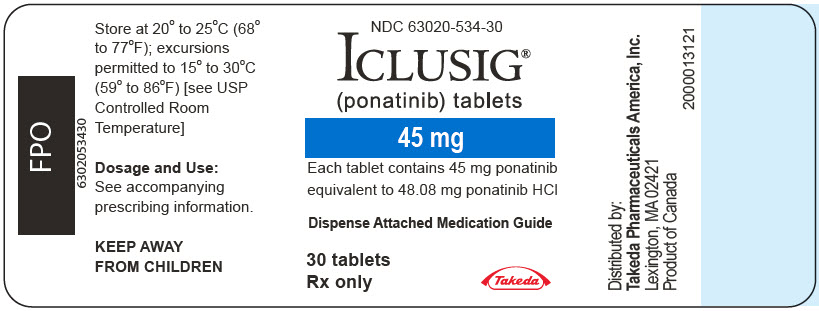
The recommended starting dosage of ICLUSIG is 45 mg orally once daily. Continue ICLUSIG until loss of response or unacceptable toxicity.
Consider discontinuing ICLUSIG if response has not occurred by 3 months.
CP-CML
The recommended starting dosage of ICLUSIG is 45 mg orally once daily with a reduction to 15 mg orally once daily upon achievement of ≤1% BCR::ABL1IS. Patients with loss of response can re-escalate the dose of ICLUSIG to a previously tolerated dosage of 30 mg or 45 mg orally once daily. Continue ICLUSIG until loss of response at the re-escalated dose or unacceptable toxicity.
Consider discontinuing ICLUSIG if hematologic response has not occurred by 3 months.
AP-CML and BP-CML
The optimal dose of ICLUSIG has not been identified.
The recommended starting dosage of ICLUSIG is 45 mg orally once daily. Consider reducing the dose of ICLUSIG for patients with accelerated phase (AP) CML who have achieved a major cytogenetic response. Continue ICLUSIG until loss of response or unacceptable toxicity.
Consider discontinuing ICLUSIG if response has not occurred by 3 months.
Administration
Advise patients of the following:
Previously Treated CP-CML
The safety of ICLUSIG was evaluated in OPTIC [see Clinical Studies (14)]. Patients received one of three starting doses of ICLUSIG: 45 mg orally once daily (n=94), 30 mg orally once daily (n=94), or 15 mg orally once daily (n=94). Patients with uncontrolled hypertension or diabetes and patients with clinically significant, uncontrolled, or active cardiovascular disease, including any history of myocardial infarction, peripheral vascular infarction, revascularization procedure, congestive heart failure, venous thromboembolism, or clinically significant atrial/ventricular arrhythmias, were excluded. Only the safety information for the recommended starting dosage (45 mg) is described below. Patients who received a starting dose of ICLUSIG 45 mg orally once daily had a mandatory dose reduction to 15 mg once daily upon achievement of ≤1% BCR::ABL1IS. Of these patients, 76% were exposed for 1 year or longer, 59% were exposed for two years or longer and 43% were exposed to five years or longer. The median time to the response-based dose reduction to 15 mg was 6.4 months (range: 3.1 months to 1.8 years).
Serious adverse reactions occurred in 40% of patients who received ICLUSIG at a starting dose of 45 mg. Serious adverse reactions in >2% of patients included AOEs (13%; of which 2.1% were sudden death), cardiac arrhythmias (9%; of which 2.1% were atrial fibrillation), thrombocytopenia (5%), pyrexia (4.3%), anemia (3.2%), abdominal pain (3.2%), pancreatitis/lipase elevation (2.1%), neutropenia (2.1%), hypertension (2.1%) and hepatotoxicity (2.1%). Fatal adverse reactions occurred in 4 patients (4.3%), including sudden death (2.1%), myocardial infarction (1.1%) and myocardial ischemia (1.1%).
Permanent discontinuation of ICLUSIG due to an adverse reaction occurred in 24% of patients who received ICLUSIG at a starting dose of 45 mg. Adverse reactions which resulted in permanent discontinuation in >2% of patients included AOEs, thrombocytopenia, hypertension, and sudden death.
Dose modifications (dose interruption or reductions) of ICLUSIG due to an adverse reaction occurred in 81% of patients who received ICLUSIG at a starting dose of 45 mg. Adverse reactions which required dose interruptions or reductions in >5% of patients included thrombocytopenia, pancreatitis/lipase elevation, neutropenia, hepatotoxicity, rash and related conditions, anemia, cardiac arrhythmias, AOEs, and cardiac failure.
The most common (>20%) adverse reactions were rash and related conditions, hypertension, hepatoxicity, hyperlipidemia, arthralgia, pancreatitis/lipase elevation, abdominal pain and cardiac arrhythmias. The most common (>20%) Grade 3 or 4 laboratory abnormalities were platelet count decreased and neutrophil cell count decreased.
Table 6 summarizes the adverse reactions in OPTIC for patients who received ICLUSIG at a starting dose of 45 mg.
| Adverse Reaction | ICLUSIG 45 mg → 15 mg (N = 94) | |
|---|---|---|
| All Grades (%) | Grade 3 or 4 (%) | |
| Graded using CTCAE v5.0 | ||
| Skin and Subcutaneous Tissue Disorders | ||
| Rash and related conditions | 47 | 3.2 |
| Dry skin | 12 | 0 |
| Vascular Disorders | ||
| Hypertension | 37 | 14 |
| Arterial occlusive events | 18 | 7 |
| Hemorrhage | 13 | 2.1 |
| Hepatobiliary Disorders | ||
| Hepatotoxicity | 34 | 7 |
| Musculoskeletal and Connective Tissue Disorders | ||
| Arthralgia Arthralgia includes arthralgia, back pain, osteoarthritis, pain, neck pain, pain in extremity, spinal pain, tendonitis, bone pain, musculoskeletal pain, chondrocalcinosis, enthesopathy, pain in jaw | 33 | 0 |
| Metabolism and Nutrition Disorders | ||
| Hyperlipidemia Hyperlipidemia includes blood cholesterol increased, blood triglycerides increased, dyslipidemia, hypercholesterolemia, hyperlipidemia, hypertriglyceridemia, low density lipoprotein increased | 32 | 4.3 |
| Impaired glucose tolerance | 10 | 2.1 |
| Gastrointestinal Disorders | ||
| Abdominal pain Abdominal pain includes abdominal distension, abdominal pain, abdominal pain upper, chronic gastritis, duodenal ulcer, duodenitis, duodenogastric reflux, dyspepsia, gastric ulcer, gastritis, gastroenteritis, gastrointestinal pain, helicobacter gastritis, peptic ulcer | 31 | 3.2 |
| Pancreatitis/lipase elevation | 29 | 16 |
| Constipation | 15 | 0 |
| Cardiac Disorders | ||
| Cardiac arrhythmias | 27 | 5 |
| Cardiac failure | 20 | 2.1 |
| Nervous System Disorders | ||
| Headache | 20 | 0 |
| Neuropathy | 13 | 0 |
| General Disorders and Administration Site Conditions | ||
| Pyrexia | 18 | 1.1 |
| Fatigue or asthenia | 18 | 1.1 |
| Infections and Infestations | ||
| Upper respiratory tract infection | 11 | 0 |
| Respiratory Thoracic and Mediastinal Disorders | ||
| Cough | 10 | 0 |
Clinically relevant adverse reactions in <10% of patients who received ICLUSIG at a starting dose of 45 mg: fluid retention and edema (6%), and hypothyroidism (5%).
Table 7 summarizes the laboratory abnormalities in OPTIC for patients who received ICLUSIG at a starting dose of 45 mg.
| Laboratory Abnormality | ICLUSIG 45 mg → 15 mg (N = 94) | |
|---|---|---|
| All Grades (%) | Grade 3 or 4 (%) | |
| ALT = alanine aminotransferase, AST = aspartate aminotransferase Graded using CTCAE v5.0 (except glucose increased which is graded using CTCAE v4.03) | ||
| Hematologic Laboratory Tests | ||
| Platelet count decreased | 66 | 31 |
| Neutrophil cell count decreased | 56 | 22 |
| White blood cell decreased | 54 | 15 |
| Lymphocyte decreased | 45 | 9 |
| Hemoglobin decreased | 38 | 14 |
| Liver Function Tests | ||
| ALT increased | 53 | 2.1 |
| AST increased | 39 | 1.1 |
| Alkaline phosphatase increased | 31 | 1.1 |
| Chemistry | ||
| Glucose increased | 53 | 3.2 |
| Triglycerides increased | 50 | 6 |
| Phosphate decreased | 34 | 3.2 |
| Bicarbonate decreased | 30 | 0 |
| Calcium decreased | 21 | 3.2 |
| Pancreatic Enzymes | ||
| Lipase increased | 40 | 16 |
Previously Treated CML or Ph+ ALL
The safety of ICLUSIG was evaluated in PACE [see Clinical Studies (14)]. Eligible patients had CML or Ph+ ALL whose disease was considered to be resistant or intolerant to prior kinase inhibitor, including those with the BCR::ABL T315I mutation. Patients with uncontrolled hypertriglyceridemia and patients with clinically significant or active cardiovascular disease, including any history of clinically significant atrial/ventricular arrhythmias or history of myocardial infarction, unstable angina, or congestive heart failure within the 3 months prior to the first dose of ICLUSIG, were excluded. Patients received a starting dose of ICLUSIG 45 mg orally once daily (N=449). Dose reductions to 30 mg orally once daily or 15 mg orally once daily were allowed for the management of adverse reactions. After approximately 2 years of follow-up, patients who were still taking a 45 mg orally once daily dose were recommended to undergo a dose reduction in response to the continued occurrence of AOEs and VTEs in the clinical trial [see Warnings and Precautions (5.1)]. At study completion (60 months of follow-up), the median duration of treatment with ICLUSIG was 32 months in patients with CP-CML, 19 months in patients with AP-CML, 2.9 months in patients with BP-CML, and 2.7 months in patients with Ph+ ALL.
Serious adverse reactions occurred in 69% of patients who received ICLUSIG. Serious adverse reactions in >2% of patients included AOEs (20%), pneumonia (10%), cardiac arrhythmias (8%), pancreatitis/lipase elevation (7%), abdominal pain (6%), cardiac failure (6%), hemorrhage (6%), sepsis (5%), VTEs (5%), fluid retention and edema (4.5%), pyrexia (4.5%), secondary malignancies (5%), anemia (3.3%), hypertension (3.1%), thrombocytopenia (3.1%), febrile neutropenia (2.9%), cellulitis (2.7%), and arthralgia (2.2%). Fatal adverse reactions occurred in 9% of patients who received ICLUSIG; the most frequent fatal adverse reactions were AOEs (2%), sepsis (1.6%), and hemorrhage (1.3%).
Permanent discontinuation of ICLUSIG due to an adverse reaction occurred in 21% of CP-CML, 12% of AP-CML, 15% of BP-CML, and 9% of Ph+ ALL patients. The most frequent adverse reactions that led to treatment discontinuation were thrombocytopenia (4.5%) and AOEs (4%).
Dose interruption of ICLUSIG for more than 3 days due to an adverse reaction occurred in 71% of patients and dose reduction of ICLUSIG due to an adverse reaction occurred in 68% of patients. Adverse reactions which required a dosage interruption or dose reduction in >5% of patients included thrombocytopenia (31%), pancreatitis/lipase elevation (17%), abdominal pain (14%), rash and related conditions (14%), neutropenia (14%), hepatotoxicity (12%), AOEs (10%), arthralgia (8%), anemia (7%), ALT increased (6%), and AST increased (5%).
The most common (>20%) non-hematologic adverse reactions were rash and related conditions, arthralgia, abdominal pain, fatigue, constipation, headache, dry skin, fluid retention and edema, hepatotoxicity, hypertension, pyrexia, nausea, hemorrhage, pancreatitis/lipase elevation, AOEs, diarrhea, vomiting, and myalgia.
Table 8 summarizes the adverse reactions in PACE.
| Adverse Reaction | CP-CML (N = 270) | AP-CML (N = 85) | BP-CML (N = 62) | Ph+ ALL (N = 32) | ||||
|---|---|---|---|---|---|---|---|---|
| All Grades (%) | Grade 3 or 4 (%) | All Grades (%) | Grade 3 or 4 (%) | All Grades (%) | Grade 3 or 4 (%) | All Grades (%) | Grade 3 or 4 (%) | |
| Graded using CTCAE v4.03. | ||||||||
| Skin and Subcutaneous Tissue Disorders | ||||||||
| Rash and related conditions | 75 | 9 | 68 | 12 | 55 | 7 | 50 | 3.1 |
| Dry skin | 42 | 3.3 | 32 | 1.2 | 26 | 1.6 | 25 | 0 |
| Alopecia | 8 | 0 | 11 | 0 | 8 | 0 | 6 | 0 |
| Musculoskeletal and Connective Tissue Disorders | ||||||||
| Arthralgia | 61 | 9 | 58 | 6 | 52 | 4.8 | 41 | 0 |
| Myalgia | 24 | 1.1 | 21 | 0 | 18 | 0 | 6 | 0 |
| Muscle spasms | 14 | 0 | 7 | 0 | 4.8 | 0 | 13 | 0 |
| Bone pain | 14 | 0.4 | 13 | 1.2 | 11 | 3 | 9 | 3 |
| Musculoskeletal pain | 11 | 1.5 | 7 | 0 | 8.1 | 0 | 6 | 3 |
| Gastrointestinal Disorders | ||||||||
| Abdominal pain | 54 | 11 | 49 | 9 | 45 | 13 | 34 | 6 |
| Constipation | 42 | 2.6 | 29 | 2.4 | 27 | 0 | 53 | 3.1 |
| Pancreatitis/lipase elevation | 32 | 19 | 21 | 15 | 19 | 16 | 9 | 6 |
| Nausea | 29 | 0.7 | 32 | 0 | 34 | 1.6 | 22 | 0 |
| Diarrhea | 20 | 0.7 | 29 | 2.4 | 24 | 3.2 | 13 | 3.1 |
| Vomiting | 19 | 1.5 | 27 | 0 | 27 | 1.6 | 25 | 0 |
| Oral mucositis Oral mucositis includes aphthous ulcer, gingival pain, lip blister, lip pain, lip swelling, mouth ulceration, oropharyngeal pain, oral mucosal blistering, oral mucosal eruption, oral pain, pharyngeal ulceration, stomatitis, and tongue ulceration | 16 | 1.1 | 20 | 1.2 | 24 | 0 | 9 | 3.1 |
| General Disorders | ||||||||
| Fatigue or asthenia | 44 | 3.7 | 47 | 8 | 36 | 4.8 | 34 | 3.1 |
| Fluid retention and edema | 31 | 3.7 | 37 | 3.5 | 32 | 4.8 | 41 | 6 |
| Pyrexia | 26 | 1.1 | 40 | 7 | 37 | 3.2 | 25 | 0 |
| Chills | 8 | 0 | 12 | 0 | 13 | 1.6 | 9 | 0 |
| Nervous System Disorders | ||||||||
| Headache | 43 | 3.3 | 31 | 1.2 | 31 | 3.2 | 25 | 0 |
| Neuropathy | 26 | 3.3 | 18 | 2.4 | 13 | 0 | 13 | 0 |
| Dizziness | 17 | 0.4 | 11 | 0 | 4.8 | 0 | 3.1 | 0 |
| Vascular Disorders | ||||||||
| Hypertension Derived from blood pressure (BP) measurement | 42 | 30 | 53 | 28 | 48 | 6 | 31 | 25 |
| Arterial occlusive events | 31 | 17 | 22 | 12 | 13 | 10 | 13 | 6 |
| Hemorrhage | 23 | 3 | 38 | 12 | 37 | 8 | 31 | 13 |
| Hepatobiliary Disorders | ||||||||
| Hepatotoxicity | 32 | 10 | 39 | 14 | 34 | 19 | 16 | 13 |
| Cardiac Disorders | ||||||||
| Cardiac arrhythmias | 19 | 7 | 17 | 4.7 | 24 | 8 | 25 | 6 |
| Cardiac failure | 9 | 5 | 8 | 4.7 | 16 | 10 | 6 | 3.1 |
| Respiratory, Thoracic, and Mediastinal Disorders | ||||||||
| Cough Cough includes cough, productive cough, and upper airway cough syndrome | 19 | 0 | 24 | 0 | 21 | 0 | 6 | 0 |
| Dyspnea Dyspnea includes dyspnea and dyspnea exertional | 19 | 3 | 20 | 3.5 | 23 | 6 | 16 | 0 |
| Infections | ||||||||
| Upper respiratory tract infection Upper respiratory tract infection includes upper respiratory tract infection and viral upper respiratory tract infection | 14 | 1.1 | 13 | 0 | 13 | 1.6 | 3.1 | 0 |
| Urinary tract infection Urinary tract infection includes escherichia urinary tract infection, urinary tract infection, and urinary tract infection bacterial | 12 | 2.2 | 14 | 3.5 | 1.6 | 1.6 | 9 | 0 |
| Nasopharyngitis | 12 | 0 | 18 | 0 | 3.2 | 0 | 3.1 | 0 |
| Pneumonia | 8 | 4.8 | 18 | 11 | 18 | 13 | 22 | 16 |
| Cellulitis | 4.4 | 1.9 | 8 | 3.5 | 13 | 4.8 | 0 | 0 |
| Sepsis Sepsis includes abdominal sepsis, bacteremia, device-related sepsis, escherichia bacteremia, fungemia, klebsiella bacteremia, klebsiella sepsis, neutropenic sepsis, sepsis, septic shock, staphylococcal bacteremia, staphylococcal sepsis, streptococcal bacteremia, and urosepsis | 2.6 | 1.9 | 11 | 6 | 18 | 6 | 28 | 25 |
| Metabolism and Nutrition Disorders | ||||||||
| Decreased appetite | 13 | 0.4 | 14 | 1.2 | 8 | 0 | 31 | 0 |
| Hyperlipidemia | 13 | 0.7 | 7 | 0 | 3.2 | 0 | 3.1 | 0 |
| Investigations | ||||||||
| Weight decreased | 10 | 0.4 | 9 | 0 | 4.8 | 0 | 13 | 0 |
| Psychiatric Disorders | ||||||||
| Insomnia | 11 | 0 | 13 | 0 | 11 | 0 | 13 | 0 |
| Anxiety | 4.8 | 0 | 18 | 0 | 8 | 0 | 6 | 0 |
| Blood and Lymphatic System Disorders | ||||||||
| Febrile neutropenia | 1.1 | 1.1 | 4.7 | 4.7 | 13 | 13 | 25 | 25 |
Clinically relevant adverse reactions occurring in ≤10% of patients: impaired glucose tolerance (9%)
Grouped terms: secondary malignancies includes basal cell carcinoma, squamous cell carcinoma of the skin, melanoma, chronic myelomonocytic leukemia, colon cancer, epithelioid mesothelioma, large cell lung cancer recurrent, lung neoplasm, malignant ascites, myelodysplastic syndrome, neuroendocrine carcinoma metastatic, non-Hodgkin lymphoma, pancreatic cancer, thyroid neoplasm, vulval cancer; venous thromboembolic events includes deep vein thrombosis, pulmonary embolism, retinal vein occlusion, retinal vein thrombosis, superficial thrombophlebitis, venous embolism, veno-occlusive liver disease, portal vein thrombosis; impaired glucose tolerance includes blood glucose increased, diabetes mellitus, glucose tolerance impaired, glycosylated hemoglobin increased, hyperglycemia, insulin resistance, and type 2 diabetes mellitus
, venous thromboembolic events (6%)Strong CYP3A Inhibitors
Coadministration of ICLUSIG with a strong CYP3A inhibitor increases ponatinib plasma concentrations [see Clinical Pharmacology (12.3)], which may increase the risk of ICLUSIG adverse reactions. Avoid coadministration of ICLUSIG with strong CYP3A inhibitors. If coadministration of ICLUSIG with strong CYP3A inhibitors cannot be avoided, reduce the ICLUSIG dosage [see Dosage and Administration (2.3)].
Strong CYP3A Inducers
Coadministration of ICLUSIG with a strong CYP3A inducer decreases ponatinib plasma concentrations [see Clinical Pharmacology (12.3)]. Avoid coadministration of ICLUSIG with strong CYP3A inducers unless the benefit outweighs the risk of decreased ponatinib exposure. Monitor patients for reduced efficacy. Selection of concomitant medication with no or minimal CYP3A induction potential is recommended.
Risk Summary
Based on findings in animals and its mechanism of action [see Clinical Pharmacology (12.1)], ICLUSIG can cause fetal harm when administered to a pregnant woman. There are no available data on ICLUSIG use in pregnant women. In animal reproduction studies, oral administration of ponatinib to pregnant rats during organogenesis caused adverse developmental effects at doses lower than human exposures at the maximum recommended human dose of 45 mg/day (see Data). Advise pregnant women of the potential risk to a fetus.
In the U.S. general population, the estimated background risk of major birth defects and miscarriage in clinically recognized pregnancies is 2% to 4% and 15% to 20%, respectively.
Data
Animal Data
Ponatinib was studied for effects on embryo-fetal development in pregnant rats given oral doses of 0.3 mg/kg/day, 1 mg/kg/day, and 3 mg/kg/day during organogenesis (25 rats per group). At the maternally toxic dose of 3 mg/kg/day (equivalent to the AUC in patients receiving the maximum recommended dose of 45 mg/day), ponatinib caused embryo-fetal toxicity as shown by increased resorptions, reduced body weight, external alterations, multiple soft tissue and skeletal alterations, and reduced ossification. Embryo-fetal toxicities also were observed at 1 mg/kg/day (approximately 24% the AUC in patients receiving the maximum recommended dose of 45 mg/day) and involved multiple fetal soft tissue and skeletal alterations, including reduced ossification.
Risk Summary
There are no data on the presence of ponatinib in human milk, the effects on the breastfed child, or on milk production. Because of the potential for serious adverse reactions in the breastfed child, advise women not to breastfeed during treatment with ICLUSIG and for 1 week after the last dose.
Pregnancy Testing
Verify the pregnancy status of females of reproductive potential prior to initiating ICLUSIG.
Contraception
Females
Advise females of reproductive potential to use effective contraception during treatment with ICLUSIG and for 3 weeks after the last dose.
Infertility
Females
Based on animal data, ponatinib may impair fertility in females of reproductive potential [see Nonclinical Toxicology (13.1)]. It is not known whether these effects on fertility are reversible.
Juvenile Animal Toxicity Data
A juvenile toxicity study in 15 day old rats was conducted with daily oral gavage administration of ponatinib at 0.75 mg/kg/day, 1.5 mg/kg/day, or 3 mg/kg/day for 21 days. There were no adverse effects of ponatinib on juvenile rat developmental parameters (vaginal opening, preputial separation or bone measurements) observed in this study. Once daily oral administration of 3 mg/kg/day ponatinib to juvenile rats beginning on Day 15 postpartum (pp) resulted in mortality related to inflammatory effects after 6 to 7 days following initiation of treatment. The dose of 3 mg/kg/day is approximately 0.32 times the maximum recommended human dose of 45 mg/day on a mg/m2 basis for a child.
Cardiac Electrophysiology
The QT interval prolongation potential of ICLUSIG was assessed in 39 patients with cancer who received ICLUSIG 30 mg, 45 mg, or 60 mg (0.67 to 1.33 times the approved maximum recommended starting dose) orally once daily. No large mean increase (i.e., >20 msec) in QTc interval was detected.
Absorption
The absolute bioavailability of ponatinib is unknown. Peak concentrations of ponatinib are observed within 6 hours after ICLUSIG oral administration.
Effect of Food
Following ingestion of either a high-fat (approximately 900 to 1000 calories with approximately 150, 250, and 500 to 600 calories derived from protein, carbohydrate, and fat, respectively) or low-fat meal (approximately 547 calories with approximately 56, 428 and 63 calories derived from protein, carbohydrate, and fat, respectively) by 22 healthy volunteers, plasma ponatinib exposures (AUC and Cmax) were not different when compared to fasting conditions.
Distribution
Ponatinib is greater than 99% bound to plasma proteins in vitro. There was no plasma protein binding displacement of ponatinib (145 nM) in vitro by other highly protein bound medications (ibuprofen, nifedipine, propranolol, salicylic acid, and warfarin).
The mean (CV%) apparent steady-state volume of distribution is 1,223 liters (102%) following oral administration of ICLUSIG 45 mg orally once daily for 28 days in patients with cancer.
Elimination
The mean (range) terminal elimination half-life of ponatinib was approximately 24 (12 to 66) hours following ICLUSIG 45 mg orally once daily for 28 days in patients with cancer.
Metabolism
At least 64% of a dose undergoes Phase I and Phase II metabolism. CYP3A4 and to a lesser extent CYP2C8, CYP2D6 and CYP3A5 are involved in the Phase I metabolism of ponatinib in vitro. Ponatinib is also metabolized by esterases and/or amidases.
Excretion
Following a single oral dose of radiolabeled ponatinib, approximately 87% of the radioactive dose was recovered in the feces and approximately 5% in the urine.
Specific Populations
No clinically significant differences in the pharmacokinetics of ponatinib were observed based on age (19 to 85 years), body weight (41 to 152 kg), and mild to moderate renal impairment (creatinine clearance 30 to 89 mL/min, estimated by the Cockcroft-Gault equation).
Patients with Renal Impairment
ICLUSIG has not been studied in patients with severe renal impairment. Although renal excretion is not a major route of ponatinib elimination, the potential for severe renal impairment to affect hepatic elimination has not been determined.
Patients with Hepatic Impairment
A single 30 mg oral dose of ICLUSIG was administered to subjects with normal hepatic function and to subjects with mild (Child-Pugh A), moderate (Child-Pugh B), and severe (Child-Pugh C) hepatic impairment. Compared to subjects with normal hepatic function, there was no trend of increased ponatinib exposure in subjects with hepatic impairment. There was an increased incidence of adverse reactions (e.g., gastrointestinal disorders, including a case of severe pancreatitis) in subjects with hepatic impairment compared to subjects with normal hepatic function.
Drug Interaction Studies
Clinical Studies
Strong CYP3A Inhibitors: Coadministration of ponatinib with multiple doses of ketoconazole (strong CYP3A inhibitor) increased the ponatinib AUC0-INF by 78% and Cmax by 47%.
Strong CYP3A Inducers: Coadministration of ponatinib with multiple doses of rifampin (strong CYP3A inducer) decreased the ponatinib AUC0-INF by 62% and Cmax by 42%.
Gastric Acid Reducing Agents: Coadministration of ponatinib with multiple doses of lansoprazole (proton pump inhibitor) decreased the ponatinib AUC0-INF by 6% and Cmax by 25%.
In Vitro Studies
CYP Enzymes: Ponatinib does not inhibit CYP1A2, CYP2B6, CYP2C8, CYP2C9, CYP2C19, CYP3A, or CYP2D6 and does not induce CYP1A2, CYP2B6, or CYP3A.
Transporter Systems: Ponatinib is a weak substrate for both P-glycoprotein (P-gp) and breast cancer resistance protein (BCRP). Ponatinib is not a substrate for organic anion transporting polypeptides (OATP1B1, OATP1B3) and organic cation transporter 1 (OCT1).
Ponatinib inhibits P-gp, BCRP, and bile salt export pump (BSEP). Ponatinib does not inhibit OATP1B1, OATP1B3, OCT1, OCT2, or the organic anion transporters OAT1 and OAT3.
Newly Diagnosed Ph+ ALL
The efficacy of ICLUSIG in combination with chemotherapy was evaluated in PhALLCON (NCT03589326), a randomized, active-controlled, multicenter, open-label trial of 245 patients with newly diagnosed Ph+ ALL. Randomization was stratified by age at the time of induction therapy (18 to <45 years; ≥45 to <60 years; and ≥60 years). Patients were randomized (2:1) to receive either ICLUSIG 30 mg orally once daily (n=164) or imatinib 600 mg orally once daily (n=81) in combination with chemotherapy (imatinib in combination with chemotherapy is an unapproved regimen in adult patients). The ICLUSIG dose was reduced to 15 mg once daily after completion of the induction phase and achievement of MRD-negative complete remission (CR). If a patient lost MRD negativity at any time after dose reduction to 15 mg, re-escalation to 30 mg once daily was allowed. Only patients who achieved CR or CR with incomplete hematologic recovery (CRi) with MRD-negativity at the end of induction could continue study treatment at the investigator’s discretion.
Per protocol, patients were allowed to receive one cycle of optional prephase therapy excluding TKI prior to randomization to manage the acute disease during the screening period.
Patients were randomized to receive either ICLUSIG or imatinib in combination with 20 cycles of chemotherapy, followed by ICLUSIG or imatinib as single-agent therapy (ICLUSIG or imatinib as single-agent after chemotherapy for newly diagnosed Ph+ ALL is not an approved regimen). Each cycle lasted 28 days.
Following combination therapy, patients continued to receive ICLUSIG or imatinib as single-agent therapy until relapse from CR, progressive disease (PD), hematopoietic stem cell transplantation (HSCT), start of alternative therapy, or unacceptable toxicity.
The demographics and baseline disease characteristics of the randomized population are described in Table 11.
| Patient Characteristics at Entry | ICLUSIG 30 mg → 15 mg with Chemotherapy (N = 164) | Imatinib 600 mg with Chemotherapy (N = 81) |
|---|---|---|
| Age (years) | ||
| Median, years (range) | 54 (19 to 82) | 52 (19 to 75) |
| Age Category, n (%) | ||
| 18 to <45 years | 58 (35%) | 29 (36%) |
| 45 to <60 years | 45 (27%) | 22 (27%) |
| ≥60 years | 61 (37%) | 30 (37%) |
| Sex, n (%) | ||
| Female | 90 (55%) | 43 (53%) |
| Race, n (%) | ||
| White | 104 (63%) | 62 (77%) |
| Not reported | 28 (17%) | 2 (3%) |
| Asian | 20 (12%) | 11 (14%) |
| Black or African American | 9 (5%) | 4 (5%) |
| ECOG Performance Status, n (%) | ||
| 0 | 72 (44%) | 33 (41%) |
| 1 | 85 (52%) | 43 (53%) |
| 2 | 7 (4%) | 5 (6%) |
| Baseline BCR::ABL1 Dominant Variant | ||
| p190 | 114 (70%) | 53 (65%) |
| p210 | 40 (24%) | 25 (31%) |
| Undetermined/not tested | 10 (6%) | 3 (4%) |
| Prephase Therapy Per protocol, patients were allowed to receive one cycle of optional prephase therapy excluding TKI prior to randomization. | 74 (45%) | 41 (51%) |
| Comorbidities, n (%) | ||
| Hypertension | 58 (35%) | 30 (37%) |
| Diabetes | 39 (24%) | 24 (30%) |
| Dyslipidemia | 29 (18%) | 23 (28%) |
Among 244 treated patients, 96% completed induction (96% ICLUSIG, 95% imatinib), 84% received at least one cycle of consolidation (89% ICLUSIG, 75% imatinib), and 31% initiated maintenance (36% ICLUSIG, 21% imatinib). After completing combination therapy, 21% of patients received ICLUSIG and 9% received imatinib as single-agent therapy. The overall rate of HSCT was 34% (56/164) in the ICLUSIG arm versus 48% (39/81) in the imatinib arm.
Efficacy was based on the MRD-negative CR rate at the end of induction. The analysis population for MRD-negative CR included 232 randomized patients who had a baseline BCR::ABL1 dominant variant of p190 or p210 as determined by central laboratory tests (154 patients in the ICLUSIG arm and 78 in the imatinib arm). Efficacy results are summarized in Table 12.
| ICLUSIG 30 mg → 15 mg with Chemotherapy (N = 154) | Imatinib 600 mg with Chemotherapy (N = 78) | |
|---|---|---|
| MRD: minimal residual disease; CR: complete remission (complete response); BCR::ABL1: breakpoint cluster region-Abelson. | ||
| MRD-negative CR MRD-negative CR is defined as ≤0.01% BCR::ABL1/ABL1 or undetectable BCR::ABL1 transcripts in cDNA with ≥10,000 ABL1 transcripts, and meeting criteria for CR at End of Induction | ||
| Achieved at the end of induction % (n/N) | 30% (46/154) | 12% (9/78) |
| Risk difference (95% CI) Difference, 95% CI and two-sided p-value are based on Cochran-Mantel-Haenszel (CMH) method stratified by the randomization stratification factor. | 0.18 (0.08, 0.28) | |
| p-value | 0.0004 | |
| CR CR is defined as no circulating blasts and <5% blasts in the bone marrow with normal maturation of all cellular components; no evidence of extramedullary disease (i.e., CNS involvement, lymphadenopathy, splenomegaly, skin/gum infiltration, testicular mass); and hematologic recovery of absolute neutrophil count >1.0 × 10⁹/L and platelets >100 × 109/L for at least 4 weeks. at End of Induction % (n/N) | 79% (122/154) | 63% (49/78) |
The median duration of follow-up for overall survival was 20.4 months (95% CI: 18.4, 23.9) in the ICLUSIG arm and 18.1 months (95% CI: 13.9, 24.3) in the imatinib arm.
In the subset of patients who did not receive prephase therapy, MRD-negative CR at the end of induction was achieved by 31% of patients in the ICLUSIG arm compared to 16% of patients in the imatinib arm and CR at the end of induction was achieved by 84% and 61%, respectively.
Chronic Phase (CP) CML
The efficacy of ICLUSIG was evaluated in OPTIC (NCT02467270), a dose-optimization trial. Eligible patients had CP-CML whose disease was considered to be resistant or resistant/intolerant to at least 2 prior kinase inhibitors or who have the T315I mutation. T315I mutation testing was performed on peripheral blood by Sanger Sequencing of the p190 or p210 BCR::ABL region. Resistance in CP-CML while on a prior kinase inhibitor was defined as failure to achieve either a complete hematologic response (by 3 months), a minor cytogenetic response (by 6 months), or a major cytogenetic response (by 12 months), or development of a new BCR::ABL1 kinase domain mutation or new clonal evolution. Patients were required to have >1% BCR::ABL1IS (by real-time polymerase chain reaction) at trial entry. Patients received one of three starting dosages: 45 mg orally once daily, 30 mg orally once daily, or 15 mg orally once daily. Patients who received a starting dose of 45 mg or 30 mg had a dose reduction to 15 mg once daily upon achieving ≤1% BCR::ABL1IS. The major efficacy outcome measure was ≤1% BCR::ABL1IS at 12 months. Only the efficacy results for the recommended starting dose of 45 mg are described below.
The median duration of follow-up for the 45 mg cohort (N=94) was 72.9 months (range: 0.5 months to 106.3 months).
A total of 282 patients received ICLUSIG: 94 received a starting dose of 45 mg, 94 received a starting dose of 30 mg, and 94 received a starting dose of 15 mg. Baseline demographic characteristics are described in Table 13 for patients who received a starting dose of 45 mg.
| Patient Characteristics at Entry | ICLUSIG 45 mg → 15 mg (N = 94) |
|---|---|
| Age | |
| Median years (range) | 46 (19 to 81) |
| Sex, n (%) | |
| Male | 50 (53%) |
| Race, n (%) | |
| White | 73 (78%) |
| Asian | 16 (17%) |
| Other/Unknown | 4 (4%) |
| Black or African American | 1 (1%) |
| ECOG Performance Status, n (%) | |
| ECOG 0 or 1 | 93 (99%) |
| Disease History | |
| Median time from diagnosis to first dose, years (range) | 5.5 (1 to 21) |
| Resistant to Prior Kinase Inhibitor, n (%) | 92 (98%) |
| Presence of one or more BCR::ABL kinase domain mutations, n (%) | 41 (44%) |
| Number of Prior Kinase Inhibitors, n (%) | |
| 1 | 1 (1%) |
| 2 | 43 (46%) |
| ≥3 | 50 (53%) |
| T315I mutation at baseline | 25 (27%) |
| Comorbidities | |
| Hypertension | 29 (31%) |
| Diabetes | 5 (5%) |
| Hypercholesterolemia | 3 (3%) |
| History of ischemic heart disease | 3 (3%) |
Efficacy results are summarized in Table 14.
| ICLUSIG 45 mg → 15 mg (N = 93) ITT population (N=93) defined as patients who had the b2a2/b3a2 (p210) transcript. | |
|---|---|
| Molecular Response at 12 months Primary endpoint was ≤1% BCR::ABL1IS rate at 12 months. Defined as a ≤1% ratio of BCR::ABL to ABL transcripts on the International Scale (IS) (i.e., ≤1% BCR::ABLIS; patients must have the b2a2/b3a2 (p210) transcript), in peripheral blood measured by quantitative reverse transcriptase polymerase chain reaction (qRT PCR). | |
| Overall ≤1% BCR::ABL1IS Rate | |
| % (n/N) | 44% (41/93) |
| (95% CI) 95% CI is calculated using the binomial exact (Clopper-Pearson) method. | (34%, 55%) |
| Patients with T315I mutation | |
| % (n/N) | 44% (11/25) |
| (95% CI) | (24%, 65%) |
| Patients without T315I mutation | |
| % (n/N) | 44% (29/66) Of the 93 patients, two patients did not have a baseline mutation assessment and were excluded from the response by mutation analysis. |
| (95% CI) | (32%, 57%) |
| Cytogenetic Response by 12 months | |
| Major (MCyR) Secondary endpoint was MCyR by 12 months which combines both complete (no detectable Ph+ cells) and partial (1% to 35% Ph+ cells in at least 20 metaphases) cytogenetic responses. | |
| % (n/N) | 48% (44/91) Analysis is based on ITT cytogenetic population (N=91) defined as patients who had a cytogenetic assessment at baseline with at least 20 metaphases examined. One patient who had a complete cytogenetic response at baseline was excluded from the analysis. |
| (95% CI) | (38%, 59%) |
| Patients with T315I mutation | |
| % (n/N) | 52% (13/25) |
| (95% CI) | (31%, 72%) |
| Patients without T315I mutation | |
| % (n/N) | 46% (30/65) Of the 91 patients, one patient did not have a baseline mutation assessment and was excluded from the response by mutation analysis. |
| (95% CI) | (34%, 59%) |
The rate of molecular response (≤1% BCR::ABL1IS) by 60 months was 60.2% (95% CI 49.5, 70.0). In patients with T3151 mutation, it was 64.0% (95% CI 42.5, 82.0) and in patients without T3151 mutation, it was 59.1% (95% CI, 46.3, 71.0).
Of the 45 patients who had a dose reduction to 15 mg after achieving ≤1% BCR::ABL1IS, 25 patients (56%) maintained their response at the reduced dose for at least one year. Of these 25 patients, 16 patients (64%) maintained response for greater than 60 months. With a minimum follow-up of 60 months, median duration of molecular response (≤1% BCR::ABL1IS) was not reached.
Chronic Phase (CP), Accelerated Phase (AP), Blast Phase (BP) CML and Philadelphia Chromosome-Positive Acute Lymphoblastic Leukemia (Ph+ ALL)
The efficacy of ICLUSIG was evaluated in PACE (NCT01207440), a single-arm, open-label, international, multicenter trial. Eligible patients had CML and Ph+ ALL whose disease was considered to be resistant or intolerant to a prior kinase inhibitor. Patients were assigned to one of six cohorts based on disease phase (CP-CML, AP-CML, or BP-CML/Ph+ ALL), resistance or intolerance (R/I) to prior kinase inhibitors, and the presence of the T315I mutation. T315I mutation testing was performed on peripheral blood by Sanger Sequencing of the p190 or p210 BCR::ABL region.
Resistance in CP-CML while on a prior kinase inhibitor was defined as failure to achieve either a complete hematologic response (by 3 months), a minor cytogenetic response (by 6 months), or a major cytogenetic response (by 12 months). Patients with CP-CML who experienced a loss of response or development of a kinase domain mutation in the absence of a complete cytogenetic response or progression to AP-CML or BP-CML at any time on a prior kinase inhibitor were also considered resistant.
Resistance in AP-CML, BP-CML, and Ph+ ALL was defined as failure to achieve either a major hematologic response (by 3 months in AP-CML, and by 1 month in BP-CML and Ph+ ALL), loss of major hematologic response (at any time), or development of a kinase domain mutation in the absence of a complete major hematologic response while on a prior kinase inhibitor. Intolerance was defined as the discontinuation of a prior kinase inhibitor due to toxicities despite optimal management in the absence of a complete cytogenetic response in patients with CP-CML or major hematologic response for patients with AP-CML, BP-CML, or Ph+ ALL.
Patients were administered a starting dose of ICLUSIG 45 mg orally once daily.
The major efficacy outcome measure for patients with CP-CML was major cytogenetic response (MCyR), which included complete and partial cytogenetic responses (CCyR and PCyR). The major efficacy outcome measure for patients with AP-CML, BP-CML, and Ph+ ALL was major hematologic response (MaHR), defined as either a complete hematologic response (CHR) or no evidence of leukemia (NEL).
The trial enrolled 449 patients, of which 444 were eligible for efficacy analysis: 267 patients with CP-CML (R/I Cohort: N=203, T315I: N=64), 83 patients with AP-CML, 62 patients with BP-CML, and 32 patients with Ph+ ALL. Five patients were not eligible for efficacy analysis due to lack of confirmation of T315I mutation status, and these patients had not received prior dasatinib or nilotinib.
At study completion, the median duration of follow-up for the trial (all cohorts) was 40.5 months (range: 0.1 months to 79.5 months). The median duration of treatment was 35 months for patients with CP-CML, 21.1 months for patients with AP-CML, 3.2 months for patients with BP-CML and 2.9 months for patients with Ph+ ALL. Baseline demographic characteristics are described in Table 15.
| Patient Characteristics at Entry | Efficacy Population (N = 444) |
|---|---|
| Age | |
| Median, years (range) | 59 (18 to 94) |
| Sex, n (%) | |
| Male | 236 (53%) |
| Race, n (%) | |
| White | 349 (79%) |
| Asian | 57 (13%) |
| Black or African American | 25 (6%) |
| Other/Unknown | 13 (3%) |
| ECOG Performance Status, n (%) | |
| ECOG = 0 or 1 | 409 (92%) |
| Disease History | |
| Median time from diagnosis to first dose, years (range) | 6.1 (0.3 to 29) |
| Resistant to Prior Kinase Inhibitor, n (%) | 374 (88%) |
| Presence of one or more BCR::ABL kinase domain mutations Of the patients with one or more BCR::ABL kinase domain mutations detected at entry, 37 unique mutations were detected. , n (%) | 244 (55%) |
| Number of Prior Kinase Inhibitor, n (%) | |
| 1 | 29 (7%) |
| 2 | 166 (37%) |
| ≥3 | 249 (56%) |
| T315I mutation at baseline | 128 (29%) |
| Comorbidities | |
| Hypertension | 159 (35%) |
| Diabetes | 57 (13%) |
| Hypercholesterolemia | 100 (22%) |
| History of ischemic disease | 67 (15%) |
Efficacy results are summarized in Table 16 and Table 17.
| Overall (N = 267) | Cohort | ||
|---|---|---|---|
| R/I Cohort (N = 203) | T315I Cohort (N = 64) | ||
| Cytogenetic Response | |||
| Major Primary endpoint for CP-CML cohorts was MCyR by 12 months, which combines both complete (no detectable Ph+ cells) and partial (1% to 35% Ph+ cells in at least 20 metaphases) cytogenetic responses. (MCyR)(95% CI) | 55% (49%, 62%) | 51% (44%, 58%) | 70% (58%, 81%) |
| Complete (CCyR) (95% CI) | 46% (40%, 52%) | 40% (33%, 47%) | 66% (53%, 77%) |
| Major Molecular Response Secondary endpoint for CP-CML cohorts was MMR (proportion of patients who met the criteria for MMR at least once after the initiation of study treatment) measured in peripheral blood. Defined as a ≤0.1% ratio of BCR::ABL to ABL transcripts on the International Scale (IS) (i.e., ≤0.1% BCR::ABLIS; patients must have the b2a2/b3a2 (p210) transcript), in peripheral blood measured by quantitative reverse transcriptase polymerase chain reaction (qRT PCR). (95% CI) | 40% (35%, 47%) | 35% (28%, 42%) | 58% (45%, 70%) |
In patients with CP-CML who achieved MCyR or MMR, the median time to response was 3 months (range: 1.8 to 12.3 months) and 6 months (range: 2 to 60.2 months), respectively. With a minimum follow-up of 60 months, the median durations of MCyR (range: 1 day to 70.1 months) and MMR (range: 1 day to 67.8 months) had not yet been reached.
| AP-CML Overall (N = 83) | BP-CML Overall (N = 62) | Ph+ ALL Overall (N = 32) | |
|---|---|---|---|
| Hematologic Response | |||
| Major Primary endpoint for patients with AP-CML, BP-CML, and Ph+ ALL was MaHR by 6 months, which combines complete hematologic responses and no evidence of leukemia. (MaHR) | 57% | 31% | 41% |
| (95% CI) | (45%, 68%) | (20%, 44%) | (24%, 59%) |
| Complete CHR: WBC ≤ institutional ULN, ANC ≥1000/mm3, platelets ≥100,000/mm3, no blasts or promyelocytes in peripheral blood, bone marrow blasts ≤5%, <5% myelocytes plus metamyelocytes in peripheral blood, basophils <5% in peripheral blood, no extramedullary involvement (including no hepatomegaly or splenomegaly) . (CHR) | 51% | 21% | 34% |
| (95% CI) | (39%, 62%) | (12%, 33%) | (19%, 53%) |
The median time to MaHR in patients with AP-CML, BP-CML, and Ph+ ALL was 0.8 months (range: 0.4 to 6.3 months), 1.0 month (range: 0.4 to 4 months), and 0.7 months (range: 0.4 to 6 months), respectively. The median duration of MaHR for patients with AP-CML, BP-CML, and Ph+ ALL was 14 months (range: 1.3 to 74.3 months), 6.5 months (range: 1.9 to 64.7 months), and 3.5 months (range: 1.9 to 13.7 months), respectively.
Arterial Occlusive Events and Venous Thromboembolic Events
Inform patients that serious arterial thromboses (including arterial stenosis sometimes requiring revascularization) and VTEs have occurred. Advise patients to immediately contact their healthcare provider with any symptoms suggestive of a blood clot such as chest pain, shortness of breath, weakness on one side of the body, speech problems, leg pain, or leg swelling [see Warnings and Precautions (5.1, 5.2)].
Heart Failure and Cardiac Arrhythmias
Inform patients of the possibility of heart failure, and abnormally slow or fast heart rates. Advise patients to contact their healthcare provider if they experience symptoms such as shortness of breath, chest pain, palpitations, dizziness, or fainting [see Warnings and Precautions (5.3, 5.12)].
Hepatotoxicity
Inform patients of the possibility of developing liver function abnormalities and serious hepatotoxicity. Advise patients to immediately contact their healthcare provider if signs of liver failure occur, including jaundice, anorexia, bleeding or bruising [see Warnings and Precautions (5.4)].
Hypertension
Inform patients of the possibility of new or worsening of existing hypertension. Advise patients to contact their healthcare provider for elevated blood pressure or if symptoms of hypertension occur including confusion, headache, dizziness, chest pain, or shortness of breath [see Warnings and Precautions (5.5)].
Pancreatitis
Inform patients of the possibility of developing pancreatitis that may be accompanied by nausea, vomiting, abdominal pain, or abdominal discomfort, and to promptly report these symptoms [see Warnings and Precautions (5.6)].
Neuropathy
Inform patients of the possibility of developing peripheral or cranial neuropathy while being treated with ICLUSIG. Advise patients to report symptoms of neuropathy, such as hypoesthesia, hyperesthesia, paresthesia, discomfort, a burning sensation, neuropathic pain, or weakness [see Warnings and Precautions (5.8)].
Ocular Toxicity
Inform patients of the possibility of ocular toxicity while being treated with ICLUSIG. Advise patients to report symptoms of ocular toxicity, such as blurred vision, dry eye, or eye pain [see Warnings and Precautions (5.9)].
Hemorrhage
Inform patients of the possibility of serious bleeding and to immediately contact their healthcare provider with any signs or symptoms suggestive of hemorrhage such as unusual bleeding or easy bruising [see Warnings and Precautions (5.10)].
Fluid Retention
Inform patients of the possibility of developing fluid retention and to contact their healthcare provider for symptoms such as leg swelling, abdominal swelling, weight gain, or shortness of breath [see Warnings and Precautions (5.11)].
Myelosuppression
Inform patients of the possibility of developing low blood cell counts; inform patients to report immediately should fever develop, particularly in association with any suggestion of infection [see Warnings and Precautions (5.13)].
Tumor Lysis Syndrome
Inform patients of the possibility of developing TLS and to immediately contact their healthcare provider for any signs or symptoms associated with TLS [see Warnings and Precautions (5.14)]. Advise patients to be adequately hydrated when taking ICLUSIG to reduce the risk of TLS.
Reversible Posterior Leukoencephalopathy Syndrome (RPLS – also known as Posterior Reversible Encephalopathy Syndrome)
Inform patients of the possibility of developing Reversible Posterior Leukoencephalopathy Syndrome while being treated with ICLUSIG. Advise patients to report symptoms such as seizure, headache, decreased alertness, altered mental functioning, vision loss, and other visual and neurological disturbances [see Warnings and Precautions (5.15)].
Impaired Wound Healing and Gastrointestinal Perforation
Inform patients that impaired wound healing and gastrointestinal fistula or perforation have been reported. Advise patients to inform their healthcare provider of any planned surgical procedure [see Warnings and Precautions (5.16)].
Embryo-Fetal Toxicity
Advise pregnant women and females of reproductive potential of the potential risk to a fetus. Advise females to inform their healthcare provider of a known or suspected pregnancy. Advise females of reproductive potential to use effective contraception during treatment with ICLUSIG and for 3 weeks after the last dose [see Warnings and Precautions (5.17), Use in Specific Populations (8.1, 8.3)].
Lactation
Advise women not to breastfeed during treatment with ICLUSIG and for 1 week after the last dose [see Use in Specific Populations (8.2)].
Infertility
Advise females of reproductive potential of the potential for reduced fertility from ICLUSIG [see Use in Specific Populations (8.3), Nonclinical Toxicology (13.1)].
Instructions for Taking ICLUSIG
Advise patients to take ICLUSIG exactly as prescribed and not to change their dose or to stop taking ICLUSIG unless they are told to do so by their healthcare provider. ICLUSIG may be taken with or without food. ICLUSIG tablets should be swallowed whole. Patients should not cut, crush or dissolve the tablets.
Patients should not take two doses at the same time to make up for a missed dose.
Advise patients not to drink grapefruit juice or eat grapefruit as it may increase the amount of ICLUSIG in their blood and therefore increase their risk of adverse reactions.
Lactose
Inform patients that ICLUSIG tablets contain lactose monohydrate.
Distributed by:
Takeda Pharmaceuticals America, Inc.
Cambridge, MA 02142
ICLUSIG and

Logo 1 (Iclusig 06)
TAKEDA and

Logo 2 (Iclusig 07)
©2025 Takeda Pharmaceuticals U.S.A., Inc. All rights reserved.
ICL348 R12