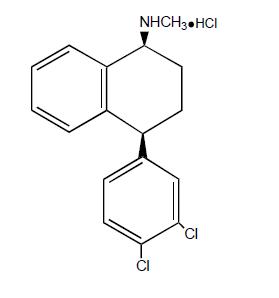
Metabolism
Sertraline undergoes extensive first pass metabolism. The principal initial pathway of metabolism for sertraline is N-demethylation. N-desmethylsertraline has a plasma terminal elimination half-life of 62 to 104 hours. Both in vitro biochemical and in vivo pharmacological testing have shown N-desmethylsertraline to be substantially less active than sertraline. Both sertraline and N-desmethylsertraline undergo oxidative deamination and subsequent reduction, hydroxylation, and glucuronide conjugation. In a study of radiolabeled sertraline involving two healthy male subjects, sertraline accounted for less than 5% of the plasma radioactivity. About 40 to 45% of the administered radioactivity was recovered in urine in 9 days. Unchanged sertraline was not detectable in the urine. For the same period, about 40 to 45% of the administered radioactivity was accounted for in feces, including 12 to 14% unchanged sertraline.
Desmethylsertraline exhibits time-related, dose dependent increases in AUC (0-24 hour), Cmax and Cmin, with about a 5 to 9 fold increase in these pharmacokinetic parameters between day 1 and day 14.
Protein Binding
In vitro protein binding studies performed with radiolabeled 3H-sertraline showed that sertraline is highly bound to serum proteins (98%) in the range of 20 to 500 ng/mL. However, at up to 300 and 200 ng/mL concentrations, respectively, sertraline and N-desmethylsertraline did not alter the plasma protein binding of two other highly protein bound drugs, viz., warfarin and propranolol (see PRECAUTIONS).
Pediatric Pharmacokinetics
Sertraline pharmacokinetics were evaluated in a group of 61 pediatric patients (29 aged 6 to 12 years, 32 aged 13 to 17 years) with a DSM-III-R diagnosis of major depressive disorder or obsessive-compulsive disorder. Patients included both males (N=28) and females (N=33). During 42 days of chronic sertraline dosing, sertraline was titrated up to 200 mg/day and maintained at that dose for a minimum of 11 days. On the final day of sertraline 200 mg/day, the 6 to 12 year old group exhibited a mean sertraline AUC (0 to 24 hr) of 3107 ng-hr/mL, mean Cmax of 165 ng/mL, and mean half-life of 26.2 hr. The 13 to 17 year old group exhibited a mean sertraline AUC (0 to 24 hr) of 2296 ng-hr/mL, mean Cmax of 123 ng/mL, and mean half-life of 27.8 hr. Higher plasma levels in the 6 to 12 year old group were largely attributable to patients with lower body weights. No gender associated differences were observed. By comparison, a group of 22 separately studied adults between 18 and 45 years of age (11 male, 11 female) received 30 days of 200 mg/day sertraline and exhibited a mean sertraline AUC (0 to 24 hr) of 2570 ng-hr/mL, mean Cmax of 142 ng/mL, and mean half-life of 27.2 hr. Relative to the adults, both the 6 to 12 year olds and the 13 to 17 year olds showed about 22% lower AUC (0 to 24 hr) and Cmax values when plasma concentration was adjusted for weight. These data suggest that pediatric patients metabolize sertraline with slightly greater efficiency than adults. Nevertheless, lower doses may be advisable for pediatric patients given their lower body weights, especially in very young patients, in order to avoid excessive plasma levels (see DOSAGE AND ADMINISTRATION).
Age
Sertraline plasma clearance in a group of 16 (8 male, 8 female) elderly patients treated for 14 days at a dose of 100 mg/day was approximately 40% lower than in a similarly studied group of younger (25 to 32 y.o.) individuals. Steady-state, therefore, should be achieved after 2 to 3 weeks in older patients. The same study showed a decreased clearance of desmethylsertraline in older males, but not in older females.
Liver Disease
As might be predicted from its primary site of metabolism, liver impairment can affect the elimination of sertraline. In patients with chronic mild liver impairment (N=10, 8 patients with Child-Pugh scores of 5 to 6 and 2 patients with Child-Pugh scores of 7 to 8) who received 50 mg sertraline per day maintained for 21 days, sertraline clearance was reduced, resulting in approximately 3-fold greater exposure compared to age-matched volunteers with no hepatic impairment (N=10). The exposure to desmethylsertraline was approximately 2-fold greater compared to age-matched volunteers with no hepatic impairment. There were no significant differences in plasma protein binding observed between the two groups. The effects of sertraline in patients with moderate and severe hepatic impairment have not been studied. The results suggest that the use of sertraline in patients with liver disease must be approached with caution. If sertraline is administered to patients with liver impairment, a lower or less frequent dose should be used (see PRECAUTIONS and DOSAGE AND ADMINISTRATION).
Renal Disease
Sertraline is extensively metabolized and excretion of unchanged drug in urine is a minor route of elimination. In volunteers with mild to moderate (CLcr=30 to 60 mL/min), moderate to severe (CLcr=10 to 29 mL/min) or severe (receiving hemodialysis) renal impairment (N=10 each group), the pharmacokinetics and protein binding of 200 mg sertraline per day maintained for 21 days were not altered compared to age-matched volunteers (N=12) with no renal impairment. Thus sertraline multiple dose pharmacokinetics appear to be unaffected by renal impairment (see PRECAUTIONS).
Panic Disorder
The effectiveness of sertraline in the treatment of panic disorder was demonstrated in three double-blind, placebo-controlled studies (Studies 1 to 3) of adult outpatients who had a primary diagnosis of panic disorder (DSM-III-R), with or without agoraphobia.
Studies 1 and 2 were 10-week flexible dose studies. Sertraline was initiated at 25 mg/day for the first week, and then patients were dosed in a range of 50 to 200 mg/day on the basis of clinical response and toleration. The mean sertraline doses for completers to 10 weeks were 131 mg/day and 144 mg/day, respectively, for Studies 1 and 2. In these studies, sertraline was shown to be significantly more effective than placebo on change from baseline in panic attack frequency and on the Clinical Global Impression Severity of Illness and Global Improvement scores. The difference between sertraline and placebo in reduction from baseline in the number of full panic attacks was approximately 2 panic attacks per week in both studies.
Study 3 was a 12-week fixed-dose study, including sertraline doses of 50, 100, and 200 mg/day. Patients receiving sertraline experienced a significantly greater reduction in panic attack frequency than patients receiving placebo. Study 3 was not readily interpretable regarding a dose response relationship for effectiveness.
Subgroup analyses did not indicate that there were any differences in treatment outcomes as a function of age, race, or gender.
In a longer-term study, patients meeting DSM-III-R criteria for Panic Disorder who had responded during a 52-week open trial on sertraline 50-200 mg/day (n=183) were randomized to continuation of sertraline or to substitution of placebo for up to 28 weeks of observation for discontinuation due to relapse or insufficient clinical response. Response during the open phase was defined as a CGI-I score of 1(very much improved) or 2 (much improved). Relapse during the double-blind phase was defined as the following conditions being met on three consecutive visits: (1) CGI-I ≥ 3; (2) meets DSM-III-R criteria for Panic Disorder; (3) number of panic attacks greater than at baseline. Insufficient clinical response indicated a worsening of the patient's condition that resulted in study discontinuation, as assessed by the investigator. Patients receiving continued sertraline treatment experienced a significantly lower rate of discontinuation due to relapse or insufficient clinical response over the subsequent 28 weeks compared to those receiving placebo. This pattern was demonstrated in male and female subjects.
Posttraumatic Stress Disorder (PTSD)
The effectiveness of sertraline in the treatment of PTSD was established in two multicenter placebo-controlled studies (Studies 1 to 2) of adult outpatients who met DSM-III-R criteria for PTSD. The mean duration of PTSD for these patients was 12 years (Studies 1 and 2 combined) and 44% of patients (169 of the 385 patients treated) had secondary depressive disorder.
Studies 1 and 2 were 12-week flexible dose studies. sertraline was initiated at 25 mg/day for the first week, and patients were then dosed in the range of 50 to 200 mg/day on the basis of clinical response and toleration. The mean sertraline dose for completers was 146 mg/day and 151 mg/day, respectively for Studies 1 and 2. Study outcome was assessed by the Clinician-Administered PTSD Scale Part 2 (CAPS) which is a multi-item instrument that measures the three PTSD diagnostic symptom clusters of reexperiencing/intrusion, avoidance/numbing, and hyperarousal as well as the patient-rated Impact of Event Scale (IES) which measures intrusion and avoidance symptoms. Sertraline was shown to be significantly more effective than placebo on change from baseline to endpoint on the CAPS, IES and on the Clinical Global Impressions (CGI) Severity of Illness and Global Improvement scores. In two additional placebo-controlled PTSD trials, the difference in response to treatment between patients receiving sertraline and patients receiving placebo was not statistically significant. One of these additional studies was conducted in patients similar to those recruited for Studies 1 and 2, while the second additional study was conducted in predominantly male veterans.
As PTSD is a more common disorder in women than men, the majority (76%) of patients in these trials were women (152 and 139 women on sertraline and placebo versus 39 and 55 men on sertraline and placebo; Studies 1 and 2 combined). Post hoc exploratory analyses revealed a significant difference between sertraline and placebo on the CAPS, IES and CGI in women, regardless of baseline diagnosis of comorbid major depressive disorder, but essentially no effect in the relatively smaller number of men in these studies. The clinical significance of this apparent gender interaction is unknown at this time. There was insufficient information to determine the effect of race or age on outcome.
In a longer-term study, patients meeting DSM-III-R criteria for PTSD who had responded during a 24-week open trial on sertraline 50-200 mg/day (n=96) were randomized to continuation of sertraline or to substitution of placebo for up to 28 weeks of observation for relapse. Response during the open phase was defined as a CGI-I of 1 (very much improved) or 2 (much improved), and a decrease in the CAPS-2 score of > 30% compared to baseline. Relapse during the double- blind phase was defined as the following conditions being met on two consecutive visits: (1) CGI-I ≥ 3; (2) CAPS-2 score increased by ≥ 30% and by ≥ 15 points relative to baseline; and (3) worsening of the patient's condition in the investigator's judgment. Patients receiving continued sertraline treatment experienced significantly lower relapse rates over the subsequent 28 weeks compared to those receiving placebo. This pattern was demonstrated in male and female subjects.
Premenstrual Dysphoric Disorder (PMDD)
The effectiveness of sertraline for the treatment of PMDD was established in two double-blind, parallel group, placebo-controlled flexible dose trials (Studies 1 and 2) conducted over 3 menstrual cycles. Patients in Study 1 met DSM-III-R criteria for Late Luteal Phase Dysphoric Disorder (LLPDD), the clinical entity now referred to as Premenstrual Dysphoric Disorder (PMDD) in DSM-IV. Patients in Study 2 met DSM-IV criteria for PMDD. Study 1 utilized daily dosing throughout the study, while Study 2 utilized luteal phase dosing for the 2 weeks prior to the onset of menses. The mean duration of PMDD symptoms for these patients was approximately 10.5 years in both studies. Patients on oral contraceptives were excluded from these trials; therefore, the efficacy of sertraline in combination with oral contraceptives for the treatment of PMDD is unknown.
Efficacy was assessed with the Daily Record of Severity of Problems (DRSP), a patient-rated instrument that mirrors the diagnostic criteria for PMDD as identified in the DSM-IV, and includes assessments for mood, physical symptoms, and other symptoms. Other efficacy assessments included the Hamilton Depression Rating Scale (HAMD-17), and the Clinical Global Impression Severity of Illness (CGI-S) and Improvement (CGI-I) scores.
In Study 1, involving n=251 randomized patients; sertraline treatment was initiated at 50 mg/day and administered daily throughout the menstrual cycle. In subsequent cycles, patients were dosed in the range of 50 to 150 mg/day on the basis of clinical response and toleration. The mean dose for completers was 102 mg/day. Sertraline administered daily throughout the menstrual cycle was significantly more effective than placebo on change from baseline to endpoint on the DRSP total score, the HAMD-17 total score, and the CGI-S score, as well as the CGI-I score at endpoint.
In Study 2, involving n=281 randomized patients, sertraline treatment was initiated at 50 mg/day in the late luteal phase (last 2 weeks) of each menstrual cycle and then discontinued at the onset of menses. In subsequent cycles, patients were dosed in the range of 50 to 100 mg/day in the luteal phase of each cycle, on the basis of clinical response and toleration. Patients who were titrated to 100 mg/day received 50 mg/day for the first 3 days of the cycle, then 100 mg/day for the remainder of the cycle. The mean sertraline dose for completers was 74 mg/day. Sertraline administered in the late luteal phase of the menstrual cycle was significantly more effective than placebo on change from baseline to endpoint on the DRSP total score and the CGI-S score, as well as the CGI-I score at endpoint.
There was insufficient information to determine the effect of race or age on outcome in these studies.
Social Anxiety Disorder
The effectiveness of sertraline in the treatment of social anxiety disorder (also known as social phobia) was established in two multicenter placebo-controlled studies (Study 1 and 2) of adult outpatients who met DSM-IV criteria for social anxiety disorder.
Study 1 was a 12-week, multicenter, flexible dose study comparing sertraline (50 to 200 mg/day) to placebo, in which sertraline was initiated at 25 mg/day for the first week. Study outcome was assessed by (a) the Liebowitz Social Anxiety Scale (LSAS), a 24-item clinician administered instrument that measures fear, anxiety and avoidance of social and performance situations, and by (b) the proportion of responders as defined by the Clinical Global Impression of Improvement (CGI-I) criterion of CGI-I ≤ 2 (very much or much improved). Sertraline was statistically significantly more effective than placebo as measured by the LSAS and the percentage of responders.
Study 2 was a 20-week, multicenter, flexible dose study that compared sertraline (50 to 200 mg/day) to placebo. Study outcome was assessed by the (a) Duke Brief Social Phobia Scale (BSPS), a multi-item clinician-rated instrument that measures fear, avoidance and physiologic response to social or performance situations, (b) the Marks Fear Questionnaire Social Phobia Subscale (FQ-SPS), a 5-item patient-rated instrument that measures change in the severity of phobic avoidance and distress, and (c) the CGI-I responder criterion of ≤ 2. sertraline was shown to be statistically significantly more effective than placebo as measured by the BSPS total score and fear, avoidance and physiologic factor scores, as well as the FQ-SPS total score, and to have significantly more responders than placebo as defined by the CGI-I.
Subgroup analyses did not suggest differences in treatment outcome on the basis of gender. There was insufficient information to determine the effect of race or age on outcome.
In a longer-term study, patients meeting DSM-IV criteria for social anxiety disorder who had responded while assigned to sertraline (CGI-I of 1 or 2) during a 20-week placebo-controlled trial on sertraline 50 to 200 mg/day were randomized to continuation of sertraline or to substitution of placebo for up to 24 weeks of observation for relapse. Relapse was defined as ≥ 2 point increase in the Clinical Global Impression - Severity of Illness (CGI-S) score compared to baseline or study discontinuation due to lack of efficacy. Patients receiving sertraline continuation treatment experienced a statistically significantly lower relapse rate over this 24-week study than patients randomized to placebo substitution.
All Dosage Forms of Sertraline
The use of MAOIs intended to treat psychiatric disorders with sertraline or within 14 days of stopping treatment with sertraline is contraindicated because of an increased risk of serotonin syndrome. The use of sertraline within 14 days of stopping an MAOI intended to treat psychiatric disorders is also contraindicated (see WARNINGS and DOSAGE AND ADMINISTRATION).
Starting sertraline in a patient who is being treated with MAOIs such as linezolid or intravenous methylene blue is also contraindicated because of an increased risk of serotonin syndrome (see WARNINGS and DOSAGE AND ADMINISTRATION).
Concomitant use in patients taking pimozide is contraindicated (see PRECAUTIONS).
Sertraline tablets are contraindicated in patients with a hypersensitivity to sertraline or any of the inactive ingredients in sertraline tablets.
Monoamine Oxidase Inhibitors
See CONTRAINDICATIONS, WARNINGS, and DOSAGE AND ADMINISTRATION.
Drugs Metabolized by P450 3A4
In three separate in vivo interaction studies, sertraline was co-administered with cytochrome P450 3A4 substrates, terfenadine, carbamazepine, or cisapride under steady-state conditions. The results of these studies indicated that sertraline did not increase plasma concentrations of terfenadine, carbamazepine, or cisapride. These data indicate that sertraline's extent of inhibition of P450 3A4 activity is not likely to be of clinical significance. Results of the interaction study with cisapride indicate that sertraline 200 mg (q.d.) induces the metabolism of cisapride (cisapride AUC and Cmax were reduced by about 35%).
Drugs Metabolized by P450 2D6
Many drugs effective in the treatment of major depressive disorder, e.g., the SSRIs, including sertraline, and most tricyclic antidepressant drugs effective in the treatment of major depressive disorder inhibit the biochemical activity of the drug metabolizing isozyme cytochrome P450 2D6 (debrisoquin hydroxylase), and, thus, may increase the plasma concentrations of co-administered drugs that are metabolized by P450 2D6. The drugs for which this potential interaction is of greatest concern are those metabolized primarily by 2D6 and which have a narrow therapeutic index, e.g., the tricyclic antidepressant drugs effective in the treatment of major depressive disorder and the Type 1C antiarrhythmics propafenone and flecainide. The extent to which this interaction is an important clinical problem depends on the extent of the inhibition of P450 2D6 by the antidepressant and the therapeutic index of the co-administered drug. There is variability among the drugs effective in the treatment of major depressive disorder in the extent of clinically important 2D6 inhibition, and in fact sertraline at lower doses has a less prominent inhibitory effect on 2D6 than some others in the class. Nevertheless, even sertraline has the potential for clinically important 2D6 inhibition. Consequently, concomitant use of a drug metabolized by P450 2D6 with sertraline may require lower doses than usually prescribed for the other drug. Furthermore, whenever sertraline is withdrawn from co-therapy, an increased dose of the co-administered drug may be required (see Tricyclic Antidepressant Drugs Effective in the Treatment of Major Depressive Disorder under PRECAUTIONS).
Serotonergic Drugs
See CONTRAINDICATIONS, WARNINGS, and DOSAGE AND ADMINISTRATION.
Triptans
There have been rare post marketing reports of serotonin syndrome with use of an SNRI or an SSRI and a triptan. If concomitant treatment of SNRIs and SSRIs, including sertraline, with a triptan is clinically warranted, careful observation of the patient is advised, particularly during treatment initiation and dose increases (see WARNINGS - Serotonin Syndrome).
Sumatriptan
There have been rare post marketing reports describing patients with weakness, hyperreflexia, and incoordination following the use of a selective serotonin reuptake inhibitor (SSRI) and sumatriptan. If concomitant treatment with sumatriptan and an SSRI (e.g., citalopram, fluoxetine, fluvoxamine, paroxetine, sertraline) is clinically warranted, appropriate observation of the patient is advised.
Tricyclic Antidepressant Drugs Effective in the Treatment of Major Depressive Disorder (TCAs)
The extent to which SSRI-TCA interactions may pose clinical problems will depend on the degree of inhibition and the pharmacokinetics of the SSRI involved. Nevertheless, caution is indicated in the co-administration of TCAs with sertraline, because sertraline may inhibit TCA metabolism. Plasma TCA concentrations may need to be monitored, and the dose of TCA may need to be reduced, if a TCA is co-administered with sertraline (see Drugs Metabolized by P450 2D6 under PRECAUTIONS).
Hypoglycemic Drugs
In a placebo-controlled trial in normal volunteers, administration of sertraline for 22 days (including 200 mg/day for the final 13 days) caused a statistically significant 16% decrease from baseline in the clearance of tolbutamide following an intravenous 1000 mg dose. sertraline administration did not noticeably change either the plasma protein binding or the apparent volume of distribution of tolbutamide, suggesting that the decreased clearance was due to a change in the metabolism of the drug. The clinical significance of this decrease in tolbutamide clearance is unknown.
Atenolol
Sertraline (100 mg) when administered to 10 healthy male subjects had no effect on the beta-adrenergic blocking ability of atenolol.
Digoxin
In a placebo-controlled trial in normal volunteers, administration of sertraline for 17 days (including 200 mg/day for the last 10 days) did not change serum digoxin levels or digoxin renal clearance.
Microsomal Enzyme Induction
Preclinical studies have shown sertraline to induce hepatic microsomal enzymes. In clinical studies, sertraline was shown to induce hepatic enzymes minimally as determined by a small (5%) but statistically significant decrease in antipyrine half-life following administration of 200 mg/day for 21 days. This small change in antipyrine half-life reflects a clinically insignificant change in hepatic metabolism.
Drugs That Interfere With Hemostasis (Non-selective NSAIDs, Aspirin, Warfarin, etc.)
Serotonin release by platelets plays an important role in hemostasis. Epidemiological studies of the case-control and cohort design that have demonstrated an association between use of psychotropic drugs that interfere with serotonin reuptake and the occurrence of upper gastrointestinal bleeding have also shown that concurrent use of an NSAID or aspirin may potentiate this risk of bleeding. These studies have also shown that concurrent use of an NSAID or aspirin may potentiate this risk of bleeding. Altered anticoagulant effects, including increased bleeding, have been reported when SSRIs or SNRIs are coadministered with warfarin. Patients receiving warfarin therapy should be carefully monitored when sertraline is initiated or discontinued.
Electroconvulsive Therapy
There are no clinical studies establishing the risks or benefits of the combined use of electroconvulsive therapy (ECT) and sertraline.
Alcohol
Although sertraline did not potentiate the cognitive and psychomotor effects of alcohol in experiments with normal subjects, the concomitant use of sertraline and alcohol is not recommended.
During its premarketing assessment, multiple doses of sertraline were administered to over 4000 adult subjects as of February 18, 2000. The conditions and duration of exposure to sertraline varied greatly, and included (in overlapping categories) clinical pharmacology studies, open and double-blind studies, uncontrolled and controlled studies, inpatient and outpatient studies, fixed-dose and titration studies, and studies for multiple indications, including major depressive disorder, OCD, panic disorder, PTSD, PMDD and social anxiety disorder.
Untoward events associated with this exposure were recorded by clinical investigators using terminology of their own choosing. Consequently, it is not possible to provide a meaningful estimate of the proportion of individuals experiencing adverse events without first grouping similar types of untoward events into a smaller number of standardized event categories.
In the tabulations that follow, a World Health Organization dictionary of terminology has been used to classify reported adverse events. The frequencies presented, therefore, represent the proportion of the over 4000 adult individuals exposed to multiple doses of sertraline who experienced a treatment-emergent adverse event of the type cited on at least one occasion while receiving sertraline. An event was considered treatment-emergent if it occurred for the first time or worsened while receiving therapy following baseline evaluation. It is important to emphasize that events reported during therapy were not necessarily caused by it.
The prescriber should be aware that the figures in the tables and tabulations cannot be used to predict the incidence of side effects in the course of usual medical practice where patient characteristics and other factors differ from those that prevailed in the clinical trials. Similarly, the cited frequencies cannot be compared with figures obtained from other clinical investigations involving different treatments, uses, and investigators. The cited figures, however, do provide the prescribing physician with some basis for estimating the relative contribution of drug and non-drug factors to the side effect incidence rate in the population studied.
Autonomic Nervous System Disorders
Frequent: impotence.
Infrequent: flushing, increased saliva, cold clammy skin, mydriasis.
Rare: pallor, glaucoma, priapism, vasodilation.
Body as a Whole-General Disorders
Rare: allergic reaction, allergy.
Cardiovascular
Frequent:
palpitations, chest pain.
Infrequent: hypertension, tachycardia, postural dizziness, postural hypotension, periorbital edema, peripheral edema, hypotension, peripheral ischemia, syncope, edema, dependent edema.
Rare: precordial chest pain, substernal chest pain, aggravated hypertension, myocardial infarction, cerebrovascular disorder.
Central and Peripheral Nervous System Disorders
Frequent: hypertonia, hypoesthesia.
Infrequent: twitching, confusion, hyperkinesia, vertigo, ataxia, migraine, abnormal coordination, hyperesthesia, leg cramps, abnormal gait, nystagmus, hypokinesia.
Rare: dysphonia, coma, dyskinesia, hypotonia, ptosis, choreoathetosis, hyporeflexia.
Disorders of Skin and Appendages
Infrequent: pruritus, acne, urticaria, alopecia, dry skin, erythematous rash, photosensitivity reaction, maculopapular rash.
Rare: follicular rash, eczema, dermatitis, contact dermatitis, bullous eruption, hypertrichosis, skin discoloration, pustular rash.
Endocrine Disorders
Rare: exophthalmos, gynecomastia.
Gastrointestinal Disorders
Frequent: appetite increased.
Infrequent: dysphagia, tooth caries aggravated, eructation, esophagitis, gastroenteritis.
Rare: melena, glossitis, gum hyperplasia, hiccup, stomatitis, tenesmus, colitis, diverticulitis, fecal incontinence, gastritis, rectum hemorrhage, hemorrhagic peptic ulcer, proctitis, ulcerative stomatitis, tongue edema, tongue ulceration.
General
Frequent: back pain, asthenia, malaise, weight increase.
Infrequent: fever, rigors, generalized edema.
Rare: face edema, aphthous stomatitis.
Hearing and Vestibular Disorders
Rare: hyperacusis, labyrinthine disorder.
Hematopoietic and Lymphatic
Rare: anemia, anterior chamber eye hemorrhage.
Liver and Biliary System Disorders
Rare: abnormal hepatic function.
Metabolic and Nutritional Disorders
Infrequent: thirst.
Rare: hypoglycemia, hypoglycemia reaction.
Musculoskeletal System Disorders
Frequent: myalgia.
Infrequent: arthralgia, dystonia, arthrosis, muscle cramps, muscle weakness.
Psychiatric Disorders
Frequent: yawning, other male sexual dysfunction, other female sexual dysfunction.
Infrequent: depression, amnesia, paroniria, teeth-grinding, emotional lability, apathy, abnormal dreams, euphoria, paranoid reaction, hallucination, aggressive reaction, aggravated depression, delusions.
Rare: withdrawal syndrome, suicide ideation, libido increased, somnambulism, illusion.
Reproductive
Infrequent: menstrual disorder, dysmenorrhea, intermenstrual bleeding, vaginal hemorrhage, amenorrhea, leukorrhea.
Rare: female breast pain, menorrhagia, balanoposthitis, breast enlargement, atrophic vaginitis, acute female mastitis.
Respiratory System Disorders
Frequent: rhinitis.
Infrequent: coughing, dyspnea, upper respiratory tract infection, epistaxis, bronchospasm, sinusitis.
Rare: hyperventilation, bradypnea, stridor, apnea, bronchitis, hemoptysis, hypoventilation, laryngismus, laryngitis.
Special Senses
Frequent: tinnitus.
Infrequent: conjunctivitis, earache, eye pain, abnormal accommodation.
Rare: xerophthalmia, photophobia, diplopia, abnormal lacrimation, scotoma, visual field defect.
Urinary System Disorders
Infrequent: micturition frequency, polyuria, urinary retention, dysuria, nocturia, urinary incontinence.
Rare: cystitis, oliguria, pyelonephritis, hematuria, renal pain, strangury.
Treatment of Pregnant Women During the Third Trimester
Neonates exposed to sertraline and other SSRIs or SNRIs, late in the third trimester have developed complications requiring prolonged hospitalization, respiratory support, and tube feeding (see PRECAUTIONS). When treating pregnant women with sertraline during the third trimester, the physician should carefully consider the potential risks and benefits of treatment.
Discontinuation of Treatment with Sertraline
Symptoms associated with discontinuation of sertraline and other SSRIs and SNRIs, have been reported (see PRECAUTIONS). Patients should be monitored for these symptoms when discontinuing treatment. A gradual reduction in the dose rather than abrupt cessation is recommended whenever possible. If intolerable symptoms occur following a decrease in the dose or upon discontinuation of treatment, then resuming the previously prescribed dose may be considered. Subsequently, the physician may continue decreasing the dose but at a more gradual rate.
Manufactured for:
Lupin Pharmaceuticals, Inc.
Baltimore, Maryland 21202
United States
Manufactured by:
Lupin Limited
Goa 403 722
INDIA
Revised: March 15, 2014 ID#: 237062
Repackaged by:
Proficient Rx LP
Thousand Oaks, CA 91320
2. Serotonin Syndrome
This condition can be life-threatening and may include:
- agitation, hallucinations, coma or other changes in mental status
- coordination problems or muscle twitching (overactive reflexes)
- racing heartbeat, high or low blood pressure
- sweating or fever
- nausea, vomiting, or diarrhea
- muscle rigidity
3. Severe allergic reactions:
- trouble breathing
- swelling of the face, tongue, eyes or mouth
- rash, itchy welts (hives) or blisters, alone or with fever or joint pain
4. Abnormal bleeding: Sertraline and other antidepressant medicines may increase your risk of bleeding or bruising, especially if you take the blood thinner warfarin (Coumadin®, Jantoven®), a non-steroidal anti-inflammatory drug (NSAIDs, like ibuprofen or naproxen), or aspirin.
5. Seizures or convulsions
6. Manic episodes:
- greatly increased energy
- severe trouble sleeping
- racing thoughts
- reckless behavior
- unusually grand ideas
- excessive happiness or irritability
- talking more or faster than usual
7. Changes in appetite or weight. Children and adolescents should have height and weight monitored during treatment.
8. Low salt (sodium) levels in the blood. Elderly people may be at greater risk for this. Symptoms may include:
- headache
- weakness or feeling unsteady
- confusion, problems concentrating or thinking or memory problems
Do not stop sertraline tablets without first talking to your healthcare provider. Stopping sertraline tablets too quickly may cause serious symptoms including:
- anxiety, irritability, high or low mood, feeling restless or changes in sleep habits
- headache, sweating, nausea, dizziness
- electric shock-like sensations, shaking, confusion
What are sertraline tablets?
Sertraline tablets are prescription medicines used to treat depression. It is important to talk with your healthcare provider about the risks of treating depression and also the risks of not treating it. You should discuss all treatment choices with your healthcare provider. Sertraline tablets are also used to treat:
- Major Depressive Disorder (MDD)
- Obsessive Compulsive Disorder (OCD)
- Panic Disorder
- Posttraumatic Stress Disorder (PTSD)
- Social Anxiety Disorder
- Premenstrual Dysphoric Disorder (PMDD)
Talk to your healthcare provider if you do not think that your condition is getting better with sertraline tablets treatment.
Who should not take sertraline tablets?
Do not take sertraline tablets if you:
- are allergic to sertraline or any of the ingredients in sertraline tablets. See the end of this Medication Guide for a complete list of ingredients in sertraline tablets.
- take the antipsychotic medicine pimozide (Orap®) because this can cause serious heart problems.
- take a monoamine oxidase inhibitor (MAOI). Ask your healthcare provider or pharmacist if you are not sure if you take an MAOI, including the antibiotic linezolid.
- Do not take an MAOI within 2 weeks of stopping sertraline tablets unless directed to do so by your physician.
- Do not start sertraline tablets if you stopped taking an MAOI in the last 2 weeks unless directed to do so by your physician.
People who take sertraline tablets close in time to an MAOI may have serious or even life-threatening side effects. Get medical help right away if you have any of these symptoms:
- high fever
- uncontrolled muscle spasms
- stiff muscles
- rapid changes in heart rate or blood pressure
- confusion
- loss of consciousness (pass out)
What should I tell my healthcare provider before taking sertraline tablets? Ask if you are not sure.
Before starting sertraline tablets, tell your healthcare provider if you:
• Are taking certain drugs such as:
▪ Medicines used to treat migraine headaches such as:
- triptans
▪ Medicines used to treat mood, anxiety, psychotic or thought disorders, such as:
- tricyclic antidepressants
- lithium
- diazepam
- SSRIs
- SNRIs
- antipsychotic drugs
- valproate
▪ Medicines used to treat seizures such as:
- phenytoin
▪ Medicines used to treat pain such as:
- tramadol
▪ Medicines used to thin your blood such as:
- warfarin
▪ Medicines used to control your heartbeat such as :
- propafenone
- flecainide
- digitoxin
▪ Medicines used to treat type II diabetes such as:
tolbutamide
▪ Cimetidine used to treat heartburn
▪ Over-the-counter medicines or supplements such as:
- Aspirin or other NSAIDs
- tryptophan
- St. John's Wort
• have liver problems
• have kidney problems
• have heart problems
• have or had seizures or convulsions
• have bipolar disorder or mania
• have low sodium levels in your blood
• have a history of a stroke
• have high blood pressure
• have or had bleeding problems
• are pregnant or plan to become pregnant. It is not known if sertraline will harm your unborn baby. Talk to your healthcare provider about the benefits and risks of treating depression during pregnancy.
• are breast-feeding or plan to breast-feed. Some sertraline may pass into your breast milk. Talk to your healthcare provider about the best way to feed your baby while taking sertraline tablets.
Tell your healthcare provider about all the medicines that you take, including prescription and non-prescription medicines, vitamins, and herbal supplements. Sertraline tablets and some medicines may interact with each other, may not work as well, or may cause serious side effects.
Your healthcare provider or pharmacist can tell you if it is safe to take sertraline tablets with your other medicines. Do not start or stop any medicine while taking sertraline tablets without talking to your healthcare provider first.
If you take sertraline tablets, you should not take any other medicines that contain sertraline (sertraline HCl, sertraline hydrochloride, etc.).
|
How should I take sertraline tablets?
- Take sertraline tablets exactly as prescribed. Your healthcare provider may need to change the dose of sertraline tablets until it is the right dose for you.
- Sertraline tablets may be taken with or without food.
- If you miss a dose of sertraline tablets, take the missed dose as soon as you remember. If it is almost time for the next dose, skip the missed dose and take your next dose at the regular time. Do not take two doses of sertraline tablets at the same time.
- If you take too much sertraline tablets, call your healthcare provider or poison control center right away, or get emergency treatment.
What should I avoid while taking sertraline tablets?
Sertraline tablets can cause sleepiness or may affect your ability to make decisions, think clearly, or react quickly. You should not drive, operate heavy machinery, or do other dangerous activities until you know how sertraline affects you. Do not drink alcohol while using sertraline tablets.
What are the possible side effects of sertraline tablets?
Sertraline tablets may cause serious side effects, including:
- See "What is the most important information I should know about sertraline tablets? "
- Feeling anxious or trouble sleeping
Common possible side effects in people who take sertraline tablets include:
- nausea, loss of appetite, diarrhea or indigestion
- change in sleep habits including increased sleepiness or insomnia
- increased sweating
- sexual problems including decreased libido and ejaculation failure
- tremor or shaking
- feeling tired or fatigued
- agitation
Other side effects in children and adolescents include:
- abnormal increase in muscle movement or agitation
- nose bleed
- urinating more often
- urinary incontinence
- aggressive reaction
- heavy menstrual periods
- possible slowed growth rate and weight change. Your child's height and weight should be monitored during treatment with sertraline tablets.
Tell your healthcare provider if you have any side effect that bothers you or that does not go away. These are not all the possible side effects of sertraline tablets. For more information, ask your healthcare provider or pharmacist.
CALL YOUR DOCTOR FOR MEDICAL ADVICE ABOUT SIDE EFFECTS. YOU MAY REPORT SIDE EFFECTS TO THE FDA AT 1-800-FDA-1088.
How should I store sertraline tablets?
- Store sertraline tablets at room temperature, between 20° to 25°C (68° to 77°F).
- Keep sertraline tablets bottle closed tightly.
Keep sertraline tablets and all medicines out of the reach of children.
General information about sertraline tablets
Medicines are sometimes prescribed for purposes other than those listed in a Medication Guide. Do not use sertraline tablets for a condition for which they were not prescribed. Do not give sertraline tablets to other people, even if they have the same condition. It may harm them.
This Medication Guide summarizes the most important information about sertraline tablets. If you would like more information, talk with your healthcare provider. You may ask your healthcare provider or pharmacist for information about sertraline tablets that is written for healthcare professionals.
For more information about sertraline tablets call Lupin Pharmaceuticals, Inc. at 1-800-399-2561 or visit at www.lupinpharmaceuticals.com.
What are the ingredients in sertraline tablets?
Active ingredient: sertraline hydrochloride
Inactive ingredients: D & C Yellow #10 (in 25 mg tablet), dibasic calcium phosphate anhydrous, FD & C Blue #1 (in 25 mg tablet), FD & C Blue #2 (in 50 mg tablet), FD & C Red #40 (in 25 mg tablet), hydroxypropyl cellulose, hypromellose, iron oxide yellow (in 100 mg tablet), magnesium stearate, microcrystalline cellulose, polyethylene glycol, polysorbate 80, sodium starch glycolate and titanium dioxide
The brands listed are trademarks of their respective owners and are not trademarks of Lupin Pharmaceuticals, Inc. The makers of these brands are not affiliated with and do not endorse Lupin Pharmaceuticals, Inc. or its products.
This Medication Guide has been approved by the U.S. Food and Drug Administration.
Manufactured for:
Lupin Pharmaceuticals, Inc.
Baltimore, Maryland 21202
United States
Manufactured by:
Lupin Limited
Goa 403 722
INDIA
Revised: March 15, 2014 ID#: 237063
Repackaged by:
Proficient Rx LP
Thousand Oaks, CA 91320