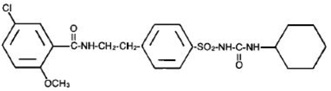
The hypoglycemic action of sulfonylureas may be potentiated by certain drugs including nonsteroidal anti-inflammatory agents and other drugs that are highly protein bound, salicylates, sulfonamides, chloramphenicol, probenecid, coumarins, monoamine oxidase inhibitors, and beta adrenergic blocking agents. When such drugs are administered to a patient receiving glyburide tablets, the patient should be observed closely for hypoglycemia. When such drugs are withdrawn from a patient receiving glyburide tablets, the patient should be observed closely for loss of control.
An increased risk of liver enzyme elevations was observed in patients receiving glyburide concomitantly with bosentan. Therefore concomitant administration of glyburide tablets and bosentan is contraindicated.
Certain drugs tend to produce hyperglycemia and may lead to loss of control. These drugs include the thiazides and other diuretics, corticosteroids, phenothiazines, thyroid products, estrogens, oral contraceptives, phenytoin, nicotinic acid, sympathomimetics, calcium channel blocking drugs, and isoniazid. When such drugs are administered to a patient receiving glyburide tablets, the patient should be closely observed for loss of control. When such drugs are withdrawn from a patient receiving glyburide tablets, the patient should be observed closely for hypoglycemia.
A possible interaction between glyburide and ciprofloxacin, a fluoroquinolone antibiotic, has been reported, resulting in a potentiation of the hypoglycemic action of glyburide. The mechanism for this interaction is not known.
A potential interaction between oral miconazole and oral hypoglycemic agents leading to severe hypoglycemia has been reported. Whether this interaction also occurs with the intravenous, topical or vaginal preparations of miconazole is not known.
Metformin: In a single-dose interaction study in NIDDM subjects, decreases in glyburide AUC and Cmax were observed, but were highly variable. The single-dose nature of this study and the lack of correlation between glyburide blood levels and pharmacodynamic effects, makes the clinical significance of this interaction uncertain. Coadministration of glyburide and metformin did not result in any changes in either metformin pharmacokinetics or pharmacodynamics.
Colesevelam: Concomitant administration of colesevelam and glyburide resulted in reductions in glyburide AUC and Cmax of 32% and 47%, respectively. The reductions in glyburide AUC and Cmax were 20% and 15%, respectively when administered 1 hour before, and not significantly changed (-7% and 4%, respectively) when administered 4 hours before colesevelam.
Topiramate: A drug-drug interaction study conducted in patients with type 2 diabetes evaluated the steady-state pharmacokinetics of glyburide (5 mg/day) alone and concomitantly with topiramate (150 mg/day). There was a 22% decrease in Cmax and a 25% reduction in AUC24 for glyburide during topiramate administration. Systemic exposure (AUC) of the active metabolites, 4-trans-hydroxy-glyburide (M1) and 3-cis hydroxyglyburide (M2), was also reduced by 13% and 15%, and Cmax was reduced by 18% and 25%, respectively. The steady-state pharmacokinetics of topiramate were unaffected by concomitant administration of glyburide.