Duloxetine Capsule, Delayed Release Pellets
Product Images NDC 63187-720
View Photos of Packaging, Regulatory Labels, and Product Appearance
Product Visual Gallery
This gallery contains 7 technical images submitted to the FDA as part of the official labeling for Duloxetine (NDC 63187-720). Unlike standard consumer photos, these assets often include clinical data figures, molecular chemical structures, and official manufacturer packaging layouts.
As provided by Proficient Rx Lp, these visuals offer a comprehensive scientific overview of the product's physical and chemical identity, aiding pharmacists and researchers in product verification and study.
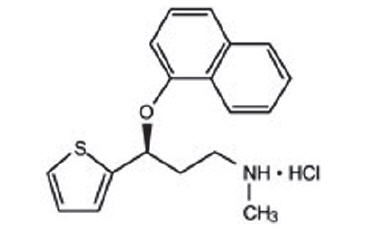
Figure 1 (Duloxetine 02)
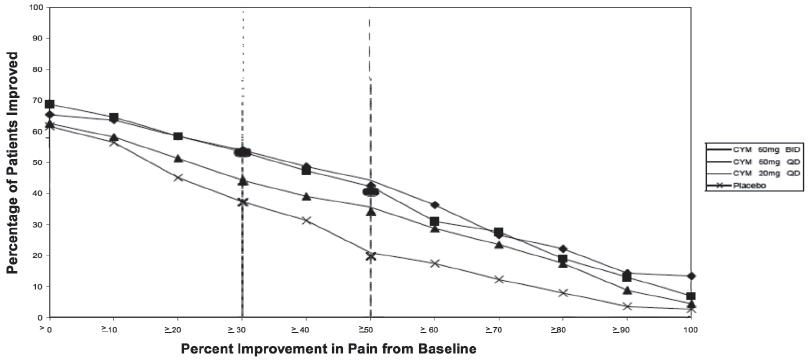
Figure 2 (Duloxetine 03)
Figure 3 (Duloxetine 04)
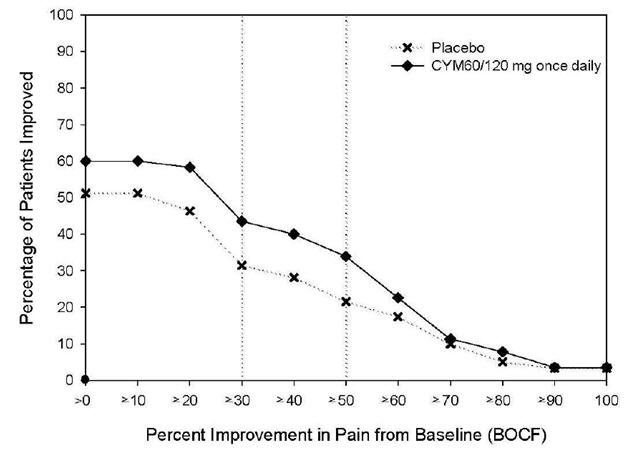
This is a graph that shows the percentage of patients who improved along with their level of pain from baseline, based on a trial that compared a placebo to a medication called CYM80/120 mg taken once daily. The percentages range from 0 to 100 with increments of 10. There is not enough information to determine what condition was being treated with this medication.*
Figure 4 (Duloxetine 05)
This text shows a graph that displays the percentage of patients who experienced pain improvement after being treated with Placebo and CYM60 mg once daily. The x-axis indicates the percent improvement in pain from baseline (BOCF) while the y-axis shows the percentage of patients improved. The placebo treatment resulted in a 70% improvement rate, while CYM60 mg once daily led to a 100% improvement rate.*
Figure 5 (Duloxetine 06)
This is a representation of the percentage of patients who have improved their pain according to a certain treatment. The chart compares the improvement between a placebo treatment and CYM60/120 mg taken once daily. The X-axis represents the percent improvement from baseline pain values, while the Y-axis represents the number of patients. The title of the chart reads "Percentage of Patients Improved" with an output value of 100%.*
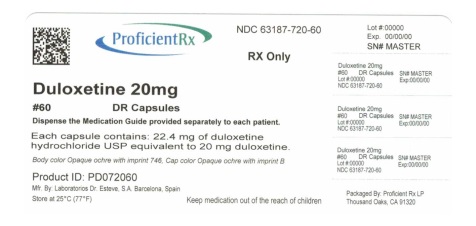
63187-720-60 (Duloxetine 07)
* These product label images have been analyzed using experimental machine learning. Please verify findings with the primary label text.