A randomized, double-blind study (561) compared clarithromycin 500 mg b.i.d. to placebo in patients with CDC-defined AIDS and CD4 counts < 100 cells/µL. This study accrued 682 patients from November 1992 to January 1994, with a median CD4 cell count at study entry of 30 cells/µL. Median duration of clarithromycin was 10.6 months vs. 8.2 months for placebo. More patients in the placebo arm than the clarithromycin arm discontinued prematurely from the study (75.6% and 67.4%, respectively). However, if premature discontinuations due to MAC or death are excluded, approximately equal percentages of patients on each arm (54.8% on clarithromycin and 52.5% on placebo) discontinued study drug early for other reasons. The study was designed to evaluate the following endpoints:
- MAC bacteremia, defined as at least one positive culture for M. avium complex bacteria from blood or another normally sterile site.
- Survival.
- Clinically significant disseminated MAC disease, defined as MAC bacteremia accompanied by signs or symptoms of serious MAC infection, including fever, night sweats, weight loss, anemia, or elevations in liver function tests.
MAC Bacteremia
In patients randomized to clarithromycin, the risk of MAC bacteremia was reduced by 69% compared to placebo. The difference between groups was statistically significant (p < 0.001). On an intent-to-treat basis, the one-year cumulative incidence of MAC bacteremia was 5 % for patients randomized to clarithromycin and 19.4% for patients randomized to placebo. While only 19 of the 341 patients randomized to clarithromycin developed MAC, 11 of these cases were resistant to clarithromycin. The patients with resistant MAC bacteremia had a median baseline CD4 count of 10 cells/mm3 (range 2 to 25 cells/mm3). Information regarding the clinical course and response to treatment of the patients with resistant MAC bacteremia is limited. The 8 patients who received clarithromycin and developed susceptible MAC bacteremia had a median baseline CD4count of 25 cells/mm3 (range 10 to 80 cells/mm3). Comparatively, 53 of the 341 placebo patients developed MAC; none of these isolates were resistant to clarithromycin. The median baseline CD4 count was 15 cells/mm3 (range 2 to 130 cells/mm3) for placebo patients that developed MAC.
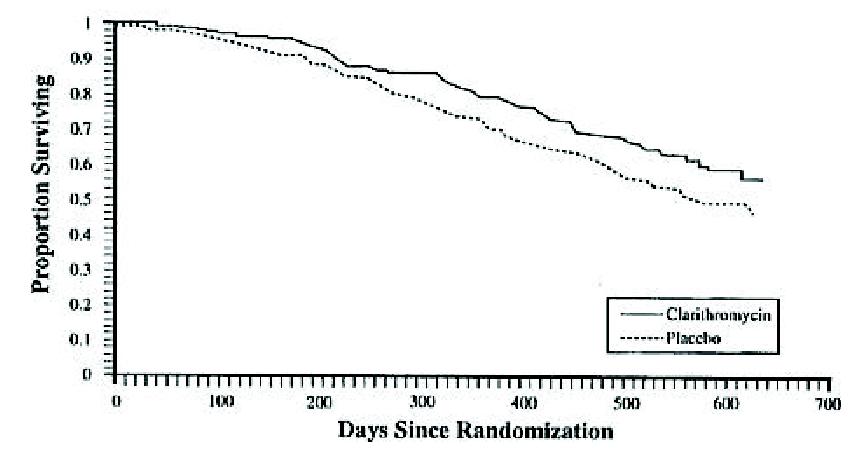
Survival
A statistically significant survival benefit was observed.
Survival All Randomized Patients
| Mortality | Reduction in Mortalityon Clarithromycin |
| Placebo | Clarithromycin |
|
6 month |
9.4% |
6.5% |
31% |
|
12 month |
29.7% |
20.5% |
31% |
|
18 month |
46.4% |
37.5% |
20% |
Since the analysis at 18 months includes patients no longer receiving prophylaxis the survival benefit of clarithromycin may be underestimated.
Clinically Significant Disseminated MAC Disease
In association with the decreased incidence of bacteremia, patients in the group randomized to clarithromycin showed reductions in the signs and symptoms of disseminated MAC disease, including fever, night sweats, weight loss, and anemia.
Safety
In AIDS patients treated with clarithromycin over long periods of time for prophylaxis against M. avium, it was often difficult to distinguish adverse events possibly associated with clarithromycin administration from underlying HIV disease or intercurrent illness. Median duration of treatment was 10.6 months for the clarithromycin group and 8.2 months for the placebo group.
Treatment-related* Adverse Event Incidence Rates (%) in Immunocompromised Adult Patients Receiving Prophylaxis Against M. avium Complex| Body System‡Adverse Event | Clarithromycin(n = 339)% | Placebo(n = 339)% |
|
Body as a Whole | | |
|
Abdominal pain |
5% |
3.5% |
|
Headache |
2.7% |
0.9% |
|
Digestive | | |
|
Diarrhea |
7.7% |
4.1% |
|
Dyspepsia |
3.8% |
2.7% |
|
Flatulence |
2.4% |
0.9% |
|
Nausea |
11.2% |
7.1% |
|
Vomiting |
5.9% |
3.2% |
|
Skin & Appendages | | |
|
Rash |
3.2% |
3.5% |
|
Special Senses | | |
|
Taste Perversion |
8% |
0.3% |
* Includes those events possibly or probably related to study drug and excludes concurrent conditions.
‡ > 2% Adverse Event Incidence Rates for either treatment group.
Among these events, taste perversion was the only event that had significantly higher incidence in the clarithromycin-treated group compared to the placebo-treated group.
Discontinuation due to adverse events was required in 18% of patients receiving clarithromycin compared to 17% of patients receiving placebo in this trial. Primary reasons for discontinuation in clarithromycin treated patients include headache, nausea, vomiting, depression and taste perversion.
Changes in Laboratory Values of Potential Clinical Importance
In immunocompromised patients receiving prophylaxis against M. avium, evaluations of laboratory values were made by analyzing those values outside the seriously abnormal value (i.e., the extreme high or low limit) for the specified test.
Percentage of Patients(a) Exceeding Extreme Laboratory Value in Patients Receiving Prophylaxis Against M. avium Complex | | Clarithromycin 500 mg b.i.d. | Placebo |
|
Hemoglobin |
< 8 g/dL |
4/118 |
3% |
5/103 |
5% |
|
Platelet Count |
< 50 x 109/L |
11/249 |
4% |
12/250 |
5% |
|
WBC Count |
< 1 x 10⁹/L |
2/103 |
4% |
0/95 |
0% |
|
SGOT |
> 5 x ULN(b) |
7/196 |
4% |
5/208 |
2% |
|
SGPT |
> 5 x ULN(b) |
6/217 |
3% |
4/232 |
2% |
|
Alk. Phos. |
> 5 x ULN(b) |
5/220 |
2% |
5/218 |
2% |
(a) Includes only patients with baseline values within the normal range or borderline high (hematology variables) and within the normal range or borderline low (chemistry variables).
(b) ULN = Upper Limit of Normal
Treatment
Three randomized studies (500, 577, and 521) compared different dosages of clarithromycin in patients with CDC-defined AIDS and CD4 counts < 100 cells/µL. These studies accrued patients from May 1991 to March 1992. Study 500 was randomized, double-blind; Study 577 was open-label compassionate use. Both studies used 500 and 1000 mg b.i.d. doses; Study 500 also had a 2000 mg b.i.d. group. Study 521 was a pediatric study at 3.75, 7.5, and 15 mg/kg b.i.d. Study 500 enrolled 154 adult patients, Study 577 enrolled 469 adult patients, and Study 521 enrolled 25 patients between the ages of 1 to 20. The majority of patients had CD4 cell counts < 50/µL at study entry. The studies were designed to evaluate the following end points:
1. Change in MAC bacteremia or blood cultures negative for M. avium.
2. Change in clinical signs and symptoms of MAC infection including one or more of the following: fever, night sweats, weight loss, diarrhea, splenomegaly, and hepatomegaly.
The results for the 500 study are described below. The 577 study results were similar to the results of the 500 study. Results with the 7.5 mg/kg b.i.d. dose in the pediatric study were comparable to those for the 500 mg b.i.d. regimen in the adult studies.
Study 069 compared the safety and efficacy of clarithromycin in combination with ethambutol versus clarithromycin in combination with ethambutol and clofazimine for the treatment of disseminated MAC (dMAC) infection.4,5 This 24-week study enrolled 106 patients with AIDS and dMAC, with 55 patients randomized to receive clarithromycin and ethambutol, and 51 patients randomized to receive clarithromycin, ethambutol, and clofazimine. Baseline characteristics between study arms were similar with the exception of median CFU counts being at least 1 log higher in the clarithromycin, ethambutol, and clofazimine arm.
Compared to prior experience with clarithromycin monotherapy, the two-drug regimen of clarithromycin and ethambutol was well tolerated and extended the time to microbiologic relapse, largely through suppressing the emergence of clarithromycin resistant strains. However, the addition of clofazimine to the regimen added no additional microbiologic or clinical benefit. Tolerability of both multidrug regimens was comparable with the most common adverse events being gastrointestinal in nature. Patients receiving the clofazimine-containing regimen had reduced survival rates; however, their baseline mycobacterial colony counts were higher. The results of this trial support the addition of ethambutol to clarithromycin for the treatment of initial dMAC infections but do not support adding clofazimine as a third agent.
MAC Bacteremia
Decreases in MAC bacteremia or negative blood cultures were seen in the majority of patients in all dose groups. Mean reductions in colony forming units (CFU) are shown below. Included in the table are results from a separate study with a four drug regimen6 (ciprofloxacin, ethambutol, rifampicin, and clofazimine). Since patient populations and study procedures may vary between these two studies, comparisons between the clarithromycin results and the combination therapy results should be interpreted cautiously.
Mean Reductions in Log CFU from Baseline (After 4 Weeks of Therapy)| 500 mg b.i.d. | 1000 mg b.i.d. | 2000 mg b.i.d. | Four Drug Regimen |
| (N = 35) | (N = 32) | (N = 26) | (N = 24) |
|
1.5 |
2.3 |
2.3 |
1.4 |
Although the 1000 mg and 2000 mg b.i.d. doses showed significantly better control of bacteremia during the first four weeks of therapy, no significant differences were seen beyond that point. The percent of patients whose blood was sterilized as shown by one or more negative cultures at any time during acute therapy was 61% (30/49) for the 500 mg b.i.d. group and 59% (29/49) and 52% (25/48) for the 1000 and 2000 mg b.i.d. groups, respectively. The percent of patients who had 2 or more negative cultures during acute therapy that were sustained through study Day 84 was 25% (12/49) in both the 500 and 1000 mg b.i.d. groups and 8% (4/48) for the 2000 mg b.i.d. group. By Day 84, 23% (11/49), 37% (18/49), and 56% (27/48) of patients had died or discontinued from the study, and 14% (7/49), 12% (6/49), and 13% (6/48) of patients had relapsed in the 500, 1000, and 2000 mg b.i.d. dose groups, respectively. All of the isolates had an MIC < 8 mcg/mL at pretreatment. Relapse was almost always accompanied by an increase in MIC. The median time to first negative culture was 54, 41, and 29 days for the 500, 1000, and 2000 mg b.i.d. groups, respectively. The time to first decrease of at least 1 log in CFU count was significantly shorter with the 1000 and 2000 mg b.i.d. doses (median equal to 16 and 15 days, respectively) in comparison to the 500 mg b.i.d. group (median equal to 29 days). The median time to first positive culture or study discontinuation following the first negative culture was 43, 59 and 43 days for the 500, 1000, and 2000 mg b.i.d. groups, respectively.
Clinically Significant Disseminated MAC Disease
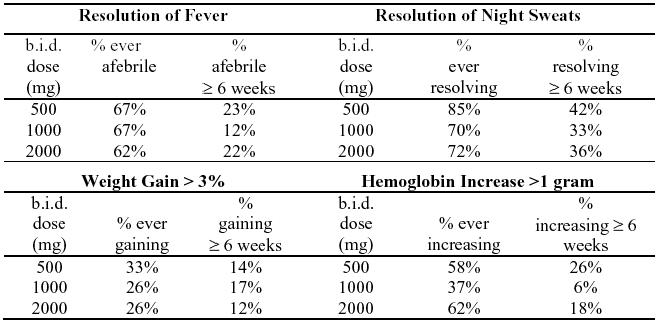
Among patients experiencing night sweats prior to therapy, 84% showed resolution or improvement at some point during the 12 weeks of clarithromycin at 500 to 2000 mg b.i.d. doses. Similarly, 77% of patients reported resolution or improvement in fevers at some point. Response rates for clinical signs of MAC are given below:
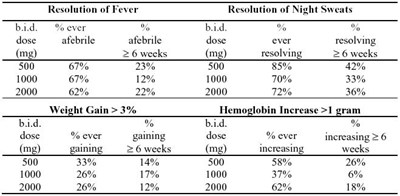
Clinical Signs Of Mac (Clinicalsigns)
The median duration of response, defined as improvement or resolution of clinical signs and symptoms, was 2 to 6 weeks.
Since the study was not designed to determine the benefit of monotherapy beyond 12 weeks, the duration of response may be underestimated for the 25 to 33% of patients who continued to show clinical response after 12 weeks.
Survival
Median survival time from study entry (Study 500) was 249 days at the 500 mg b.i.d. dose compared to 215 days with the 1000 mg b.i.d. dose. However, during the first 12 weeks of therapy, there were 2 deaths in 53 patients in the 500 mg b.i.d. group versus 13 deaths in 51 patients in the 1000 mg b.i.d. group. The reason for this apparent mortality difference is not known. Survival in the two groups was similar beyond 12 weeks. The median survival times for these dosages were similar to recent historical controls with MAC when treated with combination therapies.6
Median survival time from study entry in Study 577 was 199 days for the 500 mg b.i.d. dose and 179 days for the 1000 mg b.i.d. dose. During the first four weeks of therapy, while patients were maintained on their originally assigned dose, there were 11 deaths in 255 patients taking 500 mg b.i.d. and 18 deaths in 214 patients taking 1000 mg b.i.d.
Safety
The adverse event profiles showed that both the 500 and 1000 mg b.i.d. doses were well tolerated. The 2000 mg b.i.d. dose was poorly tolerated and resulted in a higher proportion of premature discontinuations.
In AIDS patients and other immunocompromised patients treated with the higher doses of clarithromycin over long periods of time for mycobacterial infections, it was often difficult to distinguish adverse events possibly associated with clarithromycin administration from underlying signs of HIV disease or intercurrent illness.
The following analyses summarize experience during the first 12 weeks of therapy with clarithromycin. Data are reported separately for Study 500 (randomized, double-blind) and Study 577 (open-label, compassionate use) and also combined. Adverse events were reported less frequently in Study 577, which may be due in part to differences in monitoring between the two studies. In adult patients receiving clarithromycin 500 mg b.i.d., the most frequently reported adverse events, considered possibly or probably related to study drug, with an incidence of 5% or greater, are listed below. Most of these events were mild to moderate in severity, although 5% (Study 500: 8%; Study 577: 4%) of patients receiving 500 mg b.i.d. and 5% (Study 500: 4%; Study 577: 6%) of patients receiving 1000 mg b.i.d. reported severe adverse events. Excluding those patients who discontinued therapy or died due to complications of their underlying non-mycobacterial disease, approximately 8% (Study 500: 15%; Study 577: 7%) of the patients who received 500 mg b.i.d. and 12% (Study 500: 14%; Study 577: 12%) of the patients who received 1000 mg b.i.d. discontinued therapy due to drug-related events during the first 12 weeks of therapy. Overall, the 500 and 1000 mg b.i.d. doses had similar adverse event profiles.
Treatment-related* Adverse Event Incidence Rates (%) inImmunocompromised Adult Patients During the First12 Weeks of Therapy with 500 mg b.i.d. Clarithromycin Dose| Adverse Event | Study 500(n = 53) | Study 577(n = 255) | Combined(n = 308) |
|
Abdominal Pain |
7.5 |
2.4 |
3.2 |
|
Diarrhea |
9.4 |
1.6 |
2.9 |
|
Flatulence |
7.5 |
0 |
1.3 |
|
Headache |
7.5 |
0.4 |
1.6 |
|
Nausea |
28.3 |
9 |
12.3 |
|
Rash |
9.4 |
2 |
3.2 |
|
Taste Perversion |
18.9 |
0.4 |
3.6 |
|
Vomiting |
24.5 |
3.9 |
7.5 |
* Includes those events possibly or probably related to study drug and excludes concurrent conditions.
A limited number of pediatric AIDS patients have been treated with clarithromycin suspension for mycobacterial infections. The most frequently reported adverse events, excluding those due to the patient's concurrent condition, were consistent with those observed in adult patients.
Changes in Laboratory Values
In immunocompromised patients treated with clarithromycin for mycobacterial infections, evaluations of laboratory values were made by analyzing those values outside the seriously abnormal level (i.e., the extreme high or low limit) for the specified test.
Percentage of Patients(a) Exceeding Extreme Laboratory Value Limits During First 12 Weeks of Treatment 500 mg b.i.d. Dose(b) | | Study 500 | Study 577 | Combined |
|
BUN |
> 50 mg/dL |
0% |
< 1% |
< 1% |
|
Platelet Count |
< 50 x 109/L |
0% |
< 1% |
< 1% |
|
SGOT |
> 5 x ULN(c) |
0% |
3% |
2% |
|
SGPT |
> 5 x ULN(c) |
0% |
2% |
1% |
|
WBC |
< 1 x 10⁹/L |
0% |
1% |
1% |
(a) Includes only patients with baseline values within the normal range or borderline high (hematology variables) and within the normal range or borderline low (chemistry variables)
(b) Includes all values within the first 12 weeks for patients who start on 500 mg b.i.d.
(c) ULN = Upper Limit of Normal
Otitis Media
In a controlled clinical study of acute otitis media performed in the United States, where significant rates of beta-lactamase producing organisms were found, clarithromycin was compared to an oral cephalosporin. In this study, very strict evaluability criteria were used to determine clinical response. For the 223 patients who were evaluated for clinical efficacy, the clinical success rate (i.e., cure plus improvement) at the post-therapy visit was 88% for clarithromycin and 91% for the cephalosporin.
In a smaller number of patients, microbiologic determinations were made at the pretreatment visit. The following presumptive bacterial eradication/clinical cure outcomes (i.e., clinical success) were obtained:
U.S. Acute Otitis Media Study Clarithromycin vs. Oral Cephalosporin EFFICACY RESULTS| PATHOGEN | OUTCOME |
| S. pneumoniae |
clarithromycin success rate, 13/15 (87%), control 4/5 |
| H. influenzae* |
clarithromycin success rate, 10/14 (71%), control 3/4 |
| M. catarrhalis |
clarithromycin success rate, 4/5, control 1/1 |
| S. pyogenes |
clarithromycin success rate, 3/3, control 0/1 |
|
Overall |
clarithromycin success rate, 30/37 (81%), control 8/11 (73%) |
* None of the H. influenzae isolated pretreatment was resistant to clarithromycin; 6% were resistant to the control agent.
Safety
The incidence of adverse events in all patients treated, primarily diarrhea and vomiting, did not differ clinically or statistically for the two agents.
In two other controlled clinical trials of acute otitis media performed in the United States, where significant rates of beta-lactamase producing organisms were found, clarithromycin was compared to an oral antimicrobial agent that contained a specific beta-lactamase inhibitor. In these studies, very strict evaluability criteria were used to determine the clinical responses. In the 233 patients who were evaluated for clinical efficacy, the combined clinical success rate (i.e., cure and improvement) at the post-therapy visit was 91% for both clarithromycin and the control.
For the patients who had microbiologic determinations at the pretreatment visit, the following presumptive bacterial eradication/clinical cure outcomes (i.e., clinical success) were obtained:
Two U.S. Acute Otitis Media Studies Clarithromycin vs.Antimicrobial/Beta-lactamase Inhibitor EFFICACY RESULTS| PATHOGEN | OUTCOME |
| S. pneumoniae |
clarithromycin success rate, 43/51 (84%), control 55/56 (98%) |
| H. influenzae* |
clarithromycin success rate, 36/45 (80%), control 31/33 (94%) |
| M. catarrhalis |
clarithromycin success rate, 9/10 (90%), control 6/6 |
| S. pyogenes |
clarithromycin success rate, 3/3, control 5/5 |
|
Overall |
clarithromycin success rate, 91/109 (83%), control 97/100 (97%) |
* Of the H. influenzae isolated pretreatment, 3% were resistant to clarithromycin and 10% were resistant to the control agent.
Safety
The incidence of adverse events in all patients treated, primarily diarrhea (15% vs. 38%) and diaper rash (3% vs. 11%) in young children, was clinically and statistically lower in the clarithromycin arm versus the control arm.
Duodenal Ulcer Associated with H. pylori Infection
Clarithromycin + Lansoprazole and Amoxicillin
H. pylori Eradication for Reducing the Risk of Duodenal Ulcer Recurrence
Two U.S. randomized, double-blind clinical studies in patients with H. pylori and duodenal ulcer disease (defined as an active ulcer or history of an active ulcer within one year) evaluated the efficacy of clarithromycin in combination with lansoprazole and amoxicillin capsules as triple 14-day therapy for eradication of H. pylori. Based on the results of these studies, the safety and efficacy of the following eradication regimen were established:
Triple therapy: clarithromycin 500 mg b.i.d. + lansoprazole 30 mg b.i.d. + amoxicillin 1 gm b.i.d.
Treatment was for 14 days. H. pylori eradication was defined as two negative tests (culture and histology) at 4 to 6 weeks following the end of treatment.
The combination of clarithromycin plus lansoprazole and amoxicillin as triple therapy was effective in eradicating H. pylori. Eradication of H. pylori has been shown to reduce the risk of duodenal ulcer recurrence.
A randomized, double-blind clinical study performed in the U.S. in patients with H. pylori and duodenal ulcer disease (defined as an active ulcer or history of an ulcer within one year) compared the efficacy of clarithromycin in combination with lansoprazole and amoxicillin as triple therapy for 10 and 14 days. This study established that the 10-day triple therapy was equivalent to the 14-day triple therapy in eradicating H. pylori.
H. pylori Eradication Rates-Triple Therapy (clarithromycin/lansoprazole/amoxicillin) Percent of Patients Cured [95% Confidence Interval] (number of patients)| Study | Duration | Triple TherapyEvaluable Analysis* | Triple TherapyIntent-to-Treat Analysis# |
|
M93-131 |
14 days |
92† [80 to 97.7]
(n = 48) |
86† [73.3 to 93.5]
(n = 55) |
|
M95-392 |
14 days |
86‡ [75.7 to 93.6]
(n = 66) |
83‡ [72 to 90.8]
(n = 70) |
|
M95-399 |
14 days |
85 [77 to 91 ]
(N = 113) |
82 [73.9 to 88.1]
(N = 126) |
|
10 days |
84 [76 to 89.8]
(N = 123) |
81 [73.9 to 87.6]
(N = 135) |
*Based on evaluable patients with confirmed duodenal ulcer (active or within one year) and H. pylori infection at baseline defined as at least two of three positive endoscopic tests from CLOtest (Delta West LTD., Bentley, Australia), histology, and/or culture. Patients were included in the analysis if they completed the study. Additionally, if patients were dropped out of the study due to an adverse event related to the study drug, they were included in the analysis as evaluable failures of therapy.
#Patients were included in the analysis if they had documented H. pylori infection at baseline as defined above and had a confirmed duodenal ulcer (active or within one year). All dropouts were included as failures of therapy.
†(p < 0.05) versus clarithromycin/lansoprazole and lansoprazole/amoxicillin dual therapy.
‡(p < 0.05) versus clarithromycin/amoxicillin dual therapy.
¶The 95% confidence interval for the difference in eradication rates, 10-day minus 14-day, is (-10.5, 8.1) in the evaluable analysis and (-9.7, 9.1) in the intent-to-treat analysis.
Clarithromycin + Omeprazole and Amoxicillin Therapy
H. pylori Eradication for Reducing the Risk of Duodenal Ulcer Recurrence
Three U.S., randomized, double-blind clinical studies in patients with H. pylori infection and duodenal ulcer disease (n = 558) compared clarithromycin plus omeprazole and amoxicillin to clarithromycin plus amoxicillin. Two studies (Studies 126 and 127) were conducted in patients with an active duodenal ulcer, and the third study (Study 446) was conducted in patients with a duodenal ulcer in the past 5 years, but without an ulcer present at the time of enrollment. The dosage regimen in the studies was clarithromycin 500 mg b.i.d. plus omeprazole 20 mg b.i.d. plus amoxicillin 1 gram b.i.d. for 10 days. In Studies 126 and 127, patients who took the omeprazole regimen also received an additional 18 days of omeprazole 20 mg q.d. Endpoints studied were eradication of H. pylori and duodenal ulcer healing (studies 126 and 127 only). H. pylori status was determined by CLOtest®, histology, and culture in all three studies. For a given patient, H. pylori was considered eradicated if at least two of these tests were negative, and none was positive. The combination of clarithromycin plus omeprazole and amoxicillin was effective in eradicating H. pylori.
Per-Protocol and Intent-to-Treat H. pylori Eradication Rates % of Patients Cured [95% Confidence Interval] | Clarithromycin + omeprazole + amoxicillin | Clarithromycin + amoxicillin |
| Per-Protocol† | Intent-to-Treat‡ | Per-Protocol† | Intent-to-Treat‡ |
|
Study 126 | *77 [64, 86]
(n = 64) |
69 [57, 79]
(n = 80) |
43 [31, 56]
(n = 67) |
37 [27, 48]
(n = 84) |
|
Study 127 | *78 [67, 88]
(n = 65) |
73 [61, 82]
(n = 77) |
41 [29, 54]
(n = 68) |
36 [26, 47]
(n = 84) |
|
Study M96-446 | *90 [80, 96]
(n = 69) |
83 [74, 91]
(n = 84) |
33 [24, 44]
(n = 93) |
32 [23, 42]
(n = 99) |
† Patients were included in the analysis if they had confirmed duodenal ulcer disease (active ulcer studies 126 and 127; history of ulcer within 5 years, study M96-446) and H. pylori infection at baseline defined as at least two of three positive endoscopic tests from CLOtest®, histology, and/or culture. Patients were included in the analysis if they completed the study. Additionally, if patients dropped out of the study due to an adverse event related to the study drug, they were included in the analysis as failures of therapy. The impact of eradication on ulcer recurrence has not been assessed in patients with a past history of ulcer.
‡ Patients were included in the analysis if they had documented H. pylori infection at baseline and had confirmed duodenal ulcer disease. All dropouts were included as failures of therapy.
* p < 0.05 versus clarithromycin plus amoxicillin.
Safety
In clinical trials using combination therapy with clarithromycin plus omeprazole and amoxicillin, no adverse reactions peculiar to the combination of these drugs have been observed. Adverse reactions that have occurred have been limited to those that have been previously reported with clarithromycin, omeprazole, or amoxicillin.
The most frequent adverse experiences observed in clinical trials using combination therapy with clarithromycin plus omeprazole and amoxicillin (n = 274) were diarrhea (14%), taste perversion (10%), and headache (7%).
For information about adverse reactions with omeprazole or amoxicillin, refer to the ADVERSE REACTIONS section of their package inserts.
Clarithromycin + Omeprazole Therapy
Four randomized, double-blind, multi-center studies (067, 100, 812b, and 058) evaluated clarithromycin 500 mg t.i.d. plus omeprazole 40 mg q.d. for 14 days, followed by omeprazole 20 mg q.d. (067, 100, and 058) or by omeprazole 40 mg q.d. (812b) for an additional 14 days in patients with active duodenal ulcer associated with H. pylori. Studies 067 and 100 were conducted in the U.S. and Canada and enrolled 242 and 256 patients, respectively. H. pylori infection and duodenal ulcer were confirmed in 219 patients in Study 067 and 228 patients in Study 100. These studies compared the combination regimen to omeprazole and clarithromycin monotherapies. Studies 812b and 058 were conducted in Europe and enrolled 154 and 215 patients, respectively. H. pylori infection and duodenal ulcer were confirmed in 148 patients in Study 812b and 208 patients in Study 058. These studies compared the combination regimen to omeprazole monotherapy. The results for the efficacy analyses for these studies are described below.
Duodenal Ulcer Healing
The combination of clarithromycin and omeprazole was as effective as omeprazole alone for healing duodenal ulcer.
End-of-Treatment Ulcer Healing RatesPercent of Patients Healed (n/N)| Study | Clarithromycin + Omeprazole | Omeprazole | Clarithromycin |
| U.S. Studies | | | |
|
Study 100 |
94% (58/62)† |
88% (60/68) |
71% (49/69) |
|
Study 067 |
88% (56/64)† |
85% (55/65) |
64% (44/69) |
| Non-U.S. Studies | | | |
|
Study 058 |
99% (84/85) |
95% (82/86) |
N/A |
|
Study 812b1 |
100% (64/64) |
99% (71/72) |
N/A |
†p < 0.05 for clarithromycin + omeprazole versus clarithromycin monotherapy.
1In Study 812b patients received omeprazole 40 mg daily for days 15 to 28.
Eradication of H. pylori Associated with Duodenal Ulcer
The combination of clarithromycin and omeprazole was effective in eradicating H. pylori.
H. pylori Eradication Rates (Per-Protocol Analysis) at 4 to 6 weeks Percent of Patients Cured (n/N)| Study | Clarithromycin + Omeprazole | Omeprazole | Clarithromycin |
| U.S. Studies | | | |
|
Study 100 |
64% (39/61)†‡ |
0% (0/59) |
39% (17/44) |
|
Study 067 |
74% (39/53)†‡ |
0% (0/54) |
31% (13/42) |
| Non-U.S. Studies | | | |
|
Study 058 |
74% (64/86)‡ |
1% (1/90) |
N/A |
|
Study 812b |
83% (50/60)‡ |
1% (1/74) |
N/A |
†Statistically significantly higher than clarithromycin monotherapy (p < 0.05).
‡Statistically significantly higher than omeprazole monotherapy (p < 0.05).
H. pylori eradication was defined as no positive test (culture or histology) at 4 weeks following the end of treatment, and two negative tests were required to be considered eradicated. In the per-protocol analysis, the following patients were excluded: dropouts, patients with major protocol violations, patients with missing H. pylori tests post-treatment, and patients that were not assessed for H. pylori eradication at 4 weeks after the end of treatment because they were found to have an unhealed ulcer at the end of treatment.
Ulcer recurrence at 6-months following the end of treatment was assessed for patients in whom ulcers were healed post-treatment.
Ulcer Recurrence at 6 months by H. pylori Status at 4 to 6 Weeks | H. pylori Negative | H. pylori Positive |
| U.S. Studies Study 100 | | |
|
Clarithromycin + Omeprazole |
6% (2/34) |
56% (9/16) |
|
Omeprazole |
- (0/0) |
71% (35/49) |
|
Clarithromycin |
12% (2/17) |
32% (7/22) |
| Study 067 | | |
|
Clarithromycin + Omeprazole |
38% (11/29) |
50% (6/12) |
|
Omeprazole |
- (0/0) |
67% (31/46) |
|
Clarithromycin |
18% (2/11) |
52% (14/27) |
| Non-U.S. Studies Study 058 | | |
|
Clarithromycin + Omeprazole |
6% (3/53) |
24% (4/17) |
|
Omeprazole |
0% (0/3) |
55% (39/71) |
| Study 812b* | | |
|
Clarithromycin + Omeprazole |
5% (2/42) |
0% (0/7) |
|
Omeprazole |
0% (0/1) |
54% (32/59) |
| *12-month recurrence rates: | | |
|
Clarithromycin + Omeprazole |
3% (1/40) |
0% (0/6) |
|
Omeprazole |
0% (0/1) |
67% (29/43) |
Thus, in patients with duodenal ulcer associated with H. pylori infection, eradication of H. pylori reduced ulcer recurrence.
Safety
The adverse event profiles for the four studies showed that the combination of clarithromycin 500 mg t.i.d. and omeprazole 40 mg q.d. for 14 days, followed by omeprazole 20 mg q.d. (067, 100, and 058) or 40 mg q.d. (812b) for an additional 14 days was well tolerated. Of the 346 patients who received the combination, 12 (3.5%) patients discontinued study drug due to adverse events.
Adverse Events with an Incidence of 3% or Greater| Adverse Event | Clarithromycin + Omeprazole(N = 346)% of Patients | Omeprazole(N = 355)% of Patients | Clarithromycin (N = 166)% of Patients* |
|
Taste Perversion |
15% |
1% |
16% |
|
Nausea |
5% |
1% |
3% |
|
Headache |
5% |
6% |
9% |
|
Diarrhea |
4% |
3% |
7% |
|
Vomiting |
4% |
< 1% |
1% |
|
Abdominal Pain |
3% |
2% |
1% |
|
Infection |
3% |
4% |
2% |
* Studies 067 and 100, only.
Most of these events were mild to moderate in severity.
Changes in Laboratory Values
Changes in laboratory values with possible clinical significance in patients taking clarithromycin and omeprazole were as follows:
Hepatic - elevated direct bilirubin < 1%; GGT < 1%; SGOT (AST) < 1%; SGPT (ALT) < 1%.
Renal - elevated serum creatinine < 1%.
For information on omeprazole, refer to the ADVERSE REACTIONS section of the PRILOSEC package insert.
Clarithromycin + Ranitidine Bismuth Citrate Therapy
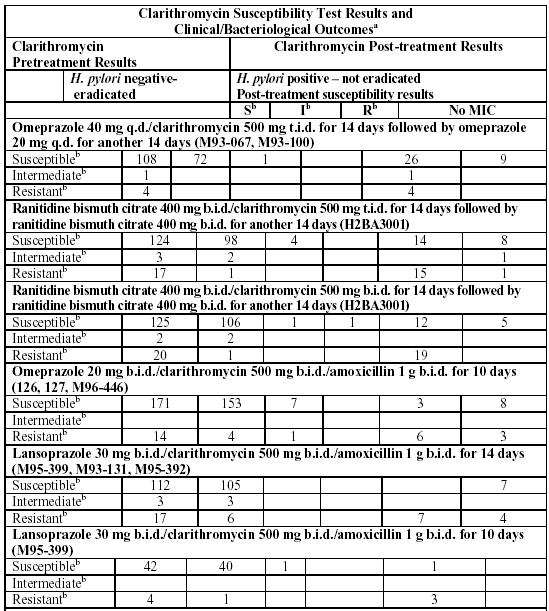
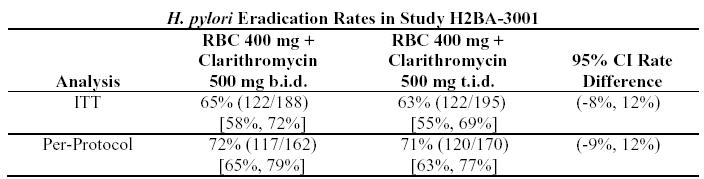
In a U.S. double-blind, randomized, multicenter, dose-comparison trial, ranitidine bismuth citrate 400 mg b.i.d. for 4 weeks plus clarithromycin 500 mg b.i.d. for the first 2 weeks was found to have an equivalent H. pylori eradication rate (based on culture and histology) when compared to ranitidine bismuth citrate 400 mg b.i.d. for 4 weeks plus clarithromycin 500 mg t.i.d. for the first 2 weeks. The intent-to-treat H. pylori eradication rates are shown below:
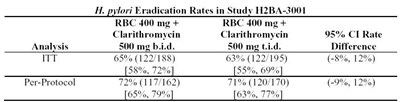
Eradication Rates (Eradicatrates)
H. pylori eradication was defined as no positive test at 4 weeks following the end of treatment. Patients must have had two tests performed, and these must have been negative to be considered eradicated of H. pylori. The following patients were excluded from the per-protocol analysis: patients not infected with H. pylori prestudy, dropouts, patients with major protocol violations, patients with missing H. pylori tests. Patients excluded from the intent-to-treat analysis included those not infected with H. pylori prestudy and those with missing H. pylori tests prestudy. Patients were assessed for H. pylori eradication (4 weeks following treatment) regardless of their healing status (at the end of treatment).
The relationship between H. pylori eradication and duodenal ulcer recurrence was assessed in a combined analysis of six U.S. randomized, double-blind, multicenter, placebo-controlled trials using ranitidine bismuth citrate with or without antibiotics. The results from approximately 650 U.S. patients showed that the risk of ulcer recurrence within 6 months of completing treatment was two times less likely in patients whose H. pylori infection was eradicated compared to patients in whom H. pylori infection was not eradicated.
Safety
In clinical trials using combination therapy with clarithromycin plus ranitidine bismuth citrate, no adverse reactions peculiar to the combination of these drugs (using clarithromycin twice daily or three times a day) were observed. Adverse reactions that have occurred have been limited to those reported with clarithromycin or ranitidine bismuth citrate. (See ADVERSE REACTIONS section of the Tritec package insert.) The most frequent adverse experiences observed in clinical trials using combination therapy with clarithromycin (500 mg three times a day) with ranitidine bismuth citrate (n = 329) were taste disturbance (11%), diarrhea (5%), nausea and vomiting (3%). The most frequent adverse experiences observed in clinical trials using combination therapy with clarithromycin (500 mg twice daily) with ranitidine bismuth citrate (n = 196) were taste disturbance (8%), nausea and vomiting (5%), and diarrhea (4%).