Gemcitabine Injection, Powder, Lyophilized, For Solution
Product Images NDC 63323-126
View Photos of Packaging, Regulatory Labels, and Product Appearance
Product Visual Gallery
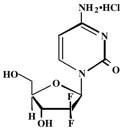
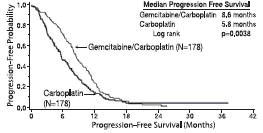
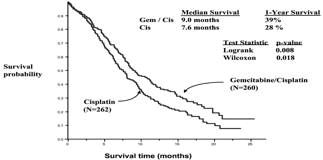
This gallery contains 8 technical images submitted to the FDA as part of the official labeling for Gemcitabine (NDC 63323-126). Unlike standard consumer photos, these assets often include clinical data figures, molecular chemical structures, and official manufacturer packaging layouts.
As provided by Fresenius Kabi Usa, Llc, these visuals offer a comprehensive scientific overview of the product's physical and chemical identity, aiding pharmacists and researchers in product verification and study.
Figure 1 (Gem0k 0001 02)
Figure 2 (Gem0k 0001 03)
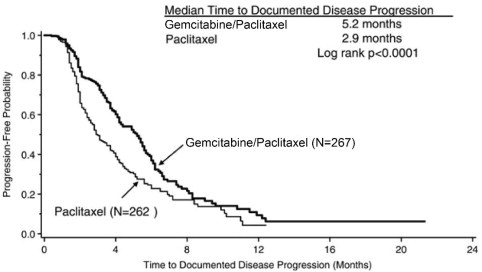
The text seems to be a statistical report comparing the progression-free probability between two different medications, Gemcitabine/Paclitaxel and Paclitaxel. The report provides the respective progression-free probabilities, measured in months, for both medications and indicates the number of participants for each medication. Additionally, the report states that the Log rank p-value is less than 0.0001. The rest of the text consists of errors and is not readable.*
Figure 3 (Gem0k 0001 04)
Figure 4 (Gem0k 0001 05)
Fresenius Kabi Logo (Gem0k 0001 06)
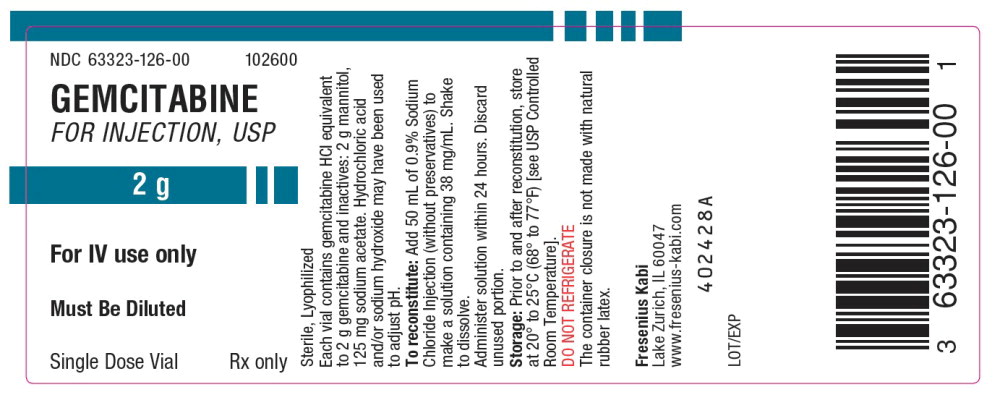
Vial (Gem0k 0001 07)
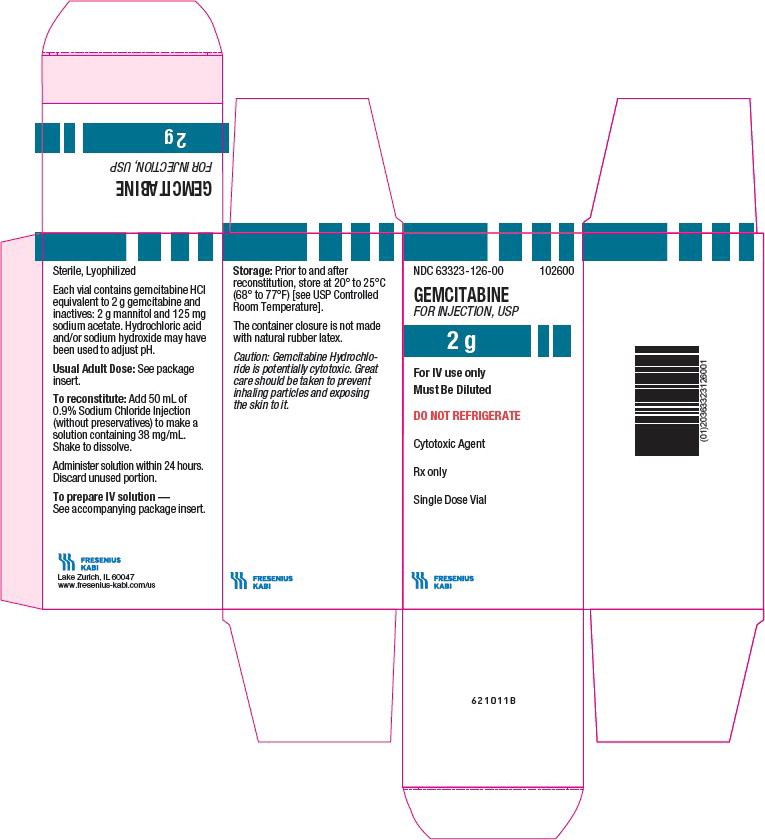
Carton (Gem0k 0001 08)
Gemcitabine is a lyophilized powder contained in a vial. It contains gemcitabine HC equivalent to 2 gemcitabine, as well as inactive ingredients such as manitol and sodium acetate. The powder should be reconstituted with 50 mL of 0.9% sodium chloride injection to create a solution containing 38 mg/mL. The solution should be shaken, administered within 24 hours, and any unused portion should be discarded. It is important to follow the package insert for use and storage directions, as gemcitabine hydrochloride is a potential cytotoxic agent. The product is for intravenous use only and must be diluted. The container closure is not made with natural rubber latex.*
* These product label images have been analyzed using experimental machine learning. Please verify findings with the primary label text.