Levetiracetam Injection, Solution
Product Images NDC 63323-400

View Photos of Packaging, Regulatory Labels, and Product Appearance

Product Visual Gallery

This gallery contains 10 technical images submitted to the FDA as part of the official labeling for Levetiracetam (NDC 63323-400). Unlike standard consumer photos, these assets often include clinical data figures, molecular chemical structures, and official manufacturer packaging layouts.

As provided by Fresenius Kabi Usa, Llc, these visuals offer a comprehensive scientific overview of the product's physical and chemical identity, aiding pharmacists and researchers in product verification and study.

FDA Label Image

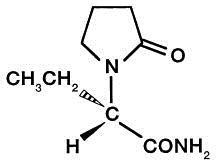
Structural Formula (Lev1d 0003 01)
FDA Label Image

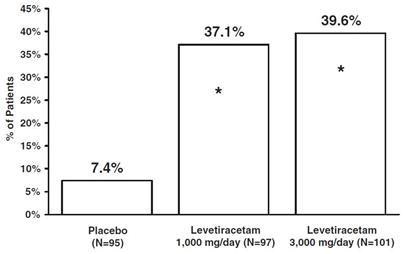
Figure 1 (Lev1d 0003 02)

Figure 1 (Lev1d 0003 02)
This text shows the percentage of patients who received different doses of levetiracetam - 7.4% were on 1,000mg/day and 37.1% were on an unknown dose (represented by blank space). The majority, 39.6%, were on 3,000mg/day.*
FDA Label Image

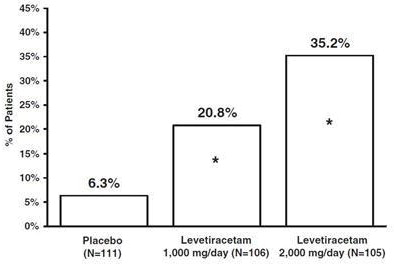
Figure 2 (Lev1d 0003 03)

Figure 2 (Lev1d 0003 03)
This appears to be a statistical report showing percentages and dosages of patients in a study related to "Leveiracetam" and "Loveiracetam". The first two percentages are 35.2% and 20.8%, but without any context or additional information, it is not clear what these percentages represent. The third percentage is 6.3%. The dosages being compared are 1,000 mg/day and 2,000 mg/day, and the number of patients in each group (N) is 106 and 105, respectively. The text does not allow for any further elaboration or interpretation of the findings.*
FDA Label Image

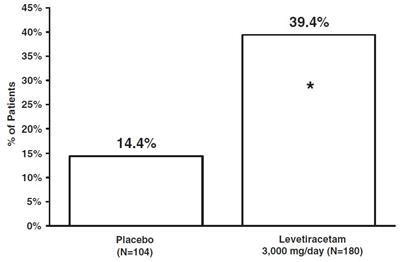
Figure 3 (Lev1d 0003 04)

Figure 3 (Lev1d 0003 04)
Not available.*
FDA Label Image

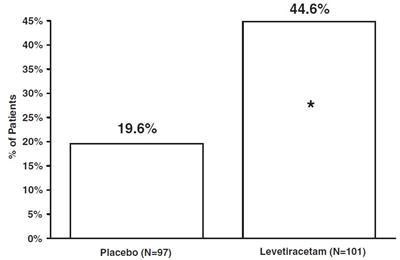
Figure 4 (Lev1d 0003 05)

Figure 4 (Lev1d 0003 05)
This text provides a table with the percentage of patients using Levetiracetam (N=101) with results for three different categories - 2%, 8%, 19.6%, and 44.6%. There is no additional information to provide a more detailed description.*
FDA Label Image

Figure 5 (Lev1d 0003 06)

Figure 5 (Lev1d 0003 06)
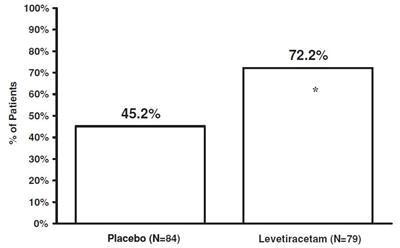
This appears to be a table or graph showing the percentages of patients in a study who were treated with either a placebo or a medication called Levetiracetam. However, without additional context or labels it is difficult to understand the full picture of the study or the outcomes.*
FDA Label Image

Figure 6 (Lev1d 0003 07)

Figure 6 (Lev1d 0003 07)
This appears to be a table or percentages without any context, so it's not possible to provide a useful description of the information presented.*
FDA Label Image

Premierprorx Logo (Lev1d 0003 08)

FDA Label Image

Package Label (PRINCIPAL DISPLAY – Levetiracetam 5 mL Tray Label)

Package Label (PRINCIPAL DISPLAY – Levetiracetam 5 mL Tray Label)
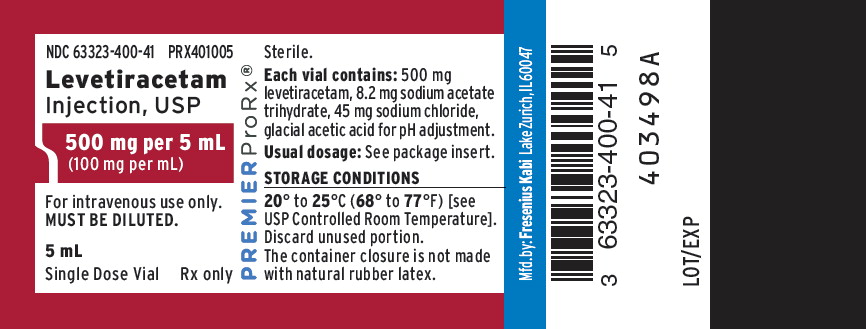
This is the product information for Levetiracetam Injection, a sterile medication used for intravenous (IV) use only. It is used for epilepsy and seizures. Each vial contains 500mg of the drug along with other chemicals such as sodium acetate trihydrate, sodium chloride, and acetic acid. The medication should be stored between 20°C and 25°C and any unused portion should be discarded. The container closure does not contain natural rubber latex. This medication is manufactured by Fresenius Kabi and comes in a box containing ten vials of 5 mL each. The package insert should be consulted for dosage guidelines.*
FDA Label Image

Package Label (PRINCIPAL DISPLAY – Levetiracetam 5 mL Tray Label)

Package Label (PRINCIPAL DISPLAY – Levetiracetam 5 mL Tray Label)
This is a description of a medication in single dose vial form that is sterile and should only be used for intravenous use. It contains Levetiracetam and sodium acetate among other components. The medication must be diluted before use and the storage temperature should be between 20°C to 25°C. The unused portion should be discarded and the container closure does not contain natural rubber latex. The medication is manufactured by Fresenius Kabi in Lake Zurich, IL.*

* These product label images have been analyzed using experimental machine learning. Please verify findings with the primary label text.