Inlyta Tablet, Film Coated
Product Images NDC 63539-044

View Photos of Packaging, Regulatory Labels, and Product Appearance

Product Visual Gallery

This gallery contains 9 technical images submitted to the FDA as part of the official labeling for Inlyta (NDC 63539-044). Unlike standard consumer photos, these assets often include clinical data figures, molecular chemical structures, and official manufacturer packaging layouts.

As provided by U.s. Pharmaceuticals, these visuals offer a comprehensive scientific overview of the product's physical and chemical identity, aiding pharmacists and researchers in product verification and study.

FDA Label Image

Chemical Structure (Inlyta 01)
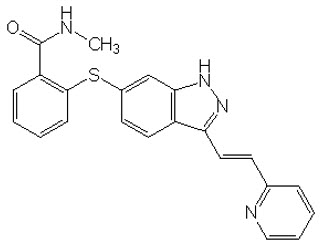
FDA Label Image

Figure 1 (Inlyta 02)

Figure 1 (Inlyta 02)
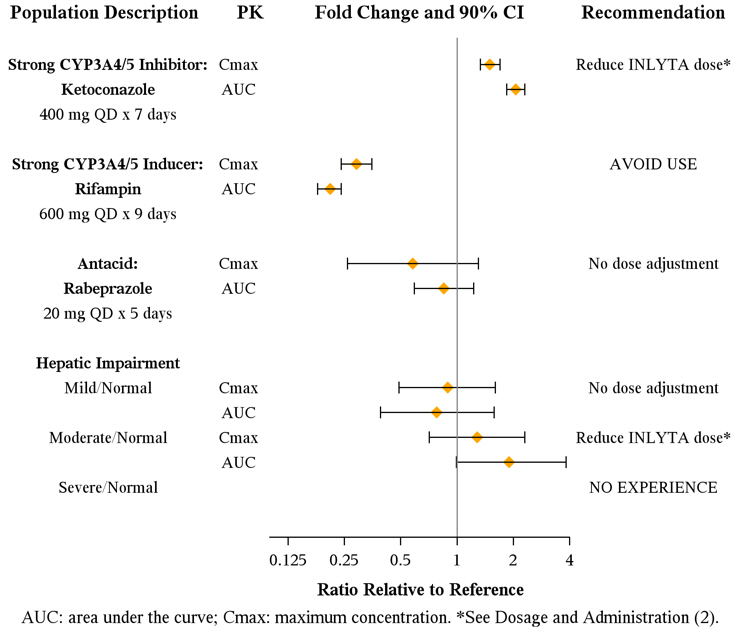
This document provides information on population description for different drugs including strong CYP3A4/5 inhibitors and inducers, antacids, and recommendations for dose adjustment based on hepatic impairment. The text also includes PK parameters such as Cmax and AUC, as well as fold change and 90% CI recommendations. The document also explains the meaning of AUC and Cmax and provides dosage and administration instructions for INLYTA.*
FDA Label Image

Figure 2 (Inlyta 03)

FDA Label Image

Logo (Inlyta 04)

Logo (Inlyta 04)
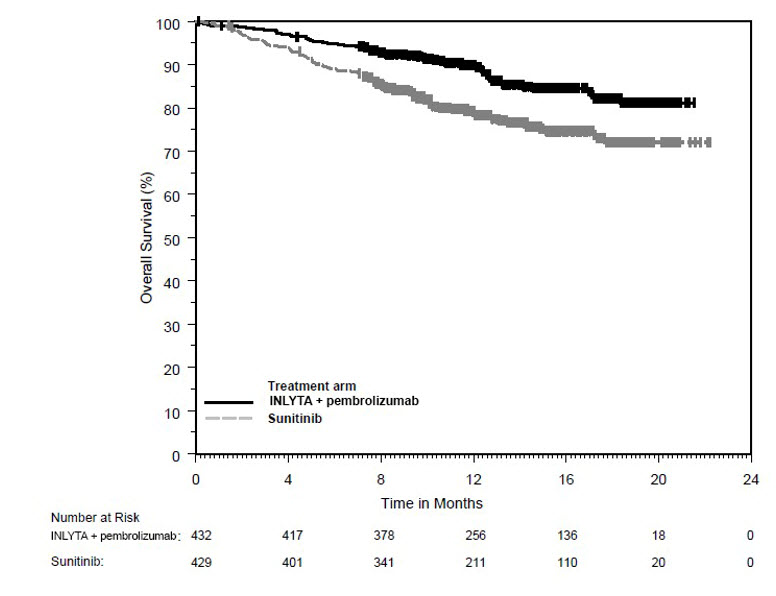
This is a graph that represents the comparison of Overall Survival between the treatment arms of INLYTA + pembrolizumab and Sunitinib over a period of 24 months. The graph shows that after 24 months, the overall survival rate for patients taking INLYTA + pembrolizumab was higher than patients taking Sunitinib. The number at risk for INLYTA + pembrolizumab treatment arm was 432, while for the Sunitinib arm, the number at risk was 101.*
FDA Label Image

Principal Display Panel (5 mg Tablet Bottle Label)

Principal Display Panel (5 mg Tablet Bottle Label)
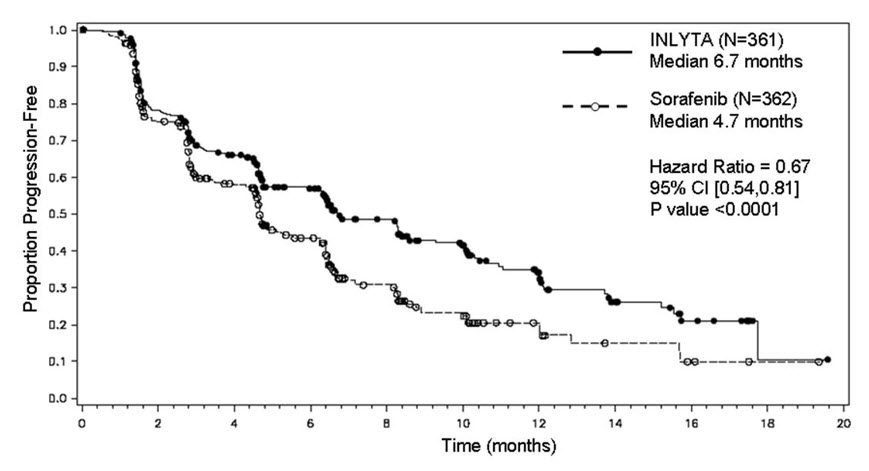
This text appears to be a chart showing the proportion of patients who remained progression-free during a clinical trial involving two medications: INLYTA and Sorafenib. The chart shows that in the group of 361 patients who received INLYTA, the median progression-free period was 6.7 months. In the group of 362 patients who received Sorafenib, the median progression-free period was 4.7 months. The hazard ratio for INLYTA versus Sorafenib was 0.67, with a 95% confidence interval of 0.54 to 0.81 and a P value of less than 0.0001. The numbers at the bottom of the chart may represent time in months.*
FDA Label Image

Principal Display Panel (1 mg Tablet Bottle Label)

Principal Display Panel (1 mg Tablet Bottle Label)
This text is a distribution information for the Pfizer Labs Division of Pfizer Inc, located in NY, NY 10017.*
FDA Label Image

Inlyta 07

Inlyta 07
This is a brief text indicating that a company called Pfizer Labs, which is a division of Pfizer Inc. located in NY, NY 10017, is responsible for distribution. It is likely that this text was found on the packaging or label of a product distributed by Pfizer Labs.*
FDA Label Image

Inlyta 08

Inlyta 08
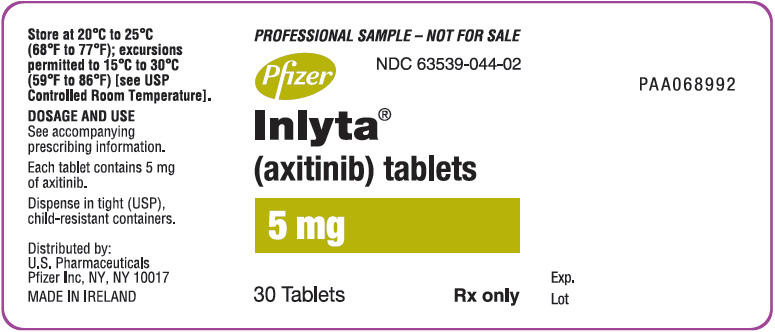
This is a label of a medication called Inlyta (axitinib) tablets. It states the storage temperature range, dosage information, and the quantity of medication in the container. It also mentions that the medication should be dispensed in a child-resistant container and cautions that the accompanying prescribing information should be reviewed. It lists the manufacturer and the place of origin. It also indicates that this sample is not for sale.*
FDA Label Image

Inlyta 09

Inlyta 09
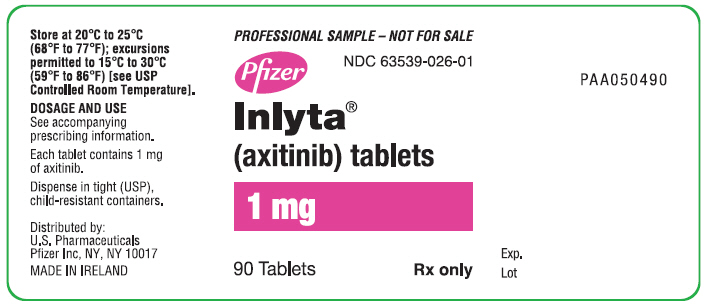
This is a description of storage and dosage information for Inlyta® tablets containing 1 mg of axitinib. The tablets should be stored between 20°C to 25°C (68°F to 77°F), with excursions allowed up to 15°C to 30°C (59°F to 86°F). Dispensing should be done in child-resistant containers, according to USP standards. The prescribing information should be referenced for dosage and usage guidance. The tablets are distributed by U.S. Pharmaceuticals Pfizer Inc. The product is not for sale and only intended for professional samples. A product code is also included: NDC 63539-026-01.*

* These product label images have been analyzed using experimental machine learning. Please verify findings with the primary label text.