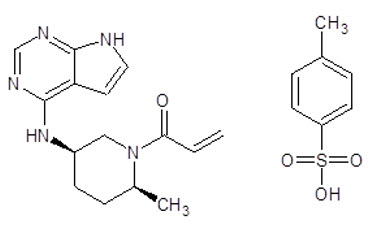
Other
- Increased risk of serious bacterial, fungal, viral and opportunistic infections leading to hospitalization or death, including tuberculosis (TB). Interrupt treatment if serious infection occurs until the infection is controlled. LITFULO should not be given to patients with active tuberculosis. Test for latent TB before and during therapy; treat latent TB prior to use. Monitor all patients for active TB during treatment, even patients with initial negative, latent TB test. (5.1)
- Higher rate of all-cause mortality, including sudden cardiovascular death with another Janus kinase inhibitor (JAK) vs. TNF blockers in rheumatoid arthritis (RA) patients. LITFULO is not approved for use in RA patients. (5.2)
- Malignancies have occurred in patients treated with LITFULO [see Warnings and Precautions (5.3)]. Higher rate of lymphomas and lung cancers with another JAK inhibitor vs. TNF blockers in RA patients. (5.3)
- Higher rate of MACE (defined as cardiovascular death, myocardial infarction, and stroke) with another JAK inhibitor vs. TNF blockers in RA patients. (5.4)
- Thrombosis has occurred in patients treated with LITFULO. Increased incidence of pulmonary embolism, venous and arterial thrombosis with another JAK inhibitor vs. TNF blockers. (5.5)
- Glutathione S-transferase (GST): cytosolic GST A1/3, M1/3/5, P1, S1, T2, Z1 and microsomal GST 1/2/3
- CYP enzymes (CYP3A, CYP2C8, CYP1A2, and CYP2C9)
Hematologic Abnormalities
Recommendations for LITFULO treatment interruption or discontinuation for hematologic abnormalities are summarized in Table 1.
| Laboratory Measure | Recommendation |
|---|---|
| ALC = absolute lymphocyte count. | |
Platelet Count | Treatment should be discontinued if platelet count is <50,000/mm3 |
Lymphocytes | Treatment should be interrupted if ALC is <500/mm3 and may be restarted once ALC return above this value. |
ALC and platelet counts are recommended before treatment initiation and at 4 weeks after treatment initiation, and thereafter according to routine patient management [see Warnings and Precautions (5.7)].
Tuberculosis
Screen patients for tuberculosis (TB) before starting therapy. LITFULO should not be given to patients with active TB. Anti-TB therapy should be started prior to initiating therapy with LITFULO in patients with a new diagnosis of latent TB or previously untreated latent TB. In patients with a negative latent TB test, consider anti-TB therapy before initiating treatment with LITFULO in those at high risk and consider screening patients at high risk for TB during treatment with LITFULO.
Viral Reactivation
Viral reactivation, including cases of herpes virus reactivation (e.g., herpes zoster), was reported in clinical trials [see Adverse Reactions (6.1)]. If a patient develops herpes zoster, consider interrupting treatment until the episode resolves.
Screening for viral hepatitis should be performed in accordance with clinical guidelines before starting therapy with LITFULO. Patients with evidence of HIV infection or hepatitis B or C infection were excluded from clinical trials.
Risk Summary
Available data from clinical trials with LITFULO use in pregnant women are insufficient to identify a drug-associated risk of major birth defects, miscarriage or other adverse maternal or fetal outcomes. In animal reproduction studies, oral administration of ritlecitinib to pregnant rats and rabbits during organogenesis caused fetotoxicity and fetal malformations at exposures 49 and 55 times the maximum recommended human dose (MRHD) based on area under the curve (AUC) comparison, respectively (see Animal Data).
The background risks of major birth defects and miscarriage for the indicated population are unknown. All pregnancies carry some risk of birth defects, loss, or other adverse outcomes. The estimated background risks in the U.S. general population of major birth defects and miscarriages are 2-4% and 15-20% of clinically recognized pregnancies, respectively.
Data
Animal Data
In an embryo-fetal development study in pregnant rats, oral administration of ritlecitinib from gestation days 6 to 17 decreased fetal body weights and caused fetal skeletal malformations (malformed vertebrae and ribs) and variations (delayed ossification) at doses ≥175 mg/kg/day (49 times the MRHD based on AUC comparison). Maternal toxicity (lower body weights) was noted at 325 mg/kg/day (102 times the MRHD based on AUC comparison). There was no developmental toxicity at 75 mg/kg/day (16 times the MRHD based on AUC comparison).
In an embryo-fetal development study in pregnant rabbits, oral administration of ritlecitinib from gestation days 7 to 19 decreased mean fetal body weights and increased visceral malformations (malpositioned kidneys), skeletal malformations (supernumerary sternebrae, absent thoracic arch, and/or fused thoracic centra), and skeletal variations (delayed ossification) at 75 mg/kg/day (55 times the MRHD based on AUC comparison). There was no developmental toxicity at doses up to 25 mg/kg/day (12 times the MRHD based on AUC comparison).
In a pre- and postnatal development study in rats, oral administration of ritlecitinib from gestation day 6 through lactation day 20 had no effects on pre- and postnatal development at doses up to 75 mg/kg/day (14 times the MRHD based on AUC comparison). At 175 mg/kg/day (41 times the MRHD based on AUC comparison), ritlecitinib caused adverse lower postnatal survival and lower offspring body weights, which correlated with delayed sexual maturation in both sexes. Bred females in the F1 generation also exhibited lower mean numbers of corpora lutea at 175 mg/kg/day.
Risk Summary
There are no data on the presence of ritlecitinib in human milk, the effects on the breastfed infant, or the effects on milk production. Ritlecitinib is present in the milk of lactating rats (see Data). When a drug is present in animal milk, it is likely that it will be present in human milk. Because of the serious adverse effects in adults, including risks of serious infection and malignancy, advise women not to breastfeed during treatment with LITFULO and for approximately 14 hours after the last dose (approximately 6 elimination half-lives).
Data
After a single oral 30 mg/kg dose of ritlecitinib to lactating rats, ritlecitinib concentrations in milk over time were higher than those in plasma. The mean milk to plasma AUC ratio was 2.2.
Lymphocyte Subsets
A dose-dependent early decrease in absolute lymphocyte levels, T lymphocytes (CD3) and T lymphocyte subsets (CD4 and CD8) was associated with LITFULO treatment in patients with alopecia areata. In addition, there was a dose-dependent early decrease in NK cells (CD16/56) which remained stable at the lower level up to Week 48. For the 50 mg QD dose, there was an initial decrease in median lymphocyte levels which remained consistent up to Week 48. There was no change observed in B lymphocytes (CD19) in any treatment group.
Cardiac Electrophysiology
At 12 times the mean maximum exposure of the 50 mg once daily dose in patients with alopecia areata, there was no clinically relevant effect on the QTc interval.
Absorption
The ritlecitinib absolute oral bioavailability is approximately 64%. Ritlecitinib peak plasma concentrations were reached within 1 hour following an oral dose.
Effect of Food
Food does not have a clinically significant impact on the systemic exposures of ritlecitinib. The coadministration of a 100 mg ritlecitinib capsule with a high-fat meal reduced the ritlecitinib Cmax by ~32% and AUCinf was increased by 11%. In clinical trials, ritlecitinib was administered without regard to meals [see Dosage and Administration (2.2)].
Distribution
Approximately 14% of circulating ritlecitinib is bound to plasma proteins.
Elimination
The ritlecitinib mean terminal half-life ranges from 1.3 to 2.3 hours.
Metabolism
The metabolism of ritlecitinib is mediated by multiple pathways with no single route contributing to more than 25% of the total metabolism. These pathways include:
Excretion
Approximately 66% of radiolabeled ritlecitinib dose is excreted in the urine and 20% in the feces. Approximately 4% of the ritlecitinib dose is excreted unchanged drug in urine.
Specific Populations
No clinically relevant differences in the pharmacokinetics of ritlecitinib were observed based on age (12-73 years), body weight, gender, GST genotype, and race.
Patients with Renal Impairment
The AUC24 observed in patients with severe renal impairment (eGFR <30 mL/min) was 55.2% higher compared with the AUC24 in matched participants with normal renal functions. These differences are not considered clinically significant. Ritlecitinib has not been studied in patients with mild (eGFR 60 to <90 mL/min) or moderate (eGFR 30 to <60 mL/min) renal impairment, as a clinically relevant increase in ritlecitinib exposure is not expected in these patients. The eGFR and classification of renal function status of patients was done using the Modification of Diet in Renal Disease (MDRD) formula. Ritlecitinib has not been studied in patients with ESRD or in renal transplant recipients.
Patients with Hepatic Impairment
Patients with moderate (Child Pugh B) hepatic impairment had an 18.5% increase in ritlecitinib AUC24 compared to patients with normal hepatic function. Ritlecitinib has not been studied in patients with mild (Child Pugh A) hepatic impairment, as a clinically relevant increase in ritlecitinib exposure is not expected in these patients.
Ritlecitinib has not been studied in patients with severe (Child Pugh C) hepatic impairment and is not recommended for use in these patients [see Dosage and Administration (2.3) and Use In Specific Populations (8.6)].
Drug Interaction Studies
Clinical Studies
Effect of other drugs on ritlecitinib
The effect of coadministered drugs on the pharmacokinetics of ritlecitinib is presented in Table 5.
Coadministered Drugs | Regimen of Coadministered Drug | Dose of Ritlecitinib | Ratio Ratios for Cmax and AUCinf compare coadministration of ritlecitinib with the drug versus administration of ritlecitinib alone. (90% Confidence Interval) | |
Cmax | AUCinf | |||
Strong CYP3A inhibitor: Itraconazole Drug interaction with CYP3A inhibitor is not clinically significant. | 200 mg once daily × 5 days | 30 mg | 1.03 (0.83, 1.27) | 1.15 (1.05, 1.27) |
Strong CYP enzyme inducer: Rifampin | 600 mg once daily × 8 days | 50 mg | 0.75 (0.63, 0.89) | 0.56 (0.52, 0.60) |
Effect of ritlecitinib on other drugs
The effect of ritlecitinib on the pharmacokinetics of coadministered drugs is presented in Table 6.
Coadministered Drugs | Dose Regimen of Ritlecitinib | Ratio Ratios for Cmax and AUCinf compare coadministration of the drug with ritlecitinib versus administration of the drug alone. (90% Confidence Interval) | |
Cmax | AUCinf | ||
Oral contraceptive: Ethinyl estradiol (EE) and levonorgestrel (LN) Drug interactions with ritlecitinib for oral contraceptives, CYP2B6 substrates, CYP2C substrates, and substrates of OATP1B1, BCRP, OAT3, and OCT1 transporters are not clinically significant. | 50 mg once daily × 11 days | EE: 0.92 (0.84, 1.01) LN: 0.80 (0.73, 0.88) | EE: 0.98 (0.91, 1.06) LN AUClast of levonorgestrel was reported in lieu of AUCinf because the terminal phase of levonorgestrel was not well characterized. : 0.88 (0.83, 0.93) |
Sensitive CYP3A substrate: Midazolam [see Drug Interactions (7.1)] | 200 mg once daily × 11 days Ritlecitinib dosage 4 times the approved recommended dosage. | 1.81 (1.48, 2.21) | 2.69 (2.16, 3.36) |
Sensitive CYP1A2 substrate: Caffeine [see Drug Interactions (7.1)] | 200 mg once daily × 9 days | 1.10 (1.04, 1.16) | 2.65 (2.34, 3.00) |
Sensitive CYP2B6 substrate: Efavirenz | 200 mg once daily × 11 days | 0.88 (0.77, 1.01) | 1.00 AUC0-72 of efavirenz was reported (0.95, 1.04) |
Sensitive CYP2C substrate: Tolbutamide | 200 mg once daily × 10 days | 1.03 (0.97, 1.10) | 0.99 (0.92, 1.07) |
Sensitive OATP1B1, BCRP and OAT3 substrate: Rosuvastatin | 200 mg once daily × 10 days | 0.73 (0.63, 0.83) | 0.87 (0.75, 1.01) |
Sensitive OCT1 substrate: Sumatriptan | 400 mg single dose coadministration Ritlecitinib dosage 8 times the approved recommended dosage. | 0.87 (0.73, 1.03) | 1.30 (1.17, 1.44) |
400 mg single dose 8 hours prior to Sumatriptan | 1.50 (1.26, 1.78) | 1.50 (1.35, 1.66) | |
In Vitro Studies
CYP Related Pathways: Ritlecitinib is not an inhibitor of CYP2D6.
Other Metabolic Pathways: Ritlecitinib is not an inhibitor of uridine 5’ diphospho glucuronosyltransferases (UGTs) (UGT1A1, UGT1A4, UGT1A6, UGT1A9, and UGT2B7), GSTs or sulfotransferases (SULTs).
Transporter Systems: Ritlecitinib is not an inhibitor of P-glycoprotein (P-gp) or bile salt export pump (BSEP).
Clinical Response
Assessment of scalp hair loss was based on the SALT score. At Week 24, a greater proportion of subjects had a SALT ≤20 response (20% or less of scalp hair loss) and SALT ≤10 response (10% or less of scalp hair loss) with LITFULO compared to placebo (Table 7). The percentage of subjects achieving SALT ≤20 response by visit is shown in Figure 1.
| LITFULO 50 mg QD (N=130) % Responders | Placebo (N=131) % Responders | Difference from Placebo (95% CI) | |
|---|---|---|---|
| Abbreviations: CI = confidence interval; N = total number of subjects; QD = once daily; SALT = Severity of Alopecia Tool. | |||
SALT ≤20 response SALT ≤20 responders were subjects with scalp hair loss of ≤20%. SALT scores range from 0 to 100 with 0 = no scalp hair loss and 100 = total scalp hair loss. | 23.0 | 1.6 | 21.4 (13.4, 29.5) |
SALT ≤10 response SALT ≤10 responders were subjects with scalp hair loss of ≤10%. | 13.4 | 1.5 | 11.9 (5.4, 18.3) |
Figure 1. SALT ≤20 Response through Week 24
| Abbreviations: QD = once daily; SALT = Severity of Alopecia Tool. |
 Figure 1 (Litfulo 02) |
Administration
Advise patients not to crush, split or chew LITFULO capsules [see Dosage and Administration (2.2)].
Serious Infections
Inform patients that they may develop infections when taking LITFULO which in some cases can be serious. Instruct patients to tell their healthcare provider if they develop any signs or symptoms of an infection [see Warnings and Precautions (5.1)].
Advise patients that the risk of herpes zoster is increased in patients treated with LITFULO [see Warnings and Precautions (5.1)].
Malignancies
Inform patients that LITFULO may increase their risk of certain cancers, including skin cancers. Periodic skin examinations are recommended while using LITFULO [see Warnings and Precautions (5.3)].
Thromboembolic Events
Advise patients that events of PE and retinal artery occlusion have been reported in clinical trials with LITFULO. Instruct patients to seek immediate medical attention if they develop any signs or symptoms of a thrombosis [see Warnings and Precautions (5.5)].
Hypersensitivity Reactions
Advise patients to discontinue LITFULO and seek immediate medical attention if they develop any signs and symptoms of serious allergic reaction [see Warnings and Precautions (5.6)].
Laboratory Abnormalities
Inform patients that LITFULO may affect certain lab tests, and that blood tests are required before and during LITFULO treatment [see Dosage and Administration (2.1) and Warnings and Precautions (5.7)].
Vaccinations
Advise patients that vaccination with live vaccines is not recommended during LITFULO treatment and shortly prior to LITFULO treatment. Instruct patients to inform the healthcare practitioner that they are taking LITFULO prior to a potential vaccination [see Warnings and Precautions (5.8)].
Pregnancy
Advise pregnant females and females of reproductive potential to inform their healthcare providers if they are pregnant or intend to becomes pregnant during treatment with LITFULO. Instruct patients to report their pregnancy to Pfizer Inc. at 1-877-390-2940 [see Use in Specific Populations (8.1)].
Lactation
Advise women not to breastfeed during treatment with LITFULO and for 14 hours after the last dose [see Use in Specific Populations (8.2)].
For Medical Information about LITFULO, please visit www.pfizermedinfo.com or call 1-800-438-1985.
Logo (Litfulo 03)
LAB-1469-1.0