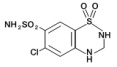
Serum Electrolyte Abnormalities: Spironolactone can cause hyperkalemia. The risk of hyperkalemia may be increased in patients with renal insufficiency, diabetes mellitus or with concomitant use of drugs that raise serum potassium (see Drug Interactions). Hydrochlorothiazide can cause hypokalemia and hyponatremia. The risk of hypokalemia may be increased in patients with cirrhosis, brisk diuresis, or with concomitant use of drugs that lower serum potassium. Hypomagnesemia can result in hypokalemia which appears difficult to treat despite potassium repletion. Monitor serum electrolytes periodically.
Gynecomastia: Gynecomastia may develop in association with the use of spironolactone; physicians should be alert to its possible onset. The development of gynecomastia appears to be related to both dosage level and duration of therapy and is normally reversible when spironolactone and hydrochlorothiazide tablets are discontinued. In rare instances, some breast enlargement may persist when spironolactone and hydrochlorothiazide tablets are discontinued.
Somnolence: Somnolence and dizziness have been reported to occur in some patients. Caution is advised when driving or operating machinery until the response to initial treatment has been determined.
ACE inhibitors, Angiotensin II receptor antagonists, aldosterone blockers, potassium supplements, heparin, low molecular weight heparin, and other drugs known to cause hyperkalemia: Concomitant administration may lead to severe hyperkalemia.
Alcohol, barbiturates, or narcotics: Potentiation of orthostatic hypotension may occur.
Antidiabetic drugs (e.g., oral agents, insulin): Dosage adjustment of the antidiabetic drug may be required (see Precautions).
Corticosteroids, ACTH: Intensified electrolyte depletion, particularly hypokalemia, may occur.
Pressor amines (e.g., norepinephrine): Both spironolactone and hydrochlorothiazide reduce the vascular responsiveness to norepinephrine. Therefore, caution should be exercised in the management of patients subjected to regional or general anesthesia while they are being treated with spironolactone and hydrochlorothiazide tablets.
Skeletal muscle relaxants, nondepolarizing (e.g., tubocurarine): Possible increased responsiveness to the muscle relaxant may result.
Lithium: Lithium generally should not be given with diuretics. Diuretic agents reduce the renal clearance of lithium and add a high risk of lithium toxicity.
Nonsteroidal anti-inflammatory drugs (NSAIDs): In some patients, the administration of an NSAID can reduce the diuretic, natriuretic, and antihypertensive effects of loop, potassium-sparing, and thiazide diuretics. Combination of NSAIDs, e.g., indomethacin, with potassium-sparing diuretics has been associated with severe hyperkalemia. Therefore, when spironolactone and hydrochlorothiazide tablets and NSAIDs are used concomitantly, the patient should be observed closely to determine if the desired effect of the diuretic is obtained.
Acetylsalicylic acid: Acetylsalicylic acid may reduce the efficacy of spironolactone. Therefore, when spironolactone and hydrochlorothiazide tablets and acetylsalicylic acid are used concomitantly, spironolactone and hydrochlorothiazide tablets may need to be titrated to higher maintenance dose and the patient should be observed closely to determine if the desired effect is obtained.
Digoxin: Spironolactone has been shown to increase the half-life of digoxin. This may result in increased serum digoxin levels and subsequent digitalis toxicity. Monitor serum digoxin levels and adjust dose accordingly. Thiazide-induced electrolyte disturbances, i.e. hypokalemia, hypomagnesemia, increase the risk of digoxin toxicity, which may lead to fatal arrhythmic events (see Precautions).
Cholestyramine: Hyperkalemic metabolic acidosis has been reported in patients given spironolactone concurrently with cholestyramine.
Spironolactone: Orally administered spironolactone has been shown to be a tumorigen in dietary administration studies performed in rats, with its proliferative effects manifested on endocrine organs and the liver. In an 18-month study using doses of about 50, 150, and 500 mg/kg/day, there were statistically significant increases in benign adenomas of the thyroid and testes and, in male rats, a dose-related increase in proliferative changes in the liver (including hepatocytomegaly and hyperplastic nodules). In a 24-month study in which the same strain of rat was administered doses of about 10, 30 and 100 mg spironolactone/kg/day, the range of proliferative effects included significant increases in hepatocellular adenomas and testicular interstitial cell tumors in males, and significant increases in thyroid follicular cell adenomas and carcinomas in both sexes. There was also a statistically significant, but not dose-related, increase in benign uterine endometrial stromal polyps in females.
A dose-related (above 30 mg/kg/day) incidence of myelocytic leukemia was observed in rats fed daily doses of potassium canrenoate (a compound chemically similar to spironolactone and whose primary metabolite, canrenone, is also a major product of spironolactone in man) for a period of one year. In two year studies in the rat, oral administration of potassium canrenoate was associated with myelocytic leukemia and hepatic, thyroid, testicular, and mammary tumors.
Neither spironolactone nor potassium canrenoate produced mutagenic effects in tests using bacteria or yeast. In the absence of metabolic activation, neither spironolactone nor potassium canrenoate has been shown to be mutagenic in mammalian tests in vitro. In the presence of metabolic activation, spironolactone has been reported to be negative in some mammalian mutagenicity tests in vitro and inconclusive (but slightly positive) for mutagenicity in other mammalian tests in vitro. In the presence of metabolic activation, potassium canrenoate has been reported to test positive for mutagenicity in some mammalian tests in vitro, inconclusive in others, and negative in still others.
In a three-litter reproduction study in which female rats received dietary doses of 15 and 500 mg spironolactone/kg/day, there were no effects on mating and fertility, but there was a small increase in incidence of stillborn pups at 500 mg/kg/day. When injected into female rats (100 mg/kg/day for 7 days, i.p.), spironolactone was found to increase the length of the estrous cycle by prolonging diestrus during treatment and inducing constant diestrus during a two week posttreatment observation period. These effects were associated with retarded ovarian follicle development and a reduction in circulating estrogen levels, which would be expected to impair mating, fertility, and fecundity. Spironolactone (100 mg/kg/day), administered i.p. to female mice during a two week cohabitation period with untreated males, decreased the number of mated mice that conceived (effect shown to be caused by an inhibition of ovulation) and decreased the number of implanted embryos in those that became pregnant (effect shown to be caused by an inhibition of implantation), and at 200 mg/kg, also increased the latency period to mating.
Hydrochlorothiazide: Two year feeding studies in mice and rats conducted under the auspices of the National Toxicology Program (NTP) uncovered no evidence of a carcinogenic potential of hydrochlorothiazide in female mice (at doses of up to approximately 600 mg/kg/day) or in male and female rats (at doses of up to approximately 100 mg/kg/day). The NTP, however, found equivocal evidence for hepatocarcinogenicity in male mice.
Hydrochlorothiazide was not genotoxic in in vitro assays using strains TA 98, TA 100, TA 1535, TA 1537, and TA 1538 of Salmonella typhimurium (Ames assay) and in the Chinese Hamster Ovary (CHO) test for chromosomal aberrations, or in in vivo assays using mouse germinal cell chromosomes, Chinese hamster bone marrow chromosomes, and the Drosophila sex-linked recessive lethal trait gene. Positive test results were obtained only in the in vitro CHO Sister Chromatid Exchange (clastogenicity) and in the Mouse Lymphoma Cell (mutagenicity) assays, using concentrations of hydrochlorothiazide from 43 to 1300 µg/mL, and in the Aspergillus nidulans non-disjunction assay at an unspecified concentration.
Hydrochlorothiazide had no adverse effects on the fertility of mice and rats of either sex in studies wherein these species were exposed, via their diet, to doses of up to 100 and 4 mg/kg, respectively, prior to mating and throughout gestation.
Hydrochlorothiazide: Studies in which hydrochlorothiazide was orally administered to pregnant mice and rats during their respective periods of major organogenesis at doses up to 3000 and 1000 mg hydrochlorothiazide/kg, respectively, provided no evidence of harm to the fetus. There are, however, no adequate and well-controlled studies in pregnant women.
Spironolactone: Teratology studies with spironolactone have been carried out in mice and rabbits at doses of up to 20 mg/kg/day. On a body surface area basis, this dose in the mouse is substantially below the maximum recommended human dose and, in the rabbit, approximates the maximum recommended human dose. No teratogenic or other embryo-toxic effects were observed in mice, but the 20 mg/kg dose caused an increased rate of resorption and a lower number of live fetuses in rabbits. Because of its antiandrogenic activity and the requirement of testosterone for male morphogenesis, spironolactone may have the potential for adversely affecting sex differentiation of the male during embryogenesis. When administered to rats at 200 mg/kg/day between gestation days 13 and 21 (late embryogenesis and fetal development), feminization of male fetuses was observed. Offspring exposed during late pregnancy to 50 and 100 mg/kg/day doses of spironolactone exhibited changes in the reproductive tract including dose-dependent decreases in weights of the ventral prostate and seminal vesicle in males, ovaries and uteri that were enlarged in females, and other indications of endocrine dysfunction, that persisted into adulthood. There are no adequate and well-controlled studies with spironolactone and hydrochlorothiazide tablets in pregnant women. Spironolactone has known endocrine effects in animals including progestational and antiandrogenic effects. The antiandrogenic effects can result in apparent estrogenic side effects in humans, such as gynecomastia. Therefore, the use of spironolactone and hydrochlorothiazide in pregnant women requires that the anticipated benefit be weighed against the possible hazards to the fetus.
Treatment: Induce vomiting or evacuate the stomach by lavage. There is no specific antidote. Treatment is supportive to maintain hydration, electrolyte balance, and vital functions.
Patients who have renal impairment may develop spironolactone-induced hyperkalemia. In such cases, spironolactone and hydrochlorothiazide tablets should be discontinued immediately. With severe hyperkalemia, the clinical situation dictates the procedures to be employed. These include the intravenous administration of calcium chloride solution, sodium bicarbonate solution, and/or the oral or parenteral administration of glucose with a rapid-acting insulin preparation. These are temporary measures to be repeated as required. Cationic exchange resins such as sodium polystyrene sulfonate may be orally or rectally administered. Persistent hyperkalemia may require dialysis.
Edema in adults (congestive heart failure, hepatic cirrhosis, or nephrotic syndrome). The usual maintenance dose of spironolactone and hydrochlorothiazide tablets is 100 mg each of spironolactone and hydrochlorothiazide daily, administered in a single dose or in divided doses, but may range from 25 mg to 200 mg of each component daily depending on the response to the initial titration. In some instances it may be desirable to administer separate tablets of either spironolactone or hydrochlorothiazide in addition to spironolactone and hydrochlorothiazide tablets in order to provide optimal individual therapy.
The onset of diuresis with spironolactone and hydrochlorothiazide tablets occurs promptly and, due to prolonged effect of the spironolactone component, persists for two to three days after spironolactone and hydrochlorothiazide tablets are discontinued.
Essential hypertension. Although the dosage will vary depending on the results of titration of the individual ingredients, many patients will be found to have an optimal response to 50 mg to 100 mg each of spironolactone and hydrochlorothiazide daily, given in a single dose or in divided doses.
Concurrent potassium supplementation is not recommended when spironolactone and hydrochlorothiazide tablets are used in the long-term management of hypertension or in the treatment of most edematous conditions, since the spironolactone content of spironolactone and hydrochlorothiazide tablets is usually sufficient to minimize loss induced by the hydrochlorothiazide component.