Felodipine Tablet, Film Coated
Product Images NDC 63629-2016
View Photos of Packaging, Regulatory Labels, and Product Appearance
Product Visual Gallery
This gallery contains 4 technical images submitted to the FDA as part of the official labeling for Felodipine (NDC 63629-2016). Unlike standard consumer photos, these assets often include clinical data figures, molecular chemical structures, and official manufacturer packaging layouts.
As provided by Bryant Ranch Prepack, these visuals offer a comprehensive scientific overview of the product's physical and chemical identity, aiding pharmacists and researchers in product verification and study.
Product Images & Figures Index
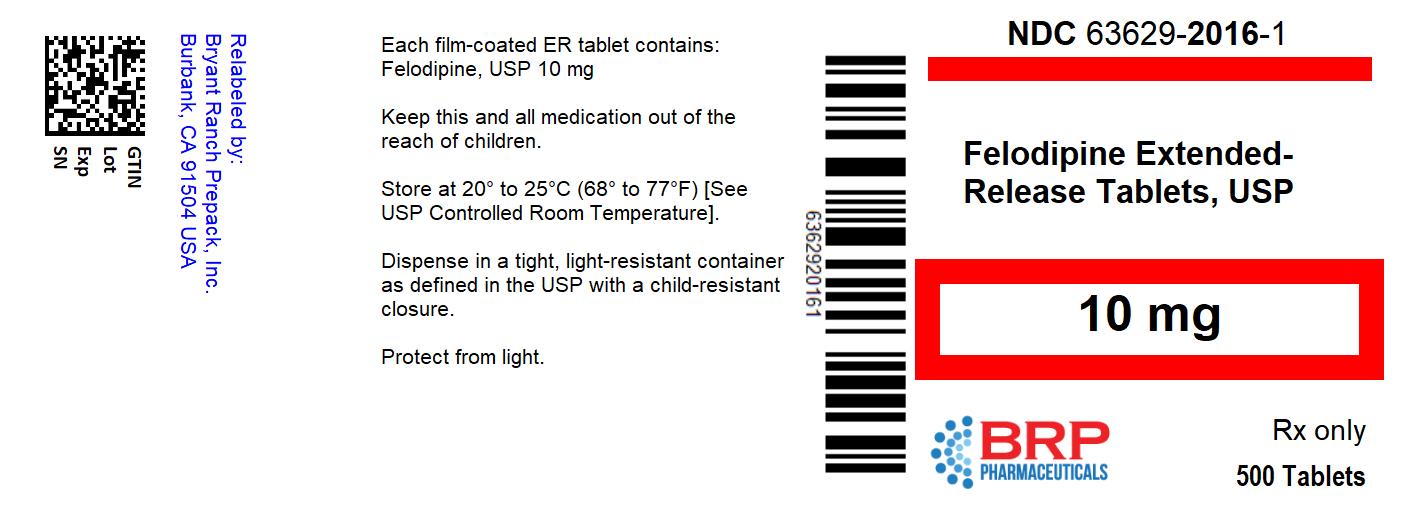
Label (Lbl636292016)
Felodipine Extended-Release Tablets, USP is a medication to be kept out of children's reach. It contains 10 mg of Felodipine, USP and is dispensed in a tightly sealed, light-resistant container with a child-resistant closure. The tablets are film-coated and come in a pack of 500. It should be stored at 20° to 25°C (68° to 77°F) and protected from light. NILD and Aq pajaqeley are not relevant to the medication.*
Table 1 (Table 1)
This is a tabular representation of two studies evaluating the mean reductions in blood pressure (in mmHg) for different doses of medication. The first study was conducted for 8 weeks and included three different doses of medication: 5mg, 10mg, and 25mg. The second study was conducted for 4 weeks and included two doses, 0mg (placebo) and 20mg. The table also includes the number of patients for each dose and the mean peak and trough response ratios. Placebo response was subtracted, and the note at the end states that a different number of patients were available for peak and trough measurements.*
Table 2 (Table 2)
This is a table showing the percentage of patients experiencing adverse events during controlled trials of Felodipine Extended-Release Tablets as Monotherapy, without regard to causality. The table shows the adverse events experienced in each dosage group (placebo, 2.5mg, 5mg, and 10mg) and the number of patients experiencing the event, with the incidence of discontinuations shown in parentheses. The events are categorized based on body system and include peripheral edema, asthenia, palpitations, nausea, headache, dizziness, and rash among others. The table indicates that most adverse events were more common in the higher dosage groups.*
* These product label images have been analyzed using experimental machine learning. Please verify findings with the primary label text.