Duloxetine
Product Images NDC 63629-5174

View Photos of Packaging, Regulatory Labels, and Product Appearance

Product Visual Gallery

This gallery contains 11 technical images submitted to the FDA as part of the official labeling for Duloxetine (NDC 63629-5174). Unlike standard consumer photos, these assets often include clinical data figures, molecular chemical structures, and official manufacturer packaging layouts.

As provided by Bryant Ranch Prepack, these visuals offer a comprehensive scientific overview of the product's physical and chemical identity, aiding pharmacists and researchers in product verification and study.

FDA Label Image

Lbl636295174

Lbl636295174
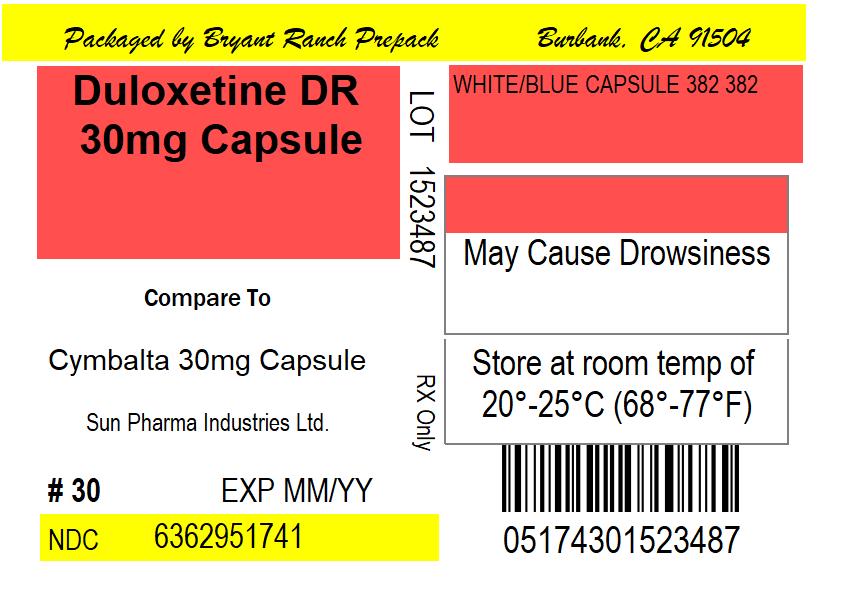
Label for Duloxetine DR 30 mg capsule by Bryant Ranch Prepack. The label compares it to Cymbalta 30 mg capsule from Sun Pharma Industries Ltd. It includes storage instructions to keep at room temperature (20°-25°C). The label also warns that the product may cause drowsiness and features a barcode with the NDC 63629-5174.*
FDA Label Image

Spl Duloxetine Figure1

Spl Duloxetine Figure1
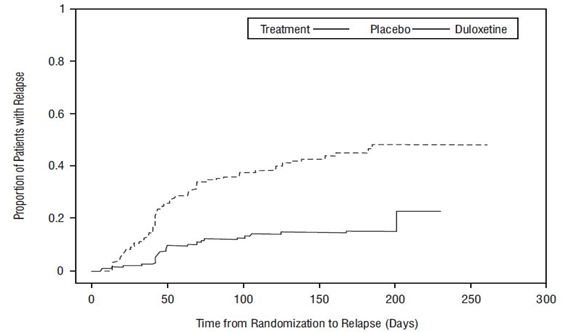
A line graph showing the proportion of patients experiencing relapse over time in days from randomization. The graph compares three groups: Treatment, Placebo, and Duloxetine, illustrating their relapse rates up to approximately 220 days.*
FDA Label Image

Spl Duloxetine Figure10

Spl Duloxetine Figure10
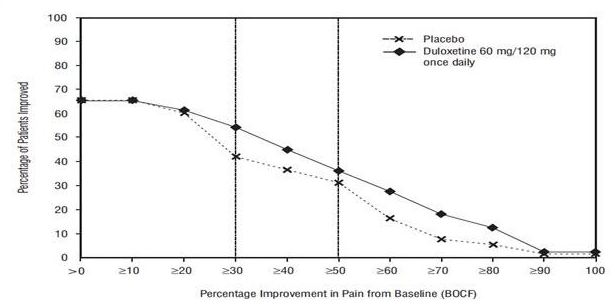
A line graph comparing the percentage of patients improved versus percentage improvement in pain from baseline using the Brief Overall Common Factor (BOCF) method. It shows two lines: one for placebo and one for Duloxetine 60 mg/120 mg once daily, illustrating patient response differences across varying levels of pain improvement.*
FDA Label Image

Spl Duloxetine Figure2

Spl Duloxetine Figure2
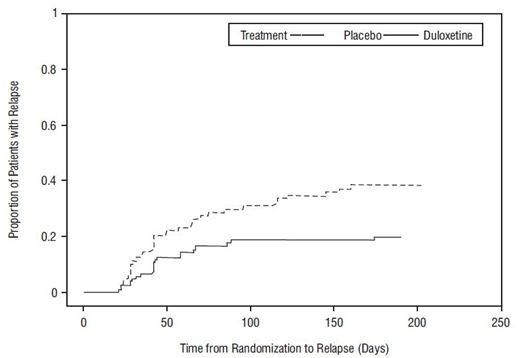
A Kaplan-Meier curve comparing time from randomization to relapse in days. The graph shows the proportion of patients with relapse over time for two groups: placebo and Duloxetine treatment. The placebo group curve rises more steeply, indicating a higher proportion of relapse compared to the Duloxetine group.*
FDA Label Image

Spl Duloxetine Figure3

Spl Duloxetine Figure3
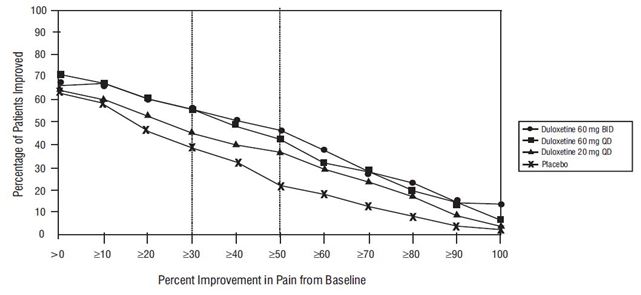
A line graph depicting the percentage of patients improved against the percent improvement in pain from baseline. It compares four groups: Duloxetine 60 mg BID, Duloxetine 60 mg QD, Duloxetine 20 mg QD, and placebo, illustrating their respective efficacy trends in pain improvement over increasing percentage thresholds.*
FDA Label Image

Spl Duloxetine Figure4

Spl Duloxetine Figure4
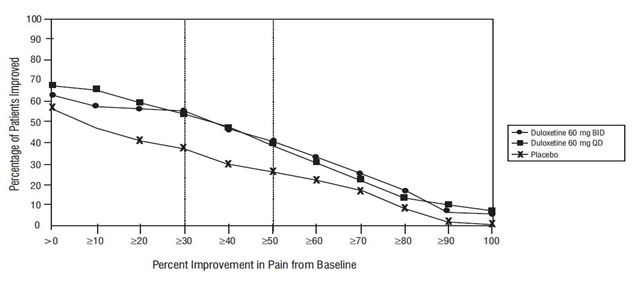
A line graph comparing the percentage of patients with pain improvement from baseline at different percent improvement levels for Duloxetine 60 mg BID, Duloxetine 60 mg QD, and placebo. The y-axis shows the percentage of patients improved, and the x-axis shows the percent improvement in pain from baseline. The graph includes a legend to differentiate between the three groups.*
FDA Label Image

Spl Duloxetine Figure5

Spl Duloxetine Figure5
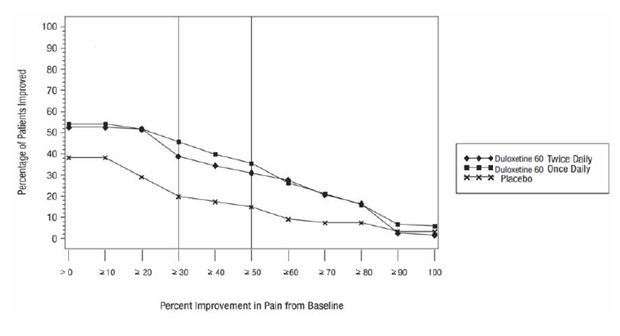
A line chart comparing percentage of patients improved by different levels of percent improvement in pain from baseline for Duloxetine 60 mg twice daily, Duloxetine 60 mg once daily, and placebo. The x-axis represents percent improvement in pain, and the y-axis shows the percentage of patients improved, illustrating higher improvement percentages for the Duloxetine groups compared to placebo.*
FDA Label Image

Spl Duloxetine Figure6

Spl Duloxetine Figure6
A line graph depicting the percentage of patients improved versus percent improvement in pain from baseline. It compares Duloxetine at doses of 20 mg, 60 mg, and 120 mg once daily, alongside placebo, showing trends of patient improvement across various pain reduction thresholds.*
FDA Label Image

Spl Duloxetine Figure8

Spl Duloxetine Figure8
A line graph comparing the percentage of patients improved between placebo and Duloxetine 60/120 mg once daily. The x-axis represents percent improvement in pain from baseline, and the y-axis shows the percentage of patients improved. Duloxetine consistently shows higher improvement percentages than placebo across the range.*
FDA Label Image

Spl Duloxetine Figure9

Spl Duloxetine Figure9
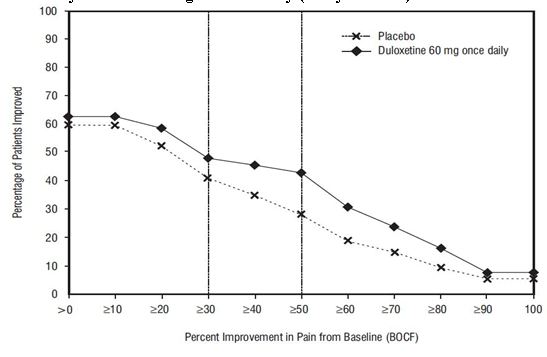
A line chart comparing the percentage of patients improved over various percent improvements in pain from baseline (BOCF) between placebo and Duloxetine 60 mg once daily. The graph shows two lines, one for placebo marked with crosses and one for Duloxetine marked with diamonds, illustrating patient outcomes across pain improvement percentages from >0 to 100.*
FDA Label Image

Spl Duloxetine Structure

Spl Duloxetine Structure
Chemical structure of duloxetine hydrochloride, showing its molecular components including a thiophene ring, a naphthyl group, and a methylated amine hydrochloride moiety.*

* About these descriptions: Image descriptions on this page are generated by automated AI analysis of the product label images from the manufacturer's FDA label submission (SPL). They are provided for reference only and may contain errors or omissions. Always rely on the printed label itself and the official FDA labeling, and consult a pharmacist or healthcare professional with any questions about this product.