Donepezil Hydrochloride Tablet, Film Coated
Product Images NDC 63629-9326

View Photos of Packaging, Regulatory Labels, and Product Appearance

Product Visual Gallery

This gallery contains 15 technical images submitted to the FDA as part of the official labeling for Donepezil Hydrochloride (NDC 63629-9326). Unlike standard consumer photos, these assets often include clinical data figures, molecular chemical structures, and official manufacturer packaging layouts.

As provided by Bryant Ranch Prepack, these visuals offer a comprehensive scientific overview of the product's physical and chemical identity, aiding pharmacists and researchers in product verification and study.

FDA Label Image

Figure 1. Time-course Of The Change From Baseline In Adas-cog Score For Patients Completing 24 Weeks Of Treatment. (Donepezil Fig1)
FDA Label Image

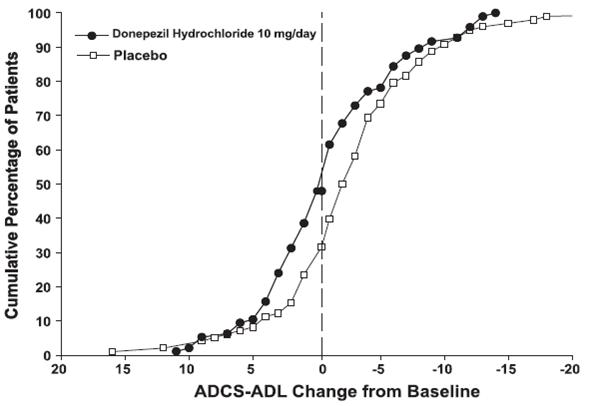
Figure 10. Cumulative Percentage Of Patients Completing 6 Months Of Double-blind Treatment With Particular Changes From Baseline In Adcs-adl-severe Scores. (Donepezil Fig10)

FDA Label Image

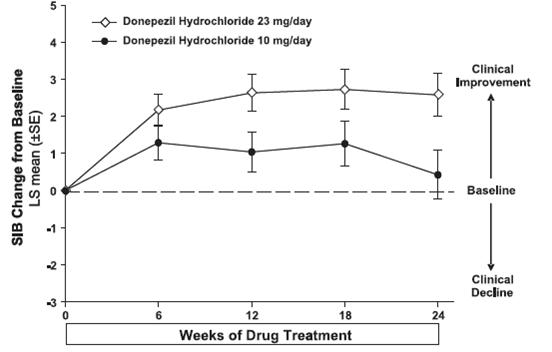
Figure 11. Time-course Of The Change From Baseline In Sib Score For Patients Completing 24 Weeks Of Treatment. (Donepezil Fig11)

Figure 11. Time-course Of The Change From Baseline In Sib Score For Patients Completing 24 Weeks Of Treatment. (Donepezil Fig11)
This text presents information regarding the change from baseline in clinical improvement or decline for individuals undergoing treatment with Donepezil Hydrochloride at different dosages over 12 to 18 weeks. The data includes LS mean values and standard errors.*
FDA Label Image

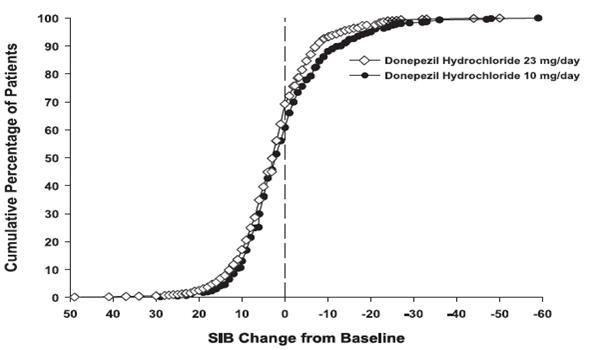
Figure 12. Cumulative Percentage Of Patients Completing 24 Weeks Of Double-blind Treatment With Specified Changes From Baseline Sib Scores. (Donepezil Fig12)

FDA Label Image

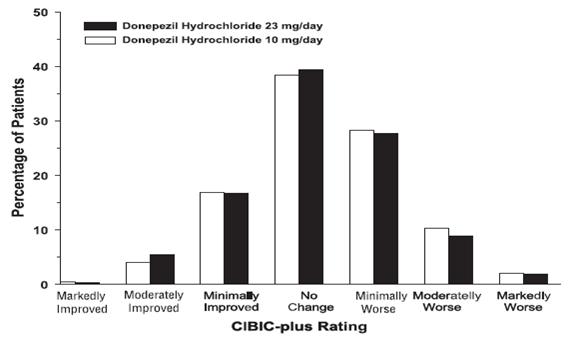
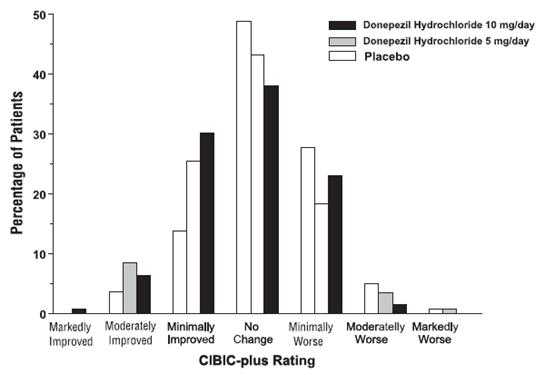
Figure 13. Frequency Distribution Of Cibic-plus Scores At Week 24. (Donepezil Fig13)

Figure 13. Frequency Distribution Of Cibic-plus Scores At Week 24. (Donepezil Fig13)
This document seems to display a comparison related to Donepezil Hydrochloride dosages. It includes a scale indicating different levels of improvement or worsening, as well as a CIBIC-plus Rating.*
FDA Label Image

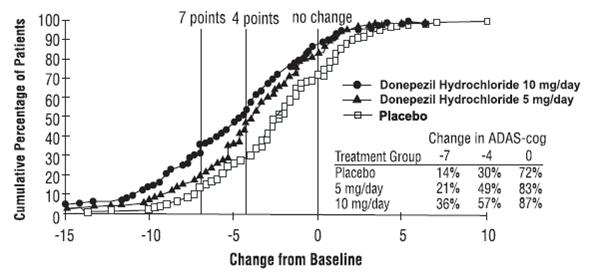
Figure 2. Cumulative Percentage Of Patients Completing 24 Weeks Of Double-blind Treatment With Specified Changes From Baseline Adas-cog Scores. The Percentages Of Randomized Patients Who Completed The Study Were: Placebo 80%, 5 mg/day 85%, And 10 mg/day 68%. (Donepezil Fig2)

FDA Label Image

Figure 3. Frequency Distribution Of Cibic-plus Scores At Week 24. (Donepezil Fig3)

Figure 3. Frequency Distribution Of Cibic-plus Scores At Week 24. (Donepezil Fig3)
This text appears to be a table showing the percentage of patients with different conditions or responses, possibly related to medication or treatment efficacy. It includes categories such as "Maredly improves", "Modeey Momaly", "Worse", and "CIBIC-plus Rating". The specific details and context of this information may provide insights into the efficacy of treatments being evaluated for certain conditions.*
FDA Label Image

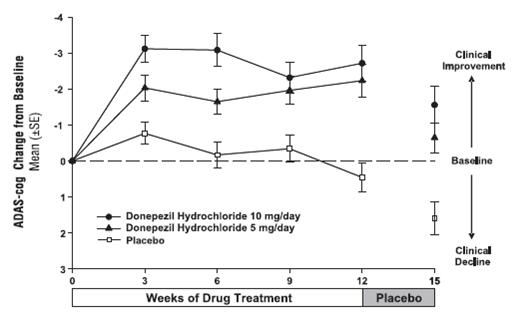
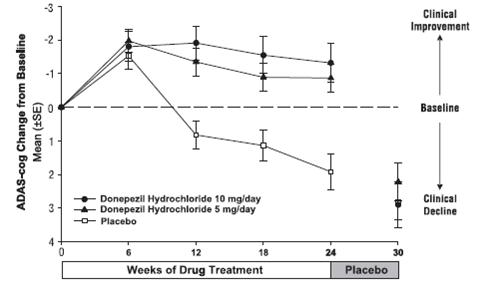
Figure 4. Time-course Of The Change From Baseline In Adas-cog Score For Patients Completing The 15-week Study. (Donepezil Fig4)

Figure 4. Time-course Of The Change From Baseline In Adas-cog Score For Patients Completing The 15-week Study. (Donepezil Fig4)
This text provides information regarding the ADAS-cog change from baseline for different treatments, including donepezil hydrochloride and placebo. The data includes clinical improvement and decline, with details about the dosage used for each treatment. The text seems to be related to a clinical study or trial evaluating the effects of these treatments on cognitive function.*
FDA Label Image

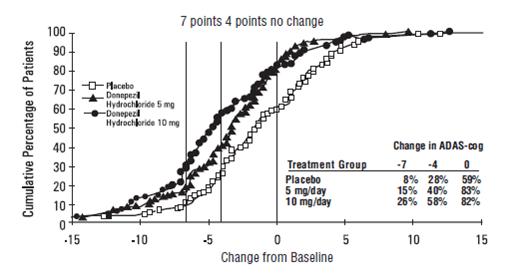
Figure 5. Cumulative Percentage Of Patients With Specified Changes From Baseline Adas-cog Scores. The Percentages Of Randomized Patients Within Each Treatment Group Who Completed The Study Were: Placebo 93%, 5 mg/day 90%, And 10 mg/day 82%. (Donepezil Fig5)

FDA Label Image

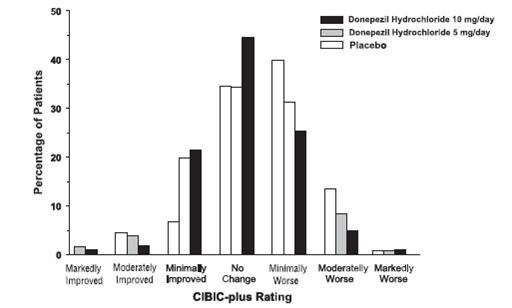
Figure 6. Frequency Distribution Of Cibic-plus Scores At Week 12. (Donepezil Fig6)

Figure 6. Frequency Distribution Of Cibic-plus Scores At Week 12. (Donepezil Fig6)
This appears to be a chart showing the percentage of patients and their responses to different treatments possibly related to a medical study or clinical trial. The chart includes categories for "Improved", "Change", and "Worse" with different levels marked such as "Markedly", "Moderately", "Minimally", and "No". Multiple treatments are listed including Donepezil Hydrochloride at different doses (10 mg/day and 5 mg/day) and Placebo. Furthermore, the CIBIC-plus Rating is mentioned, suggesting the use of this rating scale in assessing the patients' condition.*
FDA Label Image

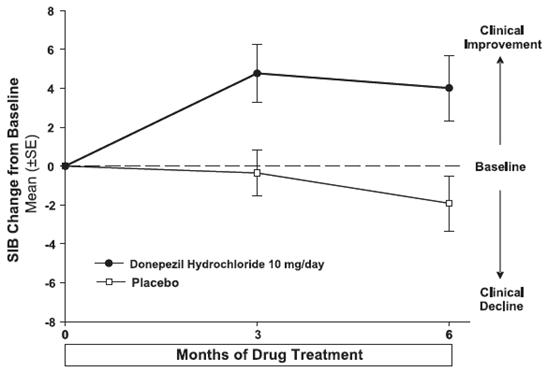
Figure 7. Time Course Of The Change From Baseline In Sib Score For Patients Completing 6 Months Of Treatment. (Donepezil Fig7)

Figure 7. Time Course Of The Change From Baseline In Sib Score For Patients Completing 6 Months Of Treatment. (Donepezil Fig7)
This text provides data on the change from baseline in clinical improvement observed after 3 months of drug treatment with Donepezil Hydrochloride 10 mg/day compared to a placebo. The mean values are presented with standard error.*
FDA Label Image

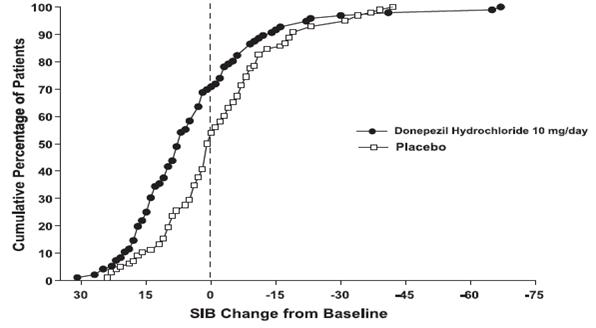
Figure 8. Cumulative Percentage Of Patients Completing 6 Months Of Double-blind Treatment With Particular Changes From Baseline In Sib Scores. (Donepezil Fig8)

Figure 8. Cumulative Percentage Of Patients Completing 6 Months Of Double-blind Treatment With Particular Changes From Baseline In Sib Scores. (Donepezil Fig8)
This text shows the cumulative percentage of patients for Donepezil Hydrochloride 10 mg/day and Placebo across various SIB change points from baseline. The graph depicts data at 30%, 45%, and 75% intervals for both treatments.*
FDA Label Image

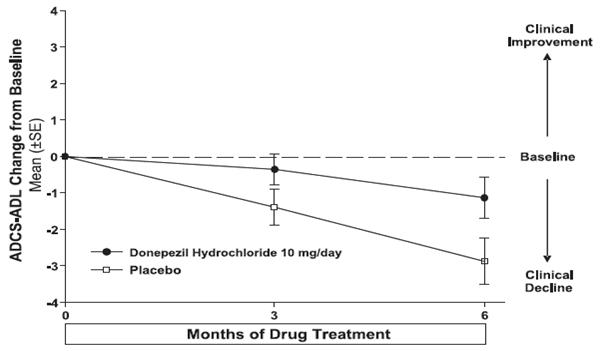
Figure 9. Time Course Of The Change From Baseline In Adcs-adl-severe Score For Patients Completing 6 Months Of Treatment. (Donepezil Fig9)

Figure 9. Time Course Of The Change From Baseline In Adcs-adl-severe Score For Patients Completing 6 Months Of Treatment. (Donepezil Fig9)
This text indicates the change from baseline in activities of daily living (ADL) evaluated with the Alzheimer's Disease Assessment Scale - Cognitive Subscale (ADAS-cog) after 3 months of treatment with donepezil hydrochloride 10 mg/day compared to placebo. The graph shows improvement over time for ADL with the drug treatment.*
FDA Label Image

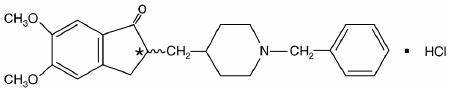
Chemical Structure (Donepezil Str)

FDA Label Image

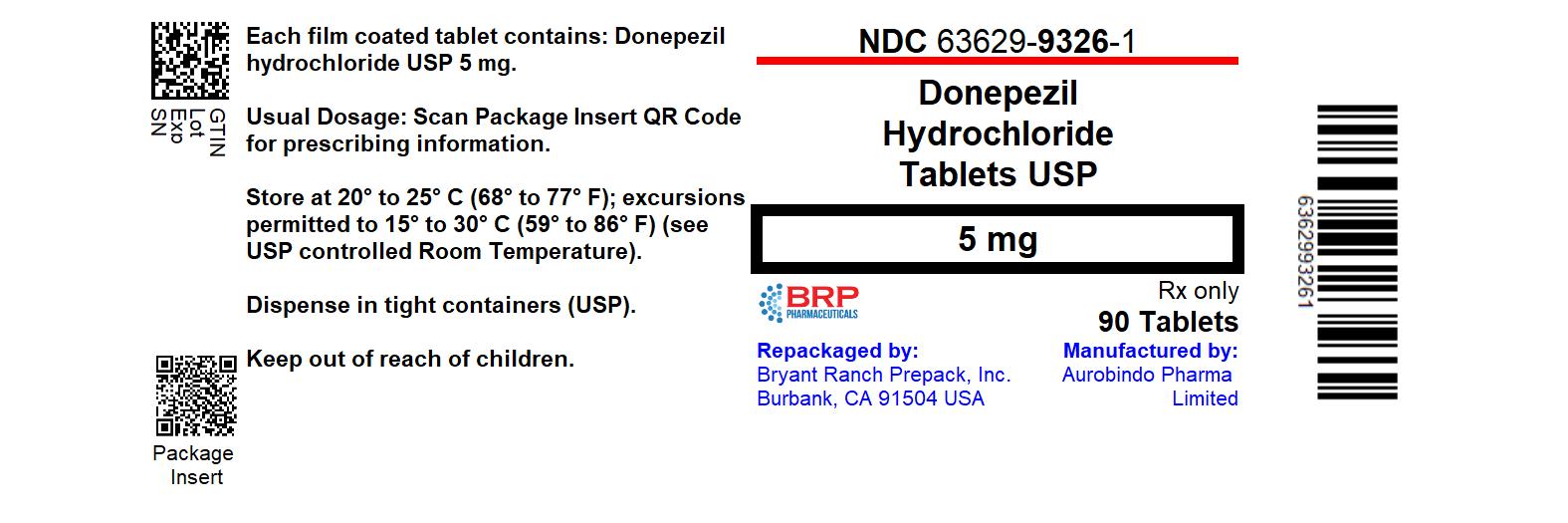
Label (Lbl636299326)

Label (Lbl636299326)
This is a package insert for Donepezil hydrochloride USP 5 mg tablets. It includes information on the usual dosage and storage instructions for the medication. The packaging needs to be stored at 20° to 25° C, with excursions permitted to 15° to 30° C. The tablets should be kept in tight containers and out of reach of children. The tablets are repackaged by Bryant Ranch Prepack, Inc. and manufactured by Aurobindo Pharma Limited. More detailed prescribing information can be accessed via the QR code provided in the insert.*

* These product label images have been analyzed using experimental machine learning. Please verify findings with the primary label text.