New Onset Diabetes Mellitus (NODM)
NODM reported based on adverse reactions and random serum glucose values, was 9% in the everolimus group compared to 7% in the control group.
Endocrine Effects in Males
In the everolimus group, serum testosterone levels significantly decreased while the FSH levels significantly increased without significant changes being observed in the control group. In both the everolimus and the control groups mean testosterone and FSH levels remained within the normal range with the mean FSH level in the everolimus group being at the upper limit of the normal range (11.1 U/L). More patients were reported with erectile dysfunction in the everolimus treatment group compared to the control group (5% compared to 2%, respectively).
Table 2 compares the incidence of treatment-emergent adverse reactions reported with an incidence of greater than or equal to 10% for patients receiving everolimus with reduced dose cyclosporine or mycophenolic acid with standard dose cyclosporine. Within each MedDRA system organ class, the adverse reactions are presented in order of decreasing frequency.
Table 2. Incidence Rates of Frequent (Greater than or Equal to 10% in Any Treatment Group) Adverse Reactions by Primary System Organ Class and Preferred Term after Kidney Transplantation (Safety Population*)
* The safety analysis population defined as all randomized kidney transplant patients who received at least one dose of treatment and had at least one post-baseline safety assessment. |
Primary System Organ Class Preferred Term
|
Everolimus tablets1.5 mgWith Reduced Exposure Cyclosporine
N = 274
n (%) |
Mycophenolic Acid1.44 gWith Standard Exposure CyclosporineN = 273
n (%)
|
Any Adverse Reactions*
|
271 (99)
|
270 (99)
|
Blood Lymphatic System Disorders |
93 (34)
|
111 (41)
|
Anemia
|
70 (26)
|
68 (25)
|
Leukopenia
|
8 (3)
|
33 (12)
|
Gastrointestinal Disorders
|
196 (72)
|
207 (76)
|
Constipation
|
105 (38)
|
117 (43)
|
Nausea
|
79 (29)
|
85 (31)
|
Diarrhea
|
51 (19)
|
54 (20)
|
Vomiting
|
40 (15)
|
60 (22)
|
Abdominal pain
|
36 (13)
|
42 (15)
|
Dyspepsia
|
12 (4)
|
31 (11)
|
Abdominal pain upper
|
9 (3)
|
30 (11)
|
General Disorders and Administrative site Conditions
|
181 (66)
|
160 (59)
|
Edema Peripheral
|
123 (45)
|
108 (40)
|
Pyrexia
|
51 (19)
|
40 (15)
|
Fatigue
|
25 (9)
|
28 (10)
|
Infections and Infestations
|
169 (62)
|
185 (68)
|
Urinary Tract Infection
|
60 (22)
|
63 (23)
|
Upper Respiratory Tract Infection
|
44 (16)
|
49 (18)
|
Injury, Poisoning and Procedural Complications
|
163 (60)
|
163 (60)
|
Incision site pain
|
45 (16)
|
47 (17)
|
Procedural pain
|
40 (15)
|
37 (14)
|
Investigations
|
137 (50)
|
133 (49)
|
Blood creatinine Increased
|
48 (18)
|
59 (22)
|
Metabolism and Nutrition Disorders
|
222 (81)
|
199 (73)
|
Hyperlipidemia
|
57 (21)
|
43 (16)
|
Hyperkalemia
|
49 (18)
|
48 (18)
|
Hypercholesterolemia
|
47 (17)
|
34 (13)
|
Dyslipidemia
|
41 (15)
|
24 (9)
|
Hypomagnesemia
|
37 (14)
|
40 (15)
|
Hypophosphatemia
|
35 (13)
|
35 (13)
|
Hyperglycemia
|
34 (12)
|
38 (14)
|
Hypokalemia
|
32 (12)
|
32 (12)
|
Musculoskeletal and Connective Tissue Disorders
|
112 (41)
|
105 (39)
|
Pain in Extremity
|
32 (12)
|
29 (11)
|
Back pain
|
30 (11)
|
28 (10)
|
Nervous System Disorders
|
92 (34)
|
109 (40)
|
Headache
|
49 (18)
|
40 (15)
|
Tremor
|
23 (8)
|
38 (14)
|
Psychiatric Disorders
|
90 (33)
|
72 (26)
|
Insomnia
|
47 (17)
|
43 (16)
|
Renal and Urinary Disorders
|
112 (41)
|
124 (45)
|
Hematuria
|
33 (12)
|
33 (12)
|
Dysuria
|
29 (11)
|
28 (10)
|
Respiratory, Thoracic and Mediastinal Disorders
|
86 (31)
|
93 (34)
|
Cough
|
20 (7)
|
30 (11)
|
Vascular Disorders
|
122 (45)
|
124 (45)
|
Hypertension
|
81 (30)
|
82 (30)
|
Adverse reaction that occurred with at least a 5% higher frequency in the everolimus 1.5 mg group compared to the control group were: peripheral edema (45% compared to 40%), hyperlipidemia (21% compared to 16%), dyslipidemia (15% compared to 9%), and stomatitis/mouth ulceration (8% compared to 3%).
A third treatment group of everolimus 3 mg per day (1.5 mg twice daily; target trough concentrations 6 to 12 ng/mL) with reduced exposure cyclosporine was included in the study described above. Although as effective as the lower dose everolimus group, the overall safety was worse and consequently higher doses of everolimus cannot be recommended. Out of 279 patients, 95 (34%) discontinued the study medication with 57 (20%) doing so because of adverse reactions. The most frequent adverse reactions leading to discontinuation of everolimus when used at this higher dose were injury, poisoning and procedural complications (everolimus 1.5 mg: 5%, everolimus 3 mg: 7%, and control: 2%), infections (2%, 6%, and 3%, respectively), renal and urinary disorders (4%, 7%, and 4%, respectively) and gastrointestinal disorders (1%, 3%, and 2%).
The combination of fixed dose everolimus and standard doses cyclosporine in previous kidney clinical trials resulted in frequent elevations of serum creatinine with higher mean and median serum creatinine values was observed than in the current study with reduced exposure cyclosporine. These results indicate that everolimus increases the cyclosporine-induced nephrotoxicity; and therefore should only be used in a concentration-controlled regimen with reduced exposure cyclosporine [see Boxed Warnings, Indications and Usage (1.1) and Warnings and Precautions (5.6)].
Liver Transplantation
The data described below reflect exposure to everolimus starting 30 days after transplantation in an open-label, randomized trial of liver transplant patients. Seven hundred and nineteen (719) patients who fulfilled the inclusion/exclusion criteria [see Clinical Studies (14.2)] were randomized into one of the three treatment groups of the study. During the first 30 days prior to randomization patients received tacrolimus and corticosteroids, with or without mycophenolate mofetil (about 70% to 80% received MMF). No induction antibody was administered. At randomization, MMF was discontinued and patients were randomized to everolimus initial dose of 1 mg twice per day (2 mg daily) and adjusted to protocol specified target trough concentrations of 3 to 8 ng/mL with reduced exposure tacrolimus [protocol specified target troughs 3 to 5 ng/mL] (N = 245) [see Clinical Pharmacology (12.7, 12.9)] or to a control group of standard exposure tacrolimus [protocol specified target troughs 8 to 12 ng/mL up to Month 4 post-transplant, then 6 to 10 ng/mL Month 4 through Month 12 post-transplant] (N = 241). A third randomized group was discontinued prematurely [see Clinical Studies (14.2)] and is not described in this section.
The population was between 18 and 70 years, more than 50% were 50 years of age (mean age was 54 years in the everolimus group, 55 years in the tacrolimus control group); 74% were male in both everolimus and control groups, respectively, and a majority were Caucasian (86% everolimus group, 80% control group). Demographic characteristics were comparable between treatment groups. The most frequent diseases leading to transplantation were balanced between groups. The most frequent causes of end-stage liver disease (ESLD) were alcoholic cirrhosis, hepatitis C, and hepatocellular carcinoma and were balanced between groups.
Twenty-seven percent (27%) discontinued study drug in the everolimus group compared with 22% for the tacrolimus control group during the first 12 months of study. The most common reason for discontinuation of study medication was due to adverse reactions (19% and 11%, respectively), including proteinuria, recurrent hepatitis C, and pancytopenia in the everolimus group. At 24 months, the rate of discontinuation of study medication in liver transplant patients was greater for the everolimus group (42%) compared to tacrolimus control group (33%).
The overall incidences of serious adverse reactions were 50% (122/245) in the everolimus group and 43% (104/241) in the control group at 12 months and similar at 24 months (56% and 54% respectively). Infections and infestations were reported as serious adverse reactions with the highest incidence followed by gastrointestinal disorders and hepatobiliary disorders.
During the first 12 months of study, 13 deaths were reported in the everolimus group (one patient never took everolimus). In the same 12 month period, 7 deaths were reported in the tacrolimus control group. Deaths occurred in both groups for a variety of reasons and were mostly associated with liver-related issues, infections and sepsis. In the following 12 months of study, four additional deaths were reported in each treatment group.
The most common adverse reactions (reported for greater or equal to 10% patients in any group) in the everolimus group were: diarrhea, headache, peripheral edema, hypertension, nausea, pyrexia, abdominal pain, and leukopenia (see Table 3).
Infections
The overall incidence of infections reported as adverse reactions was 50% for everolimus and 44% in the control group and similar at 24 months (56% and 52% respectively). The types of infections were reported as follows: bacterial 16% vs 12%, viral 17% vs 13%; and fungal infections 2% vs 5% for everolimus and control, respectively [see Warnings and Precautions (5.3)].
Wound Healing and Fluid Collections
Wound healing complications were reported as adverse reactions for 11% of patients in the everolimus group compared to 8% of patients in the control group up to 24 months. Pleural effusions were reported in 5% in both groups, and ascites in 4% of patients in the everolimus group and 3% in the control arm.
Neoplasms
Malignant and benign neoplasms were reported as adverse reactions in 4% of patients in the everolimus group and 7% in the control group at 12 months. In the everolimus group, 3 malignant tumors were reported compared to 9 cases in the control group. For the everolimus group this included lymphoma, lymphoproliferative disorder and a hepatocellular carcinoma, and for the control group included Kaposi’s sarcoma (2), metastatic colorectal cancer, glioblastoma, malignant hepatic neoplasm, pancreatic neuroendocrine tumor, hemophagocytic histiocytosis, and squamous cell carcinomas. At 24 months, the rates of malignancies were similar (10% and 11% respectively) [see Boxed Warning, Warnings and Precautions (5.2)].
Lipid Abnormalities
Hyperlipidemia adverse reactions (including the preferred terms: hyperlipidemia, hypercholesterolemia, blood cholesterol increased, blood triglycerides increased, hypertriglyceridemia lipids increased, total cholesterol/HDL ratio increased, and dyslipidemia) were reported for 24% everolimus patients, and 10% control patients at 12 months. Results were similar at 24 months (28% and 12% respectively).
New Onset of Diabetes After Transplant (NODAT)
Of the patients without diabetes mellitus at randomization, NODAT was reported in 32% in the everolimus group compared to 29% in the control group at 12 months and similar at 24 months.
Table 3 compares the incidence of treatment-emergent adverse reactions reported with an incidence of greater than or equal to 10% for patients receiving everolimus with reduced exposure tacrolimus or standard dose tacrolimus from randomization to 24 months. Within each MedDRA system organ class, the adverse reactions are presented in order of decreasing frequency.
Table 3. Incidence Rates of most Frequent (Greater than or Equal to 10% in Any Treatment Group) Adverse Reactions by Primary System Organ Class and Preferred Term and Treatment at 12 Months and 24 Months after Liver Transplantation (Safety population)
*The safety analysis population is defined as all randomized liver transplant patients who received at least one dose of treatment and had at least one post-baseline safety assessment
Primary system organ classes are presented alphabetically.
**No de novo hepatitis C cases were reported |
Preferred System Organ Class Preferred Term
|
12 month
|
24 month
|
Everolimus with Reduced Exposure Tacrolimus
N = 245
n (%)
| Tacrolimus Standard Exposure
N = 241
n (%)
| Everolimus with Reduced Exposure Tacrolimus
N = 245
n (%)
| Tacrolimus Standard Exposure
N = 242
n (%)
|
Any Adverse Reaction/Infection
| 232 (95)
| 229 (95)
| 236 (96)
| 237 (98)
|
Blood & Lymphatic System Disorders
| 66 (27)
| 47 (20)
| 79 (32)
| 58 (24)
|
- Leukopenia
| 29 (12)
| 12 (5)
| 31 (13)
| 12 (5)
|
Gastrointestinal Disorders
| 136 (56)
| 121 (50)
| 148 (60)
| 138 (57)
|
- Diarrhea
| 47 (19)
| 50 (21)
| 59 (24)
| 61 (25)
|
- Nausea
| 33 (14)
| 28 (12)
| 36 (15)
| 33 (14)
|
- Abdominal pain
| 32 (13)
| 22 (9)
| 37 (15)
| 31 (13)
|
General Disorders and Administration site Conditions
| 94 (38)
| 85 (35)
| 113 (46)
| 98 (41)
|
- Peripheral Edema
| 43 (18)
| 26 (11)
| 49 (20)
| 31 (13)
|
- Pyrexia
| 32 (13)
| 25 (10)
| 43 (18)
| 28 (12)
|
- Fatigue
| 22 (9)
| 26 (11)
| 27 (11)
| 28 (12)
|
Infections and Infestations
| 123 (50)
| 105 (44)
| 135 (56)
| 125 (52)
|
- Hepatitis C*
| 28 (11)
| 19 (8)
| 33 (14)
| 24 (10)
|
Investigations
| 81 (33)
| 78 (32)
| 92 (38)
| 98 (41)
|
- Liver function test abnormal
| 16 (7)
| 24 (10)
| 19 (8)
| 25 (10)
|
Metabolism and Nutrition Disorders
| 111 (45)
| 92 (38)
| 134 (55)
| 106 (44)
|
- Hypercholesterolemia
| 23 (9)
| 6 (3)
| 27 (11)
| 9 (4)
|
Nervous System Disorders
| 89 (36)
| 85 (35)
| 99 (40)
| 101 (42)
|
- Headache
| 47 (19)
| 46 (19)
| 53 (22)
| 54 (22)
|
- Tremor
| 23 (9)
| 29 (12)
| 25 (10)
| 37 (15)
|
- Insomnia
| 14 (6)
| 19 (8)
| 17 (7)
| 24 (10)
|
Renal and Urinary Disorders
| 49 (20)
| 53 (22)
| 67 (27)
| 73 (30)
|
- Renal failure
| 13 (5)
| 17 (7)
| 24 (10)
| 37 (15)
|
Vascular Disorders
| 56 (23)
| 57 (24)
| 72 (29)
| 68 (28)
|
- Hypertension
| 42 (17)
| 38 (16)
| 52 (21)
| 44 (18)
|
Less common adverse reactions, occurring overall in greater than or equal to 1% to less than 10% of either kidney or liver transplant patients treated with everolimus include:
Blood and Lymphatic System Disorders: anemia, leukocytosis, lymphadenopathy, neutropenia, pancytopenia, thrombocythemia, thrombocytopenia
Cardiac and Vascular Disorders: angina pectoris, atrial fibrillation, cardiac failure congestive, palpitations, tachycardia, hypertension including hypertensive crisis, hypotension, deep vein thrombosis
Endocrine Disorders: Cushingoid, hyperparathyroidism, hypothyroidism
Eye Disorders: cataract, conjunctivitis, vision blurred
Gastrointestinal Disorders: abdominal distention, abdominal hernia, ascites, constipation, dyspepsia, dysphagia, epigastric discomfort, flatulence, gastritis, gastroesophageal reflux disease, gingival hypertrophy, hematemesis, hemorrhoids, ileus, mouth ulceration, peritonitis, stomatitis
General Disorders and Administrative Site Conditions: chest discomfort, chest pain, chills, fatigue, incisional hernia, inguinal hernia, malaise, edema including generalized edema, pain
Hepatobiliary Disorders: hepatic enzyme increased, bile duct stenosis, bilirubin increased, cholangitis, cholestasis, hepatitis (non-infectious)
Infections and Infestations: BK virus infection [see Warnings and Precautions (5.13)], bacteremia, bronchitis, candidiasis, cellulitis, CMV, folliculitis, gastroenteritis, herpes infections, influenza, lower respiratory tract, nasopharyngitis, onychomycosis, oral candidiasis, oral herpes, osteomyelitis, pneumonia, pyelonephritis, sepsis, sinusitis, tinea pedis, upper respiratory tract infection, urethritis, urinary tract infection, wound infection [see Boxed Warning, Warnings and Precautions (5.3)]
Injury Poisoning and Procedural Complications: incision site complications including infections, perinephric collection, seroma, wound dehiscence, incisional hernia, perinephric hematoma, localized intraabdominal fluid collection, impaired healing, lymophocele, lymphorrhea
Investigations: blood alkaline phosphatase increased, blood creatinine increased, blood glucose increased, hemoglobin decreased, white blood cell count decreased, transaminases increased
Metabolism and Nutrition Disorders: blood urea increased, acidosis, anorexia, dehydration, diabetes mellitus [see Warnings and Precautions (5.16)], decreased appetite, fluid retention, gout, hypercalcemia, hypertriglyceridemia, hyperuricemia, hypocalcemia, hypokalemia, hypoglycemia, hypomagnesemia, hyponatremia, iron deficiency, new onset diabetes mellitus, vitamin B12 deficiency
Musculoskeletal and Connective Tissues Disorders: arthralgia, joint swelling, muscle spasms, muscular weakness, musculoskeletal pain, myalgia, osteoarthritis, osteonecrosis, osteopenia, osteoporosis, spondylitis
Nervous System Disorders: dizziness, hemiparesis, hypoesthesia, lethargy, migraine, neuralgia, paresthesia, somnolence, syncope, tremor
Psychiatric Disorders: agitation, anxiety, depression, hallucination
Renal and Urinary Disorders: bladder spasm, hydronephrosis, micturation urgency, nephritis interstitial, nocturia, pollakiuria, polyuria, proteinuria [see Warnings and Precautions (5.12)], pyuria, renal artery thrombosis [see Boxed Warning, Warnings and Precautions (5.4)], acute renal failure, renal impairment [see Warnings and Precautions (5.6)],renal tubular necrosis, urinary retention
Reproductive System and Breast Disorders: amenorrhea, benign prostatic hyperplasia, erectile dysfunction, ovarian cyst, scrotal edema
Respiratory, Thoracic, Mediastinal Disorders: atelectasis, bronchitis, dyspnea, cough, epistaxis, lower respiratory tract infection, nasal congestion, oropharyngeal pain, pleural effusions, pulmonary edema, rhinorrhea, sinus congestion, wheezing
Skin and Subcutaneous Tissue Disorders: acne, alopecia, dermatitis acneiform, ecchymosis, hirsutism, hyperhidrosis, hypertrichosis, night sweats, pruritus, rash
Vascular Disorders: venous thromboembolism (including deep vein thrombosis), phlebitis, pulmonary embolism
Less common, serious adverse reactions occurring overall in less than 1% of either kidney or liver transplant patients treated with everolimus include:
- Angioedema [see Warnings and Precautions (5.8)]
- Interstitial Lung Disease/Non-Infectious Pneumonitis [see Warnings and Precautions (5.10), Adverse Reactions (6.1)]
- Pericardial effusions [see Warnings and Precautions (5.9)]
- Pancreatitis
- Thrombotic Microangiopathy (TMA), Thrombotic Thrombocytopenic Purpura (TTP), and Hemolytic Uremic Syndrome (HUS) [see Warnings and Precautions (5.15)]
The estimated mean glomerular filtration rate (using the MDRD equation) for everolimus 1.5 mg (target trough concentrations 3 to 8 ng/mL) and mycophenolic acid groups were comparable at Month 12 in the ITT population (Table 8).
Table 8. Estimated Glomerular Filtration Rates (mL/min/1.73m2) by MDRD at 12 Months after Kidney Transplantation*
*Analysis based on using a subject’s last observation carried forward for missing data at 12 months due to death or lost to follow-up data, a value of zero is used for subjects who experienced a graft loss.
**SD = standard deviation |
Month 12 GFR (MDRD)
| Everolimus
1.5 mg per day
with reduced exposure CsA
N = 276
| Mycophenolic Acid
1.44 g per day with standard exposure CsA N = 277
|
Mean (SD)**
| 54.6 (21.7)
| 52.3 (26.5)
|
Median (Range)
| 55.0 (0-140.9)
| 50.1 (0.0-366.4)
|
Two earlier studies compared fixed doses of everolimus 1.5 mg per day and 3 mg per day, without TDM, combined with standard exposure cyclosporine and corticosteroids to mycophenolate mofetil 2 g per day and corticosteroids. Antilymphocyte antibody induction was prohibited in both studies. Both were multicenter, double-blind (for first 12 months), randomized trials (1:1:1) of 588 and 583 de novo renal transplant patients, respectively. The 12- month analysis of GFR showed increased rates of renal impairment in both the everolimus groups compared to the mycophenolate mofetil group in both studies. Therefore, reduced exposure cyclosporine should be used in combination with everolimus in order to avoid renal dysfunction and everolimus trough concentrations should be adjusted using TDM to maintain trough concentrations between 3 to 8 ng/mL [see Boxed Warning, Dosage and Administration (2.4), Warnings and Precautions (5.6)].
Results at 24 months are presented indicating that everolimus with reduced exposure tacrolimus is comparable to standard exposure tacrolimus with respect to efficacy failure, defined as treated biopsy-proven acute rejection, graft loss, death or loss to follow-up throughout 12-24 months of treatment. The percentage of patients experiencing this endpoint and each individual variable in the everolimus and control group for each time interval is shown in Table 9.
Table 9. Efficacy Failure by Treatment Group (ITT Population) at 12 Months and 24 Months after Liver Transplantation
* Treated biopsy-proven acute rejection (tBPAR) was defined as histologically confirmed acute rejection with a rejection activity index (RAI) greater or equal to RAI score 3 that received anti-rejection treatment
1 The difference in rates (everolimus – control) at 12 months with 97.5% CI for efficacy failure endpoint on normal approximation with Yates continuity correction is -4.6% (-11.4%, 2.2%); and for the graft loss, death or loss to follow-up endpoint is -0.1% (-5.4%, 5.3%)
2 Loss to follow-up (for treated BPAR, graft loss, death or loss to follow-up) represents patients who did not experience treated BPAR, graft loss or death and whose last contact date is prior to 12- or 24-month visit
3 Loss to follow-up (for Graft Loss, Death, or Loss to Follow-up) represents patients who did not experience death or graft loss and whose last contact date is prior to 12- or 24-month visit
|
|
Everolimus
With reduced Exposure Tacrolimus
N = 245
n (%)
|
Tacrolimus
(standard exposure)
N = 243
n (%)
|
Efficacy Endpoints1 at 12 months |
Composite Efficacy Failure Endpoint1,2
|
22 (9.0)
|
33 (13.6)
|
Treated Biopsy Proven Acute Rejection*
|
7 (2.9)
|
17 (7.0) |
Death
|
13 (5.3) |
7 (2.9) |
Graft Loss
|
6 (2.4) |
3 (1.2) |
Loss to Follow-up2
|
4 (1.6)
|
9 (3.7)
|
Graft Loss or Death or Loss to Follow-up
|
18 (7.3)
|
18 (7.4)
|
Graft Loss or Death
|
14 (5.7) |
8 (3.3)
|
Loss to Follow-up
|
4 (1.6) |
10 (4.1) |
Efficacy Endpointsat 24 months |
Composite Efficacy Failure Endpoint2
|
45 (18.4)
|
53 (21.8)
|
Treated Biopsy Proven Acute Rejection
|
11 (4.5)
|
18 (7.4)
|
Death
|
17 (6.9)
|
11 (4.5)
|
Graft Loss
|
9 (3.7)
|
7 (2.9)
|
Loss to Follow-up2
|
18 (7.3)
|
23 (9.5)
|
Graft Loss or Death or Loss to follow-up
|
38 (15.5)
|
39 (16.0)
|
Graft Loss or Death
|
20 (8.2)
|
15 (6.2)
|
Loss to follow-up3
|
18 (7.3)
|
24 (9.9)
|
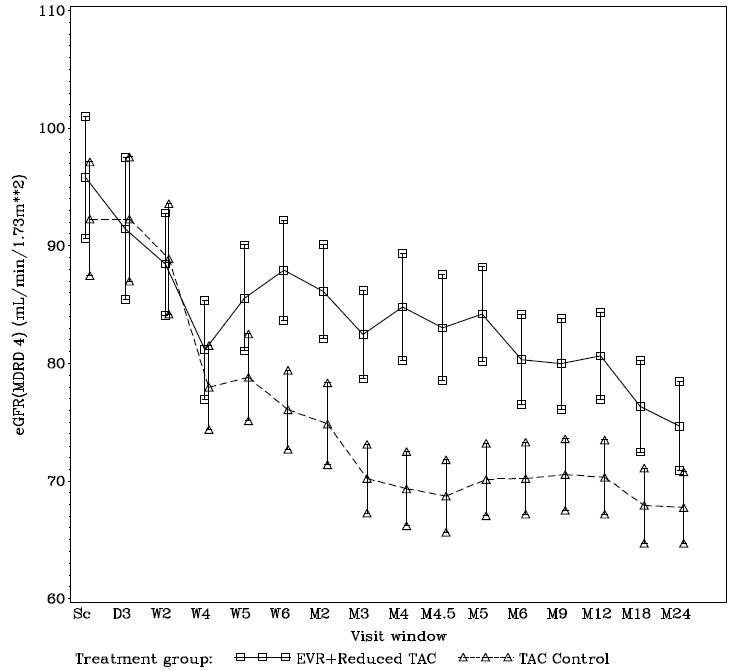
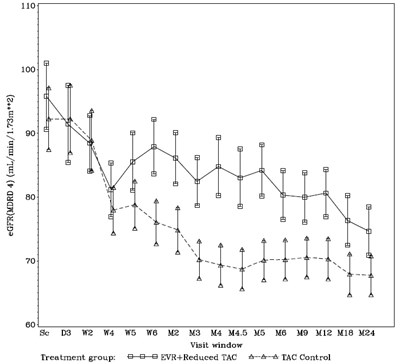
At month 12, the estimated mean glomerular filtration rate (eGFR) using the MDRD equation for the everolimus group was 80.9 mL/min/1.73m2 and the tacrolimus control was 70.3 mL/min/1.73m2 in the ITT population. At month 24, the eGFR using the MDRD equation for the Zortress group was 74.7 mL/min/1.73m2 and for the tacrolimus control the eGFR was 67.8 mL/min/1.73m2 (Table 10).
Table 10. Estimated Glomerular Filtration Rates (mL/min/1.73m2) by MDRD at 12 and 24 Months after Liver Transplantation
eGFR (MDRD)
| Everolimus with reduced exposure Tacrolimus
| Tacrolimus (standard exposure)
|
Month 12
| N = 215
| N = 209
|
Mean (SD)
| 80.9 (27.3)
| 70.3 (23.1)
|
Median (Range)
| 78.3 (28.4-153.1)
| 66.4 (27.9-155.8)
|
Month 24
| N = 184
| N = 186
|
Mean (SD)
| 74.7 (26.1)
| 67.8 (21.0)
|
Median (Range)
| 72.9 (20.3-151.6)
| 65.2 (27.0-148.9)
|
Figure 1. Mean and 95% CI of eGFR (MDRD 4) [mL/min/1.73m2] by Visit Window and Treatment after Liver Transplantation (ITT population – 24 Month Analysis)*
Everolimus-fig-1 (Everolimus Fig 1)
* Everolimus dosing was initiated 30 days after transplantation
Although the initial protocol was designed for 24 months, the study was subsequently extended to 36 months. One hundred six (136) patients (43%) in the everolimus group and 125 patients (51%) in the control group participated in the extension study from Month 24 to Month 36 after transplantation. The results for the everolimus group at 36 months were consistent with the results at 24 months in terms of tBPAR, graft loss, death and eGFR.
MEDICATION GUIDE
Everolimus (E ver OH li mus) Tablets |
What is the most important information I should know about everolimus?
Everolimus can cause serious side effects, including:
- Increased risk of getting certain cancers. People who take everolimus have a higher chance of getting lymphoma and other cancers, especially skin cancer. Talk to your doctor about your risk for cancer.
- Increased risk of serious infections. Everolimus weakens the body’s immune system and affects your ability to fight infections. Serious infections can happen with everolimus that may lead to death. People taking everolimus have a higher chance of getting infections caused by viruses, bacteria, and fungi (yeast).
- Call your doctor if you have symptoms of infection including fever or chills.
- Blood clot in the blood vessels of your transplanted kidney. If this happens, it usually occurs within the first 30 days after your kidney transplant. Tell your doctor right away if you:
- have pain in your groin, lower back, side or stomach (abdomen)
- make less urine or you do not pass any urine
- have blood in your urine or dark colored urine (tea-colored)
- have fever, nausea, or vomiting
- Serious problems with your transplanted kidney (nephrotoxicity). You will need to start with a lower dose of cyclosporine when you take it with everolimus. Your Doctor should do regular blood tests to check your levels of both everolimus and cyclosporine.
- Increased risk of death that can be related to infection, in people who have had a heart transplant. You should not take everolimus without talking to your doctor if you have had a heart transplant.
See the section “What are the possible side effects of everolimus?” for information about other serious side effects.
|
What is everolimus?
Everolimus is a prescription medicine used to prevent transplant rejection (antirejection medicine) in people who have received a kidney transplant or liver transplant. Transplant rejection happens when the body’s immune system perceives the new transplanted kidney as “foreign” and attacks it.
Everolimus is used with other medicines called cyclosporine, corticosteroids and certain other transplant medicines to prevent rejection of your transplanted kidney. Everolimus is used with other medicines called tacrolimus and corticosteroids to prevent rejection of your transplanted liver.
It is not known if everolimus is safe and effective in transplanted organs other than the kidney and liver.
It is not known if everolimus is safe and effective in children under 18 years of age. |
Do not take everolimus if you are allergic to:
- everolimus (afinitor®) or any of the ingredients in everolimus tablets. See the end of this Medication Guide for a complete list of ingredients in everolimus tablets.
- sirolimus (Rapamune®
|
Before taking everolimus, tell your doctor about all of your medical conditions, including if you:
- have liver problems
- have skin cancer or it runs in your family
- have high cholesterol or triglycerides (fat in your blood)
- have Lapp lactase deficiency or glucose-galactose malabsorption. You should not take everolimus if you have this disorder.
- are pregnant or could become pregnant. Everolimus may harm your unborn baby. If you are able to become pregnant you should use effective birth control during treatment and for 8 weeks after your last dose of everolimus. Talk to your doctor about birth control methods that may be right for you during this time. If you become pregnant or think you are pregnant, tell your healthcare provider right away. You should not become pregnant during treatment with everolimus.
- are breastfeeding or plan to breastfeed. It is not known if everolimus passes into your breast milk.
Tell your doctor about all the medicines you take, including prescription and over-the-counter medicines, vitamins, and herbal supplements.
- Especially tell your doctor if you take:
- antifungal medicine
- antibiotic medicine
- heart medicine
- high blood pressure medicine
- a medicine to lower cholesterol or triglycerides
- cyclosporine (Sandimmune, Gengraf, Neoral)
- tuberculosis (TB) medicine
- HIV medicine
- St. John’s Wort
- seizure (anticonvulsant) medicine
|
How should I take everolimus?
- Take everolimus exactly as your doctor tells you to.
- Do not stop taking everolimus or change your dose unless your doctor tells you to.
- Take everolimus at the same time as your dose of cyclosporine medicine.
- Do not stop taking or change your dose of cyclosporine or tacrolimus medicine unless your doctor tells you to.
- If your doctor changes your dose of cyclosporine, your dose of everolimus may change.
- Take everolimus 2 times a day about 12 hours apart.
- Swallow everolimus tablets whole with a glass of water. Do not crush or chew everolimus tablets.
- Take everolimus tablets with or without food. If you take everolimus tablets with food, always take everolimus tablets with food. If you take everolimus tablets without food, always take everolimus tablets without food.
- Your doctor will do regular blood tests to check your kidney function while you take everolimus. It is important that you get these tests done when your doctor tells you to. Blood tests will monitor how your kidneys are working and make sure you are getting the right dose of everolimus and other transplant medications they may be on (cyclosporine and tacrolimus).
- If you take too much everolimus, call your doctor or go to the nearest hospital emergency room right away.
|
What should I avoid while taking everolimus?
- Avoid receiving any live vaccines while taking everolimus. Some vaccines may not work as well while you are taking everolimus.
- Do not eat grapefruit or drink grapefruit juice while you are taking everolimus. Grapefruit may increase your blood level of everolimus.
- Limit the amount of time you spend in the sunlight. Avoid using tanning beds or sunlamps. People who take everolimus have a higher risk of getting skin cancer. See the section “What is the most important information I should know about everolimus?” Wear protective clothing when you are in the sun and use a sunscreen with a high protection factor (SPF 30 and above). This is especially important if you have fair skin or if you have a family history of skin cancer.
- Avoid becoming pregnant. See the section “What should I tell my doctor before taking everolimus?”
|
What are possible side effects of everolimus?
Everolimus may cause serious side effects, including:
- See “What is the most important information I should know about everolimus?”
- swelling under your skin especially around your mouth, eyes and in your throat (angioedema). Your chance of having swelling under your skin is higher if you take everolimus along with certain other medicines. Tell your doctor right away or go to the nearest emergency room if you have any of these symptoms of angioedema:
- sudden swelling of your face, mouth, throat, tongue or hands
- hives or welts
- itchy or painful swollen skin
- trouble breathing
- delayed wound healing. Everolimus can cause your incision to heal slowly or not heal well. Call your doctor right away if you have any of the following symptoms:
- your incision is red, warm or painful
- blood, fluid, or pus in your incision
- your incision opens up
- swelling of your incision
- lung or breathing problems. Tell your doctor right away if you have new or worsening cough, shortness of breath, difficulty breathing or wheezing. In some patients lung or breathing problems have been severe, and can even lead to death. Your doctor may need to stop everolimus or lower your dose.
- increased cholesterol and triglycerides (fat in your blood). If your cholesterol and triglyceride levels are high your doctor may want to lower them with diet, exercise and certain medicines.
- protein in your urine (proteinuria).
- change in kidney function. Everolimus may cause kidney problems when taken along with a standard dose of cyclosporine medicine instead of a lower dose.
Your doctor should do blood and urine tests to monitor your cholesterol, triglycerides and kidney function.
- viral infections. Certain viruses can live in your body and cause active infections when your immune system is weak. Viral infections that can happen with everolimus include BK virus-associated nephropathy. BK virus can affect how your kidney works and cause your transplanted kidney to fail.
- blood clotting problems.
- diabetes. Tell your doctor if you have frequent urination, increased thirst or hunger.
- infertility, male. Everolimus can affect fertility in males and may affect your ability to father a child. Talk with your doctor if this is a concern for you.
- infertility, female. Everolimus can affect fertility in females and may affect your ability to become pregnant. Talk to your doctor if this is a concern for you.
|
The most common side effects of everolimus in people who have had a kidney or liver transplant include:
These common side effects have been reported in both kidney and liver transplant patients:
- nausea
- swelling of the lower legs, ankles and feet
- high blood pressure
- The most common side effects of everolimus in people who have had a kidney transplant include:
- constipation
- low red blood cell count (anemia)
- urinary tract infection
- increased fat in the blood (cholesterol and triglycerides)
- The most common side effects of everolimus in people who have had a liver transplant include:
- diarrhea
- headache
- fever
- abdominal pain
- low white blood cells
These are not all of the possible side effects of everolimus.
Call your doctor for medical advice about side effects. You may report side effects to the FDA at 1-800-FDA-1088.
|
How should I store everolimus?
- Store everolimus tablets between 59°F to 86°F (15°C to 30°C).
- Keep everolimus out of the light.
- Keep everolimus tablets dry.
Keep everolimus and all medicines out of the reach of children.
|
General information about the safe and effective use of everolimus.
Medicines are sometimes prescribed for purposes other than those listed in a Medication Guide. Do not use everolimus for a condition for which it was not prescribed. Do not give everolimus to other people, even if they have the same symptoms that you have. It may harm them.
You can ask your doctor or pharmacist for information about everolimus that is written for healthcare professionals. |
What are the ingredients in everolimus?
Active ingredient: everolimus
Inactive ingredients: anhydrous lactose, butylated hydroxytoluene, crospovidone, hypromellose and magnesium stearate
Manufactured by:
NATCO PHARMA LIMITED
Kothur- 509228,
Telangana, India.
Rapamune® is a registered trademark of Pfizer Inc; Gengraf® is a registered trademark of Abbott Laboratories; Afinitor® is a registered trademark of Novartis Pharmaceuticals Corporation |
This Medication Guide has been approved by the U.S. Food and Drug Administration