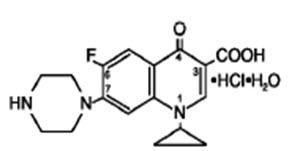
During clinical investigations with oral and parenteral ciprofloxacin, 49,038 patients received courses of the drug. Most of the adverse events reported were described as only mild or moderate in severity, abated soon after the drug was discontinued, and required no treatment. Ciprofloxacin was discontinued because of an adverse event in 1% of orally treated patients.
The most frequently reported drug related events, from clinical trials of all formulations, all dosages, all drug-therapy durations, and for all indications of ciprofloxacin therapy were nausea (2.5%), diarrhea (1.6%), liver function tests abnormal (1.3%), vomiting (1%), and rash (1%).
Additional medically important events that occurred in less than 1% of ciprofloxacin patients are listed below.
BODY AS A WHOLE: headache, abdominal pain/discomfort, foot pain, pain, pain in extremities, injection site reaction (ciprofloxacin intravenous)
CARDIOVASCULAR: palpitation, atrial flutter, ventricular ectopy, syncope, hypertension, angina pectoris, myocardial infarction, cardiopulmonary arrest, cerebral thrombosis, phlebitis, tachycardia, migraine, hypotension
CENTRAL NERVOUS SYSTEM: restlessness, dizziness, lightheadedness, insomnia, nightmares, hallucinations, manic reaction, irritability, tremor, ataxia, convulsive seizures (including status epilepticus), grand mal convulsion, lethargy, drowsiness, weakness, malaise, anorexia, phobia, depersonalization, depression (potentially culminating in self-injurious behavior such as suicidal ideations/thoughts and attempted or completed suicide), paresthesia, abnormal gait
GASTROINTESTINAL: painful oral mucosa, oral candidiasis, dysphagia, intestinal perforation, gastrointestinal bleeding, cholestatic jaundice, hepatitis
HEMIC/LYMPHATIC: lymphadenopathy, petechia
METABOLIC/NUTRITIONAL: amylase increase, lipase increase, hyperglycemia, hypoglycemia
MUSCULOSKELETAL: arthralgia or back pain, joint stiffness, achiness, neck or chest pain, flare up of gout, muscle weakness
RENAL/UROGENITAL: interstitial nephritis, nephritis, renal failure, polyuria, urinary retention, urethral bleeding, vaginitis, acidosis, breast pain
RESPIRATORY: dyspnea, epistaxis, laryngeal or pulmonary edema, hiccough, hemoptysis, bron-chospasm, pulmonary embolism
SKIN/HYPERSENSITIVITY: allergic reaction, pruritus, urticaria, photosensitivity/phototoxicity reaction, flushing, fever, chills, angioedema, edema of the face, neck, lips, conjunctivae or hands, cutaneous candidiasis, hyperpigmentation, erythema nodosum, sweating
SPECIAL SENSES: blurred vision, disturbed vision (change in color perception, overbrightness of lights), decreased visual acuity, diplopia, eye pain, tinnitus, hearing loss, bad taste, chromatopsia
In several instances nausea, vomiting, tremor, irritability, or palpitation were judged by investigators to be related to elevated serum levels of theophylline possibly as a result of drug interaction with ciprofloxacin.
In randomized, double-blind controlled clinical trials comparing ciprofloxacin tablets (500 mg BID) to cefuroxime axetil (250 mg - 500 mg BID) and to clarithromycin (500 mg BID) in patients with respiratory tract infections, ciprofloxacin demonstrated a CNS adverse event profile comparable to the control drugs.