Limitation of Use
Perioperative management of bleeding in major surgery in patients with moderate and severe hereditary Factor X deficiency has not been studied.
On-demand Treatment and Control of Bleeding Episodes
Infuse 25 IU/kg of COAGADEX when the first sign of bleeding occurs. Repeat at intervals of 24 hours until the bleed stops.
Perioperative Management of Bleeding
Measure post-infusion plasma Factor X levels for each patient before and after surgery, to ensure that hemostatic levels are obtained and maintained.
Pre-surgery: Calculate the dose of COAGADEX to raise plasma Factor X levels to 70-90 IU/dL using the following formula:
Required dose (IU) = Body Weight (kg) × Desired Factor X Rise (IU/dL) × 0.5
Post-surgery: Repeat dose as necessary to maintain plasma Factor X levels at a minimum of 50 IU/dL until the patient is no longer at risk of bleeding due to surgery.
Risk Summary
There are no data with COAGADEX use in pregnant women to inform on drug-associated risk. Animal reproduction studies have not been conducted using COAGADEX. It is not known whether COAGADEX can cause fetal harm when administered to a pregnant woman or can affect reproduction capacity. COAGADEX should be given to a pregnant woman only if clearly needed. In the U.S. general population, the estimated background risk of major birth defects and miscarriage in clinically recognized pregnancies is 2-4% and 15-20%, respectively.
Risk Summary
There is no information regarding the presence of COAGADEX in human milk, the effects on the breast-fed infant, or the effects on milk production. The developmental and health benefits of breast-feeding should be considered along with the mother's clinical need for COAGADEX and any potential adverse effects on the breast-fed infant from COAGADEX or from the underlying maternal condition.
On-demand Treatment and Control of Bleeding Episodes
In a multicenter, open-label, non-randomized clinical trial to evaluate the pharmacokinetics, safety and efficacy of COAGADEX, 16 subjects with moderate to severe hereditary Factor X deficiency (FX:C < 5 IU/dL) received a dose of 25 IU/kg COAGADEX to treat spontaneous, traumatic and menorrhagic bleeding episodes. If hemostasis was not achieved with a single dose of COAGADEX, additional doses could be given until the bleed stopped. Subjects could also continue with treatment after the bleed had stopped to reduce the risk of recurrence of a given bleed. Subjects were aged 12 to 58 years, including 6 pediatric subjects aged 12 to 17 years. Six subjects were male, 10 were female, and 12 were Caucasian.
The efficacy of COAGADEX in treating bleeding episodes was assessed by the subject and/or investigator for each new bleeding episode, using a bleed-specific ordinal rating scale of excellent, good, poor and unassessable. This rating scale was based on the number of infusions required to treat the bleed and the interval between infusions, and differed for each type of bleed (overt, covert or menorrhagic). Each bleed was reviewed by a Data Review Committee for its suitability for the efficacy evaluation. Of the 208 bleeding episodes treated with COAGADEX, 187 bleeding episodes in 15 subjects were evaluated for efficacy. Of these 187 bleeding episodes, 79 (42%) occurred spontaneously, 47 (25%) were traumatic and 61 (33%) were menorrhagic. Seventy three (39%) were mucosal in origin, 63 (34%) were joint bleeds, 26 (14%) were muscle bleeds, and 25 (13%) were located elsewhere.
Ninety eight (53%) were major bleeding episodes, and 88 (47%) were minor bleeds (one bleed not assessed). COAGADEX was considered to be good (7%) or excellent (91%) in treating 98% of bleeding episodes. Of the 187 bleeding episodes in the efficacy analysis, a total of 155 bleeds (83%) were treated with one infusion, 28 bleeds (15%) with two infusions, 3 bleeds (2%) with three infusions and 1 bleed (0.5%) with four infusions. The mean dose per infusion and total dose of Coagadex were 25.4 IU/kg and 30.4 IU/kg, respectively. Four bleeding episodes in two subjects were considered treatment failures.
The recommended dose of 25 IU/kg COAGADEX to treat a bleed was maintained during the study for 14 of the 16 subjects. The other two subjects used doses up to 30 IU/kg and 33 IU/kg.
Perioperative Management of Bleeding
The safety and efficacy of COAGADEX for perioperative management was evaluated in five subjects aged 14 to 59 years with mild (n=2), moderate (n=1), and severe (n=2) disease, who underwent a total of seven surgical procedures.
For all surgical procedures, COAGADEX was assessed as excellent (no post-operative bleeding, no requirement of blood transfusions, and blood loss was no more than 'as expected') in controlling blood loss during and after surgery. For major surgeries, a median of 13 infusions (range 2 to 15 infusions) and a median cumulative dose of 181 IU/kg (range 45 to 210 IU/kg) were required to maintain hemostasis. For minor surgeries, a median of 2.5 infusions (range 1 to 4 infusions) and a median cumulative dose of 89 IU/kg (range 51 to 127 IU/kg) were required to maintain hemostasis.
How Supplied
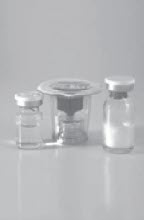
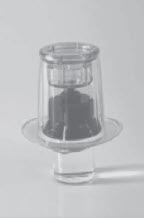
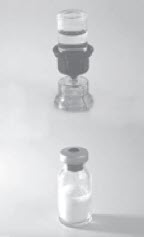
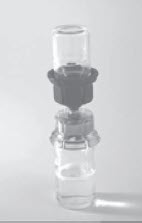
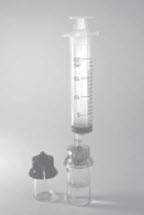
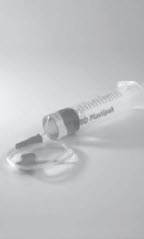
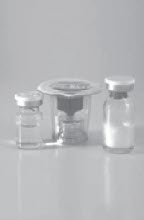
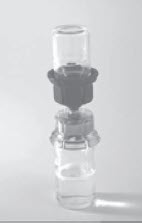
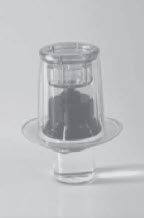
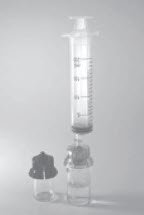
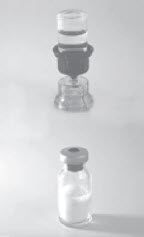
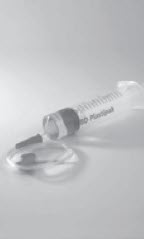
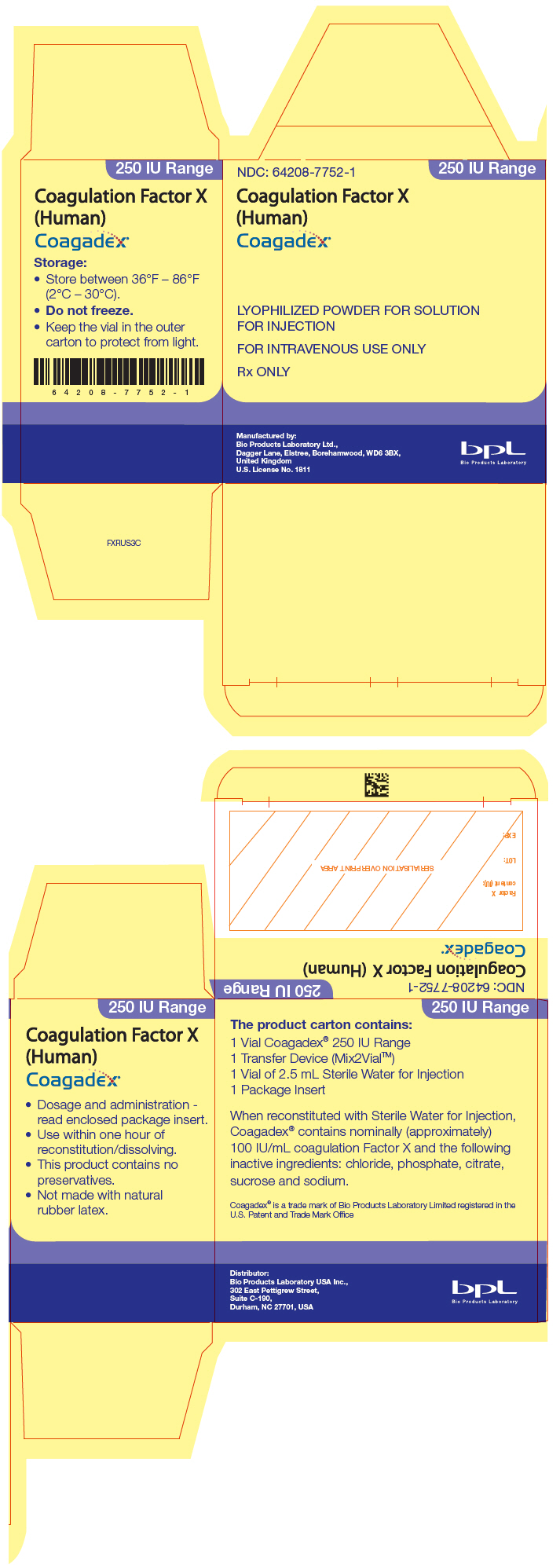
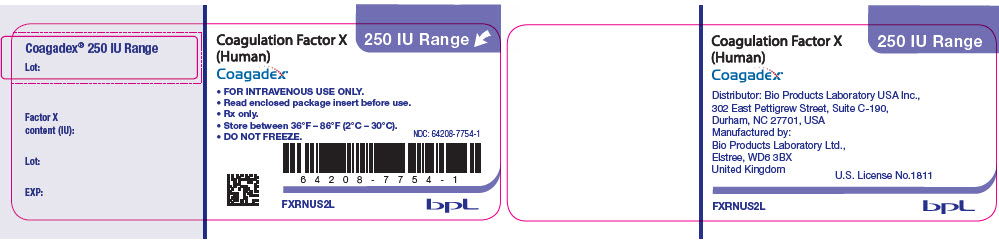
COAGADEX is supplied in single-use glass vials containing a nominal (approximate) 250 IU or 500 IU (approximately 100 IU/mL after reconstitution) of Factor X activity, packaged with 2.5 mL or 5 mL of Sterile Water for Injection, respectively, and a Mix2Vial transfer device.
The vials are closed with a synthetic rubber stopper. The stopper is not made with natural rubber latex. The stopper is secured with an aluminum overseal with a flip-off polypropylene cap.
| Strength | Kit NDC Number |
|---|
| 250 IU Range | 64208-7752-1 |
| 500 IU Range | 64208-7753-1 |
Manufactured by:
Bio Products Laboratory Ltd.,
Elstree,
WD6 3BX,
United Kingdom.
U.S. Distributor:
Bio Products Laboratory USA Inc.,
302 East Pettigrew Street,
Suite C-190,
Durham, NC 27701
USA
U.S. Licence No: 1811
COAGADEX® is a registered trade mark of Bio Products Laboratory Limited. Mix2Vial™ is a trade mark of West Pharmaceutical services.