Treatment of Primary Humoral Immunodeficiency
As there are significant differences in the half-life of IgG among patients with PI, the frequency and amount of immunoglobulin therapy may vary from patient to patient. The proper amount can be determined by monitoring clinical response.
The recommended dose of GAMMAPLEX 5% for patients with PI is 300 to 800 mg/kg (6 to 16 mL/kg), administered every 3 to 4 weeks. If a patient routinely receives a dose of less than 400 mg/kg of GAMMAPLEX 5% every 3 to 4 weeks (less than 8 mL/kg), and is at risk of measles exposure (i.e. traveling to a measles endemic area), administer a dose of at least 400 mg/kg (8 mL/kg) just prior to the expected measles exposure. If a patient has been exposed to measles, a dose of 400 mg/kg (8 mL/kg) should be administered as soon as possible after exposure. Adjust the dosage over time to achieve the desired serum trough levels and clinical response. If a patient misses a dose, administer the missed dose as soon as possible, and then resume scheduled treatments every 3 or 4 weeks, as applicable.
Treatment of Chronic Immune Thrombocytopenic Purpura
The recommended dose of GAMMAPLEX 5% for patients with ITP is 1 g/kg (20 mL/kg) on 2 consecutive days, providing a total dose of 2 g/kg. Carefully consider the relative risks and benefits before prescribing the high dose regimen (i.e. 1 g/kg/day for 2 days) in patients at increased risk of thrombosis, hemolysis, acute kidney injury, or volume overload [see Warnings and Precautions (5)]. Adequate data on the platelet response to the low dose regimen (e.g. 400 mg/kg per day for 5 consecutive days) are not available for GAMMAPLEX 5%.
Primary Humoral Immunodeficiency Study
In a multicenter, open-label, non-randomized clinical trial, 50 subjects with primary humoral immunodeficiency received doses of GAMMAPLEX 5% ranging from 279 to 799 mg/kg every 21 days (mean dose 465 mg/kg) or 28 days (mean dose 458 mg/kg), for up to 12 months [see Clinical Studies (14.1)].
Twenty-four subjects (48%) had an AR at some time during the clinical trial that was considered product-related. Of these 24 subjects, three had ARs that were considered definitely related to GAMMAPLEX 5% including headache, pyrexia, tachycardia, chest discomfort, and hypertension. More subjects with the 21-day infusion cycle had at least one AR (14 of 22 subjects, 64%) than subjects with the 28-day infusion cycle (10 of 28 subjects, 36%). The total number of ARs during infusion or within 72 hours of infusion was 237 (a rate of 0.34 ARs per infusion), reflecting that some subjects experienced more than one AR during the observation period. The percentage of GAMMAPLEX 5% infusions with one or more ARs within 72 hours of infusion was 21%. The upper bound of the 1-sided 95% confidence interval for this percentage was 24%, which was below the pre-specified upper limit of 40% for this safety endpoint.
The most common ARs observed in this clinical trial were headache (18 subjects, 36%), fatigue (6 subjects, 12%), nausea (6 subjects, 12%), pyrexia (6 subjects, 12%), pain (4 subjects, 8%), hypertension (3 subjects, 6%), chills (3 subjects, 6%), myalgia (3 subjects, 6%) and vomiting (3 subjects, 6%). Two subjects experienced serious ARs (thrombosis and chest pain).
Forty-seven of the 50 subjects enrolled in this clinical trial had a negative direct antiglobulin test (DAT) at baseline. Of these 47 subjects, 4 (9%) developed a positive DAT at some time during the clinical trial. However, no subjects showed evidence of hemolytic anemia.
There was no evidence of transmission of hepatitis B virus (HBV), hepatitis C virus (HCV), human immunodeficiency virus (HIV) or parvovirus B19 during this clinical trial.
Table 2: Adverse Reactions (ARs) Occurring in >5% of Subjects with PIAdverse Reactions
PI studies | Subjects (%) | Infusions (%) |
|---|
| PI [n=75] | PI [n=1071] |
|---|
| Headache | 29 (39%) | 74 (6.9%) |
| Sinusitis | 14 (19%) | 17 (1.6%) |
| Pyrexia | 11 (15%) | 13 (1.2%) |
| Nasal congestion/edema | 10 (13%) | 8 (0.7%) |
| Fatigue | 9 (12%) | 13 (1.2%) |
| Nausea | 7 (9%) | 8 (0.7%) |
| Hypertension | 6 (8%) | 8 (0.7%) |
| Upper respiratory tract infection | 6 (8%) | 8 (0.7%) |
| Rash | 6 (8%) | 6 (0.6%) |
| Hypotension | 5 (7%) | 11 (1.0%) |
| Infusion site reaction | 5 (7%) | 6 (0.6%) |
| Vomiting | 5 (7%) | 4 (0.4%) |
| Myalgia | 4 (5%) | 15 (1.4%) |
| Chills | 4 (5%) | 9 (0.8%) |
| Tachycardia | 4 (5%) | 6 (0.6%) |
| Rhinitis | 4 (5%) | 6 (0.6%) |
| Chest pain/discomfort | 4 (5%) | 5 (0.5%) |
| Pain | 4 (5%) | 5 (0.5%) |
| Dizziness/vertigo | 4 (5%) | 4 (0.4%) |
| Malaise/asthenia/lethargy | 4 (5%) | 4 (0.4%) |
| Dysuria/cystitis/UTI | 4 (5%) | 4 (0.4%) |
| Dry skin/eczema | 4 (5%) | 4 (0.4%) |
| Bronchitis | 4 (5%) | 4 (0.4%) |
Table 3: ARs in >5% of Pediatric Subjects with PIAdverse Reactions
PI Pediatric | Subjects (%) | Infusions (%) |
|---|
| PI [n=25] | PI [n=368] |
|---|
| Dyspnea | 2 (8%) | 2 (0.5%) |
| Otitis media acute | 2 (8%) | 2 (0.5%) |
| Tonsillar disorder | 2 (8%) | 2 (0.5%) |
Pediatric Primary Humoral Immunodeficiency Study
In a multicenter, open-label, non-randomized clinical trial, 25 children and adolescents with primary humoral immunodeficiency received doses of GAMMAPLEX 5% ranging from 300 to 800 mg/kg every 21 days (mean dose 545 mg/kg) or 28 days (mean dose 521 mg/kg), for up to 12 months [see Clinical Studies (14.1)].
Fourteen subjects (56%) had an AR at some time during the clinical trial that was considered product-related. Of these 14 subjects, two had ARs that were considered definitely related to GAMMAPLEX 5% including headache, fatigue and myalgia. Seven subjects with the 21-day infusion cycle had at least one AR (7 of 14 subjects, 50%), as did seven subjects with the 28-day infusion cycle (7 of 11 subjects, 64%).
Chronic Immune Thrombocytopenic Purpura Study
In a multicenter, open-label, non-randomized clinical trial, 35 subjects with chronic immune thrombocytopenic purpura were treated with a nominal dose of 1,000 mg/kg on each of two consecutive days (total dose 2,000 mg/kg). Doses of GAMMAPLEX 5% ranged from 482 to 1149 mg/kg on an infusion day. The median total dose per subject was 2035 mg/kg. Pre-medication with antihistamine or analgesic drugs was permitted if required, but corticosteroids were not permitted prior to infusion as pre-medication. Ten subjects received corticosteroids for ITP during the trial and one additional subject received corticosteroids as pre-medication in violation of the protocol. All 35 subjects received at least one infusion of clinical trial drug, and all but one subject completed the first course of treatment.
Twenty-four subjects (69%) reported at least one AR (103 in total); the most commonly reported being headache (12 subjects, 34%), vomiting (8 subjects, 23%), nausea (5 subjects, 14%), pyrexia (5 subjects, 14%), pruritus (2 subjects, 6%), dehydration (2 subjects, 6%) and arthralgia (2 subjects, 6%). Three subjects experienced a total of five serious ARs. Of the five serious ARs, one subject had three concurrently (vomiting, dehydration and headache) and two subjects each had one serious AR (headache). One of these latter two subjects discontinued from the clinical trial because of the severe headache. Table 4 lists the ARs in more than 5% of subjects.
Based on a review of clinical and laboratory data, 4/35 subjects (11%) with drops in hemoglobin exceeding 2 g/dL following administration of GAMMAPLEX 5% were considered to have experienced suspected treatment-emergent hemolysis. Milder treatment-emergent hemolysis could not be excluded for an additional 7 subjects, giving a total of 11 of 35 subjects (31%) for whom hemolysis could not be excluded (not including an additional two subjects who lacked follow-up testing for hemolysis, so their hemolysis status was considered unassessable). Data for two subjects were consistent with possible intravascular hemolysis, including one subject who may also have had an element of extravascular hemolysis. Nine of the possible hemolysis cases were mild and appeared consistent with possible extravascular hemolysis.
There was no evidence of transmission of HBV, HCV, HIV and parvovirus B19 during this clinical trial.
Table 4: Adverse Reactions (ARs) Occurring in >5% of Subjects with ITP| Adverse Reactions | Subjects (%) | Infusions (%) |
|---|
| ITP [n=35] | ITP [n=94] |
|---|
| Headache | 12 (34%) | 15 (16%) |
| Vomiting | 8 (23%) | 9 (9.6%) |
| Nausea | 5 (14%) | 5 (5.3%) |
| Pyrexia | 5 (14%) | 7 (7.4%) |
| Pain | 2 (6%) | 2 (2.1%) |
| Abdominal pain upper | 2 (6%) | 2 (2.1%) |
| Gastritis | 2 (6%) | 2 (2.1%) |
| Contusion | 2 (6%) | 2 (2.1%) |
| Arthralgia | 2 (6%) | 2 (2.1%) |
| Cough | 2 (6%) | 2 (2.1%) |
| Anemia | 2 (6%) | 1 (1.1%) |
| Ecchymosis | 2 (6%) | 3 (3.2%) |
| Pruritus | 2 (6%) | 2 (2.1%) |
| Dehydration | 2 (6%) | 2 (2.1%) |
| Hypertension | 2 (6%) | 1 (1.1%) |
| Neck pain | 2 (6%) | 1 (1.1%) |
Risk Summary
Animal reproduction studies have not been conducted with GAMMAPLEX 5%. It is also not known whether GAMMAPLEX 5% can cause fetal harm when administered to a pregnant woman or can affect reproduction capacity. GAMMAPLEX 5% should be given to a pregnant woman only if clearly needed. Immunoglobulins cross the placenta from maternal circulation increasingly after 30 weeks of gestation.12
Risk Summary
Use of GAMMAPLEX 5% has not been evaluated in nursing mothers.
Treatment of Primary Humoral Immunodeficiency
GAMMAPLEX 5% was evaluated in six pediatric patients with primary humoral immunodeficiency in one study (2 between ages of 9 and 10, and 4 between ages 12 and 16), and 25 patients in a second study (3 between ages of 2 to 5, 12 between ages of 6 to 11, and 10 between ages of 12 to 16). No pediatric-specific dose requirements were necessary to achieve the desired serum IgG levels [see Clinical Studies (14)].
Safety and efficacy of GAMMAPLEX 5% was not evaluated and established in pediatric patients below the age of 2 years.
Fourteen subjects (56%) had an AR at some time during the pediatric clinical trial that was considered product-related. Of these 14 subjects, two had ARs that were considered definitely related to GAMMAPLEX 5% including headache, fatigue and myalgia. Seven subjects with the 21-day infusion cycle had at least one AR (7 of 14 subjects, 50%), as did seven subjects with the 28-day infusion cycle (7 of 11 subjects, 64%).
Treatment of Chronic Immune Thrombocytopenic Purpura
GAMMAPLEX 5% was evaluated in three pediatric subjects with chronic immune thrombocytopenic purpura (two aged 6 and one aged 12). This number of pediatric patients was too small for separate evaluation from the adult patients for efficacy, however 31 pediatric patients have received GAMMAPLEX 5% in the PI studies demonstrating safety in this population [see Clinical Studies (14)].
Treatment of Primary Humoral Immunodeficiency – GAMMAPLEX 5% is a replacement therapy for primary humoral immunodeficiency. It acts through a broad spectrum of opsonic and neutralizing IgG antibodies against pathogens and their toxins involving antigen binding and effector functions13,14. However, the mechanism of action in PI has not been fully elucidated.
Treatment of Chronic Immune Thrombocytopenic Purpura - The mechanism of action of high doses of immunoglobulins in the treatment of chronic ITP has not been fully elucidated.
Treatment of Primary Humoral Immunodeficiency
In the major effectiveness study assessing safety and efficacy in primary humoral immunodeficiency, the pharmacokinetics (PK) of GAMMAPLEX 5% was assessed after administration to 24 subjects on 21- or 28-day infusion cycles. Blood samples for PK analysis were obtained after Infusion 9 for subjects on a 21-day schedule (9 subjects) and after Infusion 7 for subjects on a 28-day schedule (15 subjects), i.e. during the sixth month after initiation of GAMMAPLEX 5% treatment.
The mean dose (range) for those on the 21-day schedule was 476 mg/kg (330 to 721 mg/kg), and 468 mg/kg (324 to 799 mg/kg) for those on the 28-day schedule. Table 6 summarizes the PK parameters of GAMMAPLEX 5%, measured as serum concentrations of total IgG.
In a separate pediatric clinical trial assessing safety and efficacy in pediatric primary humoral immunodeficiency, the pharmacokinetics (PK) of GAMMAPLEX 5% was assessed after administration to 23 subjects on 21- or 28-day infusion cycles. Blood samples for PK analysis were obtained after Infusion 9 for subjects on a 21-day schedule (13 subjects) and after Infusion 7 for subjects on a 28-day schedule (10 subjects), i.e. during the sixth month after initiation of GAMMAPLEX 5% treatment.
The mean dose (range) for the 21-day interval was 545 mg/kg (429 - 689 mg/kg), and 521 mg/kg (316- 800 mg/kg) for those on the 28-day schedule. Table 6 summarizes the PK parameters of GAMMAPLEX 5%, measured as serum concentrations of total IgG.
Table 6: Pharmacokinetic Parameters of GAMMAPLEX 5% in Subjects with PI (corrected for baseline concentration)| Indication: | PI Adult study | PI Pediatric Study |
|---|
| Parameter (unit) | 21-day Dosing Interval
(n=9) | 28-day Dosing Interval
(n=14) | 2-5 years
(n=3) | 6-11years
(n=11) | 12-16 years
(n=9) |
|---|
Mean
(95% confidence intervals) | Mean
(95% confidence intervals) | Mean
(95% confidence intervals) | Mean
(95% confidence intervals) | Mean
(95% confidence intervals) |
|---|
| NC – Not Calculated |
| Cmax (mg/dL) | 1060
(867-1290) | 1190
(995-1410) | 864
(619-1210) | 917
(718-1170) | 976
(760-1250) |
| Tmax (hr) | 3.33
(NC) | 3.30
(NC) | 3.98
(NC) | 3.85
(NC) | 4.08
(NC) |
| AUC (days mg/dL) | 6280
(5080-7760) | 8770
(7540-10200) | 6210
(4000-9650) | 6420
(4940-8350) | 7240
(5790-9050) |
| Half-Life (days) | 6.06
(4.89-7.50) | 5.79
(4.94-6.78) | 4.97
(3.82-6.46) | 5.08
(4.09-6.31) | 5.45
(4.60-6.47) |
| Clearance (dL/days/kg) | 0.073
(0.061-0.088) | 0.053
(0.046-0.061) | 0.096
(0.063-0.147) | 0.082
(0.068-0.098) | 0.072
(0.057-0.09) |
| Volume of Distribution (dL/kg) | 0.60
(0.46-0.78) | 0.43
(0.39-0.48) | 0.70
(0.40-1.23) | 0.62
(0.43-0.89) | 0.55
(0.43-0.71) |
Major Effectiveness study
In a Phase 3 multicenter, open-label clinical trial to evaluate the efficacy, safety, and pharmacokinetics of GAMMAPLEX 5% in primary humoral immunodeficiency, 50 subjects on regular IGIV replacement therapy for at least 3 months prior to participation were treated for 12 months at 21-day (22 subjects) or 28-day (28 subjects) dosing intervals. Of the 50 subjects, 26 were male and 24 were female, and 46 were Caucasian. They were in the age range of 9 to 78 years.
Doses ranged from 279 mg/kg to 799 mg/kg. The mean dose (range) for the 21-day interval was 465 mg/kg (330 - 693 mg/kg); the mean dose (range) for the 28-day interval was 458 mg/kg (326 - 790 mg/kg). Subjects received a total of 703 infusions of GAMMAPLEX 5%. The maximum infusion rate allowed during this clinical trial was 0.08 mL/kg/min (4 mg/kg/min).
The efficacy analysis was based on the annual rate of acute serious bacterial infections (SABIs), defined as pneumonia, bacteremia/septicemia, osteomyelitis/septic arthritis, visceral abscess, and bacterial meningitis, per subject per year15. Other efficacy analyses were based on the annual rate of infections, antibiotic use, days out of work/school/day care or unable to perform normal activities due to illness, and days of hospitalization.
During the 12-month clinical trial period, no serious acute bacterial infections occurred in any subject with an onset date between the first infusion of GAMMAPLEX 5% and the first follow-up visit, inclusive. Thus, the mean event rate of serious, acute, bacterial infections per year was zero (with an upper 1-sided 99% confidence interval of 0.101).
Table 7: Summary of Efficacy Results in Subjects with PI| Clinical Analyses for Efficacy | Number of Subjects | 50 |
|---|
| Total Number of Subject Days | 16715 |
|---|
| Duration of exposure in all tables relating to the major effectiveness study was calculated as the difference between the date of the last visit (first follow-up visit) i.e. approximately 10-14 days following the last dose of GAMMAPLEX 5% and the date of the first GAMMAPLEX 5% infusion (plus one day). |
| Infections | Annual rate of confirmed serious acute bacterial infections | 0/subject year |
| Annual rate of other infections (median) | 3.07 infections/subject year |
| Antibiotic use (therapeutic) | Number of subjects (%)
Annual rate | 40 (80%)
47.2 days/subject year |
| Out of work/school/day care or unable to perform normal activities due to illness | Number of subjects (%)
Number of days (%)
Annual rate | 23 (46%)
394 (2.36%)
8.73 days/subject year |
| Hospitalization | Number of subjects (%)
Number of days (%)
Annual rate | 4 (8%)
29 (0.17%)
0.75 days/subject year |
Pediatric study
In a multicenter, open-label clinical trial to evaluate the efficacy, safety, and pharmacokinetics of GAMMAPLEX 5% in primary humoral immunodeficiency in children and adolescents, 25 subjects on regular IGIV replacement therapy for at least 3 months prior to participation were treated for 12 months at 21-day (14 subjects) or 28-day (11 subjects) dosing intervals. Of the 25 subjects, 19 were male and 6 were female, and all were Caucasian in the age range of 3 to 16 years.
Doses ranged from 300 mg/kg to 800 mg/kg. The mean dose (range) for the 21-day interval was 545 mg/kg (429 - 689 mg/kg); the mean dose (range) for the 28-day interval was 521 mg/kg (316- 800 mg/kg). Subjects received a total of 368 infusions of GAMMAPLEX 5%. The maximum infusion rate allowed during this clinical trial was 0.08 mL/kg/min (4 mg/kg/min).
The efficacy analysis was based on the annual rate of acute serious bacterial infections (SABIs), defined as pneumonia, bacteremia/septicemia, osteomyelitis/septic arthritis, visceral abscess, and bacterial meningitis, per subject per year15. Other efficacy analyses were based on the annual rate of infections, antibiotic use, days 'Absence from school/nursery' and days of hospitalization.
During the 12-month clinical trial period, two serious acute bacterial infections occurred in any subject with an onset date between the first infusion of GAMMAPLEX 5% and the first follow-up visit, inclusive. Thus, the mean event rate of serious, acute, bacterial infections per year was 0.09 (with an upper 1-sided 99% confidence interval of 0.36).
Table 8: Summary of pediatric Efficacy Results in Pediatric subjects with PI| Clinical Analyses for Efficacy | Number of Subjects | 25 |
|---|
| Total Number of Subject Days | 8557 |
|---|
| Duration of exposure in all tables relating to the pediatric study was calculated as the difference between the date of the last visit (first follow-up visit) i.e. approximately 10-14 days following the last dose of GAMMAPLEX 5% and the date of the first GAMMAPLEX 5% infusion (plus one day). |
| Infections | Annual rate of confirmed serious acute bacterial infections | 0.09/subject year |
| Annual rate of other infections (median) | 3.08 infections/subject year |
| Antibiotic use (therapeutic) | Number of subjects (%)
Annual rate | 21 (84%)
32.3 days/subject year |
| 'Absence from school/nursery' | Number of subjects (%)
Number of days (%)
Annual rate | 16 (64%)
102 (1.19%)
4.2 days/subject year |
| Hospitalization | Number of subjects (%)
Number of days (%)
Annual rate | 3 (12%)
6 (0.07%)
0.3 days/subject year |
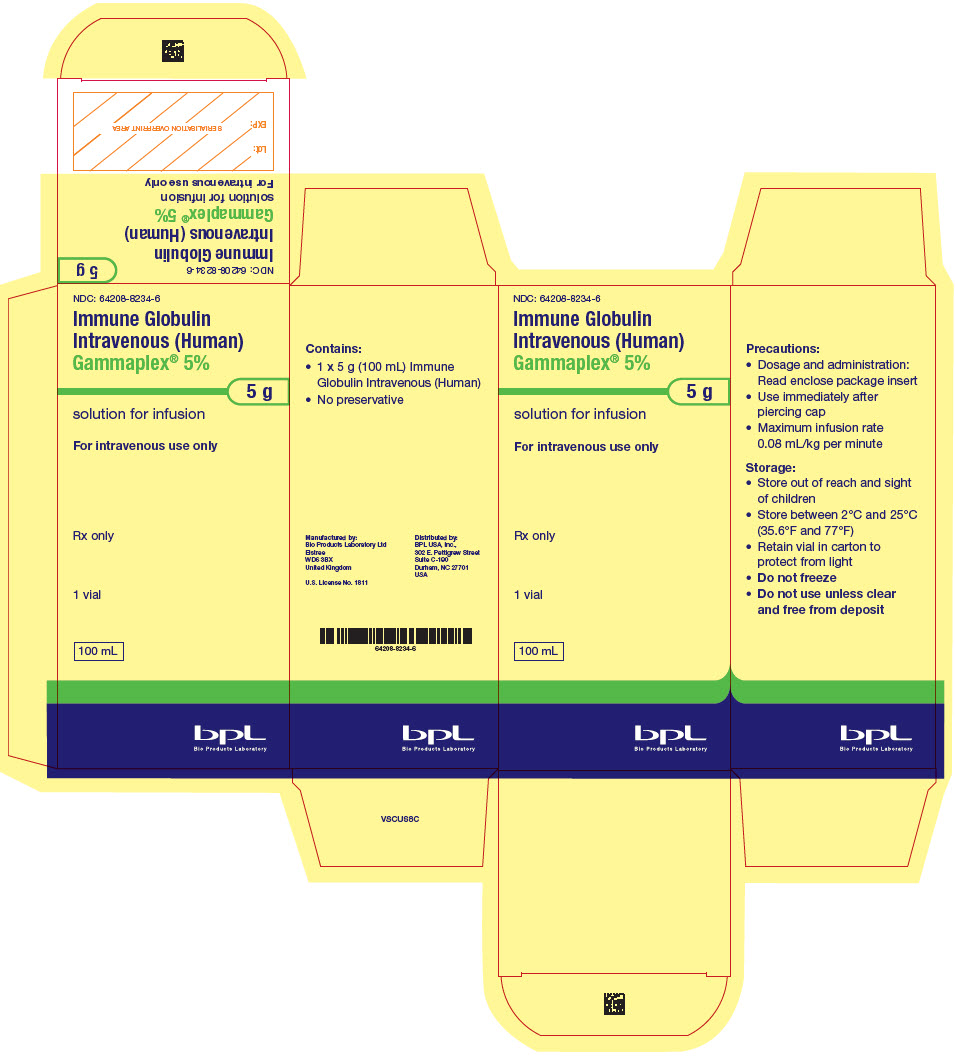
Manufactured by:
Bio Products Laboratory Ltd.,
Elstree,
WD6 3BX.
United Kingdom.
US License No. 1811
U.S. Distributor:
BPL Inc.,
302 E. Pettigrew Street,
Suite C-190,
Durham, NC 27701,
U.S.A.
Version 9