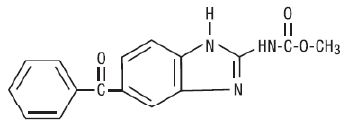
Your doctor has prescribed this medicine to treat an infection caused by an intestinal worm. Follow your doctor’s instructions carefully. In addition to your doctor’s treatment, you can help prevent reinfection and infection of other people by understanding a few simple facts about worms.
PINWORM
Pinworms look like tiny white threads and live in the bowel. Usually at night, they travel to the rectal opening and lay eggs on the outside skin. This sometimes causes itching which may be very annoying. That is why restless sleep is a frequent sign of pinworms, especially in children. Scratching will cause pinworm eggs to stick to the fingers. Reinfection will result if the fingers are placed in the mouth.
The eggs, which are too small to see, contaminate whatever they come in contact with: bedclothes, underwear, hands, and food touched by contaminated hands. Even eggs floating in the air can be swallowed and cause infection. Pinworms are highly contagious. Even the cleanest and most careful people can get them.
To help prevent reinfection follow these rules:
- Wash hands and fingernails with soap often during the day, especially before eating and after using the toilet.
- Wear tight underpants both day and night. Change them daily.
- For several days after treatment, clean the bedroom floor by vacuuming or damp mopping. Avoid dry sweeping that may stir up dust.
- After treatment, wash bed linens and night clothes (don’t shake them).
- Keep the toilet seats clean.
HOOKWORM, WHIPWORM AND ROUNDWORM
These worms also live in the bowel.
Eggs from the worms are deposited in the soil if an infected person fails to use a toilet or bathroom. Since the eggs can live only in warm soil, they are found most often where the soil never freezes in winter. People living or traveling in areas with warm winters may have these infections. The eggs in the soil are usually carried to the mouth on food or by contact with dirty hands. In the case of hookworms a pre-adult form of the worm actually penetrates the skin (usually the foot) and burrows its way into the bloodstream. Once inside the body, they grow and breed inside the bowel. New eggs are released in the feces.
Therefore, poor sewage disposal or the use of human waste for fertilizer can contaminate the ground with new eggs, which can then reinfect people.
The medication used to treat these worms causes them to be expelled from the body. Hookworms and whipworms may be seen and resemble small white threads. Roundworms are much larger and easily seen.
To help prevent reinfection follow these rules:
- Wash hands and fingernails with soap often during the day, especially before eating and after using the toilet.
- Wash all fruits and vegetables thoroughly or cook them well.
- Wear shoes.
- Use the bathroom.
Follow your doctor’s advice, take the medication he gives you and follow the rules mentioned here. If you have other questions about worms, be sure to ask your doctor.
WARNING: Do not take this medication if you are pregnant or think you may be pregnant. Consult your physician.
Dist. by:
Impax Specialty Pharma
Hayward, CA 94544
1901-01
Rev. 09/2016