- Life-threatening respiratory depression is more likely to occur in elderly, cachectic, or debilitated patients because they may have altered pharmacokinetics or altered clearance compared to younger, healthier patients [see Warnings and Precautions (5.2)].
- Because of the risk of respiratory depression, avoid the use of opioid antitussives, including hydrocodone bitartrate and homatropine methylbromide in patients with compromised respiratory function, patients at risk of respiratory failure, and in elderly, cachectic, or debilitated patients. If hydrocodone bitartrate and homatropine methylbromide is prescribed, monitor such patients closely, particularly when initiating hydrocodone bitartrate and homatropine methylbromide and when hydrocodone bitartrate and homatropine methylbromide is given concomitantly with other drugs that depress respiration [see Warnings and Precautions (5.8)].
Risk Summary
Hydrocodone bitartrate and homatropine methylbromide is not recommended for use in pregnant women, including during or immediately prior to labor.
Prolonged use of opioids during pregnancy may cause neonatal opioid withdrawal syndrome [see Warnings and Precautions (5.13), Clinical Considerations].
There are no available data with hydrocodone bitartrate and homatropine methylbromide use in pregnant women to inform a drug-associated risk for adverse developmental outcomes. Published studies with hydrocodone have reported inconsistent findings and have important methodological limitations (see Data).
Reproductive toxicity studies have not been conducted with hydrocodone bitartrate and homatropine methylbromide; however, studies are available with individual active ingredients or related active ingredients (see Data).
In animal reproduction studies, hydrocodone administered by the subcutaneous route to pregnant hamsters during the period of organogenesis produced a teratogenic effect at a dose approximately 45 times the maximum recommended human dose (MRHD) (see Data).
Based on the animal data, advise pregnant women of the potential risk to a fetus.
The estimated background risk of major birth defects and miscarriage for the indicated population is unknown. All pregnancies have a background risk of birth defect, loss, or other adverse outcomes. In the U.S. general population, the estimated background risk of major birth defects and miscarriage in clinically recognized pregnancies is 2 to 4% and 15 to 20%, respectively.
Clinical Considerations
Fetal/Neonatal Adverse Reactions
Prolonged use of opioid analgesics during pregnancy for medical or nonmedical purposes can result in physical dependence in the neonate and neonatal opioid withdrawal syndrome shortly after birth. Neonatal opioid withdrawal syndrome presents as irritability, hyperactivity and abnormal sleep pattern, high pitched cry, tremor, vomiting, diarrhea and failure to gain weight. The onset duration, and severity of neonatal sleep opioid withdrawal syndrome vary based on the specific opioid used, duration of use, timing and amount of last maternal use, and rate of elimination of the drug by the newborn. Observe newborns for symptoms of neonatal opioid withdrawal syndrome and manage accordingly [see Warnings and Precautions (5.13)].
Labor or Delivery
Opioids cross the placenta and may produce respiratory depression and psycho-physiologic effects in neonates. An opioid antagonist, such as naloxone, must be available for reversal of opioid-induced respiratory depression in the neonate. Opioids, including hydrocodone bitartrate and homatropine methylbromide, can prolong labor through actions which temporarily reduce the strength, duration, and frequency of uterine contractions. However, this effect is not consistent and may be offset by an increased rate of cervical dilation, which tends to shorten labor. Monitor neonates exposed to opioids during labor for signs of excess sedation and respiratory depression.
Data
Human Data
Hydrocodone
A limited number of pregnancies have been reported in published observational studies and postmarketing reports describing hydrocodone use during pregnancy. However, these data cannot definitely establish or exclude any drug-associated risk during pregnancy. Methodological limitations of these observational studies include small sample size and lack of details regarding dose, duration and timing of exposure.
Animal Data
Reproductive toxicity studies have not been conducted with hydrocodone bitartrate and homatropine methylbromide; however, studies are available with individual active ingredients or related active ingredients.
Hydrocodone
In an embryofetal development study in pregnant hamsters dosed on gestation day 8 during the period of organogenesis, hydrocodone induced cranioschisis, a malformation, at approximately 45 times the MRHD (on a mg/m2 basis with a maternal subcutaneous dose of 102 mg/kg). Reproductive toxicology studies were also conducted with codeine, an opiate related to hydrocodone. In an embryofetal development study in pregnant rats dosed throughout the period of organogenesis, codeine increased resorptions and decreased fetal weights at a dose approximately 65 times the MRHD of hydrocodone (on a mg/m2 basis with a maternal oral dose of codeine at 120 mg/kg/day); however, these effects occurred in the presence of maternal toxicity. In embryofetal development studies with pregnant rabbits and mice dosed throughout the period of organogenesis, codeine produced no adverse developmental effects at doses approximately 30 and 160 times, respectively, the MRHD of hydrocodone (on a mg/m2 basis with maternal oral doses of codeine at 30 mg/kg/day in rabbits and 600 mg/kg/day in mice).
Homatropine
Animal studies with homatropine are not available.
Risk Summary
Because of the potential for serious adverse reactions, including excess sedation, respiratory depression, and death in a breastfed infant, advise patients that breastfeeding is not recommended during treatment with hydrocodone bitartrate and homatropine methylbromide.
There are no data on the presence of hydrocodone bitartrate and homatropine methylbromide in human milk, the effects of hydrocodone bitartrate and homatropine methylbromide on the breastfed infant, or the effects of hydrocodone bitartrate and homatropine methylbromide on milk production; however, data are available with hydrocodone and homatropine.
Hydrocodone
Hydrocodone is present in breast milk. Published cases report variable concentrations of hydrocodone and hydromorphone (an active metabolite) in breast milk with administration of immediate-release hydrocodone to nursing mothers in the early post-partum period with relative infant doses of hydrocodone ranging between 1.4% and 3.7%. There are case reports of excessive sedation and respiratory depression in breastfed infants exposed to hydrocodone. No information is available on the effects of hydrocodone on milk production.
Homatropine
No information is available on the levels of homatropine in breast milk or on milk production. The published literature suggests that homatropine may decrease milk production based on its anticholinergic effects (see Clinical Considerations).
Clinical Considerations
Infants exposed to hydrocodone bitartrate and homatropine methylbromide through breast milk should be monitored for excess sedation and respiratory depression. Withdrawal symptoms can occur in breastfed infants when maternal administration of an opioid is stopped, or when breastfeeding is stopped.
Infertility
Chronic use of opioids, such as hydrocodone, a component of hydrocodone bitartrate and homatropine methylbromide, may cause reduced fertility in females and males of reproductive potential. It is not known whether these effects on fertility are reversible [see Adverse Reactions (6), Clinical Pharmacology (12.2)].
Hydrocodone
Hydrocodone bitartrate and homatropine methylbromide contains hydrocodone, a substance with a high potential for abuse similar to other opioids including morphine and codeine. Hydrocodone bitartrate and homatropine methylbromide can be abused and is subject to misuse, addiction, and criminal diversion [see Warnings and Precautions (5.1)].
All patients treated with opioids require careful monitoring for signs of abuse and addiction, since use of opioid analgesic and antitussive products carries the risk of addiction even under appropriate medical use.
Prescription drug abuse is the intentional non-therapeutic use of a prescription drug, even once, for its rewarding psychological or physiological effects.
Drug addiction is a cluster of behavioral, cognitive, and physiological phenomena that develop after repeated substance use and includes: a strong desire to take the drug, difficulties in controlling its use, persisting in its use despite harmful consequences, a higher priority given to drug use than to other activities and obligations, increased tolerance, and sometimes a physical withdrawal.
"Drug-seeking" behavior is very common in persons with substance use disorders. Drug-seeking tactics include emergency calls or visits near the end of office hours, refusal to undergo appropriate examination, testing, or referral, repeated "loss" of prescriptions, tampering with prescriptions, and reluctance to provide prior medical records or contact information for other treating health care provider(s). "Doctor shopping" (visiting multiple prescribers to obtain additional prescriptions) is common among drug abusers and people suffering from untreated addiction. Preoccupation with achieving adequate pain relief can be appropriate behavior in a patient with poor pain control.
Abuse and addiction are separate and distinct from physical dependence and tolerance. Health care providers should be aware that addiction may not be accompanied by concurrent tolerance and symptoms of physical dependence in all addicts. In addition, abuse of opioids can occur in the absence of true addiction. Hydrocodone bitartrate and homatropine methylbromide, like other opioids, can be diverted for non-medical use into illicit channels of distribution. Careful record-keeping of prescribing information, including quantity, frequency, and renewal requests, as required by state and federal law, is strongly advised.
Proper assessment of the patient, proper prescribing practices, periodic re-evaluation of therapy, and proper dispensing and storage are appropriate measures that help to limit abuse of opiod drugs.
Risks Specific to Abuse of Hydrocodone Bitartrate and Homatropine Methylbromide
Hydrocodone bitartrate and homatropine methylbromide is for oral use only. Abuse of hydrocodone bitartrate and homatropine methylbromide poses a risk of overdose and death. The risk is increased with concurrent use of hydrocodone bitartrate and homatropine methylbromide with alcohol and other central nervous system depressants [see Warnings and Precautions (5.8), Drug Interactions (7.1, 7.4)].
Parenteral drug abuse is commonly associated with transmission of infectious diseases such as hepatitis and HIV.
Clinical Presentation
Hydrocodone
Acute overdose with hydrocodone is characterized by respiratory depression (a decrease in respiratory rate and/or tidal volume, Cheyne-Stokes respiration, cyanosis), extreme somnolence progressing to stupor or coma, skeletal muscle flaccidity, cold and clammy skin, constricted pupils, and, in some cases, pulmonary edema, bradycardia, partial or complete airway obstruction, atypical snoring, hypotension, circulatory collapse, cardiac arrest, and death.
Hydrocodone may cause miosis, even in total darkness. Pinpoint pupils are a sign of opioid overdose but are not pathognomonic (e.g., pontine lesions of hemorrhagic or ischemic origin may produce similar findings). Marked mydriasis rather than miosis may be seen with hypoxia in overdose situations [see Clinical Pharmacology (12.2)].
Homatropine
Homatropine has broad, nonspecific anticholinergic / antimuscarinic activity that similar to, although less potent than, atropine. Overdosage of homatropine can cause mydriasis and cycloplegia (fixed and dilated pupils), dry mouth and eyes, decreased sweating, hyperthermia, flushing, headache, visual blurring, gastrointestinal symptoms, constipation, urinary retention, tachycardia and palpitations, anxiety, restlessness, agitation, hallucinations, convulsions, cardiac arrhythmias and coma. Anticholinergic agents can also precipitate acute narrow angle glaucoma.
Treatment of Overdose
Treatment of overdosage is driven by the overall clinical presentation, and consists of discontinuation of hydrocodone bitartrate and homatropine methylbromide together with institution of appropriate therapy. Give primary attention to the reestablishment of adequate respiratory exchange through provision of a patent and protected airway and the institution of assisted or controlled ventilation. Employ other supportive measures (including oxygen and vasopressors) in the management of circulatory shock and pulmonary edema as indicated. Cardiac arrest or arrhythmias will require advanced life-support techniques. Gastric emptying may be useful in removing unabsorbed drug.
The opioid antagonists, naloxone and nalmefene, are specific antidotes for respiratory depression resulting from opioid overdose. For clinically significant respiratory or circulatory depression secondary to hydrocodone overdose, administer an opioid antagonist. An antagonist should not be administered in the absence of clinically significant respiratory depression. Because the duration of opioid reversal is expected to be less than the duration of action of hydrocodone in hydrocodone bitartrate and homatropine methylbromide, carefully monitor the patient until spontaneous respiration is reliably reestablished. If the response to an opioid antagonist is suboptimal or only brief in nature, administer additional antagonist as directed by the product's prescribing information.
Hemodialysis is not routinely used to enhance the elimination of hydrocodone from the body.
Physostigmine may be used parenterally for the treatment of the signs and symptoms of homatropine toxicity.
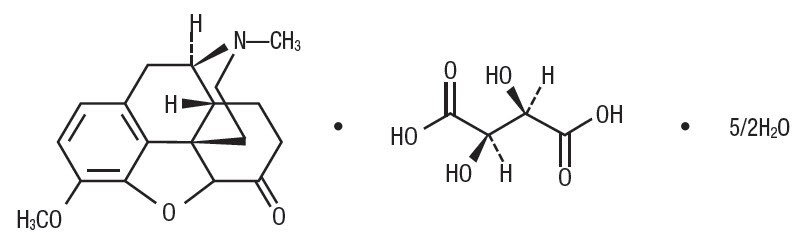
Hydrocodone Bitartrate
The chemical name for hydrocodone bitartrate is morphinan-6-one, 4,5-epoxy-3-methoxy-17-methyl, (5α)-, [R-(R*,R*)]-2,3-dihydroxybutanedioate (1:1), hydrate (2:5). It is also known as 4,5α-Epoxy-3-methoxy-17-methylmorphinan-6-one tartrate (1:1) hydrate (2:5). It occurs as a fine white crystal or crystalline powder, which is derived from the opium alkaloid, thebaine. It has a molecular weight of 494.50 and has the following chemical structure:
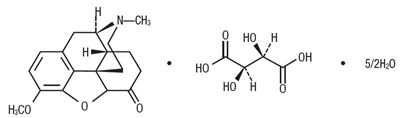
Chemical Structure (Hydrocodone 01)
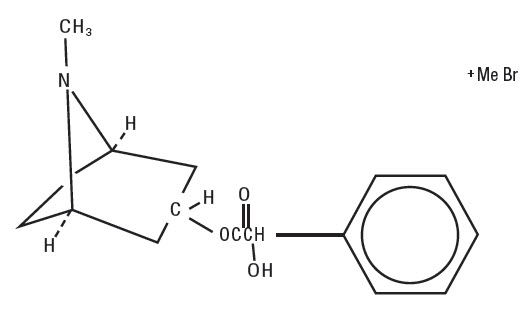
Homatropine Methylbromide
The chemical name for homatropine methylbromide is 8-Azoniabicyclo [3.2.1]octane,3-[(hydroxyphenylacetyl)oxy]-8,8-dimethyl-,bromide, endo-. It occurs as a white crystal or fine white crystalline powder. It has a molecular weight of 370.29 and has the following chemical structure:
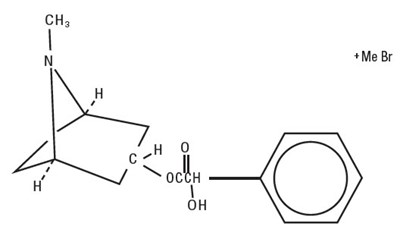 Chemical Structure (Hydrocodone 02) |
| C17H24BrNO3
HOMATROPINE METHYLBROMIDE |
Hydrocodone
Hydrocodone is an opioid agonist with relative selectivity for the mu-opioid receptor, although it can interact with other opioid receptors at higher doses. The precise mechanism of action of hydrocodone and other opiates is not known; however, hydrocodone is believed to act centrally on the cough center. In excessive doses, hydrocodone will depress respiration.
Homatropine
Homatropine is an anticholinergic that inhibits activity of the muscarinic acetylcholine receptor with less potency than atropine.
Hydrocodone
Effects on the Central Nervous System
Hydrocodone produces respiratory depression by direct action on brain stem respiratory centers. The respiratory depression involves a reduction in the responsiveness of the brain stem respiratory centers to both increases in carbon dioxide tension and to electrical stimulation.
Hydrocodone causes miosis, even in total darkness. Pinpoint pupils are a sign of opioid overdose but are not pathognomonic (e.g., pontine lesions of hemorrhagic or ischemic origins may produce similar findings). Marked mydriasis rather than miosis may be seen due to hypoxia in overdose situations.
Effects on the Gastrointestinal Tract and Other Smooth Muscle
Hydrocodone causes a reduction in motility associated with an increase in smooth muscle tone in the antrum of the stomach and duodenum. Digestion of food in the small intestine is delayed and propulsive contractions are decreased. Propulsive peristaltic waves in the colon are decreased, while tone may be increased to the point of spasm resulting in constipation. Other opioid-induced effects may include a reduction in biliary and pancreatic secretions, spasm of sphincter of Oddi, and transient elevations in serum amylase.
Effects on the Cardiovascular System
Hydrocodone produces peripheral vasodilation which may result in orthostatic hypotension or syncope. Manifestations of histamine release and/or peripheral vasodilation may include pruritus, flushing, red eyes and sweating and/or orthostatic hypotension.
Effects on the Endocrine System
Opioids inhibit the secretion of adrenocorticotropic hormone (ACTH), cortisol, and luteinizing hormone (LH) in humans [see Adverse Reactions (6)]. They also stimulate prolactin, growth hormone (GH) secretion, and pancreatic secretion of insulin and glucagon.
Chronic use of opioids may influence the hypothalamic-pituitary-gonadal axis, leading to androgen deficiency that may manifest as low libido, impotence, erectile dysfunction, amenorrhea, or infertility.
The causal role of opioids in the clinical syndrome of hypogonadism is unknown because the various medical, physical, lifestyle, and psychological stressors that may influence gonadal hormone levels have not been adequately controlled for in studies conducted to date [see Adverse Reactions (6)].
Effects on the Immune System
Opioids have been shown to have a variety of effects on components of the immune system in in vitro and animal models. The clinical significance of these findings is unknown. Overall, the effects of opioids appear to be modestly immunosuppressive.
Concentration–Adverse Reaction Relationships
There is a relationship between increasing hydrocodone plasma concentration and increasing frequency of dose-related opioid adverse reactions such as nausea, vomiting, CNS effects, and respiratory depression. In opioid-tolerant patients, the situation may be altered by the development of tolerance to opioid-related adverse reactions.
Homatropine
Homatropine methylbromide has several mild but undesirable clinical properties resulting from its antisecretory effects. These can include: dry mouth, loss of visual accommodation, photophobia, and difficulty in urination. The extent of the above actions is dictated by dose, dose escalation, therefore, results in progressively aversive symptoms in patients.
Absorption
Following a 10 mg oral dose of hydrocodone administered to five adult male subjects, the mean peak concentration was 23.6 ± 5.2 ng/mL. Maximum serum levels were achieved at 1.3 ± 0.3 hours. Food has no significant effect on the extent of absorption of hydrocodone.
Distribution
Although the extent of protein binding of hydrocodone in human plasma has not been definitively determined, structural similarities to related opioid analgesics suggest that hydrocodone is not extensively protein bound. As most agents in the 5-ring morphinan group of semi-synthetic opioids bind plasma protein to a similar degree (range 19% [hydromorphone] to 45% [oxycodone]), hydrocodone is expected to fall within this range.
Elimination
Metabolism
Hydrocodone exhibits a complex pattern of metabolism, including N-demethylation, O-demethylation, and 6keto reduction to the corresponding 6-α-and 6-β-hydroxy metabolites. CYP3A4 mediated N-demethylation to norhydrocodone is the primary metabolic pathway of hydrocodone with a lower contribution from CYP2D6-mediated O-demethylation to hydromorphone. Hydromorphone is formed from the O-demethylation of hydrocodone and may contribute to the total analgesic effect of hydrocodone. Therefore, the formation of these and related metabolites can, in theory, be affected by other drugs [see Drug Interactions (7.2)]. Published in vitro studies have shown that N-demethylation of hydrocodone to form norhydrocodone can be attributed to CYP3A4 while O-demethylation of hydrocodone to hydromorphone is predominantly catalyzed by CYP2D6 and to a lesser extent by an unknown low affinity CYP enzyme.
Excretion
Hydrocodone and its metabolites are eliminated primarily in the kidneys. The mean plasma half-life of hydrocodone is approximately 4 hours.
Hydrocodone
Carcinogenicity studies were conducted with codeine, an opiate related to hydrocodone. Two-year studies in F344/N rats and B6C3F1 mice were conducted to assess the carcinogenic potential of codeine. No evidence of tumorigenicity was observed in male and female rats at codeine dietary doses up to 70 and 80 mg/kg/day (approximately equivalent to 40 and 45 times the MRHD of hydrocodone on a mg/m2 basis, respectively). No evidence of tumorigenicity was observed in male and female mice at codeine dietary doses up to 400 mg/kg/day (approximately equivalent to 110 times the MRHD of hydrocodone on a mg/m2 basis).
Mutagenicity studies with hydrocodone have not been conducted.
Fertility studies with hydrocodone have not been conducted.
Homatropine
Carcinogenicity, mutagenicity, and fertility studies with homatropine have not been conducted.
Addiction, Abuse, and Misuse
Inform patients that the use of hydrocodone bitartrate and homatropine methylbromide, even when taken as recommended, can result in addiction, abuse, and misuse, which can lead to overdose and death [see Warnings and Precautions (5.1)]. Instruct patients not to share hydrocodone bitartrate and homatropine methylbromide with others and to take steps to protect hydrocodone bitartrate and homatropine methylbromide from theft or misuse.
Important Dosing and Administration Instructions
Instruct patients how to measure and take the correct dose of hydrocodone bitartrate and homatropine methylbromide. Advise patients to measure hydrocodone bitartrate and homatropine methylbromide with an accurate milliliter measuring device. Patients should be informed that a household teaspoon is not an accurate measuring device and could lead to overdosage. Advise patients to ask their pharmacist to recommend an appropriate measuring device and for instructions for measuring the correct dose [see Dosage and Administration (2.1), Warnings and Precautions (5.5)]. Advise patients not to increase the dose or dosing frequency of hydrocodone bitartrate and homatropine methylbromide because serious adverse events such as respiratory depression may occur with overdosage [see Warnings and Precautions (5.2), Overdosage (10)].
Life-Threatening Respiratory Depression
Inform patients of the risk of life-threatening respiratory depression, including information that the risk is greatest when starting hydrocodone bitartrate and homatropine methylbromide and that it can occur even at recommended dosages [see Warnings and Precautions (5.2)]. Advise patients how to recognize respiratory depression and to seek medical attention if breathing difficulties develop.
Accidental Ingestion
Inform patients that accidental ingestion, especially by children, may result in respiratory depression or death [see Warnings and Precautions (5.2)]. Instruct patients to take steps to store hydrocodone bitartrate and homatropine methylbromide securely and to properly dispose of unused hydrocodone bitartrate and homatropine methylbromide in accordance with the local state guidelines and/or regulations.
Activities Requiring Mental Alertness
Advise patients to avoid engaging in hazardous tasks that require mental alertness and motor coordination such as operating machinery or driving a motor vehicle as hydrocodone bitartrate and homatropine methylbromide may produce marked drowsiness [see Warnings and Precautions (5.6)].
Interactions with Benzodiazepines and Other Central Nervous System Depressants, Including Alcohol
Inform patients and caregivers that potentially fatal additive effects may occur if hydrocodone bitartrate and homatropine methylbromide is used with benzodiazepines or other CNS depressants, including alcohol. Advise patients to avoid concomitant use of hydrocodone bitartrate and homatropine methylbromide with benzodiazepines or other CNS depressants and instruct patients not to consume alcoholic beverages, as well as prescription and over-the-counter products that contain alcohol, during treatment with hydrocodone bitartrate and homatropine methylbromide [see Warnings and Precautions (5.8)], Drug Interactions (7.1, 7.4)].
Constipation
Advise patients of the potential for severe constipation [see Warnings and Precautions (5.9), Adverse Reactions (6)].
Anaphylaxis
Inform patients that anaphylaxis has been reported with ingredients contained in hydrocodone bitartrate and homatropine methylbromide. Advise patients how to recognize such a reaction and when to seek medical attention [see Contraindications (4), Adverse Reactions (6)].
MAOI Interaction
Inform patients not to take hydrocodone bitartrate and homatropine methylbromide while using or within 14 days of stopping any drugs that inhibit monoamine oxidase. Patients should not start MAOIs while taking hydrocodone bitartrate and homatropine methylbromide [see Drug Interactions (7.6)].
Hypotension
Inform patients that hydrocodone bitartrate and homatropine methylbromide may cause orthostatic hypotension and syncope. Instruct patients how to recognize symptoms of low blood pressure and how to reduce the risk of serious consequences should hypotension occur (e.g., sit or lie down, carefully rise from a sitting or lying position) [see Warnings and Precautions (5.12)].
Pregnancy
Advise patients that use of hydrocodone bitartrate and homatropine methylbromide is not recommended during pregnancy [see Use in Specific Populations (8.1)].
Neonatal Opioid Withdrawal Syndrome
Inform female patients of reproductive potential that use of hydrocodone bitartrate and homatropine methylbromide during pregnancy can result inneonatal opioid withdrawal syndrome, which may be life-threatening if not recognized and treated Warnings and Precautions (5.13), Use in Specific Populations (8.1)].
Embryo-Fetal Toxicity
Inform female patients of reproductive potential that hydrocodone bitartrate and homatropine methylbromide can cause fetal harm and to inform their healthcare provider of a known or suspected pregnancy [see Use in Specific Populations (8.1)].
Lactation
Advise women that breastfeeding is not recommended during treatment with hydrocodone bitartrate and homatropine methylbromide [see Use in Specific Populations (8.2)].
Infertility
Inform patients that chronic use of opioids, such as hydrocodone, a component of hydrocodone bitartrate and homatropine methylbromide, may cause reduced fertility. It is not known whether these effects on fertility are reversible [see Use in Specific Populations (8.3)].
Adrenal Insufficiency
Inform patients that hydrocodone bitartrate and homatropine methylbromide could cause adrenal insufficiency, a potentially life-threatening condition. Adrenal insufficiency may present with non-specific symptoms and signs such as nausea, vomiting, anorexia, fatigue, weakness, dizziness, and low blood pressure. Advise patients to seek medical attention if they experience a constellation of these symptoms [see Warnings and Precautions (5.14)].
Serotonin Syndrome
Inform patients that hydrocodone bitartrate and homatropine methylbromide could cause a rare but potentially life-threatening condition resulting from concomitant administration of serotonergic drugs. Warn patients of the symptoms of serotonin syndrome and to seek medical attention right away if symptoms develop. Instruct patients to inform their physicians if they are taking, or plan to take serotonergic medications [see Adverse Reactions (6), Drug Interactions (7.5)].
Disposal of Unused Hydrocodone Bitartrate And Homatropine Methylbromide.
Advise patients to properly dispose of unused hydrocodone bitartrate and homatropine methylbromide. Advise patients to throw the drug in the household trash following these steps. 1) Remove them from their original containers and mix them with an undesirable substance, such as used coffee grounds or kitty litter (this makes the drug less appealing to children and pets, and unrecognizable to people who may intentionally go through the trash seeking drugs). 2) Place the mixture in a sealable bag, empty can, or other container to prevent the drug from leaking or breaking out of a garbage bag, or to dispose of in accordance with local state guidelines and/or regulations.
Manufactured by:
Genus Lifesciences Inc.
Allentown, PA 18102